A Hippo Bit a 2-Year-Old — Then Let Him Go Alive
Nobody was looking at the water when it happened. A two-year-old boy went into a hippo’s jaws near Lake Edward in Uganda, and then — somehow — came back out.
This was 2017. The child had wandered to the water’s edge, which is something that happens in lakeside communities across Uganda every single day. What followed was almost too fast to process: the hippo surfaced, the boy disappeared, and then — confirmed by Ugandan authorities — the animal let him go. He was pulled from the water alive, bite wounds and all, breathing. Nobody can fully explain why the hippo released him. That’s the part that doesn’t sit right.
What Makes a Hippo Attack Survivor So Rare
Hippos kill an estimated 500 people per year across sub-Saharan Africa, according to wildlife researchers including those cited by the African Wildlife Foundation. More than lions. More than crocodiles. More than almost anything else with legs on that continent. Their jaws produce over 1,800 pounds of force per square inch — enough to split a small wooden boat clean through. As studies on hippopotamus behavior consistently show, these animals are territorial in water the way some people are about their entire neighborhood. They don’t negotiate. They don’t warn. They don’t release.
Except this one did.
That’s the part that kept researchers and wildlife experts talking long after the initial reports. Hippos don’t do partial. When an encounter happens, it ends one way. The fact that it ended differently here — that a toddler came out of that situation breathing — is genuinely, statistically bizarre. You can browse other extraordinary survival stories at this-amazing-world.com, but few have this particular quality of wrongness about them. The sense that something broke from the script entirely.
The Hippo Attack Survivor Story That Stunned Experts
Wildlife experts who study hippo behavior didn’t exactly rush forward with confident explanations. The most widely floated theory: the child was simply too small. The hippo may not have registered a two-year-old as a threat or a competitor — just something that was briefly present and then, just as briefly, wasn’t. A second theory points to the possibility that noise or sudden movement from the shore startled the animal mid-bite. A third theory is harder to quantify. Something passed through that ancient territorial brain that we don’t quite have the framework to describe.
The hippo attack survivor narrative doesn’t fit the pattern. Which raises the obvious question — why did no one notice sooner that we know so little about what drives these moments? We have behavioral studies. We have territorial maps. We have bite-force data measured to the pound. And still, when a two-year-old walks away from those jaws, all of it hits a wall.
That last question kept me reading about this for another hour.
Hippos have shared African waterways with humans for almost all of recorded history. They’ve been documented, feared, studied, and hunted. And we still don’t really know what’s happening inside their heads when they make the choices they make.
That’s the uncomfortable truth sitting at the center of this story.
Hippos Aren’t What Most People Think They Are
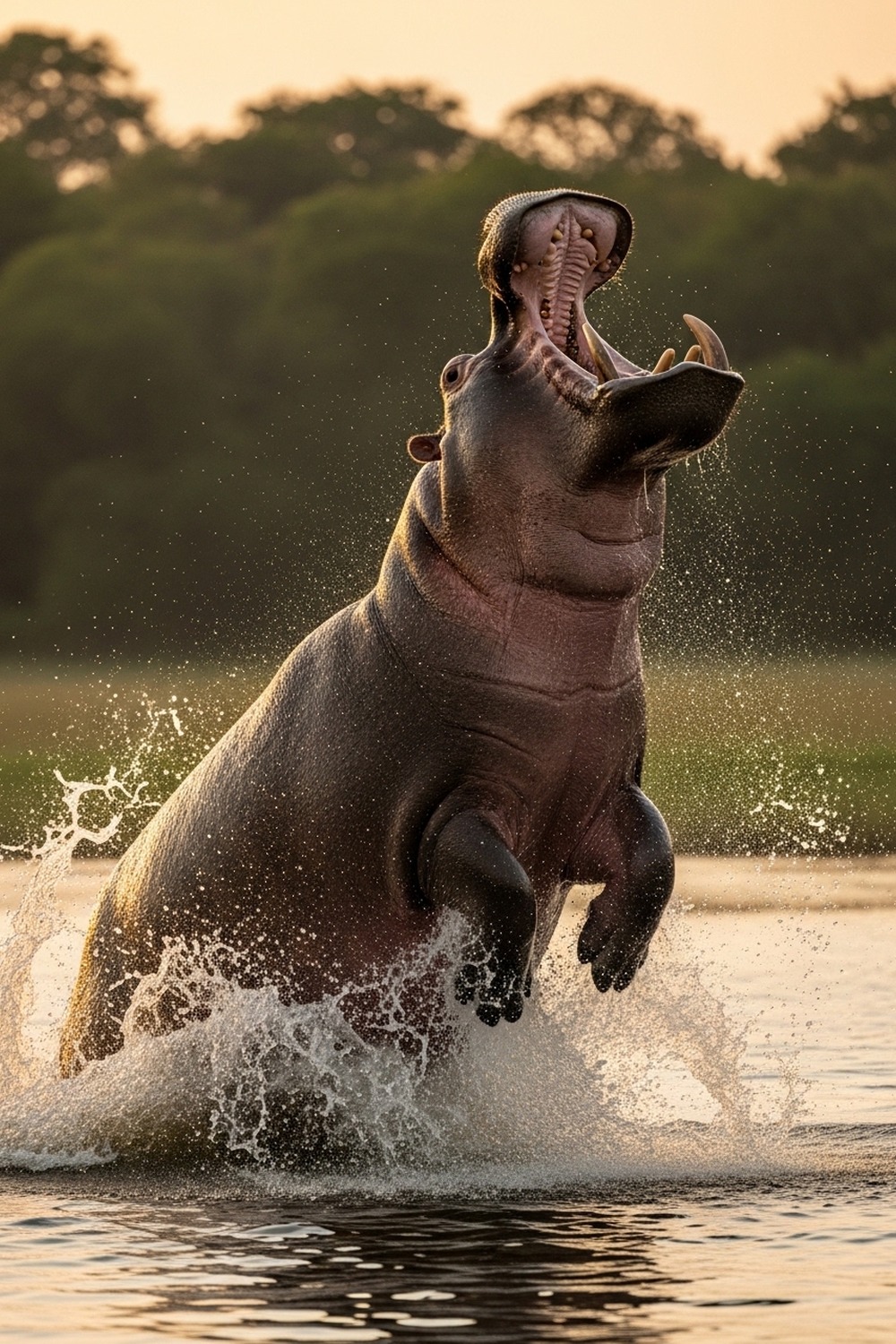
Here’s the thing — most people still picture hippos as slow, lumbering, almost comic animals. The yawning photographs. The round bodies. The way they seem to float without effort. That image is dangerously wrong.
Hippos can run at up to 19 miles per hour on land. Faster than most adult humans at full sprint. They’re among the most aggressive animals on the planet, and they treat water like a sovereign territory. Anything in that territory is a potential problem, and hippos resolve problems decisively. Turns out the closest living relative of the hippopotamus isn’t an elephant or a rhino — it’s the whale. Their evolutionary lineage split from cetaceans roughly 55 million years ago, which tells you something about how long these animals have been shaped by water.
That ancient lineage matters more than it might seem. These aren’t creatures running on simple instinct. Researchers still argue about what actually motivates hippo aggression — whether it’s purely territorial, whether specific environmental stressors shift their behavior, whether individual animals have behavioral tendencies the way other large mammals demonstrably do. The two-year-old in Uganda may have encountered one that, for reasons we’ll never fully map, paused. Just paused. And in that pause, a child’s life continued.
By the Numbers
- 500 people killed per year in Africa — more than lions, more than crocodiles, making hippos the continent’s deadliest large land animal by most estimates (African Wildlife Foundation, 2020).
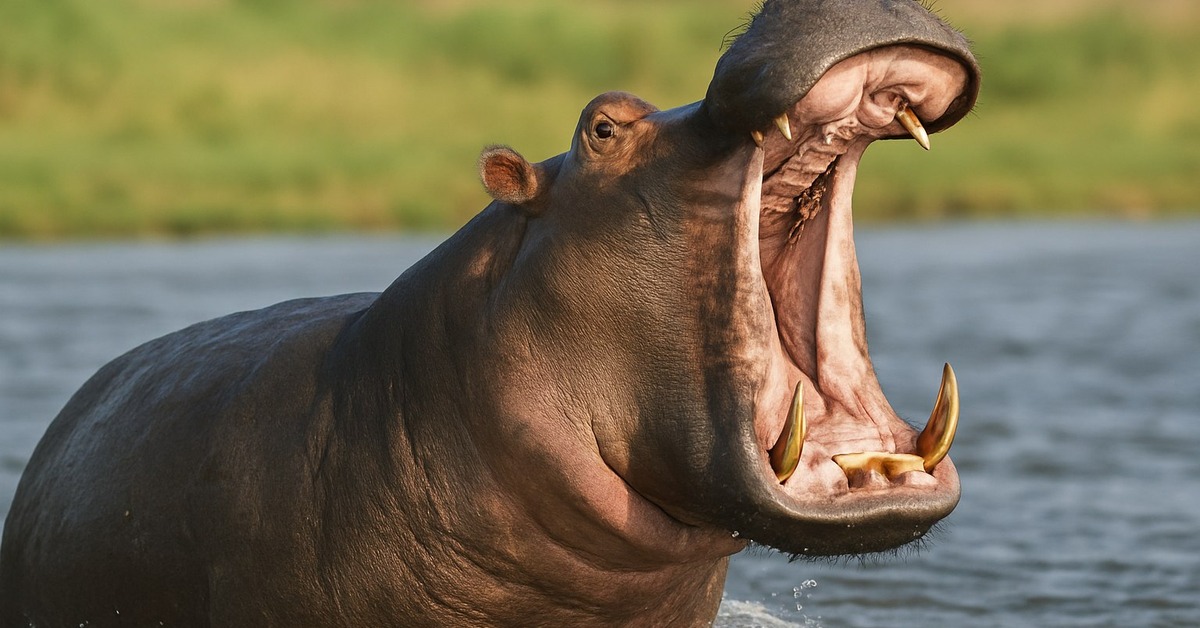
- A hippo’s jaw opens to nearly 150 degrees, wider than any comparable land mammal, with tusks reaching up to 20 inches. That gape isn’t a yawn. It’s a threat display, and most animals that see it up close don’t get the chance to describe it.
- Up to five minutes underwater on a single breath — and newborn calves nurse submerged within hours of birth, which is either beautiful or unsettling depending on how you look at it.
- 19 mph on land despite weighing up to 3,000 kilograms.
Field Notes
- Hippos secrete a reddish oily fluid from their skin — sometimes called “blood sweat,” though it contains neither. It functions as a natural sunscreen and antimicrobial agent, which is a genuinely remarkable piece of biology that most people have never heard of.
- Primarily grazers. Up to 80 pounds of grass per night, after dark.
- Uganda’s Lake Edward sits inside a protected wildlife corridor shared with the Democratic Republic of Congo, where human-hippo conflict has climbed sharply as farming pushes into traditional hippo territory. The attack in 2017 wasn’t a freak occurrence in an otherwise peaceful region. It was one incident in a pattern that’s getting harder to ignore.
Why This Story Says Something Bigger About Us
Science describes patterns. It doesn’t always explain the exception. And the exceptions are where the real questions live.
The story of this hippo attack survivor isn’t just wildlife news. It’s a window into how little we actually understand about the animals we share this planet with — even the ones that have been killing, and occasionally sparing, humans for thousands of years. We have behavioral data on hippos. We have measurements, maps, field studies. But when a two-year-old walks away from those jaws, every data point sits there looking slightly useless.
What happened in that water? What did the hippo register in the moment it released him — if “released” is even the right word, if anything resembling a decision was happening at all? We may never know. But the boy lived. That part is certain. He carried bite wounds and a story that most adults couldn’t fully absorb, and he went home.
A two-year-old survived something that statistically shouldn’t be survivable. That fact doesn’t get smaller the more you sit with it. Somewhere in Lake Edward, the water is still and calm and completely unreadable. If stories like this one pull you in at odd hours, there’s more at this-amazing-world.com — and the next one is stranger still.