The Woman Who Could See a Face From a Mile Away
Ten times better than human. That’s not a figure of speech — it’s what the University of Stuttgart measured when Veronica Seider superhuman vision was formally documented in 1972, producing a result the existing frameworks had no good place to put. She could identify individual faces from over a mile away. No instruments. No augmentation. The record has sat untouched for more than fifty years.
Normal human vision is classified as 20/20. Seider’s tested at 20/2 — meaning she could resolve detail at twenty feet that the average person required standing two feet away to see. The University of Stuttgart team documented her ability to identify individual faces from more than a mile away using only her naked eye. What Seider did with that ability afterward is, somehow, the stranger part of the story.
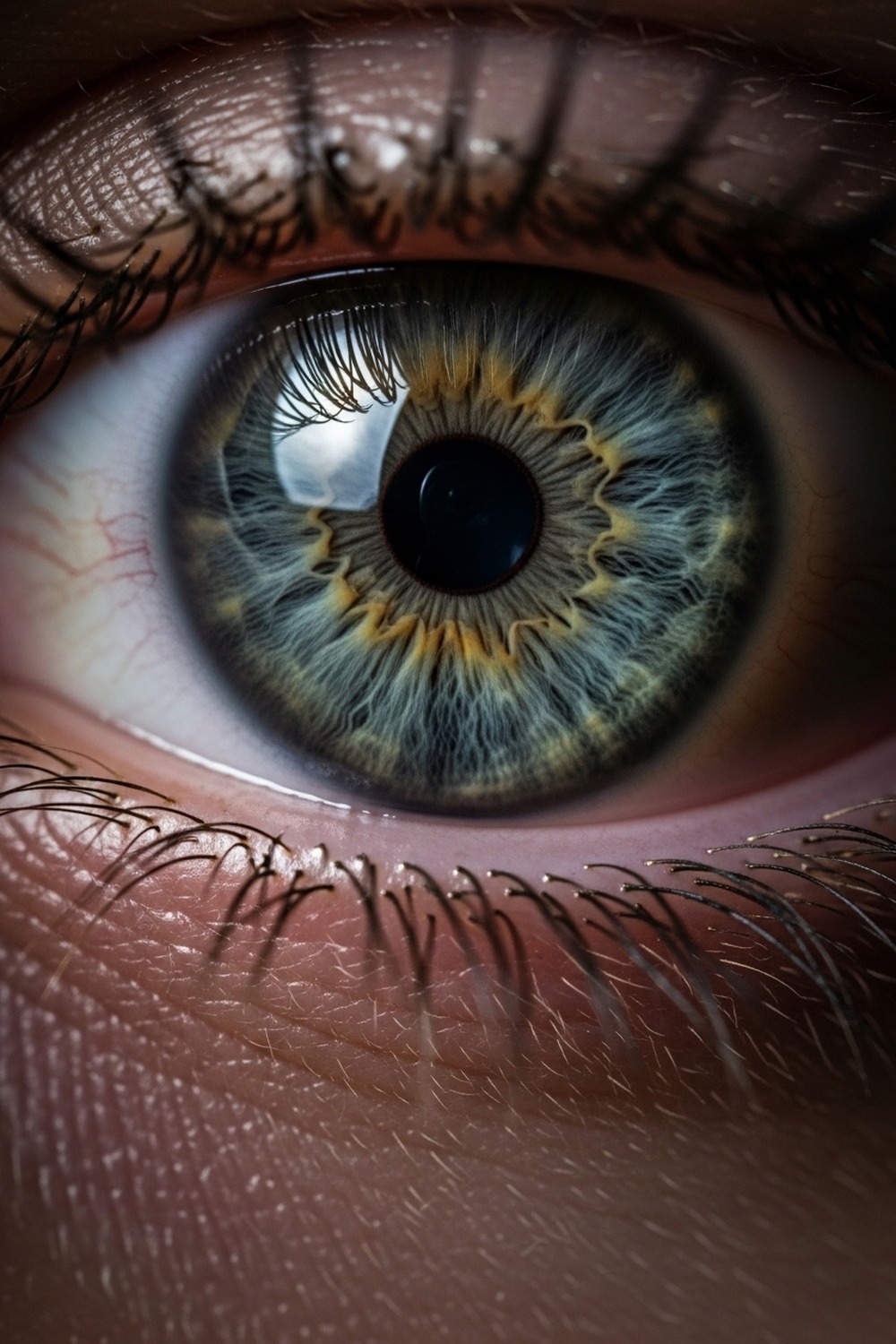
The Test Results That Rewrote Human Visual Limits
Visual acuity is measured on the Snellen scale — the same system an optometrist uses when they ask you to read the bottom line of the chart. The standard benchmark, 20/20 visual acuity, means a person can distinguish detail at twenty feet that is considered normal for human sight. A score of 20/10 is already exceptional — roughly what some professional athletes and fighter pilots test at. Veronica Seider’s 20/2 result, recorded by University of Stuttgart researchers in 1972, put her so far outside that scale that it required a new way of thinking about what the human visual system could theoretically produce. She wasn’t just sharper than most people. Her result has appeared in the Guinness World Records, and as of today, no peer-reviewed study has reported a verified equivalent.
She was operating at a resolution that conventional ophthalmology had never documented in a living subject. That matters more than it sounds. The tests were conducted under standard clinical protocols — not built around her abilities, not optimized to flatter the outcome. Nobody was trying to make history that day. They were running measurements and watching the numbers refuse to behave. Two digits. 20/2. A category of one.
For context: a human eye contains roughly six million cone cells, the photoreceptors responsible for color and fine detail. Seider’s visual processing didn’t appear to involve more of them. The working theory is that her neural system — the pathway between retina and visual cortex — processed the incoming signal with an efficiency that simply hasn’t been observed before or since. The eye itself may have been ordinary. What happened next, apparently, wasn’t.
What a Mile Actually Looks Like Through Ordinary Eyes
It’s worth stopping to feel what a mile of visual distance actually means. At one kilometer — roughly 0.62 miles — the average person can detect that a human figure exists. Shape, movement, approximate height. That’s about the limit of useful identification. You know someone is there. You don’t know who. Facial features, individual expressions, the particular set of someone’s jaw — those details collapse into blur long before you reach that distance. Seider didn’t discard that information. She kept it, organized it, and read it back at distances that shouldn’t have been possible for an unaugmented human observer. The way our senses process the world around us is more limited than we tend to assume, and most of us move through our days unaware of how much our biology quietly discards.
Think about what that means operationally. Military snipers work with high-powered optics to achieve target identification at distances Seider was matching barehanded. Professional ornithologists — people who spend careers learning to identify birds at a distance — typically rely on binoculars for fine detail beyond a few hundred meters. Sports stadium scoreboards are engineered around normal visual limits. Seider was, in effect, carrying a pair of binoculars in her skull.
She was also, by all accounts, not particularly dramatic about any of this. There’s no record of Seider treating her vision as a spectacle. She went to university. She completed her medical training. She made a professional choice. What she could see from a kilometer away apparently wasn’t the most interesting thing about her life — which, depending on your perspective, is either deeply human or quietly extraordinary.
The Biology Behind Vision This Sharp
Why does this matter? Because the ceiling everyone assumed existed kept Seider’s case from being taken as seriously as it deserved.
Human visual acuity has a theoretical ceiling, and most researchers had assumed we understood roughly where it sat. The cone cells in the fovea — the central pit of the retina responsible for high-resolution vision — are packed at a density of about 150,000 to 200,000 per square millimeter. That packing density determines the finest detail the eye can theoretically resolve, a limit described in optics as the Nyquist sampling theorem applied to biological tissue (researchers actually call this the retinal sampling limit). Most people operate well below their hardware’s theoretical maximum — and it’s in that gap where Seider’s case becomes scientifically interesting. Her cones may not have been unusually dense. Her cortical processing, the way her brain decoded the retinal signal, may have been the variable no one had calibrated for.
Veronica Seider superhuman vision raises a question that neuroscience still can’t fully answer: where does sight actually happen? The eye collects light — that’s mechanics. But recognition, the ability to parse a face from a background of noise at a thousand meters, is a computation, and it happens in the brain’s visual cortex. Two people can have identical retinas and radically different perceptual outcomes. The resolution of the hardware sets a floor. The software, apparently, can vary far more than anyone expected.
That’s what makes her result so difficult to categorize. It’s not a superhero story. It’s a data point — one data point, fifty years old, never replicated — sitting at the edge of what we think we know about ordinary human biology. A sample size of one is not how science likes to work. And yet here it sits, undisturbed, in the record books. A result this anomalous, ignored this thoroughly for this long, says something unflattering about what the field decided was worth pursuing.
Veronica Seider’s Superhuman Vision and the Life She Chose
Documented at the University of Stuttgart while still a student, Seider’s abilities entered the Guinness World Records — the closest thing to an official ledger for human extremes. But the records don’t dwell on the career she chose afterward. She became a dentist. Not a professional athlete whose sport rewarded long visual range. Not a military asset. Not a laboratory subject cycling through vision research protocols. Someone who works with their hands in a small, precisely lit room, identifying cavities and fractures at a scale of millimeters. The furthest object she needed to see most days was probably across the room.
Hard to imagine a more complete inversion of her documented gift — and somehow, completely believable.
There’s a practical logic to it. Dentistry requires extraordinary fine motor control, spatial precision, and the ability to detect subtle visual differences in texture, color, and depth at close range. These are demanding visual tasks — just not the tasks her record celebrates. High acuity doesn’t switch off at one meter. It’s possible that what made Seider’s vision so exceptional at long range — that neural efficiency, that ability to extract signal from noise — also made her exceptionally good at close-range diagnostic work. Perhaps dentistry wasn’t a contradiction. Perhaps it was just a quieter application of the same hardware.
And here’s the thing: her patients may never have known they were being seen, quite literally, more clearly than they’d ever been seen in their lives. She would have been diagnosing decay that her colleagues couldn’t see yet. Spotting the hairline fracture before it became a crisis. Reading the early signals of gum disease in tissue that looked normal to everyone else in the room.

How It Unfolded
- 1972 — Researchers at the University of Stuttgart test Veronica Seider’s visual acuity and record a result of 20/2, ten times the human standard and the highest ever documented.
- 1972 — The findings are entered into the Guinness World Records as the highest confirmed visual acuity in a human being, a category created specifically to hold this result.
- Late 1970s — Seider completes her medical training and qualifies as a dentist, choosing a precision-focused clinical career over any profession that would directly exploit her long-range vision.
- 2024 — More than fifty years after the original Stuttgart tests, no peer-reviewed study has replicated or exceeded her documented result, and the record remains unbroken.
By the Numbers
- 20/2 — Seider’s documented visual acuity score, recorded at the University of Stuttgart in 1972, compared to the 20/20 human standard.
- 1 mile (approximately 1.6 kilometers) — the estimated distance at which Seider could identify an individual person’s facial features with the naked eye.
- 6 million — the approximate number of cone photoreceptor cells in the average human retina, the hardware underlying fine visual detail and color resolution.
- 10× — the factor by which Seider’s measured acuity exceeded standard human visual performance across the distance at which faces become unresolvable to most people.
- 0 — the number of peer-reviewed studies that have independently verified a comparable result in any other living human subject since 1972.
Field Notes
- Stuttgart’s 1972 tests ran under standard ophthalmological protocols — not specially designed to maximize her score. This makes the result harder to dismiss as a measurement artifact and more difficult to explain within existing models of human visual biology.
- Seider’s case is sometimes described as involving an unusual density of cone cells, but the more likely explanation, according to vision researchers, is extraordinary neural efficiency in the processing pathway between retina and visual cortex — the software, not the hardware.
- Turns out the closest documented parallel to Seider’s long-range acuity isn’t human at all: some raptors, including eagles and hawks, achieve visual acuity estimated at 20/5 or better — still not matching Seider’s 20/2 on the Snellen equivalent scale.
- Researchers still can’t explain why Seider’s visual processing efficiency hasn’t appeared in any other tested individual. It’s unclear whether this represents genuine biological rarity, an absence of systematic testing for this trait in the general population, or something specific to her neural architecture that hasn’t been examined in sufficient detail.
Frequently Asked Questions
Q: What exactly is Veronica Seider superhuman vision, and how was it measured?
Veronica Seider superhuman vision refers to her documented visual acuity of 20/2, recorded at the University of Stuttgart in 1972. Standard human vision is 20/20 — meaning a person sees at twenty feet what is considered normal. Seider’s 20/2 result meant she could resolve the same detail at twenty feet that an average person would need to stand two feet away to see. This translated to her ability to identify individual faces from over a mile away with no optical aids.
Q: Can training or practice improve human vision to anything close to Seider’s level?
Visual acuity can be improved modestly through corrective lenses, surgery, and certain perceptual training programs, but not to anywhere near Seider’s documented level. The gap between trained elite vision — such as the 20/10 acuity sometimes found in professional athletes — and 20/2 is enormous. Current evidence suggests Seider’s result reflects an innate neurological configuration rather than a trainable skill. No program of visual training has produced results within the same order of magnitude as her 1972 Stuttgart measurements.
Q: Why didn’t Seider use her vision in a career that would directly benefit from it?
This is where the common assumption goes wrong. Many people presume that extraordinary long-range vision would naturally lead to careers in military service, athletics, or surveillance. But Seider chose dentistry — a profession demanding exceptional close-range visual precision. The same neural processing efficiency that allowed her to resolve faces at a mile almost certainly made her an exceptionally perceptive clinician at close range. High visual acuity doesn’t have an off switch. It’s reasonable to conclude she applied it every single day, just at a scale of millimeters rather than kilometers.
Editor’s Take — Sarah Blake
What stays with me isn’t the number — it’s the silence around it. One test, one university, one year, and then a woman who went and filled teeth for a living. No follow-up studies. No research program built around her biology. No institution that thought: we should understand this before she’s gone. Seider’s record endures not because science celebrated it but because science essentially walked past it. That’s not a tribute to her gift. That’s a quiet indictment of what we choose to measure, and what we don’t.
Veronica Seider’s story doesn’t belong in the category of the superhuman. It belongs in the category of the unmeasured. She moved through the world with an ability that sat, documented and unexamined, while science looked elsewhere. The real question her case leaves open isn’t about her eyes — it’s about everyone else. How many people have lived full, ordinary lives carrying some extreme of human biology that no one thought to test, or tested once and never followed up on? The record books hold one name. The population that never got measured is invisible, and probably enormous.