You Pay $2 Billion a Year to Give the World Free GPS
Your phone is talking to satellites right now that cost American taxpayers over $2 billion a year to maintain. The weird part? That signal doesn’t care who you are, where you live, or whether you’ve ever paid a dime in U.S. taxes. It just… works. For everyone. Forever.
Every time you open Google Maps, you’re using infrastructure paid for by people you’ll never meet, in a country you might never visit. And almost nobody knows this is happening.
Key Facts
- Congress allocated $2.08 billion to the GPS program in fiscal year 2022, and about $1.8 billion the following year.
- GPS keeps 31 satellites circling Earth at 20,200 kilometers altitude, while only 24 are the minimum needed for global coverage.
- GPS was developed by the U.S. Department of Defense as NAVSTAR and declared fully operational in 1995.
- On May 1, 2000, President Clinton ordered Selective Availability switched off, improving civilian accuracy from about 100 meters to under 10 meters.
- GPS generates over $1.4 trillion in global economic value annually, according to the National Institute of Standards and Technology.
In short: American taxpayers fund GPS for the entire planet: Congress allocated $2.08 billion in fiscal 2022 to maintain 31 satellites that any device on Earth can use for free. Built by the U.S. military as NAVSTAR, it became fully civilian-accurate in 2000 and generates over $1.4 trillion in global economic value each year.
GPS Taxpayer Funding: The Billion-Dollar Gift Nobody Asked For
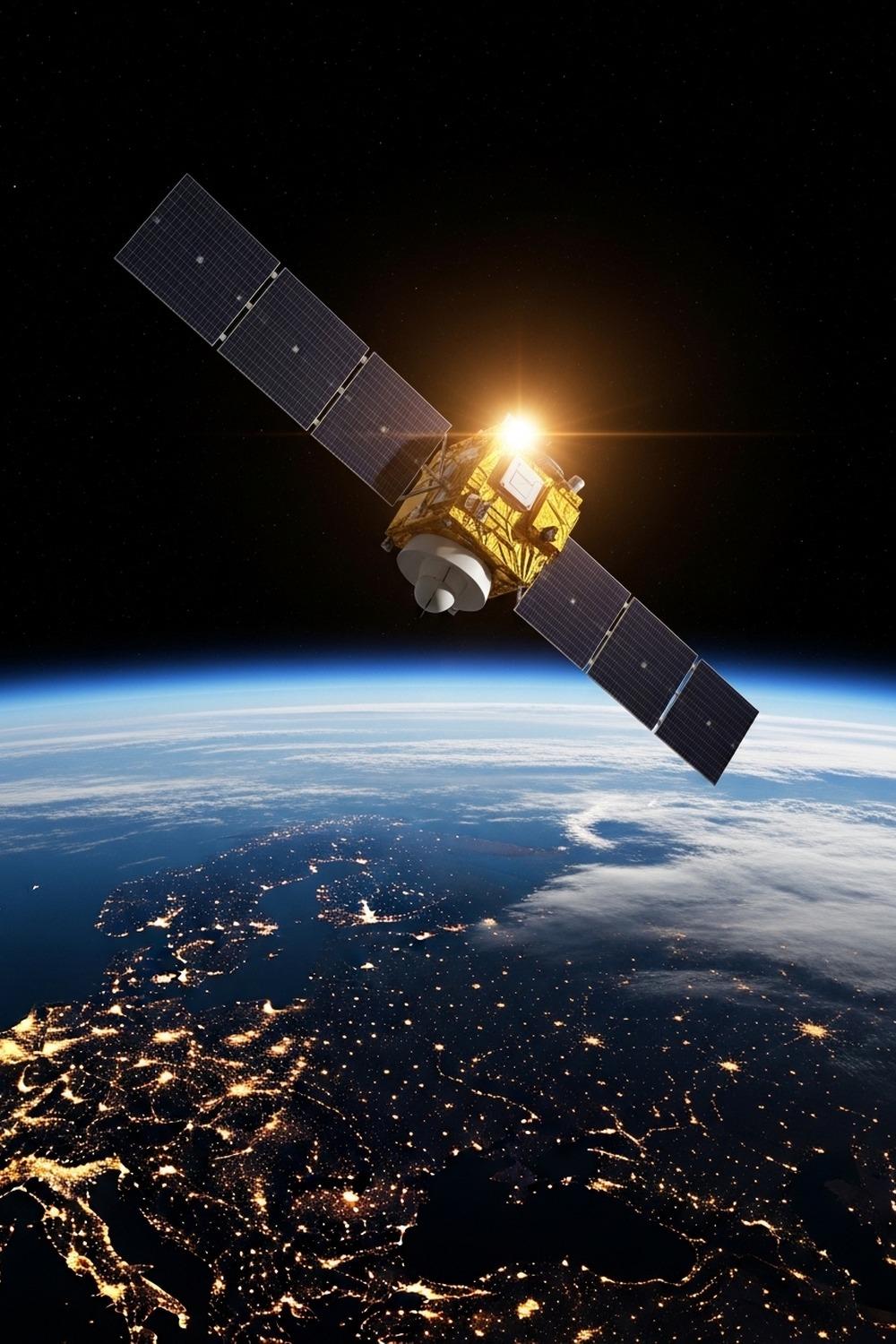
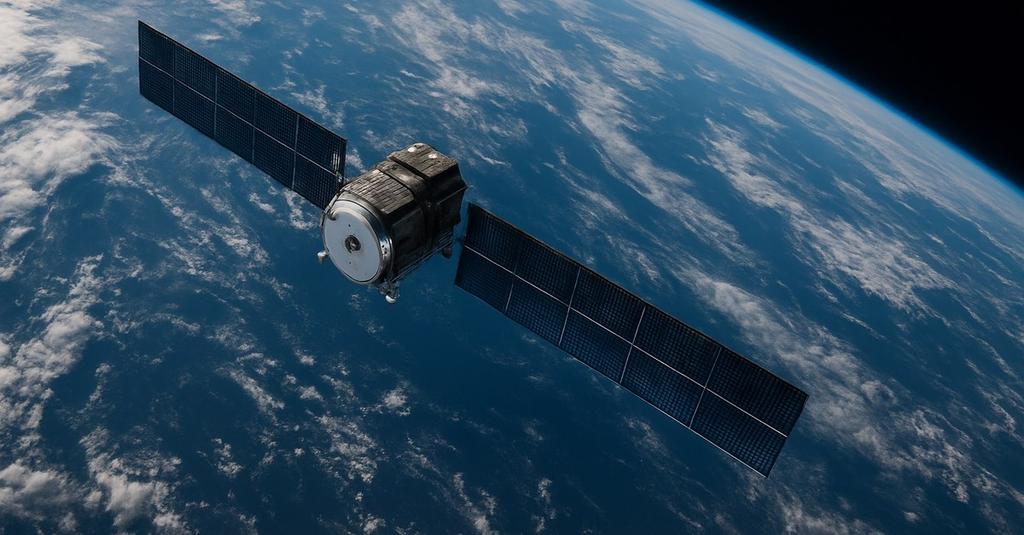
Congress allocated $2.08 billion to the GPS program in fiscal year 2022. The next year it was $1.8 billion. That money keeps 31 satellites circling Earth at 20,200 kilometers up, powers the ground stations that keep them synchronized, and maintains the atomic clocks on each satellite — clocks accurate to nanoseconds. According to the GPS Wikipedia entry, no other nation has ever offered anything like this. Not close. Not even in the same ballpark.
But here’s what’s strange: almost nobody talks about it.
The reason is obvious once you think about it. GPS is invisible. It’s baked into your phone, your car, your bank’s infrastructure. You don’t see a bill. You don’t log in. You don’t even know it’s there. And that invisibility is exactly why the price tag hits different when you finally see it laid out.
A Military Weapon That Became Everyone’s Map
GPS wasn’t designed to help you find a coffee shop.
It was built for bombs. The system — officially NAVSTAR GPS — was developed by the U.S. Department of Defense over two decades and declared fully operational in 1995 as a military targeting tool. Early civilian access was intentionally scrambled. The government introduced errors of up to 100 meters on purpose. That feature was called “Selective Availability,” and it was a deliberate national security measure. You could read more about hidden systems that shape the world you think you understand, but this one has a specific moment that changed everything.
May 1, 2000. President Clinton ordered Selective Availability switched off. Overnight, civilian GPS jumped from roughly 100-meter accuracy to under 10 meters. Farmers suddenly had precision. Pilots could navigate differently. Shipping companies could optimize routes. Hikers could find their way. And almost nobody remembers this happening because it was buried in a late-afternoon press release that nobody was watching for.
It was one of the most consequential executive decisions in the history of infrastructure, and it barely made the evening news.
Why America Pays and Everyone Else Just… Uses It
Here’s the uncomfortable math: The United States operates GPS entirely at its own expense. No international cost-sharing. No subscription tier for foreign governments. No usage fee for the billions of devices pinging those satellites every second. The bill covers everything — the satellites, the launches, the replacements, the ground stations, the software, the cybersecurity. Other nations built their own systems partly because depending on American generosity felt strategically risky. Europe’s Galileo. Russia’s GLONASS. China’s BeiDou. All of them took decades and billions of dollars to build.
In the meantime, the world used the American one.
And America kept paying.
A farmer in Kenya checking soil coordinates. A fishing boat off Indonesia finding port. A delivery driver in Germany optimizing a route. A teenager in Brazil using their phone to navigate home after school. None of them contribute to the bill. That kept me reading for another hour — the sheer scale of it, the fact that we’ve essentially subsidized global infrastructure without ever framing it that way.
The bill lands entirely on American taxpayers. Every year. Forever, apparently.
The Atomic Clocks Nobody Knew Were Up There
Here’s the thing about GPS: it’s not actually about location.
It’s about time. Each satellite carries multiple atomic clocks — cesium, rubidium — and the entire system works by measuring how long a signal takes to travel from satellite to device. Your phone’s GPS chip calculates time differences, then converts those into coordinates. If those clocks drift by even one microsecond, you’re off by hundreds of meters. The precision required is so extreme that engineers account for Einstein’s theory of relativity. Time literally moves faster in orbit than on the ground. The system corrects for this constantly. Without that correction, GPS would drift by about 10 kilometers per day. Your maps app would be useless before lunch.
That’s not metaphor. That’s not science communication. General relativity is an active factor in the software running inside the satellites your phone talks to right now.
By the Numbers
- $2.08 billion allocated to GPS in fiscal year 2022 — more than most countries spend on their entire space programs.
- Civilian GPS accuracy improved by roughly 90% when Selective Availability was disabled on May 1, 2000, dropping from ~100 meter errors to under 10 meters in a single presidential order. Think about that. One decision. Overnight change.
- 24 satellites minimum for global coverage. The U.S. maintains 31.
- Over $1.4 trillion annually — that’s the global economic value extracted from GPS, according to the National Institute of Standards and Technology. Other nations pull hundreds of billions in value from a system they didn’t build and don’t fund.
Field Notes
- Schriever Space Force Base in Colorado houses the GPS ground control master station — essentially a single facility that steers the entire global constellation. It uploads corrections to every satellite twice daily.
- Your bank uses GPS. Not for location. For time. Financial networks synchronize transactions across global systems using GPS timestamps. An outage could disrupt electronic payments worldwide within hours.
- GPS signals are extraordinarily weak when they arrive at Earth — equivalent to reading a 25-watt light bulb from 20,000 kilometers away. The fact that your phone can decode them is a quiet engineering achievement most people never consider.
What GPS Really Tells Us
GPS taxpayer funding reads one way as an act of extraordinary generosity — a public good extended to the entire planet at no charge. It reads another way as soft power so complete it barely needs naming. When the whole world depends on your infrastructure, you hold leverage that doesn’t show up in treaties. The U.S. has the legal and technical ability to degrade or deny GPS access to specific regions during military conflict. It’s happened. The fact that it mostly doesn’t happen is itself a geopolitical choice — one renewed quietly every year when Congress signs the budget.
It’s not just about navigation. It’s about who controls the invisible architecture of modern life.
Every time someone opens a maps app in another country, hails a ride, or lands a plane, a tiny fraction of an American taxpayer’s contribution made it possible. That’s either beautiful or complicated, depending on how you look at it. Maybe it’s both.
GPS is so woven into daily life that questioning it feels strange — like asking who pays for the sky. But someone does. Billions of dollars every year, flowing from American tax receipts into a constellation of satellites that guides the world home without asking for a thank-you. If this kind of story pulls you in, there’s more at this-amazing-world.com. The next one is even stranger.
Frequently Asked Questions
Q: How much do American taxpayers pay for GPS?
Congress allocated $2.08 billion to the GPS program in fiscal year 2022, and about $1.8 billion the following year. That funding maintains 31 satellites orbiting at 20,200 kilometers, the ground stations that synchronize them, and the atomic clocks on each satellite accurate to nanoseconds. The United States operates GPS entirely at its own expense, with no international cost-sharing, subscription tiers, or usage fees for foreign governments or devices.
Q: Why is GPS free for the whole world?
GPS is free globally because the United States chose to operate it that way without charging any foreign user. Originally built as a U.S. military targeting tool, the system has no mechanism for billing the billions of devices pinging its satellites every second. Other nations built rival systems, Europe’s Galileo, Russia’s GLONASS, and China’s BeiDou, partly because depending on American generosity felt strategically risky, but for decades the world simply used the American one.
Q: What happened to GPS accuracy on May 1, 2000?
On May 1, 2000, President Clinton ordered Selective Availability switched off, the deliberate scrambling that had introduced errors of up to 100 meters into civilian signals for national security. Overnight, civilian GPS accuracy jumped from roughly 100 meters to under 10 meters, an improvement of about 90%. Farmers gained precision, pilots and shipping companies could optimize routes, yet the change was buried in a late-afternoon press release almost nobody noticed.
Q: Is GPS really about location or time?
GPS is fundamentally about time, not location. Each satellite carries multiple atomic clocks, and the system works by measuring how long a signal takes to travel from satellite to device, then converting that into coordinates. The precision is so extreme that engineers correct for Einstein’s relativity, since time moves faster in orbit; without that correction GPS would drift by about 10 kilometers per day, making maps useless before lunch.
Illustrations are AI-generated. Article fact-checked and human-edited. Our editorial standards.