Norway’s Underwater Drones Are Hunting Ghost Nets
Off the coast of Norway, underwater drones are finding fishing nets that have been killing things for thirty years — and nobody even knew they were there. These ghost nets ocean drones keep discovering are still working, still catching, still doing exactly what they were designed to do, except no one’s been around to haul them in since before most of us were born.
The thing that got me reading about this for hours was the sheer patience of it. Cold fjords so dark that human divers can barely operate. Autonomous vehicles descending into seafloor terrain nobody’s ever actually seen. Sonar pings bouncing off equipment that’s been down there so long it’s grown barnacles and algae like a second skin. Norway decided the ocean wasn’t going to be a graveyard for lost fishing gear anymore, so they sent machines to find it.
Key Facts
- An estimated 640,000 tonnes of fishing equipment enters the ocean every year, roughly the weight of 4,500 blue whales, per the Global Ghost Gear Initiative (2019).
- Ghost gear accounts for approximately 10 percent of all marine plastic pollution.
- Ghost gear kills an estimated 136,000 seals and sea lions annually, plus hundreds of thousands of seabirds and sea turtles, per World Animal Protection.
- Norway’s coastline exceeds 100,000 kilometers including fjords and islands, longer than twice the circumference of the Earth.
- Monofilament nylon takes up to 600 years to fully degrade, meaning a net lost today could still be fishing in the year 2600.
In short: Off Norway’s coast, ghost nets ocean drones are locating abandoned fishing nets that have been silently killing marine life for up to 30 years. With 640,000 tonnes of gear entering the ocean yearly and nylon taking 600 years to degrade, autonomous underwater vehicles scan dark fjords so recovery crews can haul out and recycle the deadly debris.
Ghost Nets Ocean Drones Are Actually Finding
The term “ghost gear” sounds poetic until you look at the actual numbers. According to the World Animal Protection organization, 640,000 tonnes of fishing equipment enters the ocean every year. Not gets recycled. Not gets repurposed. Enters. Lost during storms, snagged on rocks, sometimes just abandoned because it’s easier than hauling it back. Researcher Joanna Alfaro-Shigueto has been documenting this for years, and here’s what she found: this gear doesn’t degrade the way we all assumed it would.
It persists.
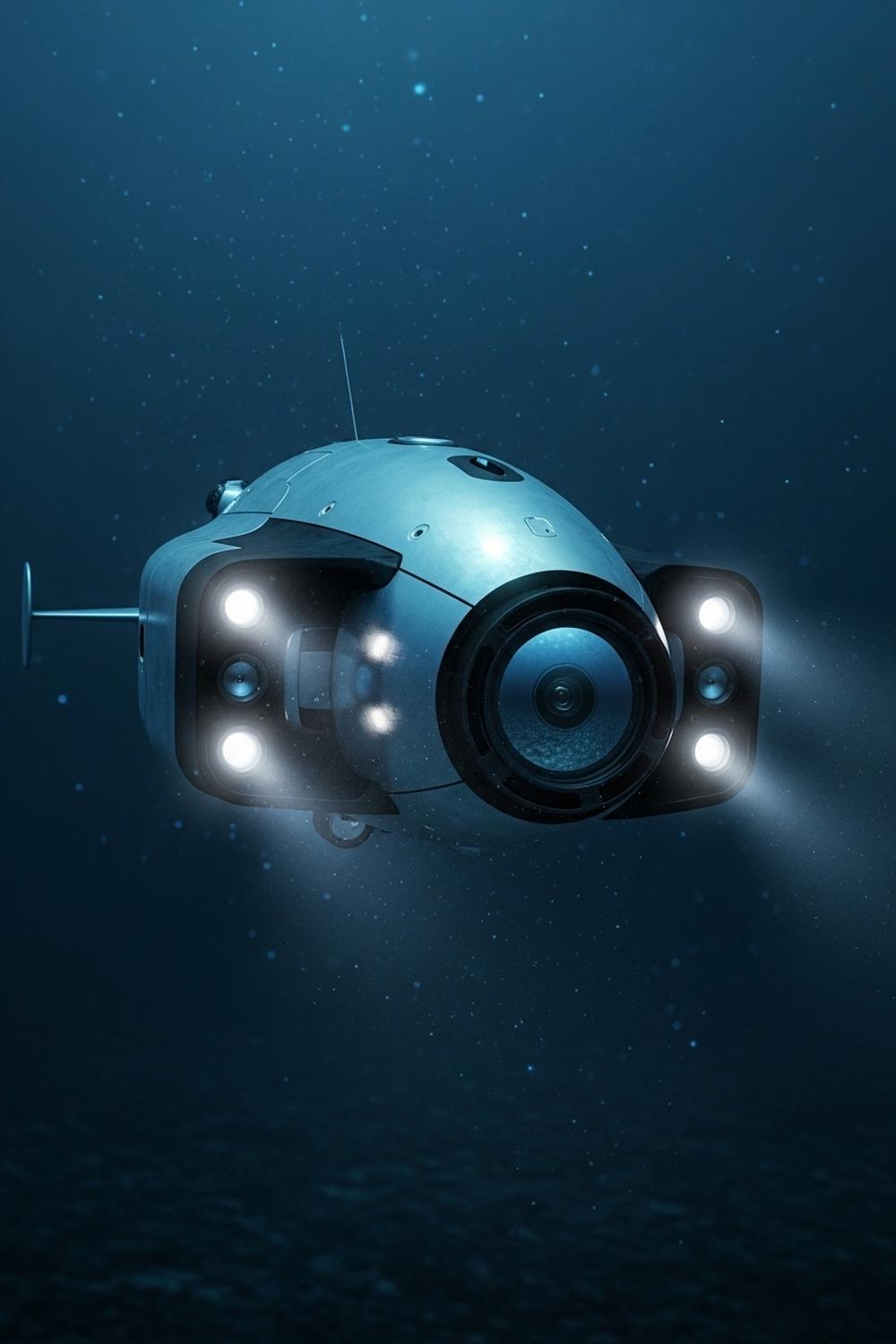
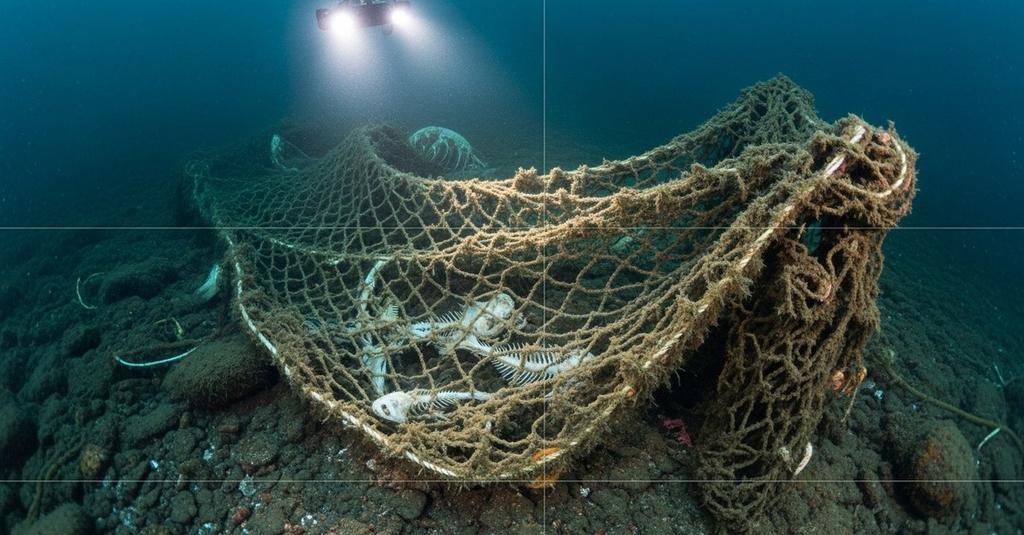
The drone’s sonar picks up something first. Then the camera feed comes alive — grey-green seafloor sediment, rocks, and then this mass of netting that doesn’t belong there. Draped over coral. Tangled into itself. Sometimes covered in so much life that it looks like it’s part of the ocean floor. But it’s still a trap. Still catching things. A net from 1990 works just as well as a net from last week.
The Norwegian System That’s Actually Working
Norway’s got over 100,000 kilometers of coastline when you count every fjord and island — that’s longer than twice around the Earth — and centuries of commercial fishing means there’s a lot of gear down there. The government started working with environmental groups and tech companies to deploy autonomous underwater vehicles equipped with high-resolution cameras and sonar mapping systems. Not rescue operations. Not crisis response. Just methodical, slow, systematic searching. this-amazing-world.com has covered some of the extreme underwater environments these drones have to navigate.
The drones move at a few knots. Scan. Log. Surface. Upload data. Go back down. Repeat.
What strikes me about this is how unsexy it is. There’s no dramatic moment. No viral rescue footage. Just patience.
What Thirty Years on the Seafloor Actually Looks Like
The ghost nets ocean drones find off Norwegian coastlines aren’t always recent. Some have been sitting there since 1990. A net that old doesn’t look like equipment anymore — it looks like geography. It’s colonized. Encrusted. Woven into the seafloor. Fish still swim into it. They still can’t reverse. Crustaceans follow. Seabirds that dive too deep get tangled in monofilament that’s nearly invisible even in daylight.
The net has never distinguished between target species and everything else.
It never will.
Globally, ghost gear accounts for roughly 10% of all ocean plastic — which sounds almost manageable until you remember the total volume of ocean plastic is measured in hundreds of millions of tonnes. The math doesn’t work out in anyone’s favor.
The Part Everyone Skips Over
Finding the net is the easy part. Getting it up is the problem. Recovery crews have to move in physically. Old nets are heavy, tangled into rocks or coral, and pulling them the wrong way damages the ecosystem you’re trying to protect. Sometimes when the crew arrives, the net is still full of live animals. They get a second chance, but it’s not a clean rescue. It’s complicated. Messy. Slow. Every retrieval is its own impossible puzzle.
Then it gets weirder. Once the net’s on deck, it has to be sorted, cleaned, and disposed of responsibly — because dumping degraded fishing nets into a landfill just moves the problem. Programs across Scandinavia are now recycling recovered ghost gear into new materials. Nylon yarn. Clothing. That jacket you wear to work? It might have spent thirty years killing fish on the seafloor. That last fact kept me reading for another hour.
What the Numbers Actually Mean
- 640,000 tonnes of fishing gear abandoned in the ocean every year — roughly 4,500 blue whales worth of weight, according to the Global Ghost Gear Initiative (2019).
- Ghost gear is approximately 10% of all marine plastic pollution, making it one of the deadliest categories of ocean debris by both volume and impact.
- 136,000 seals and sea lions killed annually by ghost gear. Plus hundreds of thousands of seabirds, sea turtles, countless fish — World Animal Protection’s numbers.
- Norway’s coastline: over 100,000 kilometers including fjords and islands. Longer than twice the circumference of the Earth. That’s a lot of places for ghost nets to hide.
Things Worth Knowing
- Recovered ghost nets sometimes contain the bones of animals that died inside them decades ago — creating a grim archaeological record of everything the net caught over its entire life on the seafloor.
- Modern AUVs can operate at depths exceeding 1,000 meters and run for hours on a single charge, mapping terrain nobody’s ever seen with human eyes. It’s like sending a rover to another planet, except the planet is underwater.
- Monofilament nylon takes up to 600 years to fully degrade in the ocean. A net lost today could still be fishing in the year 2600.
Why This Matters Beyond the Fjords
Norway’s drone program works because the concept is replicable. If you can find and remove ghost nets ocean drones have located in cold, dark, complex Norwegian fjords, you can do it anywhere. The technology’s getting cheaper. The methodology spreads. Organizations in Southeast Asia, South America, Sub-Saharan Africa are watching closely — places where artisanal fishing is embedded in culture and gear loss rates are higher because infrastructure to prevent it barely exists.
The ocean doesn’t recognize borders. A net lost off Thailand doesn’t stay there. Currents move it. Animals carry pieces. It enters a system connecting every coastline on Earth. What Norway’s doing in its cold northern waters affects every ocean, every fishery, every species depending on a functioning marine ecosystem.
And this matters to you even if you’ve never seen the ocean. The food web doesn’t stop at the waterline. What collapses in the sea shows up eventually on grocery shelves, in supply chains, in fish prices, in species disappearing before you even knew they existed.
Quiet machines in the dark. No audience. No applause. Just sonar pings and camera feeds and nets coming up from the bottom. Multiply that by every ocean, every coastline, every decade of lost gear, and the actual scale of what still needs doing comes into focus. It’s a long fight. But it’s being fought. If this kind of story hooks you the way it hooked me, there’s more at this-amazing-world.com.
Frequently Asked Questions
Q: What are ghost nets and how do ocean drones find them?
Ghost nets are abandoned or lost fishing nets that keep trapping marine life indefinitely. Some off Norway have been on the seafloor since 1990, encrusted with barnacles and algae yet still catching fish, crustaceans, and seabirds. Norway deploys autonomous underwater vehicles equipped with high-resolution cameras and sonar mapping systems. The drone’s sonar detects an object first, then the camera confirms the netting. Modern AUVs can operate below 1,000 meters and run for hours on a single charge.
Q: How much fishing gear enters the ocean each year?
An estimated 640,000 tonnes of fishing equipment enters the ocean every year, roughly the weight of 4,500 blue whales, according to the Global Ghost Gear Initiative’s 2019 data. Gear is lost during storms, snagged on rocks, or simply abandoned because hauling it back is harder. Ghost gear makes up approximately 10 percent of all marine plastic pollution, making it one of the deadliest categories of ocean debris by both volume and impact.
Q: How many animals do ghost nets kill?
Ghost gear kills an estimated 136,000 seals and sea lions every year, plus hundreds of thousands of seabirds, sea turtles, and countless fish, according to World Animal Protection. A net never distinguishes between target species and everything else, and it keeps working long after it is lost. Because monofilament nylon takes up to 600 years to degrade, a net lost today could still be trapping animals in the year 2600 unless it is recovered.
Q: Can Norway’s ghost net drone program work elsewhere?
Yes, the concept is replicable. If drones can find and help remove ghost nets in Norway’s cold, dark, complex fjords, the same methodology works anywhere, and the technology is getting cheaper. Organizations in Southeast Asia, South America, and Sub-Saharan Africa are watching closely, since artisanal fishing is widespread there and gear loss rates are higher due to limited prevention infrastructure. Recovered nets across Scandinavia are now recycled into nylon yarn and clothing.
Illustrations are AI-generated. Article fact-checked and human-edited. Our editorial standards.