A Gray Wolf Just Walked Into Los Angeles County
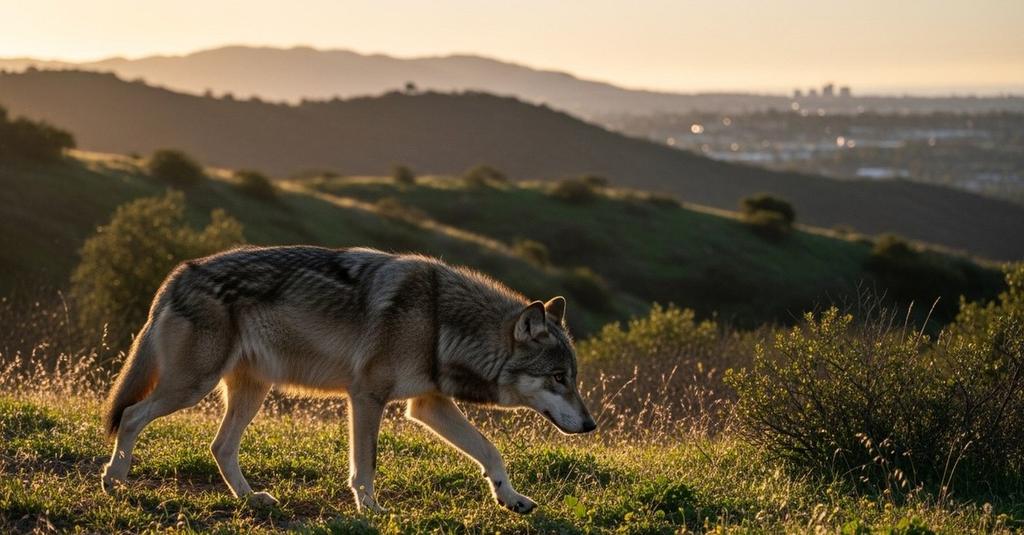
Picture this: a wolf walking through Los Angeles County in 2024. Nobody predicted it. The models said 2040 at the earliest — maybe never. Yet last week, wildlife biologists confirmed the presence of a lone female gray wolf in Los Angeles County, the first documented sighting of a gray wolf in Southern California in over a hundred years. She crossed four hundred miles of terrain that should have stopped her cold — freeways, suburbs, the ambient glow of a city that never fully goes dark. And she did it without a collar, without permission, without anyone noticing until the data caught up to what had already happened.
The California Department of Fish and Wildlife still doesn’t fully understand her route. She’s young. She’s alone. She almost certainly found a path that the formal connectivity models — the ones built by conservation planners to identify where large carnivores might move through fragmented habitat — didn’t predict existed. What it means, and what it reveals about the landscape we thought we understood: that’s the story worth telling.
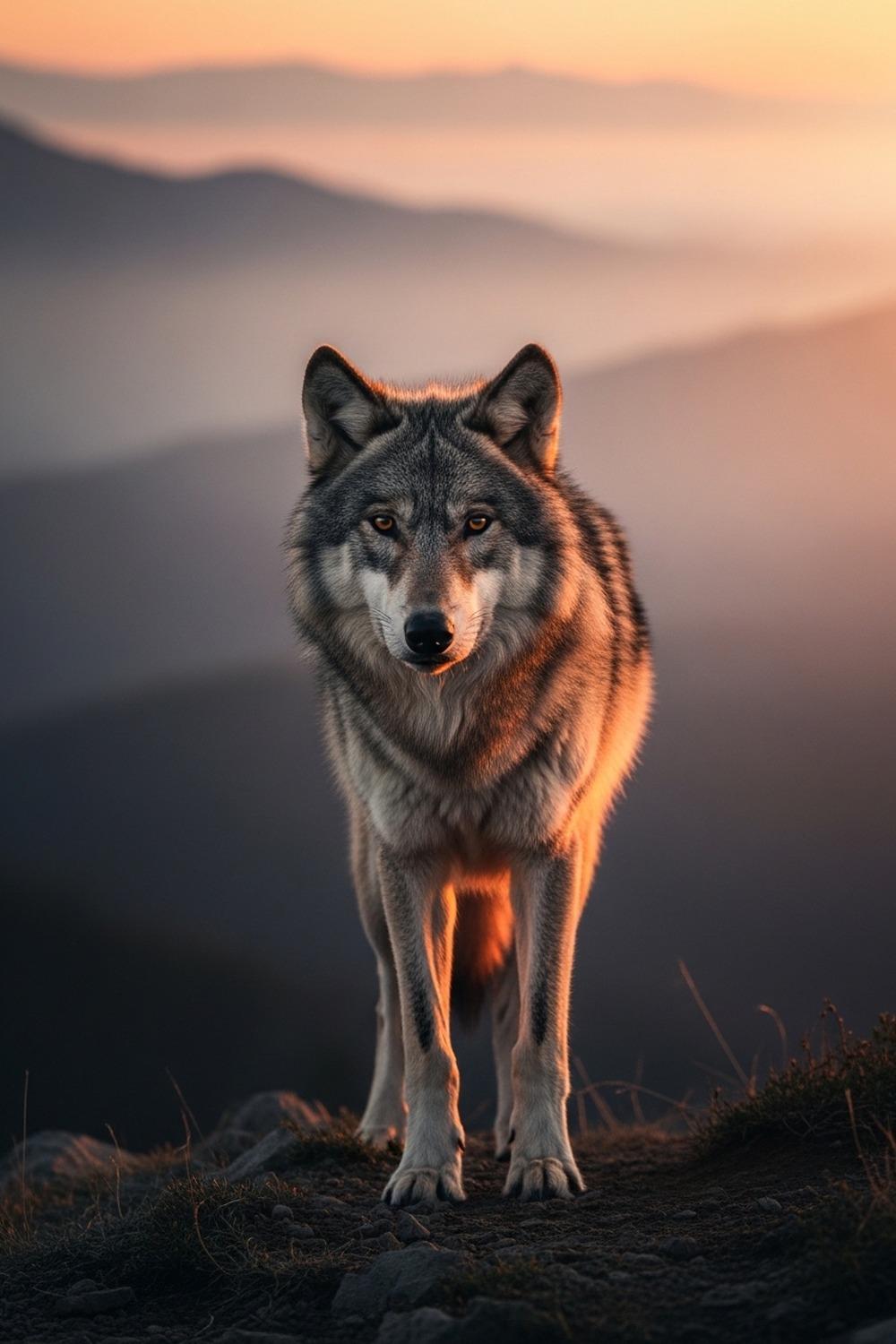
Key Facts
- In 2024, a lone female gray wolf was confirmed in Los Angeles County, the first documented gray wolf presence in Southern California in over 100 years.
- The female traveled an estimated minimum of 400 miles from the nearest established pack territory in Northern California.
- OR-7 became the first confirmed gray wolf in California in 87 years when he crossed from Oregon in 2011.
- California had at least 4 confirmed wolf packs as of 2023, all in the northern third of the state, with no model projecting a wolf reaching Los Angeles before 2040.
- In 1995, the U.S. Fish and Wildlife Service reintroduced 31 gray wolves into Yellowstone, triggering the most studied trophic cascade in North American history.
In short: A gray wolf in Los Angeles County was confirmed in 2024, the first in Southern California in over 100 years. The lone female traveled at least 400 miles from Northern California, decades ahead of models that predicted no wolf before 2040. Traveling at night through preserved habitat corridors, she proved the landscape remains more connected than expected.
A Hundred Years of Silence, Broken
Biologists with the California Department of Fish and Wildlife believe the female is likely connected to wolf lineages that reestablished in the northern part of the state after OR-7 — a now-legendary male gray wolf — crossed from Oregon into California in 2011, becoming the first wolf confirmed in California in nearly ninety years. What followed was slow and unannounced: a handful of packs forming in the Cascades and the Klamath Mountains, dispersing animals moving south in ones and twos, probing corridors through the Sierra Nevada and the Coast Ranges.
The recolonization of gray wolves in California has been one of the quietest conservation stories of the last decade. Each confirmed individual represents a decision made in the dark, a risk calculated by an animal following instincts older than any road that cuts across its path. In some ways, that’s what makes it the most remarkable.
She didn’t follow a wildlife corridor marked on any official map. That detail catches biologists off guard. She found a path the models missed — or she improvised one, stitching together patches of open space, mountain range, and scrubland in a route that only makes sense when you see the whole line drawn out across a map. And even then, it barely makes sense.
Tracking data is still being assembled. The distance she covered — likely somewhere north of four hundred miles from the nearest established pack territory — puts her in rare company even among dispersing wolves, which are already among the most wide-ranging terrestrial mammals on the continent.
What It Takes to Walk Through a City’s Shadow
There’s a version of this story that treats a wolf near Los Angeles as an anomaly — a freak event, a single animal making a once-in-a-century mistake. Ecologists who study large carnivore movement in fragmented landscapes will tell you something different. The Santa Monica Mountains, the San Gabriel range, the Tehachapi corridor form a patchwork of connected wildland that has, against considerable odds, remained functionally linked. Here’s the thing: if you’ve watched P-22 — the famous puma who spent over a decade living inside Griffith Park, a sliver of wilderness surrounded entirely by urban development — you know that Southern California’s mountains can shelter predators that most people thought had no refuge left.
Mountain lions have served as the inadvertent proof-of-concept for wolf recolonization in Southern California. If a large felid can survive — even thrive in patches — within the gravitational pull of a megacity, the habitat logic is at least partially transferable to wolves. But the behavioral differences matter. Wolves are more social, cover more ground, and have a more complex relationship with human proximity. A mountain lion will spend years in a park the size of a city block.
A wolf, by instinct, keeps moving.
That this female apparently moved through without triggering a livestock depredation event or a confrontation with a suburban neighborhood is, biologists note, both fortunate and instructive. She was using the dark. Movement recorded by remote cameras in the Tehachapi and San Gabriel passes shows the wolf traveling almost exclusively between dusk and pre-dawn. She read the human schedule and worked around it. That’s not luck — that’s a learned behavior, possibly inherited. Wolf populations that persist near human settlements show measurable shifts toward nocturnality within a few generations.
One Predator, an Entire Landscape Rewritten
Ecologists reach for the phrase trophic cascade — the ripple effect that moves through an ecosystem when a top predator reappears. The Yellowstone example dominates the literature. In 1995, the U.S. Fish and Wildlife Service reintroduced gray wolves into Yellowstone, and what followed rewrote the landscape’s physical structure in ways that still astound researchers. Elk stopped grazing in valley bottoms near rivers, because standing still in the open became dangerous again. Willows and aspens recovered along stream edges. Beavers returned. Rivers changed course. It’s one of the most documented examples of a single species rewriting a landscape, and the implications cascade downward from the predator all the way to the riverbanks.
Why does Yellowstone matter to Los Angeles? Because watching a species reorganize an entire ecosystem around its presence, you stop calling it a coincidence and start calling it evidence of what the landscape actually needs.
Southern California’s deer populations have expanded in the absence of large predators, concentrating in areas where they overgraze native vegetation and contribute to erosion on hillsides already stressed by drought and fire. Mule deer and black-tailed deer would shift their ranging patterns if a small wolf population established itself here — a significant leap from one lone female to an established pack, but the logic holds. Coyote populations, which typically contract under wolf pressure, might redistribute. The whole food web would feel it.
In a region where catastrophic wildfires are partly fueled by degraded, overgrazed vegetation, that’s not a trivial chain of consequence. None of this happens overnight. Trophic cascades unfold across decades, not seasons. But the gray wolf in Los Angeles County has already changed something: the conversation about what’s possible in the Southern California ecosystem, which most ecologists had quietly stopped having.
Gray Wolf in Los Angeles County: The Numbers Behind the Return
California’s wolf recovery has been methodical in its slowness. When OR-7 crossed the state line in 2011, he was a lone male wearing a GPS collar that turned him into one of the most closely monitored animals in North American wildlife history. By 2015, the Shasta Pack — California’s first confirmed wolf pack in roughly ninety years — had formed near Mount Shasta, documented by the University of California’s Wildlife Health Center and California Department of Fish and Wildlife through trail camera images and DNA analysis from scat samples.
By 2023, California had confirmed at least four established packs, all in the northern third of the state. None of the population models produced by those institutions in the period between 2015 and 2022 projected a wolf reaching Los Angeles County before 2040 at the earliest. The timeline just collapsed by two decades, minimum.
Dispersal distances for gray wolves are extraordinary by any large mammal standard. According to data compiled across North American populations, the average natal dispersal — the distance a young wolf travels from the pack it was born into before establishing its own territory — is approximately 60 miles. But outliers are dramatic. OR-7 himself traveled over 3,000 miles during his dispersal period. A female wolf designated OR-54 covered more than 8,700 miles of documented movement before her death in 2019, crossing Oregon, California, and Nevada. The female now confirmed in Los Angeles County fits a pattern: the animals making the longest journeys are disproportionately female, disproportionately young, and disproportionately the ones who end up changing what a species’ range map looks like.
California’s gray wolf is listed as an endangered species under both state and federal law, giving this female substantial legal protection. Any lethal response to her presence — from ranchers, from local authorities — would carry serious legal consequences. Wildlife managers are now in the position of monitoring an endangered predator inside one of the most densely populated counties in the United States, with no established protocol designed for exactly this scenario.
A City That Doesn’t Know It Has a Neighbor
Most of Los Angeles County’s ten million residents don’t know a wolf is out there. That gap — between what’s happening in the hills and what people are aware of — is not unusual in wildlife conservation, but here it takes on a particular texture. The Santa Monica Mountains National Recreation Area, a 153,000-acre unit of the National Park Service embedded in the urban matrix of greater Los Angeles, has been the site of some of the most intensive urban carnivore research conducted anywhere on earth. The NPS-led Santa Monica Mountains Carnivore Project has fitted mountain lions, bobcats, and coyotes with GPS collars since the early 2000s, generating two decades of movement data inside what amounts to a living laboratory surrounded by suburbs.
The wolf walked into the edge of this monitoring infrastructure. She may already be in the data without anyone having processed what they’re looking at.
Urban and peri-urban wildlife corridors are increasingly the frontier of conservation biology. Decades of land acquisition by organizations like the Trust for Public Land and the Santa Monica Mountains Conservancy created the connected open space that made the journey conceivable. Those acquisitions were made to protect native plants, provide recreation, manage wildfire. Nobody wrote “enable wolf recolonization” in the grant applications. But that’s what the land did, once the wolf decided to use it. And that’s how conservation actually works — you make the conditions, and then something wilder than your imagination uses them.
Stand in Malibu Creek State Park on a November evening. The coastal sage scrub smells of rain and dust. The hills go dark fast. Somewhere in those hills, or moving through them, is an animal that has crossed four hundred miles of a landscape defined by human presence and emerged on the other side, intact, uncollared, unannounced.
The city has no idea.
How It Unfolded
- Early 1900s — Gray wolves are systematically hunted and trapped out of Southern California, disappearing from the region entirely by approximately 1922.
- 2011 — OR-7, a GPS-collared male from Oregon’s Imnaha Pack, crosses into California, becoming the first confirmed gray wolf in the state in 87 years.
- 2015 — The Shasta Pack is documented near Mount Shasta, marking California’s first confirmed breeding wolf pack since the early twentieth century.
- 2023 — At least four established wolf packs confirmed across Northern California, with dispersing individuals tracked progressively further south each year.
- 2024 — A lone female gray wolf is confirmed in Los Angeles County, the first documented presence in the region in over a century, and the furthest south any wolf has been recorded in modern California history.
By the Numbers
- Approximately 100 years — the length of the gap between the last confirmed gray wolf in Southern California and the animal documented in Los Angeles County last week.
- 400+ miles — estimated minimum distance traveled by the lone female from the nearest established pack territory in Northern California.
- 4 confirmed packs — the number of established gray wolf packs in California as of 2023, all located in the northern third of the state (California Department of Fish and Wildlife).
- 1995 — the year U.S. Fish and Wildlife Service reintroduced 31 gray wolves into Yellowstone, triggering the most studied trophic cascade in North American history.
- ~10,000 gray wolves — the estimated population in the contiguous United States as of 2023, compared to a historical population estimated at up to 2 million before European settlement (U.S. Fish and Wildlife Service).
Field Notes
- OR-7, the wolf who triggered California’s modern recovery story, was tracked crossing Interstate 5 near the Oregon-California border in December 2011 — a detail that, at the time, biologists flagged as almost impossible. Wolves simply don’t cross eight-lane freeways (researchers actually call this a learned behavior that spreads through populations). Except they do, it turns out, when traffic is light and the night is dark enough.
- Gray wolves have been documented swimming across rivers more than a mile wide during dispersal movements — a capacity that makes the engineered barriers humans place in their path consistently less decisive than we expect.
- The Santa Monica Mountains currently support one of the highest densities of mountain lions relative to available habitat anywhere in the world, a fact that raises an unresolved question: how a newly arrived wolf would negotiate space with a resident puma population that has no evolutionary memory of wolves as competitors.
- Researchers still can’t reliably predict which individual wolves will become long-distance dispersers. GPS data from multiple packs shows that the longest journeys are made by animals that, prior to dispersal, showed no behavioral markers distinguishing them from wolves that traveled short distances. The trigger — if there is a consistent one — hasn’t been identified.
Frequently Asked Questions
Q: Is the gray wolf in Los Angeles County dangerous to people?
There are no documented cases of a healthy wild gray wolf killing a human in North America in modern recorded history. Gray wolves are naturally wary of people and actively avoid direct contact. The female confirmed in Los Angeles County has, by all available evidence, passed through populated areas without confrontation. The California Department of Fish and Wildlife advises residents in the region to secure livestock and report sightings, but characterizes the public safety risk as extremely low.
Q: How did a gray wolf reach Los Angeles County from Northern California?
Dispersing wolves are capable of traveling hundreds of miles through complex terrain over several months. Biologists believe this female used a combination of mountain ranges — most likely moving through the Sierra Nevada foothills, crossing the Tehachapi Mountains, and then navigating south through connected open spaces in Los Angeles County. She would have traveled primarily at night, crossing roads during low-traffic hours. The route, while extraordinary, follows habitat corridors that conservation land acquisitions over the past three decades have kept from closing entirely.
Q: Does one wolf mean wolves are “back” in Southern California?
Not yet — and this is a critical distinction. A single dispersing individual doesn’t constitute a population. For wolves to establish in Southern California, this female would need to find a mate, form a territory, and successfully raise pups — none of which is guaranteed, or even likely, given the absence of other wolves in the region. What her arrival does confirm is that the habitat connectivity exists to allow wolves to reach this area. Whether a self-sustaining population follows is a question that will take years, possibly decades, to answer.
Editor’s Take — Alex Morgan
The part of this story I can’t stop thinking about isn’t the wolf. It’s the corridors. Someone had to buy that land. Someone had to fight a zoning board, write a grant, argue in a county meeting that a scrubby hillside in the Santa Monica Mountains was worth preserving. They were thinking about native plants and fire management and places for kids to hike. They had no idea they were building a road back for a species that had been gone for a hundred years.
A gray wolf in Los Angeles County is not, in the end, a story about a lost animal. It’s a story about a landscape that turned out to be more intact than anyone gave it credit for — and a species that was waiting for exactly that fact to be true. Which raises the question that should probably follow every species we’ve ever written off: what else is out there, reading the landscape, waiting for the moment the math tips back in its favor?
Illustrations are AI-generated. Article fact-checked and human-edited. Our editorial standards.