When Wildlife Runs Out of Room: The Edge Effect Explained
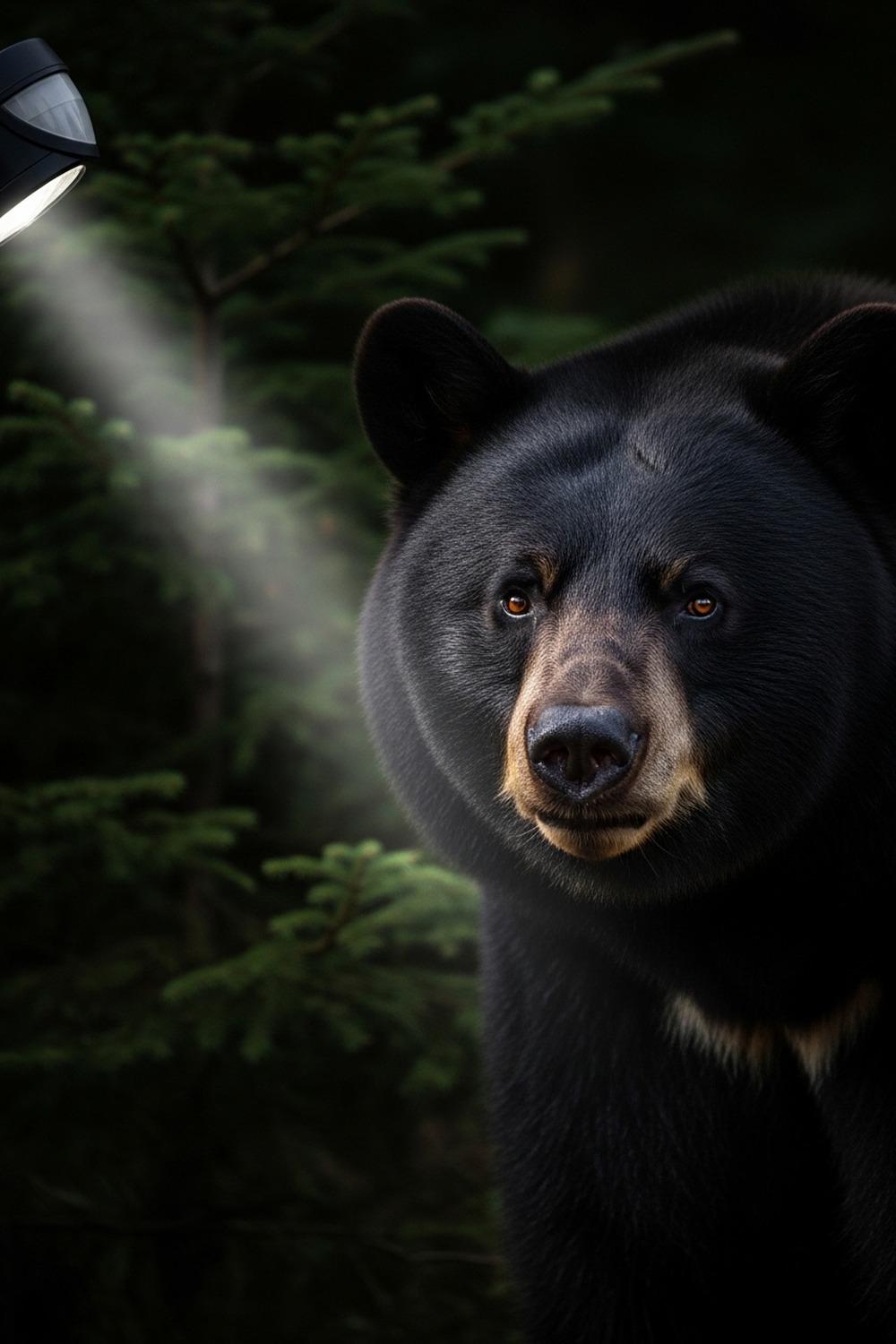
A bear stands at the edge of your lawn, blinking back at the motion-sensor light that just blinked on. This isn’t an invasion or a nuisance call — habitat fragmentation wildlife is the result of something far more deliberate: a species pushed to the margins of a shrinking world because the forest ran out first, and the bear came second.
Across the United States, approximately 6,000 acres of open land disappear under roads, rooftops, and parking lots every single day. Here’s the thing: forests don’t vanish in one dramatic clearing. They fracture slowly, divided into smaller and smaller islands of green surrounded by asphalt and fencing. Each cut changes the math for every animal that depended on what was there before.
Understanding why wildlife keeps showing up where humans don’t expect it starts with understanding what happened to the land those animals used to call interior.
Key Facts
- Approximately 6,000 acres of open land in the United States disappear under roads, rooftops, and parking lots every single day
- Robert MacArthur and E.O. Wilson published The Theory of Island Biogeography through Princeton University Press in 1967, establishing the mathematical framework for habitat fragmentation effects
- Research from the Brazilian Amazon’s Biological Dynamics of Forest Fragments Project (INPA, 1990s) showed ecological damage penetrates at least 300 meters into a forest edge
- New Jersey’s Division of Fish and Wildlife logged more than 5,000 black bear sightings in a single year, most within a half-mile of suburban development
- Brown-headed cowbird brood parasitism along forest edges has been linked to population declines of several interior-nesting songbird species across North America since at least the 1980s
In short: Habitat fragmentation forces wildlife into human spaces because forest interiors disappear first. About 6,000 acres of US land are developed daily. MacArthur and Wilson’s 1967 island biogeography framework shows smaller patches support fewer species, and Brazilian INPA research found edge effects penetrate 300 meters inward, meaning a 600-meter strip of trees has no true interior habitat.
How Fragmented Forests Reshape Animal Behavior
The science of habitat fragmentation wildlife impacts has been formally studied since at least the 1960s. Robert MacArthur and E.O. Wilson, two ecologists working in the late 1960s, gave researchers the theoretical framework that actually made sense of what happens when wild spaces get carved apart. Their 1967 book The Theory of Island Biogeography, published by Princeton University Press, argued that smaller habitat islands support fewer species — and that the relationship between size and biodiversity follows a predictable mathematical curve.
A patch of forest half the size of the original doesn’t support half the species. It supports far fewer. The fragmentation process doesn’t just shrink the land — it rewires the entire ecological network that depends on it.
What MacArthur and Wilson described in abstract terms, later field researchers began documenting in vivid, uncomfortable detail. Animals that require large territories — mountain lions, wolves, black bears, certain owl species — don’t adapt neatly to smaller patches. They push outward. They cross roads they wouldn’t have crossed before. They enter backyards searching not for food but for the kind of quiet, deep-cover habitat that used to exist a mile further in.
Why does this happen? Because the edge of a forest is loud, bright, smelling of exhaust and garbage — and no animal chooses it willingly.
In New Jersey, where black bear populations share space with one of the most densely developed states in the continental U.S., the state’s Division of Fish and Wildlife logged more than 5,000 bear sightings in a single year. Most were within a half-mile of suburban development. Not because bears had changed. Because the interior had.
The Edge Effect: Where Two Worlds Collide
Ecologists use the term “edge effect” to describe what happens at the boundary between two different habitat types — a forest meeting a meadow, or a wetland meeting a subdivision. In natural settings, these transitions can actually support a diversity of species, since animals from both sides can access resources from each.
But the edge effect created by human development is different in kind, not just degree. It’s sharp. It’s artificial. And it generates a cascade of changes that reach far deeper into the remaining forest than most people realize. Research from the Brazilian Amazon, published by the National Institute for Amazonian Research (INPA) in the 1990s as part of the long-running Biological Dynamics of Forest Fragments Project, showed that ecological damage from fragmentation penetrates at least 300 meters into a forest edge — meaning a narrow strip of trees just 600 meters wide has effectively no true interior habitat at all. This is the same forest that looks perfectly intact from a road or a satellite image.
The consequences go beyond where animals wander. Invasive plant species colonize edges more easily than interiors. Wind and sun penetration changes the microclimate of the remaining forest. Predator-prey dynamics shift in ways ecologists are still untangling (and this matters more than it sounds, because it cascades). Brown-headed cowbirds, which are brood parasites that lay their eggs in the nests of other birds, thrive along forest edges and have been directly linked to population declines of several interior-nesting songbird species across North America since at least the 1980s.
The edge actively eats the interior alive.
Fragmented forest patches that look stable from above are often in slow ecological freefall from within. Just as the eyelash viper of Costa Rica’s cloud forests depends on a specific microhabitat that can vanish with a single logging road, every interior specialist carries a narrow margin for error. Field ecologists sometimes call the process “death by a thousand cuts.” Each new subdivision, each new highway, each new utility corridor seems minor on its own. Collectively, they transform a continent’s worth of connected wild land into a scattering of isolated green islands, each one slowly losing species it can no longer support.
Wildlife Corridors and the Science of Reconnection
Not all the news is grim. Over the past three decades, conservation biologists have developed a practical, evidence-backed response to the worst effects of habitat fragmentation wildlife loss: the wildlife corridor. These are strips of habitat — sometimes natural, sometimes restored — that connect isolated patches of forest or grassland, allowing animals to move safely between them. The concept is elegantly simple. The execution is enormously complex.
Building a functional corridor requires negotiating land rights, coordinating with highway departments, and persuading developers to leave strategic gaps in otherwise wall-to-wall construction. But where corridors have been built, the results are documented and compelling. A long-term study reviewed by National Geographic found that wildlife corridors in fragmented landscapes increased species richness by up to 50 percent compared to isolated habitat patches of the same size — a finding that has reshaped conservation planning across multiple continents.
Southern California offers the most visible example of urgency in action. The National Wildlife Federation and Caltrans jointly funded the Wallis Annenberg Wildlife Crossing — a 210-foot-wide land bridge over U.S. Highway 101 in Agoura Hills, completed in 2023. It’s designed specifically to allow mountain lions, mule deer, coyotes, and dozens of other species to cross safely between the Santa Monica Mountains and wildlands to the north. The mountain lion known as P-22, who famously spent more than a decade living in Griffith Park after crossing two major freeways as a young cat, died in 2022 before the crossing opened. He’d made it across on raw luck. Future generations of his kind won’t need luck — they’ll need the corridor.
And this reframes how researchers think about minimum viable habitat entirely. Connectivity matters as much as patch size. A smaller patch that’s linked to others can sustain populations that a larger but isolated patch cannot.
Habitat Fragmentation Wildlife Numbers: The Hidden Casualty Count
Counting the dead is hard when no one’s watching the forest disappear. Researchers at the University of Queensland, in a landmark 2019 analysis published in the journal Science, attempted to quantify the global scale of the problem. They found that habitat fragmentation has left roughly 70 percent of the world’s remaining forest within one kilometer of a forest edge — meaning most of what we call “forest” on this planet is, by ecological definition, edge habitat. The study estimated that fragmentation has reduced the effective area of the world’s forests by nearly 20 percent beyond what simple deforestation figures would suggest.
The forest is there on the map. It just doesn’t work the way a forest is supposed to work.
In North America, the numbers land differently but no less heavily. According to the U.S. Geological Survey, more than 400,000 miles of roads now cross national forests and grasslands in the United States alone. Each road is a barrier. Each barrier is a filter. Species that can’t cross roads safely — or won’t — get genetically isolated within a single patch. Over generations, inbreeding reduces fitness. Small populations become fragile populations. Fragile populations become locally extinct populations.
The Florida panther, with fewer than 200 individuals remaining as of recent estimates, carries the genetic scars of this process literally in its DNA, including kinked tails and heart defects caused by inbreeding in an isolated Southern Florida population. Wildlife managers in Florida launched a deliberate genetic rescue program in 1995, introducing eight Texas pumas into the panther’s range. It worked. Kitten survival rates increased. The population stabilized. It was crisis management, not prevention — but it showed that habitat fragmentation wildlife damage isn’t always irreversible, if there’s political will and enough time left on the clock.
What Comes Next: Designing for a Fragmented Future
Conservation in the 21st century can’t afford to be purely defensive. Protecting what’s left is necessary but insufficient. The emerging field of landscape ecology — pioneered in part by researchers at the University of Wisconsin-Madison and institutionalized through organizations like the Wildlife Conservation Society — argues that human land use and wildlife habitat aren’t inherently incompatible, but they require deliberate design rather than default development.
Some of the most promising work is happening in cities. Chicago’s Forest Preserves system, which encircles the metropolitan area with more than 70,000 acres of protected land, is being actively studied as a model for how urban greenspace can buffer core habitat. It’s imperfect. But it’s functional. And watching a landscape actually heal after decades of fragmentation, you start to understand what we’ve been losing — not in theory, but in the way the ecosystem actually moves.
Species don’t go extinct the moment their habitat gets fragmented — they go extinct slowly, as populations shrink below reproductive viability, as genetic diversity collapses, as one bad winter or one bad disease outbreak hits a population too small to absorb the loss. Conservation biologists call this “extinction debt”: the species that are already ecologically doomed, still walking around, still triggering your motion-sensor light at 2 a.m., but functionally on borrowed time. The debt gets called in years or decades later, long after the parking lot that sealed their fate has been repaved twice.
In Yellowstone, reintroduced wolves have partially restored the ecological processes that fragmentation and predator removal had disrupted for decades. Rivers changed course. Vegetation recovered. The lesson isn’t just about wolves. It’s about what whole, connected ecosystems actually do — and what they stop doing the moment you start cutting them apart.
How It Unfolded
- 1967 — Robert MacArthur and E.O. Wilson publish The Theory of Island Biogeography, providing the first rigorous framework for predicting species loss in fragmented habitats.
- 1979 — The Biological Dynamics of Forest Fragments Project launches in the Brazilian Amazon, becoming the world’s longest-running experimental study of habitat fragmentation effects.
- 1995 — Florida’s genetic rescue program for the Florida panther introduces Texas pumas, demonstrating that managed genetic intervention can reverse some fragmentation damage.
- 2023 — The Wallis Annenberg Wildlife Crossing over U.S. Highway 101 in California opens, marking the largest wildlife overpass in North America and a milestone in urban corridor design.
By the Numbers
- 70% of the world’s remaining forest lies within one kilometer of a forest edge (University of Queensland, 2019, published in Science).
- 6,000 acres of open land are converted to developed use every day in the United States (American Farmland Trust).
- 400,000+ miles of roads cross U.S. national forests and grasslands, fragmenting habitat across every major biome (U.S. Geological Survey).
- 300 meters: the minimum depth of ecological damage measurable from a human-created forest edge (INPA Biological Dynamics of Forest Fragments Project).
- 50% increase in species richness observed in fragmented habitats connected by wildlife corridors versus isolated patches of equivalent size.
Field Notes
- In 2012, a mountain lion designated P-22 crossed both the 405 and 101 freeways in Los Angeles — two of the busiest highways in the country — to reach Griffith Park, where he lived alone for over a decade. Researchers only confirmed the crossing via GPS collar data reviewed months later. No one saw it happen.
- Forest fragmentation doesn’t just affect large mammals. Dung beetles — critical seed dispersers in tropical forests — show measurable population collapse in patches smaller than 10 hectares, even when the patch looks visually intact and healthy.
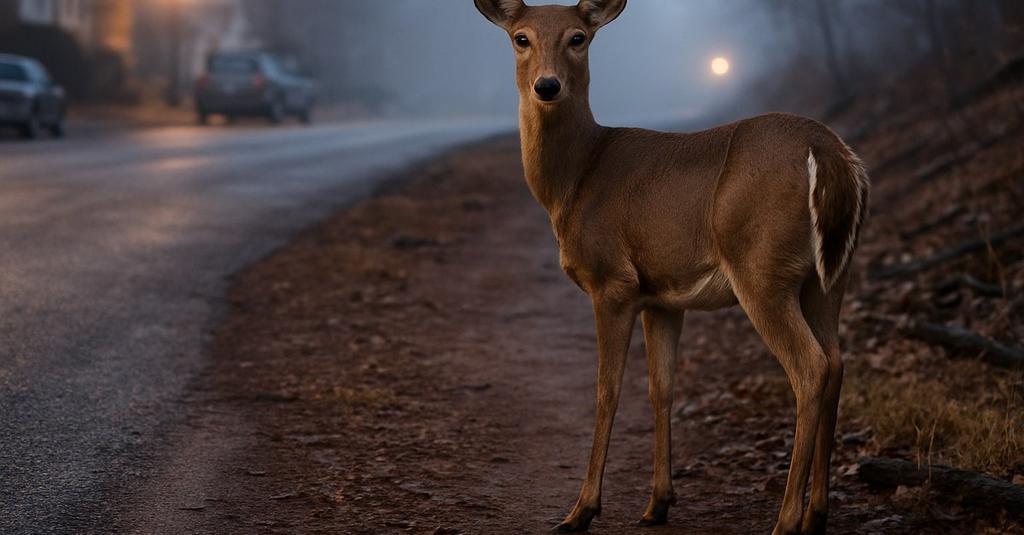
- Some species actually increase in number along forest edges immediately after fragmentation — white-tailed deer and raccoons among them — which can mask the simultaneous collapse of interior specialists and make fragmentation appear less damaging than it is.
- Researchers still can’t reliably predict the exact threshold patch size at which a given species will begin declining. The relationship appears to vary significantly by species, landscape context, and the quality of the surrounding matrix — and no universal formula has yet emerged despite decades of field data.
Frequently Asked Questions
Q: What exactly is habitat fragmentation wildlife loss, and why does it matter more than outright deforestation?
Habitat fragmentation wildlife loss occurs when continuous wild habitat is divided into smaller, isolated patches by roads, development, or agriculture. It’s distinct from total deforestation because the trees may still exist — but the ecological function breaks down. Interior-dependent species lose the deep-cover habitat they need. Even a 50% size reduction can eliminate far more than 50% of the species a habitat once supported, because the relationship between patch size and biodiversity isn’t linear.
Q: Why do wild animals keep appearing in suburban areas more frequently than they used to?
It’s rarely about animals becoming bolder or habituated to humans. It’s about the interior habitat they need ceasing to exist at viable scale. When forests fragment, animals that once ranged across large connected territories find themselves in shrinking patches. They don’t choose suburban edges — they exhaust the alternatives first. What looks like encroachment from a backyard perspective is, from the animal’s perspective, a last resort after the interior options disappeared. The development came first. The animal followed the only remaining gap.
Q: Don’t wildlife corridors just guide animals into more dangerous areas near roads and people?
This is a common misconception. Well-designed wildlife corridors are specifically engineered to reduce road mortality, not increase it. Overpasses and underpasses route animals away from traffic rather than across it. Studies from Banff National Park in Canada, where wildlife crossing infrastructure has been in place since the late 1990s, show an 80% reduction in large mammal road mortality in the years following corridor installation. The goal is connectivity without exposure — and the data from established corridors consistently supports that the design works.
Editor’s Take — Alex Morgan
What stops me about this story isn’t the bear on the porch. It’s the extinction debt concept — the idea that species are already functionally doomed and still walking around, and that the decisions which sealed their fate were made years ago, by people who never thought about animals at all. We tend to mark conservation failures at the moment a species disappears. The real failure happened the day someone approved the subdivision that cut the last corridor in half. The disappearance is just the paperwork.
Every bear that triggers a motion-sensor light, every coyote caught on a doorbell camera, every mountain lion photographed padding through a parking garage at 3 a.m. — they’re not messengers, exactly, but they’re carrying information we should probably read more carefully. The question isn’t why wildlife keeps showing up in human spaces. The question is how long we’ll keep designing a world with no room for anything else, and what the landscape looks like — and sounds like, and doesn’t sound like — when the last animals finally stop trying to find a way through.
“
Illustrations are AI-generated. Article fact-checked and human-edited. Our editorial standards.