Tokyo’s Office Cats Have Business Cards and Real Job Titles
Somewhere in Tokyo right now, a cat named Auditor is probably sleeping on someone’s keyboard. That cat has a job title. That cat has business cards.
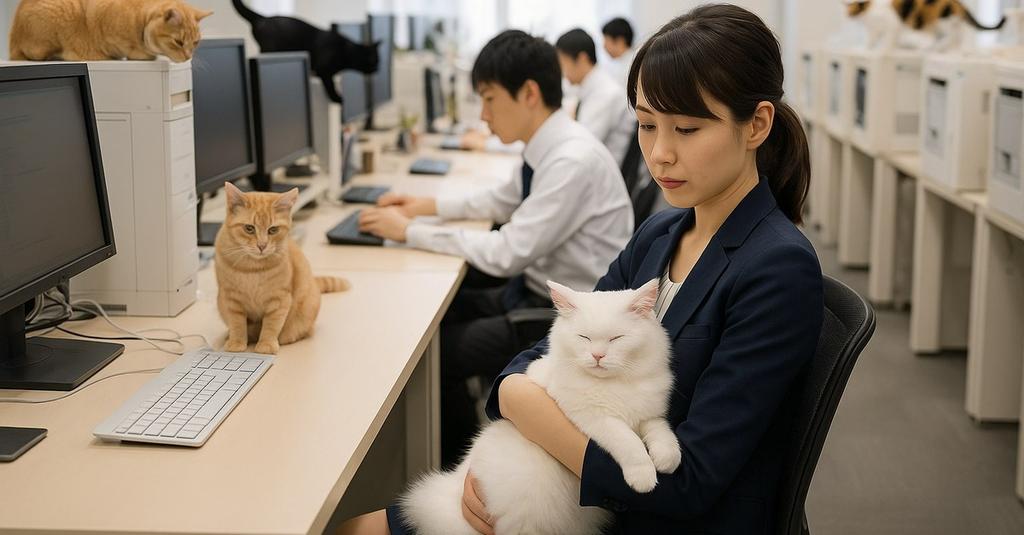
Qnote Inc. didn’t mean for this to happen. Back in 2004, when the software company adopted its first cat, nobody was thinking about organizational restructuring. Twenty years later, eleven cats roam the office with official titles printed on cardstock. One oversees operations. Another handles quality control by wandering between desks and judging your work ethic. The whole building got rebuilt around them — custom shelving at three different heights, scratch-resistant surfaces, twelve dedicated bathrooms. The cats didn’t adapt to the workspace. The workspace folded itself around the cats.
Key Facts
- Qnote Inc. in Tokyo adopted its first office cat in 2004 and now has eleven cats with official titles printed on business cards
- Qnote rebuilt its office around the cats with custom shelving at three heights, scratch-resistant surfaces, and twelve dedicated cat bathrooms
- Ten minutes with a cat measurably reduces cortisol, documented in controlled studies by Dr. Sandra Barker at Virginia Commonwealth University
- Japan’s Ministry of Health recorded over 2,000 official karoshi (death from overwork) claims in 2022 alone
- Japan’s pet cat population exceeded 9.4 million in 2023
In short: The Tokyo office cats of Qnote Inc. are eleven felines with official job titles and business cards, working in a building rebuilt around them since 2004. Against Japan’s karoshi culture, with over 2,000 overwork-death claims in 2022, the program leverages research that ten minutes with a cat measurably lowers cortisol.
How This Became Real
Here’s the thing about Qnote’s feline staff: they’re not mascots, not props, not some viral marketing stunt that looked good for three months. The titles are real. The business cards are real. Visitors collect them.
Researchers studying animal-assisted interventions have long known that ten minutes with a cat drops cortisol levels measurably. Dr. Sandra Barker at Virginia Commonwealth University and others documented it in controlled studies. But Qnote asked a different question: what if you didn’t just *interact* with a cat for ten minutes? What if the cat was your coworker?
Employees report stronger team bonds and lower stress. In Japan, where this kind of workplace wellness rarely goes beyond a vending machine, that matters.
That last fact kept me reading for another hour.
The Context You Need to Understand Why This Isn’t Cute
Japan has a word: karoshi. Death from overwork. It’s not metaphorical. It’s legally recognized. People die from their jobs, and the government has to have a category for it.
The labor culture is that intense.
Japan runs national campaigns just trying to convince workers to take vacations they’ve already earned. The government has to tell people to go home. Against that backdrop, Qnote’s decision to fill an office with cats and rebuild the entire building around them reads less like a quirk and more like something else entirely — a quiet institutional rebellion against a system that’s grinding people into dust. You can read more about unconventional workplace cultures around the world at this-amazing-world.com.
And it’s working. Staff loyalty at a cat-friendly office, in a country where burnout is endemic? That’s not a perk. That’s a signal.
The Architecture of It
Qnote renovated.
Not in the way most companies do — where they throw in a ping-pong table and call it culture. They actually rebuilt the space. Twelve dedicated cat bathrooms. Custom wall shelving at varying heights so the cats could move through the building vertically, never touching the floor unless they wanted to. Scratch-resistant surfaces everywhere. Surfaces that could survive being lived in by eleven independent creatures with claws and opinions.
That’s not a pet-friendly policy. That’s architecture. The cats are residents. The humans are visitors who happen to work there.
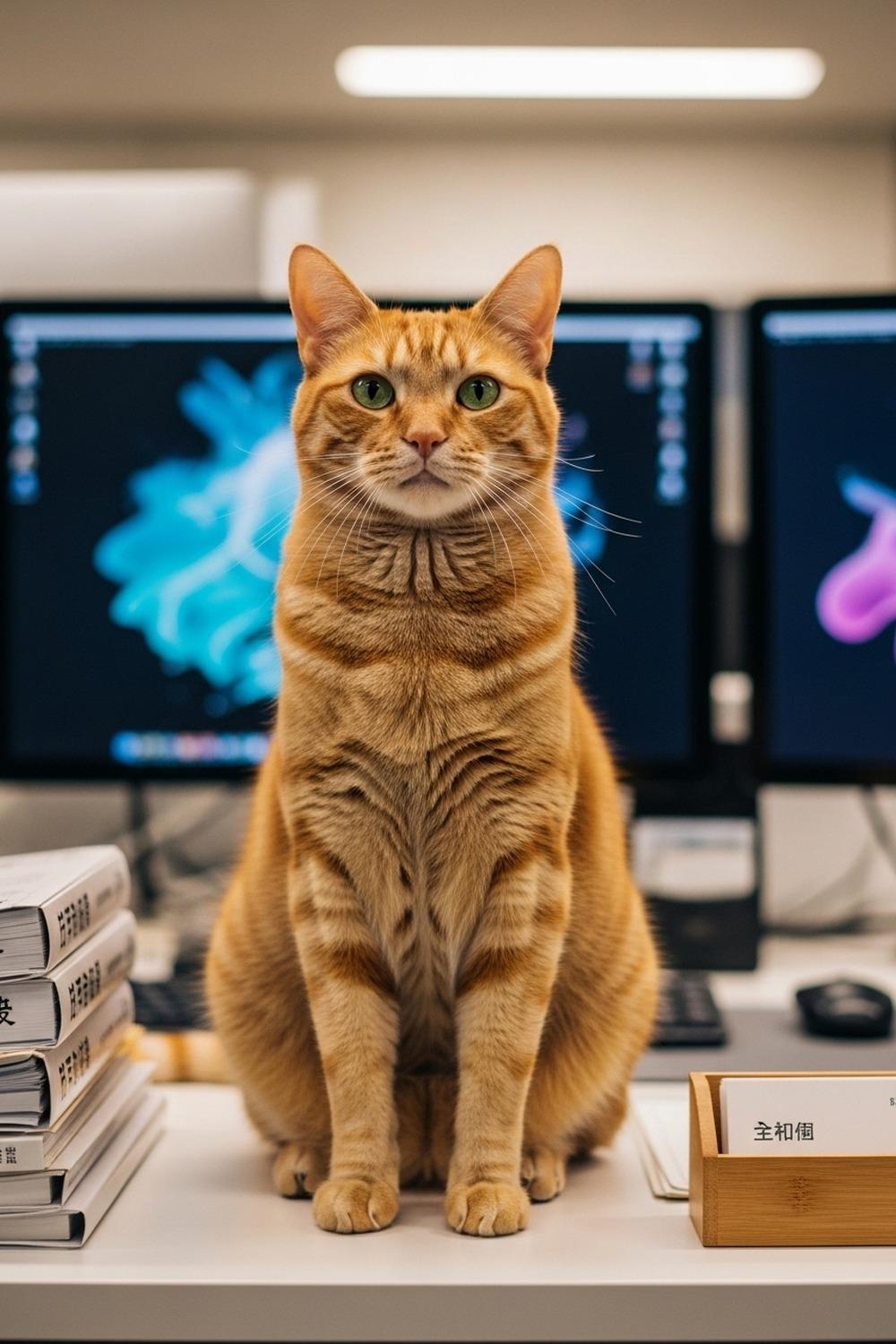
The Business Cards
Each title matches the cat’s actual behavior. A cat that supervises others became manager. One that drifts between desks auditing activity? Auditor. The cards look like human employee cards — name, title, company — and people actually collect them.
It sounds absurd. Then you realize what it does: it creates shared language. Employees aren’t just petting a cat anymore. They’re interacting with the auditor. That reframe has weight. It shifts the interaction from distraction to something almost collegial.
And collegial changes everything about how a brain processes stress.
What the Numbers Show
- Japan’s Ministry of Health recorded over 2,000 official karoshi claims in 2022 alone — widely considered an undercount due to strict reporting standards.
- Ten minutes with a cat reduces cortisol by a measurable margin.
- Qnote has run its cat office program for over 20 years — one of the longest-running corporate cat programs anywhere.
- Japan’s pet cat population exceeded 9.4 million in 2023. Cat cafés number in the hundreds in Tokyo alone, suggesting the country treats cats as emotional infrastructure.
The Details
- Some cats needed weeks to adjust — they hid before they started showing up at desks uninvited.
- The cats are indoor-only and receive veterinary care as a legitimate business expense — not a personal perk, but an operational cost.
- Japan’s first cat café opened in Osaka in 2004. The same year Qnote adopted its first cat. The same cultural moment, maybe. The same instinct about what humans actually need in cities.
What This Actually Means
The story isn’t about cats. It’s about what workplaces are willing to admit they owe their employees.
Qnote made a bet in 2004: people do better work when they feel better. Then they spent two decades proving it. They didn’t wait for a study. They just renovated and printed the business cards and waited to see what would happen.
People stayed. Showed up. Stopped burning out as fast.
In a country still grappling with productivity culture’s body count, that’s not a small experiment. That’s a blueprint.
There’s a version of this that scales. Not necessarily the cats — though honestly, why not — but the underlying principle: the physical and emotional texture of a workspace determines what people can actually produce. You can optimize processes forever, or you can hire an auditor who naps on the printer and watch what shakes loose.
Qnote’s cats clock in every day without knowing they’re part of a decades-long argument about how humans should be treated at work. They just find the warm laptop and settle in. And somehow, that’s enough to change everything about the room. If this kind of story keeps you reading past midnight, there’s more at this-amazing-world.com — and the next one is even stranger.
“
Frequently Asked Questions
Q: What are the Tokyo office cats at Qnote Inc.?
The Tokyo office cats are eleven felines employed at the software company Qnote Inc., each with an official job title printed on real business cards that visitors collect. One cat oversees operations as a manager; another, named Auditor, handles quality control by wandering between desks. The titles match each cat’s actual behavior. Qnote adopted its first cat in 2004, and over twenty years the program grew into one of the longest-running corporate cat programs anywhere.
Q: How did Qnote redesign its office for the cats?
Qnote did not simply add a pet-friendly policy; it rebuilt the space. The renovation included custom wall shelving at three different heights so cats could move vertically through the building without touching the floor, scratch-resistant surfaces throughout, and twelve dedicated cat bathrooms. The cats are indoor-only and receive veterinary care as a legitimate business expense rather than a personal perk. As the company frames it, the cats are residents and the humans are visitors who happen to work there.
Q: Is there science behind cats reducing workplace stress?
Yes. Researchers studying animal-assisted interventions, including Dr. Sandra Barker at Virginia Commonwealth University, have documented in controlled studies that roughly ten minutes spent with a cat measurably reduces cortisol levels. Qnote extended that idea by making the cat a coworker rather than a brief interaction. Employees report stronger team bonds and lower stress, which matters in Japan, where workplace wellness rarely extends beyond a vending machine.
Q: Why does this matter in the context of Japanese work culture?
Japan has a legally recognized term, karoshi, meaning death from overwork, and its Ministry of Health recorded over 2,000 official karoshi claims in 2022 alone, widely considered an undercount. The government runs national campaigns urging workers to take earned vacations. Against that backdrop, an office rebuilt around eleven cats reads less like a quirk and more like institutional rebellion. Japan’s pet cat population exceeded 9.4 million in 2023, suggesting cats are treated as emotional infrastructure.
Illustrations are AI-generated. Article fact-checked and human-edited. Our editorial standards.