The Husky Trait That Kept Arctic Families Alive for Centuries
So there’s this thing about Siberian Huskies that nobody talks about until you’re reading about sled dogs at 2 a.m. and suddenly realize: these dogs were literally bred to disobey. Not because they’re stubborn. Because saying no to the wrong command used to mean the difference between your family living and your family drowning in frozen ocean.
That’s not a training quirk. That’s 3,000 years of survival encoded into a dog’s nervous system.
Picture it: northeastern Siberia, January, 2 a.m., pitch black. A sled team moving fast across sea ice that’s maybe solid and maybe isn’t. The musher can’t see what’s ahead. Can’t hear the groan of ice under pressure. Can’t feel the subtle shift that says a crack is forming. But the lead dog already knows. It’s already turning the team around — straight-up ignoring the command to go forward.
Key Facts
- The Chukchi people selectively bred Siberian Huskies for roughly 3,000 years, prioritizing judgment over raw pulling power
- The Chukchi traveled up to 1,000 miles per season across Arctic terrain
- The Iditarod sled dog race covers 1,049 miles from Anchorage to Nome, with finishing teams averaging 8 to 15 days
- A racing husky’s metabolism can burn up to 12,000 calories per day, roughly six times a normal large dog’s needs
- Duke University’s Canine Cognition Center documented that huskies retain unusually high ‘autonomous decision-making’
In short: Siberian Husky intelligent disobedience is the bred-in ability of lead sled dogs to override a human’s unsafe command, a trait the Chukchi people selected for over roughly 3,000 years of Arctic survival. Dogs that blindly obeyed onto cracking sea ice died, so judgment was favored. Guide-dog training for the blind later borrowed the same concept.
How the Chukchi Built a Dog That Thinks
The Chukchi people weren’t trying to breed pulling power. They were trying to breed judgment.
For thousands of years, the Chukchi traveled up to 1,000 miles per season across terrain that doesn’t forgive mistakes. That meant dogs couldn’t just be fast or strong. They had to be able to read a situation — a shift in ice, a change in wind, the sound of their own weight on snow — and make a call. A correct call. The kind that keeps you alive.
So here’s what happened: dogs that blindly followed commands died. Their genes didn’t pass on. Dogs that looked at a situation and thought *wait, no, I’m not doing that* — those dogs lived. Their pups inherited it. You do that for 3,000 years and you’ve built something that looks less like obedience training and more like engineering.
I kept reading about this for hours because the more I dug, the more I realized nobody really talks about how *intentional* it was.
What Sled Mushers Know That Nobody Else Does
In police work, in the military, in search and rescue — obedience is law. A dog that ignores a command is a problem.
But sled dog culture figured out something completely different a long time ago. The best lead dogs aren’t the most obedient ones. They’re the ones with enough confidence to override a human’s mistake. The relationship runs both directions. It’s honestly one of the strangest human-animal partnerships that exists.
Mushers in the Iditarod — that’s the 1,000-mile race from Anchorage to Nome — they talk about their lead dogs like pilots talk about autopilot with better instincts than the instrument panel. You point and you hope. The system does the actual thinking.
And it works.
The Iditarod Is Proof This Still Works
The race crosses mountains, river ice, tundra, coastal sea ice, sometimes in whiteout visibility with temps dropping past -50°F. Lead dogs are reading trail conditions the whole time. They’re detecting overflow ice hidden under fresh snow. They’re pacing the team to avoid exhaustion that could kill.
Mushers will tell you straight: the best lead dogs flatly refuse compromised trails, even under direct command to continue.
This isn’t stubbornness.
This is exactly what got selected for. And here’s the part that kept me reading: these dogs aren’t following a scent or reacting to obvious danger. They’re picking up on things — changes in how the snow resonates under paws, wind shifts, how the team behind them is moving — and synthesizing a decision in maybe two seconds. No human could process that fast.
Which raises the question researchers are only starting to actually investigate: how much is learned and how much is something built into the circuitry?
The Science of a Dog That Knows Better Than You
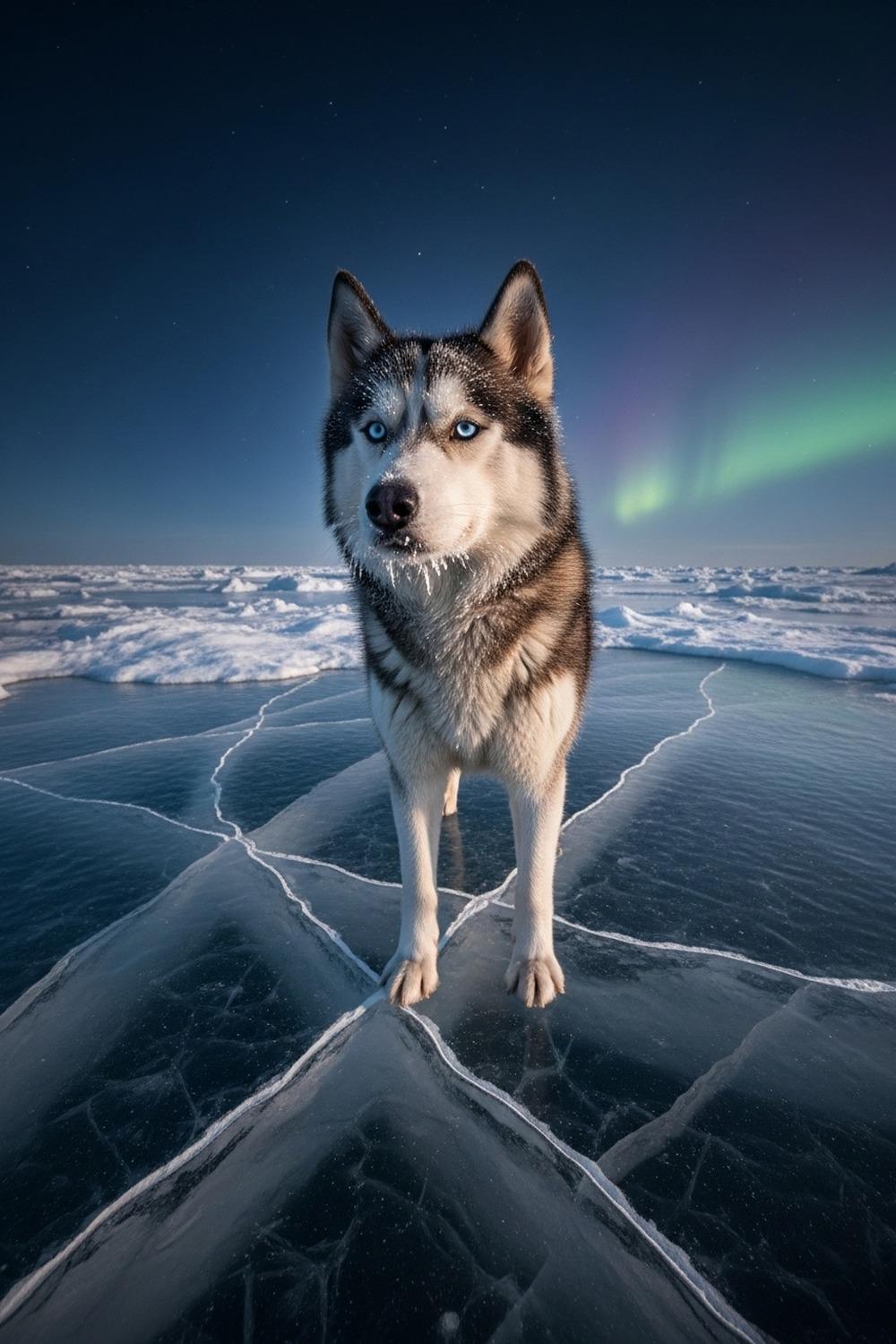
Turns out canine cognition research is finally catching up to what Arctic mushers have known intuitively for centuries. Duke University’s Canine Cognition Center has documented that dogs are uniquely wired — compared to basically every other domesticated animal — to read human social cues *and* independently assess environmental risk. Huskies specifically retain what researchers call “autonomous decision-making” at levels way higher than breeds selected purely for compliance.
It’s not disobedience. It’s how they’re built.
Here’s the part that’s genuinely strange: guide dogs for the visually impaired are specifically trained to disobey commands that would walk their handler into traffic. That training program didn’t invent the concept. It borrowed it. From huskies. From 3,000 years of Arctic breeding. The husky was doing it long before anyone wrote a manual about it.
By the Numbers
- 3,000 years of selective breeding by the Chukchi people, which makes the husky one of the oldest deliberately developed working breeds on record.
- The Iditarod Trail covers 1,049 miles — that’s the symbolic distance, reflecting Alaska as the 49th state — and finishing teams average somewhere between 8 and 15 days of continuous travel.
- -60°F with wind chill. That’s what mushers face. A single wrong trail decision at that temperature is fatal within minutes.
- A husky’s metabolism during peak racing burns up to 12,000 calories per day. That’s roughly six times what a regular large dog needs. These animals are built for something most dogs will never experience.
Field Notes
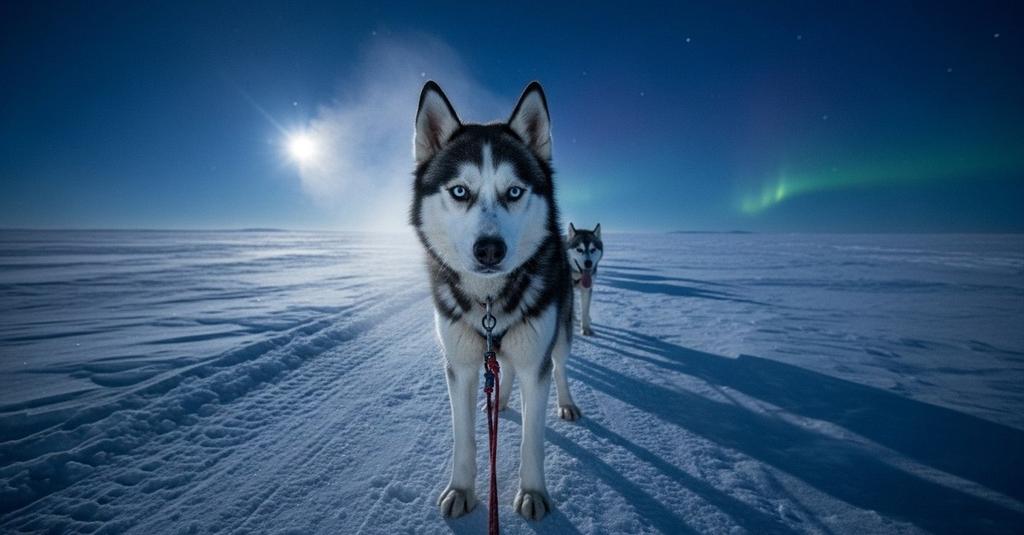
- The double coat is so insulated that huskies sleep comfortably in snow at -50°F by curling their tail over their nose, using special dense underfur that evolved specifically for face protection during sleep.
- Almond-shaped eyes that narrow against snow glare. Heterochromia — those striking different-colored eyes — doesn’t affect their low-light vision at all.
- The Chukchi let their sled dogs live inside family shelters during winter, treating them as household members. That’s unusual. That probably accelerated everything — how fast they learned to read human behavior, how nuanced their decisions became. Explore more about extreme animal adaptations at this-amazing-world.com.
Why This Matters Now
We’re spending billions right now trying to build autonomous systems — self-driving cars, algorithmic trading, drones that navigate without human input — machines that can assess complex situations and override flawed human instructions in real time. We think we’re inventing something new.
The Chukchi built that system in a living animal. No computers. No neuroscience. Just observation, repetition, and the relentless filter of survival. Siberian Husky intelligent disobedience is, in a really quiet way, one of the most sophisticated engineering achievements in human history. We just didn’t call it engineering because it was biological.
It also breaks something we usually assume about intelligence. We treat obedience as the marker of a well-trained mind — in dogs, in employees, in students. In systems. But the Arctic taught a different lesson. Sometimes the most valuable thing a partner can do is tell you no.
The husky didn’t become remarkable by learning to follow perfectly. It became remarkable by learning when *not* to. That’s the trait the Chukchi protected for three thousand years. That’s the trait that still pulls teams through blizzards. Some wisdom survives because it’s written down. Some survives because it’s encoded. If this kind of story keeps you reading past midnight, there’s more at this-amazing-world.com — and the next one is even stranger.
Frequently Asked Questions
Q: What is Siberian Husky intelligent disobedience?
It is the ability of a Siberian Husky, especially a lead sled dog, to refuse a human command that would lead the team into danger, such as crossing cracking sea ice. The Chukchi people bred this trait over roughly 3,000 years because dogs that blindly obeyed often died, ending their bloodlines. It is not stubbornness but a survival-driven form of independent judgment encoded through selective breeding.
Q: Why did the Chukchi breed huskies to disobey?
The Chukchi traveled up to 1,000 miles per season across Arctic terrain that punished mistakes, including unstable sea ice a musher could not see, hear, or feel shifting. Dogs that read a dangerous situation and refused a flawed command survived and passed on their genes; dogs that blindly obeyed died. Over about 3,000 years this filter produced an animal bred for judgment rather than pure pulling power or obedience.
Q: Do sled dog races still rely on this trait today?
Yes. In the Iditarod, a 1,049-mile race from Anchorage to Nome run in temperatures dropping past -50 degrees Fahrenheit, lead dogs read trail conditions continuously, detecting hidden overflow ice and refusing compromised trails even under direct command. Mushers say the best lead dogs flatly reject unsafe routes. A single wrong trail decision at -60 degrees Fahrenheit with wind chill can be fatal within minutes, so that judgment still matters.
Q: How is husky disobedience connected to guide dogs?
Guide dogs for the visually impaired are specifically trained to disobey commands that would walk their handler into traffic, a practice known as intelligent disobedience. That training did not invent the concept; it borrowed it from huskies and roughly 3,000 years of Arctic breeding. The husky was overriding unsafe human commands long before anyone wrote a formal manual describing the behavior for assistance dogs.
Illustrations are AI-generated. Article fact-checked and human-edited. Our editorial standards.