The Man Who Forgot He Was Missing for 30 Years
What if the person you become is so complete, so convincing, that neither you nor anyone around you realizes you’ve stopped being yourself? Edgar Latulip lived as a stranger in a city 130 kilometres from his own family for thirty years, and dissociative fugue identity loss had erased the fact that he was missing at all.
In 1986, Latulip vanished from Ontario, Canada. A head injury scrambled something fundamental — the neural architecture that holds identity in place. He settled in St. Catharines. He built a life. He answered to a name that wasn’t his. For three decades, his family existed in a strange suspension: not grieving, not quite hoping. Then it started to crack. Fragments. Pressure. A social worker ran a search. The answer had been waiting the entire time, 130 kilometres away.

Key Facts
- Edgar Latulip disappeared from Ontario, Canada, in 1986 following a head injury and lived under a new identity for about 30 years
- He settled in St. Catharines, roughly 130 kilometres from his original home
- In 2015, a social worker searched his name online and matched him to a decades-old missing persons case, confirmed by DNA testing
- Dissociative fugue is estimated to affect about 0.2% of the general population, per DSM-5 clinical data
- The DSM-5 reclassified dissociative fugue as a specifier within dissociative amnesia in 2013
In short: Dissociative fugue identity loss is a condition in which a person loses autobiographical memory and adopts a new, functioning identity without realizing anything is wrong. Edgar Latulip lived this for about 30 years after a 1986 head injury, settling 130 kilometres from home in Ontario, Canada, until a 2015 online search and DNA test reunited him with his family.
When Memory Abandons the Self Completely
At one of the strangest edges of human neurology sits dissociative fugue identity loss. The DSM-5 classifies it under dissociative disorders — a sudden, involuntary departure from one’s own identity, often triggered by severe psychological trauma or physical brain injury. But here’s the thing: the person doesn’t experience their amnesia as a gap. They experience it as normalcy. They believe they are whoever they’ve become. In 2013, the DSM-5 reclassified fugue as a specifier within dissociative amnesia rather than a standalone diagnosis, marking a shift in how clinicians understood the fluid presentation of these states. According to the Wikipedia entry on dissociative fugue, the condition affects an estimated 0.2% of the general population — though that number almost certainly undercounts cases that are never identified at all.
What arrests clinicians about Latulip’s case isn’t just its duration. It’s the geography. He didn’t flee to another country or another coast. He settled 130 kilometres from his original home. His brain erased his past while his body stayed close to it — a detail that should unsettle anyone who assumes fugue produces dramatic reinvention. Sometimes it produces something quieter: an ordinary life, built on a foundation that doesn’t exist.
The fragments came back slowly. Not in a rush. Not in a dramatic moment of clarity. Just pressure. Latulip described half-formed memories pressing through the years like light through ice.
That metaphor isn’t just poetic — it’s clinically plausible (researchers actually call this the “partial suppression hypothesis”). Memory traces don’t always delete. Sometimes they just go unreachable.
The Flashes That Finally Broke Through
Why don’t these cases get detected sooner? Because ordinary lives don’t trigger alarms.
Memory’s return in dissociative cases rarely follows a clean narrative arc, and Latulip’s experience fits the clinical pattern precisely. His emerging fragments didn’t arrive as full scenes — they arrived as doubt. A growing sense that something about his name didn’t fit. That his own biography had edges that didn’t match. This kind of identity uncertainty is deeply disorienting, not because the person remembers the truth, but because they begin to sense the absence of one. It calls to mind other cases of long-hidden identity — including the unsettling ease with which a false identity can be constructed and believed when the person presenting it is fully committed, even if that person is themselves. In Latulip’s case, the false identity wasn’t a deception. It was a survival mechanism his own mind had built without his consent.
2015 arrived, and Latulip mentioned his doubts to a social worker. She searched the name online. Within minutes, she was looking at a decades-old missing persons listing that matched his description precisely. DNA testing confirmed the connection. He was in his fifties when they reunited him with his sister — the first contact with his biological family in nearly thirty years. His sister told reporters she’d always believed he was alive. That instinct, that refusal to close the file, had never been wrong.
But what strikes clinicians about recoveries like this isn’t the reunion. It’s the process that preceded it — the slow, unsponsored return of selfhood. Nobody triggered it deliberately. A brain, after thirty years, simply began to leak its own past back through the walls it had built.
Trauma, the Brain, and Borrowed Lives
One of the least understood phenomena in clinical psychiatry remains the neuroscience of dissociative fugue identity loss. Research published in peer-reviewed psychiatric literature and synthesised by institutions including the National Alliance on Mental Illness (NAMI) suggests that fugue states are most commonly triggered by acute psychological trauma, physical head injury, or extreme stress — exactly the profile that fits Latulip’s presumed circumstances. According to a BBC Future investigation into memory loss and identity, cases of extended dissociative amnesia are vanishingly rare. Most involve partial rather than total identity replacement. Latulip’s case — three full decades of complete identity displacement — belongs to an extraordinarily small clinical cohort.
What’s counterintuitive is that dissociative fugue identity loss isn’t the same as simple amnesia. People with fugue don’t walk around confused about who they are. They’re confident — just confident about the wrong self. The disorder doesn’t create a blank. It creates a substitute. And the substitute often functions well enough that neither the person nor anyone around them recognises that anything is missing. That functional coherence is precisely what makes these cases so hard to identify from the outside. There’s also a significant underreporting problem. If someone builds a quiet life, pays their bills, causes no disruption, there’s no mechanism that flags them as missing. They’re simply gone. Their family grieves or waits. The person lives on — just not as themselves.
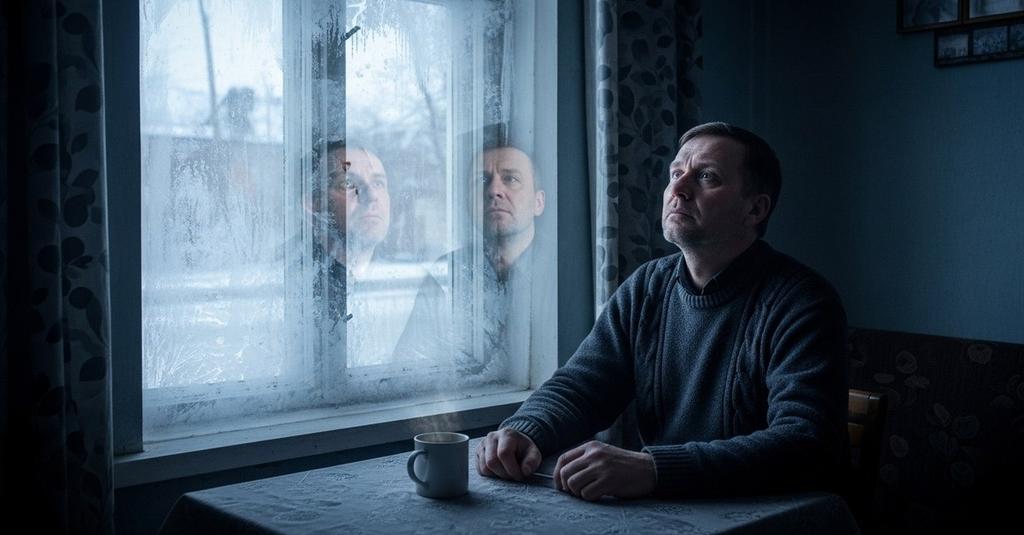
Dissociative Fugue Identity Loss and the Question of Who Returns
Recovery from dissociative fugue identity loss raises a question psychiatry hasn’t fully answered: when the original self returns, what happens to the person who replaced them? Latulip spent thirty years building a life. He had a routine, relationships, a sense of who he was in the world — even if the foundations of that identity were neurologically constructed rather than biographical. The University of Toronto’s Department of Psychiatry has published case reviews noting that reintegration after prolonged dissociative episodes can itself be traumatic, because the returning self must somehow coexist with — or displace — the constructed identity that kept the person functional. In a 2016 interview following his reunion, Latulip described the experience as bewildering rather than euphoric. Two versions of himself, suddenly present at the same time. Neuroimaging studies conducted at institutions including the Karolinska Institute in Stockholm have shown measurable differences in hippocampal and prefrontal cortex activity in patients with dissociative disorders, suggesting that the brain actively suppresses autobiographical memory during fugue states rather than simply losing access to it.
That distinction matters enormously.
Suppression implies the memories remain encoded. They’re not gone. They’re held at a distance by the brain’s own architecture — a biological act of self-protection that can, under certain conditions, begin to reverse. The flashes Latulip described align with exactly this model: suppressed traces becoming gradually less suppressed as the original triggering stress fades across decades. Watching a person reassemble their own biography after thirty years of absence, you stop treating identity as a solid thing. It becomes something the brain actively maintains — or actively conceals — moment by moment. Clinicians now treat reintegration as its own therapeutic challenge, separate from the fugue itself. Returning someone to their original identity isn’t always a straightforward gift. Sometimes it’s the beginning of an entirely new kind of work.
How It Unfolded
- 1980: Dissociative fugue is formally described in major psychiatric literature as a distinct clinical phenomenon, with early case studies documenting complete identity displacement following trauma.
- 1986: Edgar Latulip disappears from his life in Ontario, Canada, likely following a head injury — triggering what would become one of the longest documented cases of sustained identity displacement in Canadian records.
- 2013: The DSM-5 reclassifies dissociative fugue as a specifier within dissociative amnesia, reflecting a deeper clinical understanding that fugue rarely presents in isolation from broader dissociative processes.
- 2015: Latulip’s social worker searches his name online and discovers the thirty-year-old missing persons case; DNA testing confirms his identity and he is reunited with his sister.
By the Numbers
- 0.2% — estimated prevalence of dissociative fugue in the general population, according to DSM-5 clinical data, though true figures are likely higher due to undetected cases.
- 30 years — the duration of Edgar Latulip’s undetected identity displacement, making it one of the longest verified cases on record in North America.
- 130 km — the distance between Latulip’s original home and the city where he lived his displaced life, underlining how proximity offers no protection against identity loss.
- Fewer than 1 in 500 dissociative fugue cases are estimated to last longer than one month; cases exceeding a year are considered clinically exceptional.
- Up to 90% of dissociative disorder diagnoses involve a documented history of prior trauma, according to research compiled by the International Society for the Study of Trauma and Dissociation (ISSTD).
Field Notes
- In one of the most cited historical fugue cases, Agatha Christie disappeared for eleven days in 1926 and was found registered at a hotel under a different name — she later claimed no memory of the episode, and no psychiatric explanation was ever formally confirmed. The case remains debated among clinicians studying dissociative fugue identity loss.
- Most people assume fugue patients appear disoriented or distressed. In reality, many function smoothly — holding jobs, forming friendships, navigating daily life — because the constructed identity is neurologically coherent, not fragmentary.
- Latulip’s case is unusual not only for its length but because memory recovery began spontaneously, without therapeutic intervention — suggesting the brain’s suppression mechanisms can degrade naturally over very long time frames.
- Researchers still can’t reliably predict who will recover autobiographical memory and who won’t. There’s no clear clinical marker for spontaneous reintegration, and it’s not yet understood why suppression lifts for some patients after decades while others show no return of prior identity at all.
Frequently Asked Questions
Q: What exactly is dissociative fugue identity loss, and how is it different from ordinary amnesia?
Dissociative fugue identity loss is a condition in which a person not only loses autobiographical memory but also adopts a new, functioning identity — often without any awareness that anything is wrong. Unlike ordinary amnesia, where a person knows they’ve forgotten, fugue states replace the missing self with a substitute. The person doesn’t feel lost. They feel like themselves — just a different self. The DSM-5 classifies it under dissociative amnesia, with fugue as a specifier first formalised in the 2013 edition.
Q: Can someone in a dissociative fugue state truly not know who they really are?
Yes — and that’s precisely what makes the condition so clinically striking. The brain doesn’t just block access to prior memories; it appears to actively suppress them while constructing an alternative identity framework that feels entirely authentic to the person experiencing it. Neuroimaging research from institutions including the Karolinska Institute has shown differences in hippocampal activity in dissociative patients, consistent with suppression rather than deletion of memories. The original self isn’t gone — it’s held at a neurological distance. Latulip’s thirty years are an extreme version of a process that can theoretically occur in anyone following sufficient trauma or brain injury.
Q: Is dissociative fugue the same thing as multiple personality disorder?
No — and this is one of the most common misconceptions in popular coverage of dissociative conditions. Dissociative fugue involves the displacement of a single identity, not the simultaneous existence of multiple distinct personality states. Dissociative Identity Disorder (DID), formerly known as multiple personality disorder, involves two or more distinct identities that can alternate. In fugue, there’s typically one active identity at a time — the original has simply been replaced, not multiplied. Latulip didn’t alternate between selves. He lived entirely as the substitute for thirty years, until fragments of the original began returning spontaneously.
Editor’s Take — Sarah Blake
What stays with me about Latulip’s case isn’t the thirty years — it’s the 130 kilometres. He never left. His body stayed close to everything his brain had erased. That proximity is either meaningless or it’s the reason the flashes eventually came. Nobody knows which. And that gap — between what we can verify and what we can only suspect — is exactly where the most important questions about identity and memory still live, unanswered, after decades of research.
Edgar Latulip’s story is not really about disappearance. It’s about the architecture of selfhood — how identity isn’t a fixed thing you carry, but a structure the brain actively maintains, and can, under the right conditions of trauma or injury, quietly dismantle and rebuild from scratch. If a person can live thirty years as someone else without knowing it, what does that say about the self we take for granted every morning? The question doesn’t close neatly. It just sits there, pressing up through the years, like light through ice.
Illustrations are AI-generated. Article fact-checked and human-edited. Our editorial standards.