The Laundress Who Gave $150,000 to Students She Never Met
A paradox walked into the University of Southern Mississippi on a humid August afternoon in 1995: an eighty-seven-year-old woman with a sixth-grade education, carrying $150,000 in savings from a lifetime of washing other people’s clothes, about to reshape American philanthropy without knowing it. No briefcase. No financial advisor. No announcement. Just Oseola McCarty and the most quietly radical act of generosity in modern educational history. The Oseola McCarty scholarship would become the story that made everyone else’s giving look insufficient.
She handed over the check without hesitation. Bill McCree, her banker at Trustmark National Bank in Hattiesburg, watched her do it. She’d walked into his office with accumulated savings built one dollar at a time, over seven decades, and decided that students she would never meet deserved it more than she did. That wasn’t a financial decision. It was a moral one.
What makes the story stick, decades later, isn’t the amount. It’s the why — a question that lingers because there’s no dramatic answer waiting. She just thought it was the right thing to do.
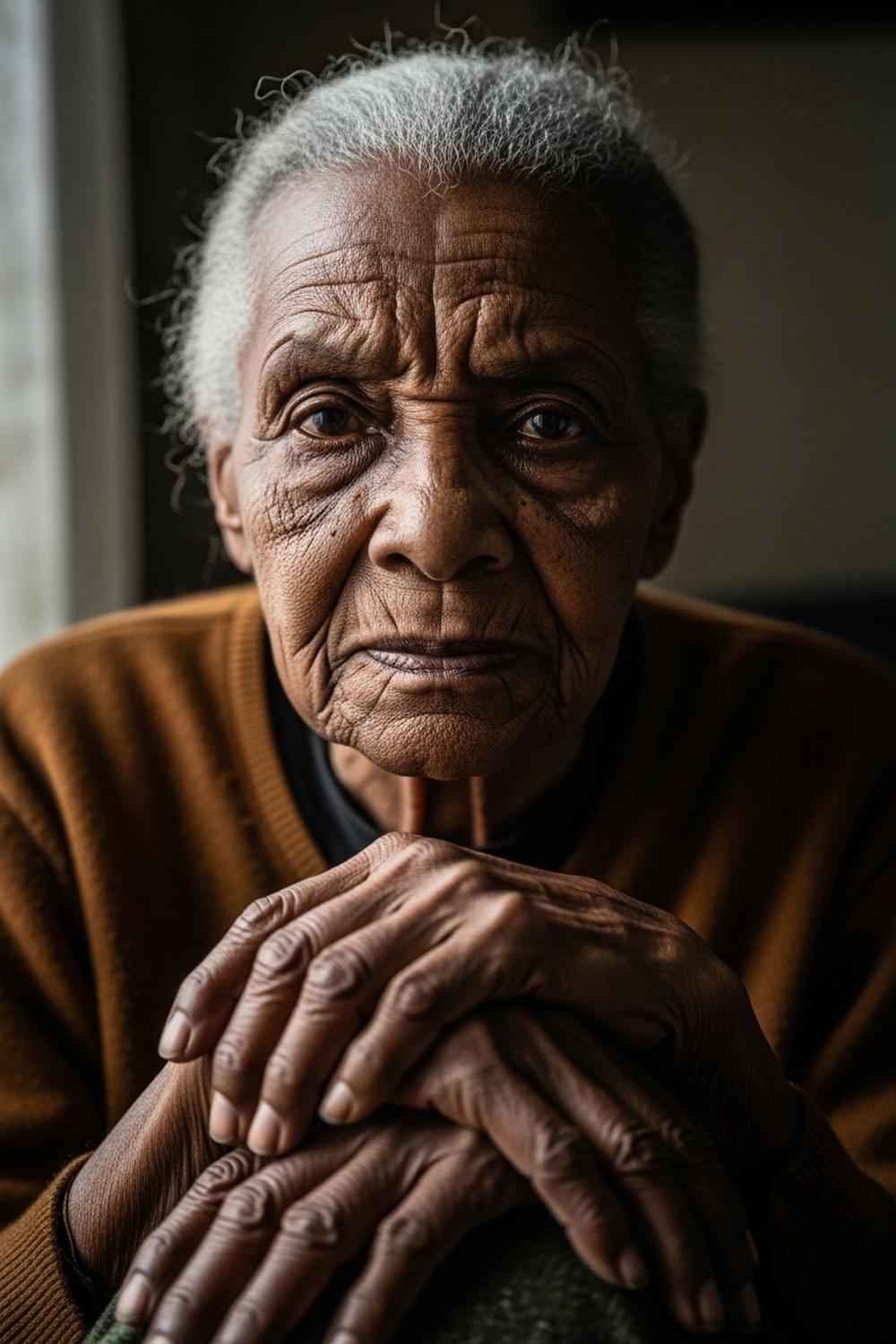
Key Facts
- Oseola McCarty donated $150,000 to the University of Southern Mississippi in 1995, funding a scholarship in her name.
- She accumulated $280,000 in savings over roughly 70 years of washing and ironing clothes.
- McCarty was 87 years old at the time of her donation, one of the oldest first-time major university donors.
- Philanthropist Ted Turner contributed a $1 million matching donation triggered by the media attention in 1995.
- President Bill Clinton awarded McCarty the Presidential Citizens Medal in 1996.
In short: The Oseola McCarty scholarship was created in 1995 when an 87-year-old Hattiesburg laundress donated $150,000 of her $280,000 lifetime savings to the University of Southern Mississippi. Her gift inspired a $1 million match from Ted Turner and earned her the 1996 Presidential Citizens Medal, funding African American students for decades.
Born Into a World That Wasn’t Built for Her
Oseola McCarty entered the world in 1908 in Shubuta, Mississippi, a place and time where educational opportunity for Black Americans required not just desire but resources few families possessed. She attended school in Hattiesburg until sixth grade. Then her aunt fell ill. She left to care for her and never went back — not because the alternative appealed to her, but because in the American South of the early twentieth century, need consumed want with a completeness that left no room for negotiation. According to her Wikipedia biography, she took up washing and ironing, inherited work that had sustained her family for generations before her, and built something from it that only the families who employed her really saw.
The details of her life were deliberate and small. She charged as little as $1.50 per bundle in her early decades, slowly raising rates as inflation demanded, never high enough to price out the people who depended on her. She didn’t drive. She walked everywhere in Hattiesburg, in shoes she patched herself when they wore through. She didn’t own a dryer — never saw the need for one. The washboard, the washtub, the clothesline: these were her entire toolkit, played six days a week for the better part of seventy years.
What she didn’t spend, she saved. Not according to some grand calculated plan that she’d sketched out in advance. But in the simple, unglamorous way that most people have stopped practicing entirely — the way that requires patience. She deposited what she could into a local bank account. Then another. Then another. Years collapsed into decades. Interest compounded silently.
By 1994, when arthritis forced her to retire, she had accumulated $280,000 across multiple accounts.
The Moment Everything Changed
She pointed to the money and said the university could have most of it.
Why does a person who never attended college decide to give away everything she spent seventy years accumulating? Because Oseola McCarty understood something that most philanthropists never grasp: education wasn’t a luxury she could afford. It was a right she’d been denied, and if she could hand it to someone else, the mathematics were simple. Bill McCree helped her arrange her estate. She set aside amounts for her church. A little for a cousin. A little for herself. The rest — $150,000 — became the university’s share. She didn’t bargain for naming rights. She didn’t negotiate recognition. She simply gave it.
And then she went home.
What One Woman’s Discipline Quietly Sparked
The story broke nationally in August 1995, not because of a press release or a calculated publicity campaign, but because it was genuinely, almost impossibly, moving. Here was a woman with no college degree, no inheritance, no financial safety net, who had decided that other people’s children deserved the education she never received. The University of Southern Mississippi established the scholarship in her name immediately, designating it for African American students who demonstrated financial need and academic promise.
Watching someone give away seventy years of careful saving, you stop calling it generosity and start calling it conviction.
What happened next is the kind of ripple effect that tends to get reduced to a statistic but deserves to be told as a sequence of events. Donors began flooding in — strangers, corporations, alumni. They were embarrassed, perhaps. Inspired, certainly. The idea that an eighty-seven-year-old laundress had done more with less than most of them had done with more was not a comfortable thought to sit with. Within weeks, the story had triggered something genuine. Ted Turner, then one of America’s most prominent philanthropists, contributed $1 million to match the giving her donation had inspired. The University of Southern Mississippi created a formal scholarship committee to vet and select recipients. Stephanie Bullock of Hattiesburg, a pre-law student who had been struggling to fund her education, became the first recipient. She later met McCarty in person — the two women, separated by nearly seventy years of life experience, sat together quietly, and McCarty told her she’d better study hard. Bullock said it was one of the most important conversations of her life.
What’s remarkable is that McCarty never sought a single moment of it. She gave the money before anyone told her it would make the news. She didn’t know it would.

Recognition That Arrived Whether She Wanted It or Not
By late 1995, Oseola McCarty had become one of the most celebrated private citizens in America — a distinction she accepted with characteristic quietness. President Bill Clinton awarded her the Presidential Citizens Medal in 1996, one of the highest civilian honors the United States offers. Harvard University awarded her an honorary degree. The United Nations honored her. She became a special advisor to the 1997 President’s Summit for America’s Future in Philadelphia. Over 300 letters arrived in the weeks after her story broke. She answered every single one of them, by hand, often with the same measured, unhurried penmanship she’d used her whole life.
The Smithsonian Institution’s National Museum of American History acquired items connected to her life and work as part of its permanent collections documenting American labor and philanthropy — a recognition, quiet but institutional, that what she had done belonged to the national story. Smithsonian Magazine has documented her legacy in detail, placing her story within a broader American tradition of self-made generosity.
And yet something deeper was happening beneath the awards. What the Oseola McCarty scholarship represented, in the eyes of sociologists and historians who study American philanthropy, was a direct challenge to who gets to be a benefactor. Philanthropy in the United States has historically been a rich person’s game — Carnegie Libraries, Rockefeller foundations, Gates initiatives. McCarty’s gift didn’t fit that mold. It came from the bottom of the economic ladder, which made it both more radical and more instructive. Dr. Andrew Seligsohn, writing in the context of civic engagement research in the early 2000s, noted that McCarty’s act catalyzed conversations about community-based giving at the grassroots level that had largely been absent from mainstream philanthropic discourse.
The Living Legacy, Years Later
She died on September 26, 1999, at ninety-one, in Hattiesburg, Mississippi — the same city where she’d washed other people’s clothes for most of her adult life. She never saw the full scope of what her gift would become, but she knew it had started.
Here’s the thing: the numbers tell one version of the story. McCarty started with $150,000. Through matching gifts, inspired donations, and decades of compounding interest and philanthropic attention, the fund attached to her name has grown into a multi-million-dollar force in Southern higher education. But the more important figure is harder to quantify — the number of young Black students from Mississippi and beyond who looked at what an eighty-seven-year-old laundress did and understood, concretely, that someone had believed in their future before they’d even declared a major.
The University of Southern Mississippi has continued to fund and expand the Oseola McCarty scholarship in the decades since her death. The endowment, bolstered by the wave of giving her story triggered, has grown substantially beyond that original $150,000. Multiple students have received support through the fund, each one a direct continuation of what she set in motion in 1995. The university established a permanent exhibition honoring her life in the McCain Library and Archives on campus. Her image hangs in the student union. Her name is spoken at every scholarship ceremony. In 2019, the University of Southern Mississippi formally renewed its commitment to the scholarship as part of a broader diversity and inclusion initiative, citing McCarty’s original donation as foundational to the institution’s identity.
Her house still stands in Hattiesburg. Simple, well-kept, unremarkable from the outside. The clothesline is gone. But the name on every scholarship certificate carries the weight of everything that happened inside those walls, one saved dollar at a time.
How It Unfolded
- 1908: Oseola McCarty is born in Shubuta, Mississippi; she begins washing clothes for pay after leaving school in the sixth grade to care for a sick aunt.
- 1994: McCarty retires from laundry work after developing arthritis, having quietly accumulated $280,000 across decades of modest savings deposited at Trustmark National Bank in Hattiesburg.
- 1995: McCarty donates $150,000 to the University of Southern Mississippi, establishing the scholarship that bears her name; the story breaks nationally in August and triggers a wave of matching donations, including $1 million from Ted Turner.
- 1996: President Bill Clinton awards McCarty the Presidential Citizens Medal; Harvard University presents her with an honorary degree, and the United Nations recognizes her contribution to global values of education and equity.
- 1999: Oseola McCarty dies on September 26 in Hattiesburg at age ninety-one; the Oseola McCarty scholarship endowment continues to grow and fund students at the University of Southern Mississippi to this day.
By the Numbers
- $150,000 — the exact sum Oseola McCarty donated to the University of Southern Mississippi in 1995, drawn from a lifetime of laundry wages.
- $280,000 — her total accumulated savings at retirement in 1994, built over approximately seventy years of work with almost no discretionary spending.
- 87 — her age at the time of the donation, making her one of the oldest first-time major donors in American university history.
- $1,000,000 — the matching donation from philanthropist Ted Turner, triggered directly by the media attention McCarty’s gift received in August 1995.
- 300+ — the number of letters McCarty received in the weeks after her story went national; she replied to every single one, by hand.
Field Notes
- McCarty had never visited the University of Southern Mississippi campus before she walked in to make her donation in 1995. She had passed it on foot many times over the years — it sat in her city, a few miles from her home — but she had never had reason to go inside until she arrived with a check that would change the institution’s history.
- Multiple bank accounts became her strategy not from financial advice but from a vague worry that a single account might somehow fail her. The compounding effect across accounts over decades was something she hadn’t consciously engineered — it simply happened because she never touched the principal (researchers actually call this “passive wealth accumulation,” though it sounds far too clinical for what Oseola McCarty did).
- Stephanie Bullock, the first scholarship recipient, later said that meeting McCarty was more formative than any class she took in law school. That a woman who never finished sixth grade could produce that effect on a law student is, quietly, the sharpest argument for McCarty’s philosophy of education.
- Scholars studying the psychology of charitable giving still struggle to explain why McCarty’s gift triggered such an outsized philanthropic response compared to larger donations from wealthier individuals made in the same period. The emotional mechanism — something about sacrifice, scale, and sincerity combined — remains genuinely difficult to model mathematically.
Frequently Asked Questions
Q: What was the Oseola McCarty scholarship, and who was it for?
The Oseola McCarty scholarship was established in 1995 at the University of Southern Mississippi in Hattiesburg, funded by McCarty’s $150,000 personal donation. It was designated specifically for African American students with demonstrated financial need and academic promise. McCarty herself had never attended the university — or any university — but believed deeply that young Black students in Mississippi deserved access to higher education that their economic circumstances might otherwise deny them.
Q: How did Oseola McCarty save $150,000 on a laundress’s income?
McCarty’s savings accumulated through decades of extreme frugality combined with consistent deposits into multiple bank accounts at Trustmark National Bank in Hattiesburg. She didn’t own a car, never purchased a dryer, repaired her own shoes, and spent almost nothing on non-essentials. She wasn’t following a financial strategy — she simply didn’t spend what she earned. Over seventy years, compound interest did much of the heavy lifting. By the time she retired in 1994, her accounts held $280,000 in total.
Q: Is the Oseola McCarty scholarship still active today?
Yes. The scholarship has remained active at the University of Southern Mississippi since its founding in 1995 and has grown significantly beyond McCarty’s original $150,000 donation. Inspired giving from individuals and corporations — most notably a $1 million matching gift from Ted Turner in 1995 — expanded the endowment substantially. The university formally reaffirmed its commitment to the fund in 2019 as part of broader institutional diversity initiatives. McCarty’s name continues to appear on scholarship certificates awarded each academic year.
Editor’s Take — Sarah Blake
What strikes me most about Oseola McCarty isn’t the dollar amount — it’s the timeline. She saved for seventy years before anyone called her generous. She gave before anyone told her it would matter. There’s a version of this story that gets reduced to an inspirational poster, and that version does her a disservice. What she actually demonstrated is that sustained, quiet discipline — completely invisible to the people around you — can outlast almost everything. The washboard is gone. The scholarship isn’t.
Oseola McCarty never sat in a university lecture hall. She never wrote an essay under fluorescent lights at midnight, never walked across a stage to collect a degree. But somewhere in Hattiesburg today, a student funded partly by her life’s work is doing exactly that. It raises a question worth sitting with: how many other people are quietly, invisibly accumulating something — discipline, belief, sacrifice — that will only become visible long after they’re gone? And what would we do differently if we knew we were living alongside them right now?
“
Illustrations are AI-generated. Article fact-checked and human-edited. Our editorial standards.