Gaming Until Death: The Science Behind Fatal Addiction
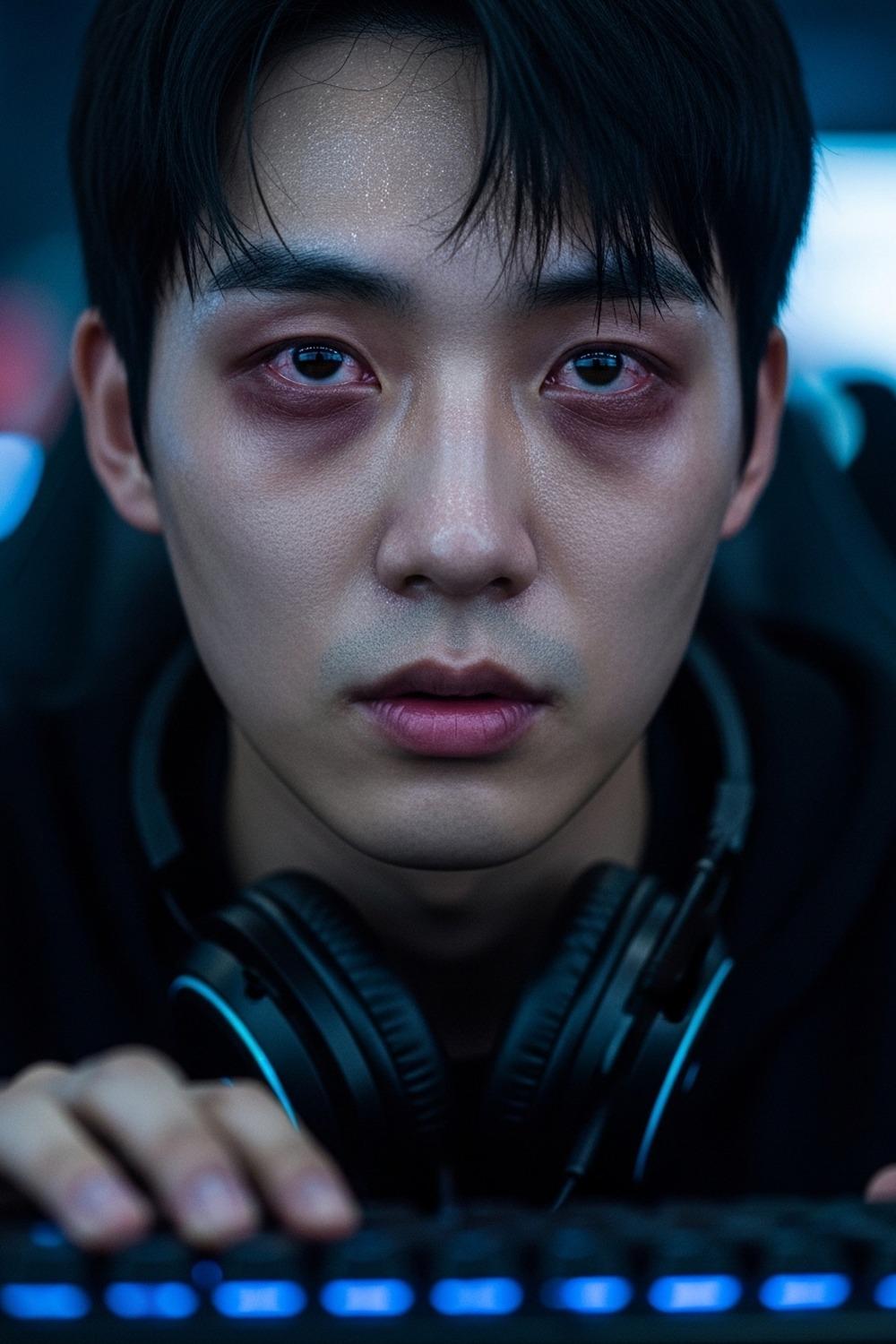
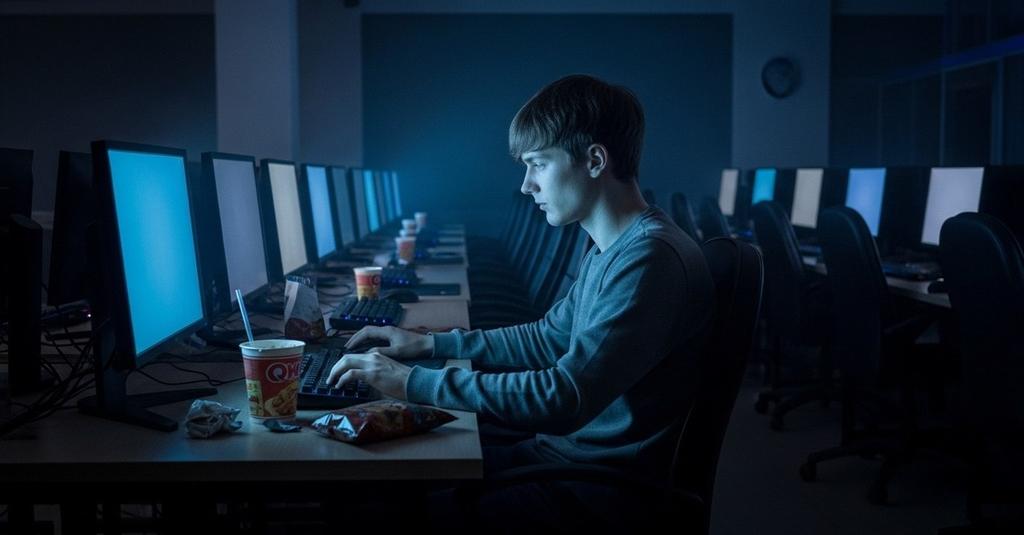
In August 2005, a twenty-eight-year-old man sat down at a computer in a Daegu PC bang and never stood up again. Fifty consecutive hours of gaming addiction fatal exhaustion — his heart simply stopped before the screen went dark. Lee Seung Seop had quit his job for this. The game had taken everything else already.
International news wires picked up the story and then, mostly, dropped it. Was this a mental health crisis? A cardiovascular collapse? A cultural failure specific to South Korea’s PC bang culture? The answer turned out to be messier than any single category. It required two decades of neuroscience, public health policy, and accumulated case data to explain how a human being could be so completely consumed by a digital world that the physical body simply… stops functioning. What happens inside a brain, and a cardiovascular system, when the game becomes the only stimulus that registers?
Key Facts
- In August 2005, Lee Seung Seop died in a Daegu PC bang after a documented 50-hour gaming session.
- The World Health Organization formally classified Gaming Disorder in the ICD-11 in 2018.
- Between 1% and 9% of gamers globally may meet clinical criteria for Gaming Disorder, per WHO 2019 estimates.
- South Korea enacted the Shutdown Law in 2011, prohibiting children under sixteen from online games between midnight and 6 a.m.
- The global gaming market reached $184 billion in revenue in 2023, with over three billion daily gamers worldwide as of 2022.
In short: The term gaming addiction fatal exhaustion describes the cascade of immobility, dehydration, and cardiovascular stress that killed Lee Seung Seop after a 50-hour session in 2005. The WHO classified Gaming Disorder in the ICD-11 in 2018, and South Korea’s 2011 Shutdown Law was the first legislation targeting the problem.
When the Body Stops and the Screen Stays On
Understanding how gaming addiction fatal exhaustion kills requires understanding what extended sedentary stress does to human physiology at the cellular level. During intense gaming, cortisol and adrenaline flood the bloodstream. Blood pressure rises. Heart rate climbs. Muscles tense in anticipation of threats that exist only on screen — the body doesn’t know the difference between a digital enemy and a real one. It responds with everything it has, for as long as the stimulus continues. Dr. Peter Levine, a specialist in trauma physiology at the University of California San Francisco, has described the stress response as a system built for short bursts, not marathon sessions of sustained neurological arousal.
Deep vein thrombosis — dangerous clotting of blood in stationary limbs — becomes a serious risk after just a few hours of immobility. For someone sitting in the same chair for two days straight, the risk isn’t theoretical. It’s arithmetic. Prolonged immobility slows circulation. Dehydration thickens the blood. Stress hormones keep the cardiovascular system in a state of high alert it was never designed to sustain indefinitely.
Lee’s autopsy pointed to cardiac arrest triggered by exhaustion and dehydration. But the machinery behind that outcome had been running for hours before his heart gave out. Each of these factors alone — slowed circulation, thickened blood, sustained cardiovascular stress — is manageable. Stacked on top of each other, over fifty unbroken hours, they create a cascade that even a young, otherwise healthy body can’t survive. The cruelest irony: the very chemical reward loop that made the game impossible to stop was also suppressing the fatigue signals his brain was trying to send.
He reportedly took brief naps at his keyboard. His body was demanding rest. His brain’s reward system was louder.
That’s not a character flaw. That’s neuroscience — and it’s the same mechanism driving millions of players who’ve never made international headlines, because they stopped just short of the threshold.
The Brain on Reward: Why Quitting Feels Impossible
Why does the brain architecture that makes gaming so compelling mirror the brain activity involved in substance dependence? Because the nucleus accumbens — the brain’s primary reward processing center — responds to in-game achievements, social victories, and leveling-up events with dopamine releases that mirror those triggered by cocaine in animal studies, according to research published by the National Institute on Drug Abuse in 2012. This isn’t hyperbole. It’s receptor-level biochemistry.
The difference is that gaming is legal, omnipresent, and in most cultures, socially encouraged. It’s tempting to think of gaming addiction as a modern affliction invented by smartphones and broadband — but the psychological compulsion loop is ancient. Consider documented cases of obsessive behavior in early arcade culture, or the way slot machine designers in the 1980s deliberately engineered near-miss outcomes to extend play. Digital games didn’t invent the trap. They perfected it. Here’s the thing: gaming addiction often operates in plain sight, invisible to the person carrying it, much like a foreign object lodged inside a human body for decades (researchers actually call this the “normalization effect” — when the extraordinary becomes routine to the person living it).
The World Health Organization formally classified Gaming Disorder as an official diagnosis in the International Classification of Diseases (ICD-11) in 2018 — a decision that took years of debate and generated genuine controversy among researchers who worried about pathologizing normal leisure behavior. The diagnostic criteria require that gaming must take priority over other life interests, that the pattern must persist despite negative consequences, and that the behavior must be severe enough to cause significant impairment in personal, family, social, or occupational functioning. Between 1% and 9% of gamers globally may meet clinical criteria for the disorder, per WHO 2019 estimates — a range reflecting genuine scientific uncertainty, but also a population measured in tens of millions at minimum.
Most people who play for four hours on a Saturday are not addicted. The person who misses their own child’s birthday because they can’t pause a raid? The diagnostic criteria are designed to find them, not the casual player. The distinction matters enormously for treatment, and it matters more than it sounds.
South Korea’s Experiment: Banning Minors from Midnight Gaming
By the mid-2000s, the Korean government was already treating internet addiction as a national emergency. PC bangs operated twenty-four hours a day in virtually every neighborhood. Broadband penetration was among the highest on earth. And the deaths were accumulating — not just Lee’s, but a string of cases that shared the same grim profile: young men, extended sessions, cardiac events. No country had more compelling reasons to take the public health implications of gaming addiction seriously than South Korea, and no country did.
In 2011, the South Korean government implemented the Shutdown Law, formally prohibiting children under sixteen from accessing online games between midnight and six in the morning. It was the first legislation of its kind anywhere in the world. Research published in Scientific Reports in 2020 found that while the law had modest effects on actual sleep duration, it did reduce late-night gaming sessions among the target age group — suggesting that structural intervention, even imperfect intervention, can shift behavior at scale.
The South Korean model has been criticized as paternalistic, and some researchers argue it drove gaming underground rather than reducing it. But the broader public health infrastructure that accompanied it — over two hundred government-funded treatment centers for internet and gaming addiction by 2014, a national counseling hotline, school-based prevention programs — represented something genuinely new. A government treating gaming addiction fatal exhaustion not as a personal weakness or a media panic, but as a diagnosable, treatable, preventable condition.
Other countries watched. China introduced its own real-name registration system and playtime limits for minors in 2019, capping gameplay at ninety minutes on weekdays. By 2021, those limits had tightened further to just one hour per day on weekends and holidays.
Fatal Gaming: Where the Science Stands on Risk Thresholds
A 2017 study from the University of Exeter examined cardiovascular risk factors in habitual gamers and found that sessions exceeding eight continuous hours significantly elevated markers for deep vein thrombosis, with risk rising non-linearly beyond the twelve-hour mark. The study’s lead author, Dr. Andrew Freeman, was careful to note that individual risk profiles vary enormously — hydration status, pre-existing cardiovascular conditions, whether the player gets up to move periodically. But the direction of the data was consistent: the body was not designed for double-digit hour stationary arousal, and the symptoms of gaming addiction fatal exhaustion represent the outer limit of a spectrum that begins with backache and ends, in extreme cases, with cardiac arrest. One of the most important questions the research community has wrestled with since Lee’s death is deceptively simple: how long is too long? At what point does gaming session length cross from demanding hobby into physiological danger?
Sleep deprivation beyond twenty-four hours impairs cognitive function at rates comparable to a blood alcohol level of 0.10% — legally drunk in most jurisdictions — according to research published by the American Academy of Sleep Medicine in 2000. Decision-making degrades first. Then emotional regulation. Then the capacity to accurately assess one’s own impairment. This creates a vicious feedback loop specific to gaming addiction: the worse the sleep deprivation gets, the less capable the player is of deciding to stop. By hour thirty, forty, fifty, the person sitting at the screen may be genuinely incapable of making the rational choice that seems, from the outside, so obvious.
And yet recovery is real. Treatment programs at the Jump Trading Simulation & Education Center in Chicago and at Chung Ang University Hospital in Seoul have developed structured interventions combining cognitive behavioral therapy with controlled re-exposure — treating gaming disorder with the same evidence-based frameworks used for substance addiction. It happens. But it requires the disorder to be recognized first, by clinicians, families, and the players themselves.
The Next Generation: Is the Risk Growing?
The conditions that produced Lee’s death in 2005 haven’t disappeared. If anything, they’ve been optimized. Mobile gaming has untethered the activity from the physical desk entirely — you can now sustain a gaming session across a commute, a lunch break, a sleepless night, with a device that fits in your pocket and never needs to be plugged in at a fixed location. The global gaming market reached $184 billion in revenue in 2023, according to industry analysts at Newzoo, with mobile gaming accounting for more than half that figure. The number of people gaming daily worldwide exceeded three billion for the first time in 2022.
These aren’t addicts — the vast majority are casual players. But within any population of three billion daily users, even a small percentage with genuine gaming addiction represents a public health caseload measured in the tens of millions. Game design has simultaneously become more sophisticated at retaining players. Variable reward schedules — the same psychological mechanism that makes slot machines compulsive — are embedded in loot box systems, daily login bonuses, and battle pass structures that reward consecutive daily play. The industry understands the neuroscience of gaming addiction fatal exhaustion perfectly. Whether regulation and public health infrastructure can keep pace with systems specifically engineered to maximize time-on-screen remains the actual question.
In a treatment ward in Seoul in 2023, a seventeen-year-old named Kim — whose family requested his surname be withheld — described his longest unbroken session as sixty-two hours. He remembers his vision narrowing at the edges. His hands shaking. He didn’t stop because he wanted to. He stopped because his body finally overrode the game. Watching a person survive what should have killed them, you understand that Lee Seung Seop wasn’t uniquely vulnerable — he was uniquely unlucky. He was lucky. His heart was young enough, and strong enough, to absorb what he’d asked of it. Lee’s wasn’t.
How It Unfolded
- 1993 — Early reports of compulsive arcade and home console behavior prompt the first academic discussions of “video game addiction” in psychological literature, though no formal diagnostic criteria exist.
- 2005 — Lee Seung Seop dies in a Daegu PC bang after a fifty-hour gaming session; his death becomes the first widely reported case of gaming addiction fatal exhaustion and forces international media attention onto the issue.
- 2011 — South Korea enacts the Shutdown Law, the world’s first legislation specifically restricting minors’ access to online gaming during overnight hours, signaling a shift from moral panic to public health policy.
- 2018 — The World Health Organization formally includes Gaming Disorder in the ICD-11, giving clinicians a standardized diagnostic framework and triggering a global conversation about treatment and prevention.
By the Numbers
- 50 hours — the documented length of Lee Seung Seop’s final gaming session in Daegu, South Korea, August 2005
- 1%–9% — estimated proportion of global gamers who may meet clinical criteria for Gaming Disorder, per WHO 2019 estimates, representing tens of millions of people
- 3 billion+ — number of daily active gamers worldwide as of 2022, the first time the figure exceeded that threshold (Newzoo, 2022)
- 24 hours — threshold beyond which sleep deprivation impairs cognitive function to a level equivalent to a 0.10% blood alcohol concentration (American Academy of Sleep Medicine, 2000)
- $184 billion — total global gaming market revenue in 2023, more than double the combined global box office and recorded music industries
Field Notes
- In 2012, researchers at Hamad Medical Corporation in Qatar documented a case of bilateral deep vein thrombosis in a nineteen-year-old with no pre-existing clotting disorder — his only risk factor was an eleven-day gaming binge with minimal movement. He survived, but required emergency anticoagulation therapy.
- Most cases of gaming-related cardiovascular events involve men between the ages of eighteen and thirty-five — a demographic whose risk profile is otherwise considered low, which is exactly why the mechanism goes unrecognized until a crisis occurs.
- South Korea’s gaming addiction treatment infrastructure includes inpatient residential programs lasting four to eight weeks — longer than many Western alcohol rehabilitation programs — reflecting how seriously the clinical community there takes the severity of the condition.
- Researchers still can’t answer a fundamental question: why do some heavy gamers develop fatal physiological complications while others with seemingly identical usage patterns don’t? Genetic predisposition to clotting disorders, undiagnosed cardiac arrhythmias, and individual variation in stress hormone response are all suspected — but no predictive model currently exists that can identify who’s most at risk before a crisis happens.
Frequently Asked Questions
Q: Can gaming addiction fatal exhaustion happen to anyone, or only people with pre-existing conditions?
It can happen to people without any diagnosed pre-existing condition, as Lee Seung Seop’s case demonstrated — he was twenty-eight and apparently healthy before his fifty-hour session. The mechanism involves compounding risks: prolonged immobility, dehydration, sustained cardiovascular stress from the game’s demands, and sleep deprivation. Any one of these is manageable. All four together, sustained long enough, can overwhelm even a young, otherwise functional cardiovascular system. Pre-existing conditions raise the risk, but their absence doesn’t eliminate it.
Q: How is gaming disorder actually diagnosed, and what separates it from just playing a lot?
The WHO’s ICD-11 criteria require three things: gaming must take consistent priority over other life activities, the behavior must continue despite clearly negative consequences, and the pattern must cause significant impairment in the person’s daily functioning — at work, in relationships, or in personal health — for a minimum of twelve months. Frequency alone doesn’t create a diagnosis. Someone who plays forty hours a week but maintains relationships, employment, and physical health doesn’t meet the clinical threshold. The criteria are designed to catch functional collapse, not enthusiasm.
Q: Is gaming addiction the same as any other behavioral addiction, or is there something different about how games are designed?
This is where most public discussion gets it wrong. Gaming isn’t uniquely addictive because of some inherent flaw in the medium — it’s that modern game design deliberately incorporates behavioral psychology techniques, including variable reward schedules and social reciprocity mechanics, that are known to maximize engagement. These same techniques appear in social media and gambling. The difference is that games deliver them with extraordinary narrative immersion and identity investment, making the psychological hook deeper and the interruption of play feel more personally costly. That’s a design choice, not an accident.
Editor’s Take — Dr. James Carter
What troubles me most about Lee Seung Seop’s story isn’t the fifty hours. It’s the six weeks before it — fired for showing up late because of gaming, then quitting the next job to play without restrictions. The fatality gets the headline. But the slow erasure of everything else in his life is the actual story of gaming addiction fatal exhaustion, and it’s happening right now to people whose hearts are still beating. The cardiac arrest was just the last event in a much longer sequence that nobody stopped.
Lee Seung Seop’s death in 2005 generated headlines for a week, then largely disappeared — absorbed into the noise of a world that was still deciding whether to take gaming addiction seriously. Nearly two decades later, the diagnostic frameworks exist, the treatment centers exist, the neuroscience is unambiguous. What remains stubbornly difficult is the earliest intervention — recognizing the slow vanishing of a life before it reaches the point of no return. Three billion people will open a game today. For the overwhelming majority, it’s leisure. For some smaller, uncountable number, the screen is already the only thing left. What does it take to notice the difference before it’s too late?
Illustrations are AI-generated. Article fact-checked and human-edited. Our editorial standards.