The Blind Owl Whose Eyes Look Like the Universe
There’s a small owl in California with eyes that look like someone trapped a nebula behind amber glass. Nobody expected him to become famous. That’s the part that makes it strange.
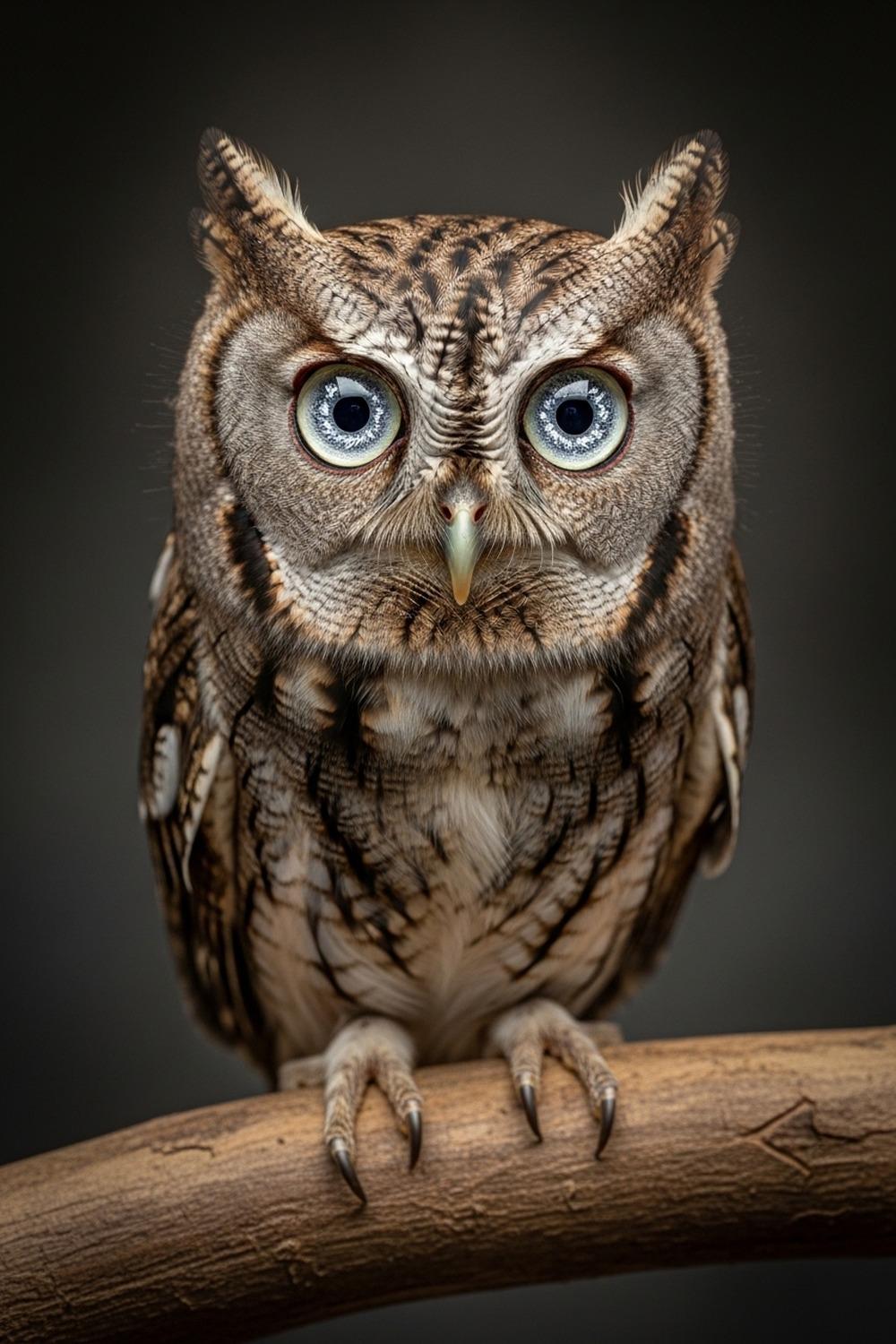
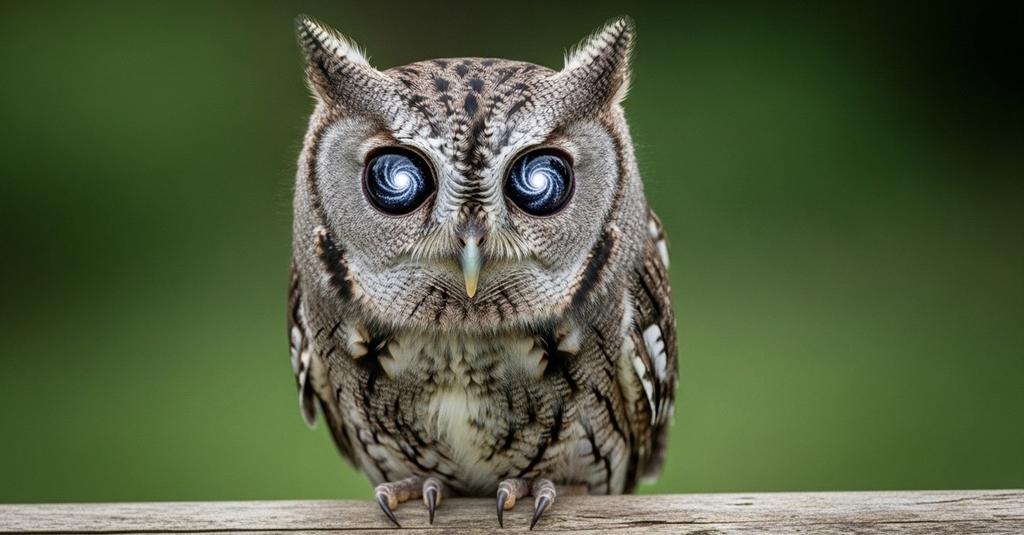
Zeus is a western screech-owl at the Wildlife Learning Center in Sylmar, California, and he arrived injured, nearly blind, with eyes that stopped NASA astronomers mid-conversation. The white and silver patterns swirling across his iris — they’re not photoshopped, not some internet trick. They’re real scars from real trauma, and they happen to look almost exactly like deep-space imaging. Scientists have photographed the cosmos for decades. Nothing quite prepared them for this specific thing to show up in a bird that weighs less than a smartphone.
Key Facts
- Zeus is a western screech-owl who has been a permanent resident at the Wildlife Learning Center in Sylmar, California since 2012.
- Zeus weighs roughly 100 to 165 grams, about the mass of a standard orange.
- The cosmic patterns in Zeus’s eyes are capsular cataracts combined with old trauma that scatter light through fractured protein.
- Capsular cataracts show a documented 3 to 5 percent incidence in rehabilitated raptors with prior head trauma, per the International Wildlife Rehabilitation Council.
- The Wildlife Learning Center welcomes more than 100,000 visitors annually.
In short: Zeus owl nebula eyes belong to a western screech-owl at California’s Wildlife Learning Center whose injured eyes scatter light like deep-space imaging. The shimmering silver patterns are capsular cataracts from trauma, not pigment, and the resident owl, weighing only 100-165 grams, has drawn comparisons from NASA researchers since 2012.
What Actually Happens Inside Zeus Owl’s Nebula Eyes
The shimmering constellations you see in Zeus’s eyes are capsular cataracts combined with old trauma. When the lens capsule itself gets damaged, light scatters through fractured protein structures in ways that healthy eyes simply don’t. Dr. Michael Valdez, an ophthalmologist who examined Zeus early in his care, had no clinical comparison for what he was looking at. Turns out the physics of damaged eye tissue and the physics of nebulae overlap in a way nobody really planned.
Nebulae form when gas and dust scatter starlight at irregular densities. Capsular cataracts scatter ambient light through broken protein architecture. Different mechanics. Nearly identical visual result.
The Hubble Space Telescope captures light across a spectrum ten times wider than humans can see — and yet when those images get compared to close-up photos of Zeus, the resemblance is visible to the naked eye. Which kept me reading for another hour, trying to understand if that was coincidence or something deeper.
It’s mostly coincidence.
How a Tiny Bird Became Impossible to Look Away From
The Wildlife Learning Center didn’t plan to create a viral sensation. They set out to save a bird that couldn’t survive on its own. Western screech-owls depend entirely on precise vision for hunting. No vision means starvation within days in the wild. So Zeus stayed. When staff began sharing photos of him online, something shifted. Thousands visit him every year now — many of them encountering a live wild bird for the first time in their lives. You can read about other animals living extraordinary second lives at this-amazing-world.com.
Here’s the thing about standing in front of Zeus.
Visitors describe it almost identically. It’s not quite awe. It’s more like being seen by something that shouldn’t be able to see you. He can barely make out light and shadow. And yet something happens when you lock eyes with him — or when he seems to lock eyes with you, even though the mechanics don’t work that way.
The Weight of Presence in 150 Grams
Western screech-owls are genuinely small. Zeus weighs roughly 150 grams — less than a deck of cards, small enough to sit in a child’s cupped palms. Most people who see photos of his Zeus owl nebula eyes assume he’s large, that cosmic eyes must belong to something imposing. They’re always surprised. That contrast — nebula-level visual drama packed into something you could hold in one hand — is disarming. It rewrites what presence is supposed to feel like.
And it raises a question that gets uncomfortable fast. What does Zeus actually experience? His world is mostly shadow and blur. Does any of the light creating that visual effect register for him at all?
Researchers aren’t sure.
That uncertainty sits with you.
The Injury That Became the Whole Story
Here’s where it gets strange. The injuries that should have ended Zeus’s life are exactly what made it. Trauma to his eyes, sustained before rescue, destroyed most of his functional vision permanently. But the specific way that trauma interacted with his lens capsules created a light-scattering effect so visually dramatic that NASA researchers and astrophotographers started reaching out after his photos circulated. They weren’t being poetic when they compared his eyes to nebula photography. They were being precise. The structural patterns genuinely mirror gas formations captured by deep-space imaging equipment.
That’s an uncomfortable kind of beauty — the thing that looks most extraordinary about Zeus is the record of something that hurt him. It’s not metaphorical. It’s written in light and protein, visible every time he opens his eyes.
By the Numbers
- Over a decade of residence: Since 2012, Zeus has been a permanent resident at the Wildlife Learning Center, during which the center has welcomed more than 100,000 visitors annually (Wildlife Learning Center, 2023).
- Weight comparison: 100–165 grams, which is roughly the mass of a standard orange.
- Capsular cataracts in raptors show a documented incidence rate of 3–5% in rehabilitated birds with prior head trauma, according to avian veterinary surveys through the International Wildlife Rehabilitation Council.
- The Hubble Space Telescope captures light across a spectrum 10 times wider than human vision — yet the visual resemblance to Zeus’s injury pattern is visible to the naked eye.
Field Notes
- Western screech-owls can locate prey beneath snow using sound alone.
- The white and silver flecks in Zeus’s eyes aren’t pigment — they’re light refracting through disrupted lens protein. The pattern actually shifts depending on light angle and intensity, which means his eyes change depending on how you’re looking at them.
- Owls don’t have eyeballs in the traditional sense. Their eyes are elongated tubes fixed in the skull, which is why owls rotate their heads dramatically instead of moving their eyes left or right. Zeus’s fixed, forward gaze becomes even more striking when you understand he has no other option.
What a Small Owl Teaches About Wonder
The Zeus owl nebula eyes story gets shared constantly because people think they’re passing along something beautiful. And they are. But what’s really circulating is something more complicated — proof that damage and wonder aren’t opposites, that a living creature can carry evidence of trauma and simultaneously stop strangers in their tracks with something that resembles the cosmos.
The Wildlife Learning Center understood this when they made him an ambassador. He doesn’t just represent owls. He represents the idea that what survives injury sometimes becomes the most honest and striking version of itself.
That’s not a lesson you expect from a 150-gram bird in a wildlife center in California.
But there it is. Written in swirling white light every time Zeus opens his eyes.
He’s not a symbol someone designed. He’s just a small owl who got hurt, got rescued, and ended up looking like the universe lives behind his eyes. He sits on a handler’s glove during school visits now while children lean in close. Every single one of them goes quiet for a second. That pause — that involuntary hush — is what wonder actually looks like in real life. If this kind of story keeps you up at night, there’s more at this-amazing-world.com.
Frequently Asked Questions
Q: What causes the nebula-like patterns in Zeus’s eyes?
The cosmic patterns in Zeus owl’s nebula eyes are capsular cataracts combined with old trauma. When the lens capsule is damaged, light scatters through fractured protein structures the way it never does in healthy eyes. Nebulae form when gas and dust scatter starlight at irregular densities, so the physics overlaps and produces a nearly identical visual result. The white and silver flecks are not pigment but light refracting through disrupted lens protein.
Q: Can Zeus the owl actually see?
Barely. The trauma to Zeus’s eyes, sustained before his rescue, destroyed most of his functional vision permanently, leaving him able to make out only light and shadow. Western screech-owls depend entirely on precise vision to hunt, so Zeus could not survive in the wild and became a permanent resident at the Wildlife Learning Center in 2012. Researchers are not even certain whether the light creating his striking visual effect registers for him at all.
Q: How big is Zeus the western screech-owl?
Zeus is genuinely tiny, weighing roughly 100 to 165 grams, about the mass of a standard orange and less than a deck of cards. He is small enough to sit in a child’s cupped palms. Most people who see photos of his cosmic eyes assume he must be large and imposing, and are surprised by the contrast between nebula-level visual drama and a bird you could hold in one hand.
Illustrations are AI-generated. Article fact-checked and human-edited. Our editorial standards.