Japan Built Water Fountains Dogs Can Use Themselves
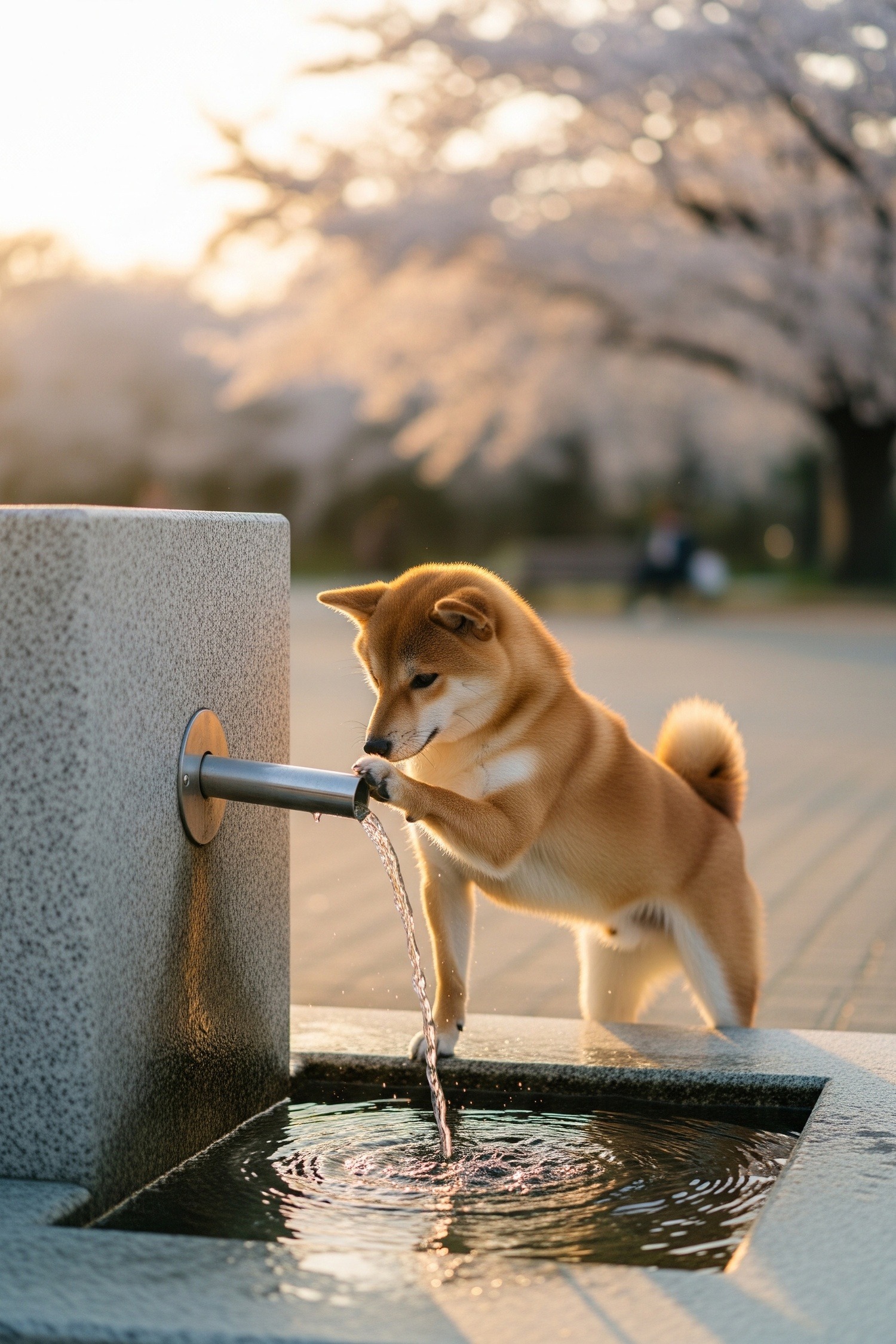
A dog walks into a park in Tokyo. It approaches a metal lever mounted low to the ground, paws at it, and water flows into a basin. No owner needed. No fumbling. Just architecture that actually thought about who was coming.
This is happening right now, across Japanese cities. And nobody told Western urban planners they were being left behind until it was too late.
The thing that got me reading about this for three hours was the realization: this isn’t a cute dog thing. It’s a design philosophy. Japan has 16 million dogs — more than it has children under 12. That’s not a trend. That’s a demographic shift that forced an entire country to ask a question most cities still haven’t: if dogs live here, shouldn’t the parks be built for them too?
Key Facts
- Japan had approximately 16.1 million pet dogs in 2022 — more than the 14.5 million children under age 12 that same year.
- Paw-activated park fountains use a lever or paddle 15 to 20 centimetres off the ground; the dog pushes it and water flows into a shallow basin with no electricity or app.
- Japanese pet industry spending exceeded ¥1.6 trillion (roughly $11 billion USD) in 2023.
- Tokyo’s Yoyogi Park has fenced off-leash dog run zones with separate large- and small-breed sections, water stations, and agility equipment.
- In a 2021 Rakuten Insight survey, 68% of Japanese dog owners said access to pet-friendly public spaces influenced where they chose to live.
In short: Japan, home to about 16.1 million dogs in 2022, has redesigned public parks around them, adding paw-activated water fountains with levers 15-20 cm high that need no electricity. The approach reflects a demographic shift and an inclusive design philosophy that benefits children, elderly and disabled users too.
Dog-Friendly Public Parks Japan Has Built for Everyone
16.1 million dogs. One country. Do the math and you start to see why Japanese urban planners couldn’t keep ignoring them.
In the early 2000s, pet ownership was just climbing. After 2010, something shifted. Birth rates dropped. People aged. Families looked different. Dogs weren’t a luxury anymore — they were how people solved loneliness. Sociologists call it “social companionship substitution.” It sounds clinical. It isn’t. It’s about isolation. And Japan built something in response.
But not a band-aid response. An actual redesign.
The fountains are just the visible part. Ground-level shade structures. Waste stations with built-in compostable bags. Water points sized for snouts. Paths wider. Rest areas lower. The whole space breathes differently. And here’s what matters: when a park is designed with a dog in mind from the blueprint stage — not retrofitted with a bowl by the gate six months later — it changes the experience for every user. Children. Elderly people. People in wheelchairs. The space works better for humans too.
How These Paw-Activated Fountains Actually Work
The mechanics are stupid simple. A lever or paddle at paw height — 15 to 20 centimeters off the ground. Dog approaches. Dog pushes. Water flows into a shallow basin. No electricity. No app. No human standing there with a water bottle.
Dogs don’t figure this out on day one. But they do figure it out. Owners report that after a few assisted tries — a gentle paw guided to the lever — most dogs get it within a visit or two. Some dogs are now navigating public parks with independence that would’ve been unthinkable a decade ago. Which means we’re living in a world where a dog can be thirsty, walk to a park, and solve its own problem.
The design borrowed from something bigger: the idea that the environment should meet the body, not the other way around.
Japan’s Pet Culture Didn’t Happen by Accident
It was deliberate. Intentional. Decades of asking “who moves through this space?” and “at what height?” and “how does their body experience it?”
There’s a concept in Japanese urban planning called ma — negative space. Meaningful interval. It’s not new. But the way Japan applied it to pets is. Space gets considered. A child, an elderly person, a dog, someone in a wheelchair — each has a different relationship to the same ground. Japanese designers have been asking those questions longer than most Western planners even knew to ask.
That matters.
When a park is built this way from the blueprint stage, it changes everything downstream. The implications are significant. A city that asks “how does a dog experience this park?” is a city that’s also asking how a wheelchair user experiences it. How a toddler does. How someone with sensory sensitivities does. Inclusive design has a multiplier effect.
By the Numbers
- Japan had approximately 16.1 million pet dogs in 2022 — more than the 14.5 million children under age 12 in the same year.
- Pet industry spending hit over ¥1.6 trillion (roughly $11 billion USD) in 2023, with pet-friendly infrastructure eating an increasing share of that.
- Tokyo’s Yoyogi Park has full dog run zones — fenced, off-leash areas with sections for large and small breeds, water stations, agility equipment. Other municipalities have copied the model.
- In a 2021 Rakuten Insight survey, 68% of Japanese dog owners said access to pet-friendly public spaces influenced where they chose to live. It outranked proximity to schools for respondents without children.
Field Notes
- Some paw-activated fountains include a secondary low-flow spout angled for smaller breeds. A Shiba Inu and a Chihuahua can use the same station without the smaller dog getting soaked. The engineering is quiet. Precise.
- South Korea and Taiwan started piloting similar ground-level water infrastructure in urban parks after 2018 — both cited Japanese municipal design documents as reference material. The model is spreading.
- Train stations in Japan now have designated pet waiting areas built as permanent fixtures. Ventilation. Water access. Noise buffering. Not temporary accommodations. Permanent infrastructure for permanent residents.
Why This Story Is Really About Who Belongs in Public Space
Dog-friendly public parks in Japan are easy to dismiss. Quirky cultural detail. Share it, scroll past. But they’re actually a pressure test for something bigger: who does public space belong to?
Most cities answer implicitly: able-bodied adults between 20 and 60. Everyone else — children, elderly people, disabled people, animals — gets accommodated as an afterthought. If at all. Japan challenged that default. Deliberately. At the design level. Before the concrete was poured.
A dog at a fountain doesn’t seem revolutionary. But it’s demonstrating what a city looks like when its designers asked “who else is here?” before they started building.
It’s demonstrating what paying attention actually looks like.
Japan built a fountain for a dog. The mechanics are simple. The philosophy behind it is the opposite of simple. It’s a statement about shared space — about who gets considered when cities are designed. Most cities haven’t gotten there yet. Some are starting to ask the questions. And the places that figure it out first tend to be better for everyone, two legs or four. If this kept you reading this long, there’s more at this-amazing-world.com. The next one is even stranger.
Frequently Asked Questions
Q: How do the paw-activated dog fountains work?
A lever or paddle is mounted at paw height, 15 to 20 centimetres off the ground. The dog approaches and pushes it, and water flows into a shallow basin. There is no electricity, no app, and no human needed. Dogs do not master it on day one, but owners report that after a few assisted tries most dogs learn to use the fountain independently within a visit or two.
Q: Why did Japan start building dog-friendly parks?
Japan had roughly 16.1 million dogs in 2022, more than children under 12. After 2010 birth rates dropped and families changed, and dogs increasingly answered loneliness — what sociologists call social companionship substitution. Rather than retrofitting a bowl by the gate, Japanese planners designed parks for dogs from the blueprint stage, adding shade structures, waste stations, snout-sized water points, wider paths and lower rest areas.
Q: How many dogs does Japan have?
Japan had approximately 16.1 million pet dogs in 2022, which was more than the 14.5 million children under age 12 recorded in the same year. The article frames this not as a passing trend but as a demographic shift significant enough to push an entire country to ask whether its parks should be built for dogs as well as people.
Q: Are other countries copying Japan’s pet infrastructure?
Yes. South Korea and Taiwan began piloting similar ground-level water infrastructure in urban parks after 2018, both citing Japanese municipal design documents as reference material. Within Japan itself, train stations now include designated pet waiting areas built as permanent fixtures, with ventilation, water access and noise buffering, rather than temporary accommodations. The article presents these as evidence the model is spreading beyond Japan’s borders.
Illustrations are AI-generated. Article fact-checked and human-edited.