Hessdalen Lights Norway: 40 Years of Measured Mystery
Here is the plainest honest description of the Hessdalen lights Norway has been photographing since December 1981: luminous bodies, anywhere from the size of a football to the length of a house, that hover, drift, dart, and occasionally eject smaller lights — almost always inside one 12-kilometre valley in the central Norwegian highlands. That much is not seriously disputed. What they are is still disputed, four decades, six geophysical field campaigns and one permanent monitoring station later. And that combination is the genuinely surprising part: Hessdalen may be the only unexplained light on Earth that has been placed in front of a radar, a magnetometer, a spectrograph and a laser beam — and walked away from all four.
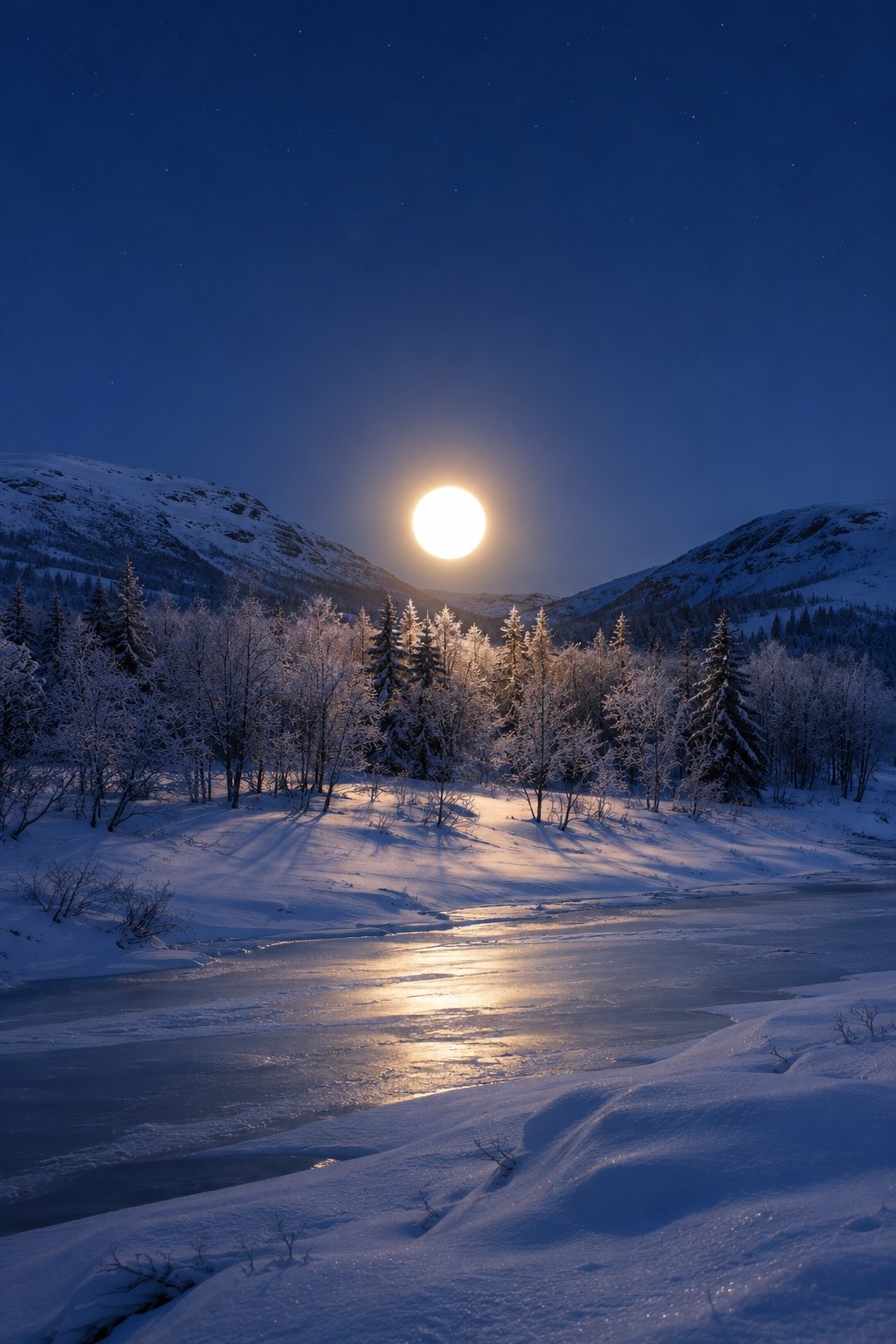
- Where: Hessdalen, Holtålen municipality, Trøndelag — a roughly 12 km valley about 45 minutes north of Røros, central Norway, home to around a hundred people.
- First modern record: December 1981, though local accounts of lights in the valley reach back to at least the 1930s.
- Peak rate: 15–20 sightings a week between December 1981 and mid-1984; down to roughly 10–20 a year by 2010.
- Appearance: about half a metre to 30 metres across; bright white, yellow or red; lasting from a second to more than an hour, by day as well as night.
- Status: recorded on radar, magnetometer, spectrograph and video since 1984 — and still without an agreed explanation.
The valley: a 12-kilometre stage
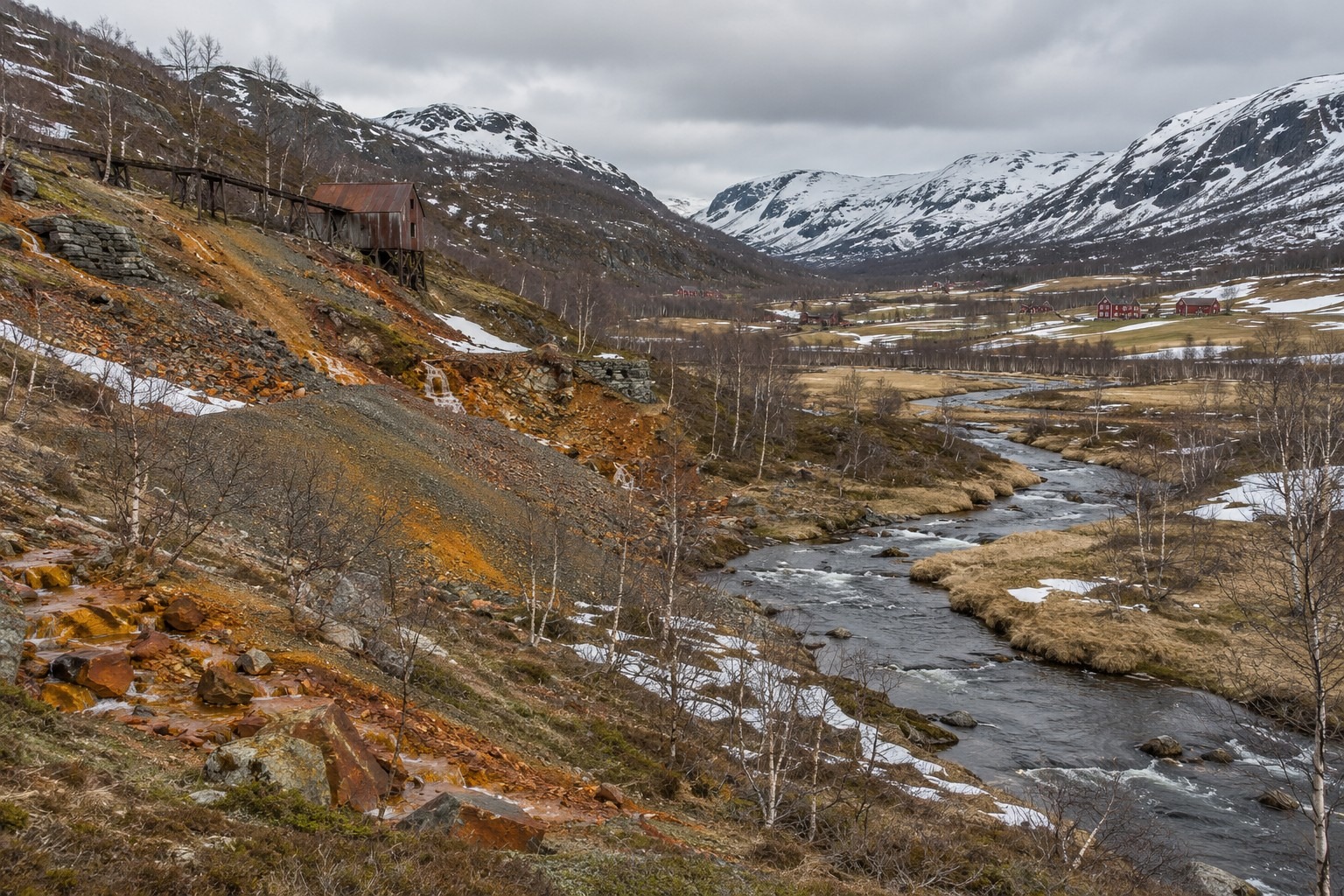
Hessdalen is not a dramatic place. Low birch and spruce, bog, rounded grey-green hills, a thin river called the Hesja running its length, a scattering of farms along a single road. In winter the valley is dark for most of the day and bitterly clear — which is partly why so much of the record comes from January and February.
Geology is what makes it interesting. Just south lies Røros, a town built on copper, mined there from the 1640s and worked for three centuries; the wider district is riddled with sulphide ore bodies and abandoned workings. Beneath Hessdalen itself sits a large igneous intrusion of gabbro, and the slopes on either side of the Hesja are chemically different from one another — iron and zinc minerals on one flank, copper-bearing rock on the other.
That asymmetry matters later. For now, hold on to one odd fact: the lights do not wander. They appear inside this valley, over and over, and essentially nowhere around it.
Field marks of the Hessdalen lights Norway photographs
Observers and cameras agree on a surprisingly consistent catalogue. Colours run white, yellow-white, and red. Sizes span two orders of magnitude, from roughly half a metre to around thirty. Some hang motionless above the treeline for an hour; others cross the valley in seconds; a few sway slowly, like something floating rather than flying.
Project Hessdalen’s own 1984 report sorted its unexplained cases into three types: small white or blue flashes; yellow-white lights with erratic movement; and — the strangest category — multiple lights travelling together while holding a fixed separation, often with one red component. Spectral photographs of a cluster showed a white central ball ejecting green satellites, the green attributed to ionised oxygen, with a nearly flat-topped emission profile rather than the clean lines of a burning gas.
And then, sometime in mid-1984, the frenzy simply stopped. The valley never went fully quiet, but twenty events a week became twenty events a year, and researchers have no accepted explanation for that collapse either.
{IMAGE_2}
The instrument rack: radar, magnetometer and one red laser
Between 21 January and 26 February 1984, a volunteer team led by Norwegian engineer Erling Strand hauled a remarkable amount of kit into the valley: an Atlas 2000 radar with a 33-kilometre range, a fluxgate magnetometer, an MEQ-800 seismograph, cameras fitted with diffraction gratings for spectra, a radio spectrum analyser covering 150 kHz to 1250 MHz, Geiger counters, infrared viewers, and a 633-nanometre helium-neon laser of well under a milliwatt.
Their arithmetic is worth quoting precisely, because it is the part popular retellings tend to skip. Of 188 logged reports, 86 were identified as ordinary aircraft. Fifty-three survived as anomalous, four of them rated at the highest strangeness. Thirty-six radar recordings were obtained, three of which coincided with something a human being was watching at the same moment. One return implied a minimum speed of 8,000 to 9,000 metres per second. Several reflections came back as strong as the echo from a mountainside — consistent with a solid object, the report notes, or with a locally and strongly ionised gas, and radar alone cannot tell those apart.
Then there is the laser. On nine occasions the team aimed the beam at a light that was flashing at a steady rate, and the flashing changed to a double-blink for as long as the beam was on it; secondary summaries differ slightly on whether one of the nine trials failed. Nobody has proposed a mechanism for why a sub-milliwatt red laser should change anything about a glowing object kilometres away, and nobody has independently repeated it. Strand’s own conclusion was admirably flat: they had not found out what the phenomenon was, only that it could be measured.
Permanent monitoring followed. The Hessdalen Automatic Measurement Station — the “Blue Box” — went into service on 7 August 1998 with cameras and a magnetometer, and a dedicated observatory was added in 2018. Analysing the station’s 1998–2001 archive for the Journal of Scientific Exploration, Italian astrophysicist Massimo Teodorani reported radiant powers reaching up to about 19 kilowatts, clusters that appeared to regulate their own temperature, the ejection of smaller light balls, and an unidentified frequency shift in the very low frequency radio range.
Forty years on, the valley’s real contribution is not an answer but an archive — and that archive, not any of the theories built on it, is why serious geophysicists still bother with Hessdalen at all.
| What was actually measured | Instrument and date | What it does not establish |
|---|---|---|
| Radar echoes as strong as mountain returns | Atlas 2000 radar, Feb 1984 | Whether the target was solid matter or dense ionised gas |
| One track at a minimum 8,000–9,000 m/s | Radar, Feb 1984 | A single unrepeated recording; no error budget published |
| Flash rate doubling when hit by a 633 nm laser | He-Ne laser, nine attempts, Feb 1984 | Any mechanism; never independently replicated |
| Radiant power up to ~19 kW; smaller balls ejected | Automatic station archive, 1998–2001 | Where the energy comes from |
| ~40% match between magnetic pulsations and sightings | Fluxgate magnetometer, 11–14 Feb 1984 | Significance — the report itself calls the sample too small |
| Conductive sulphide zones in a ~6 × 12 km ellipse | VLF ground survey, published 2024 | That this geology has ever produced a single light |
Mechanism one: the valley as a battery
Italian engineer Jader Monari proposed in 2014 that Hessdalen works like an enormous, badly made car battery. One valley wall supplies the iron and zinc, the other supplies copper, and the Hesja — made acidic and conductive by drainage from old sulphide mine workings — acts as the electrolyte between them. Chemical reactions in that system release gas bubbles that rise into the air already electrically charged, and those, in this picture, are what glow.
Could a river really run a battery big enough to light a valley? The first half of the claim is testable, and Monari’s group did test it: they measured a current flowing between stones taken from opposite banks that was, by their account, enough to power a small light bulb. Nobody disputes that two different ore bodies separated by acidic water form a galvanic cell. The gap is everything after that — getting from a weak ground current to a 19-kilowatt object hanging over the treeline.
Bjørn Gitle Hauge and Erling Strand of Østfold University College, the two engineers who have carried the Hessdalen research programme since the early 1980s, treat the battery model as a working hypothesis rather than a result, and describe the chemistry as a possible supply of charge rather than a demonstrated source of light.
Mechanism two: dust, radon and a cold plasma
A second family of explanations starts not with electricity but with the air. A 2007 analysis placed the lights at very low altitude — possibly only tens of metres above the treeline — and suggested an incompletely understood combustion involving valley dust rich in the rare-earth element scandium. Turns out the Norwegian press ran with it: “The Mystery in Hessdalen is Solved.” It wasn’t.
Physicists Gerson Paiva and Carlton Taft took a different route in 2010, modelling the lights as a dusty plasma in which radon decay ionises air and dust grains, which then self-organise into so-called Coulomb crystals — structures that, in their calculation, would sit around 5,000 K. In a follow-up the pair tested whether piezoelectricity, the charge released when quartz grains are strained in stressed rock, could do the job instead. Their own answer was no: piezoelectric charging could not account for the geometrical structures actually photographed.
A published negative result on your own favoured mechanism is rare, and it says something good about the people working this problem.
What the sceptics say — and why it matters
Norwegian physicist Bjørn Samset has put the most pointed objections on record. The distance between the proposed electrodes, he argues, is simply too great for the field to do useful work. More awkward still is the thermal problem: electrically charged gases normally sit at thousands of degrees, so a “cold plasma” drifting gently above a Norwegian bog is conceptually uncomfortable. He has also noted, bluntly, that much of the supporting literature appears in low-impact journals with few citations.
Those criticisms deserve to sit in the article rather than in a footnote. So does the mundane baseline the 1984 team established themselves — nearly half of everything reported that winter turned out to be aircraft. A separate strand of the literature has argued over whether distant car headlights on valley roads explain a share of the sightings, with Hessdalen researchers publishing specifically against that reading.
No consensus explanation exists. Anyone who tells you otherwise — in either direction — is overselling.
The 2024 ground survey: an ellipse beneath the valley
Most popular accounts of Hessdalen stop in 2014. The newest peer-reviewed work is considerably more interesting, and it changes the question being asked.
In May 2024, G. N. Vargemezis, Jacques Zlotnicki, Bjørn Gitle Hauge and Erling P. Strand published a very low frequency electromagnetic survey of the valley in the Journal of Applied Geophysics (volume 226, article 105398). Across six geophysical field campaigns — some also measuring the total magnetic field and self potential at the ground — they walked traverses totalling about 100 kilometres of line at roughly 20-metre station spacing, covering some 100 square kilometres. The survey mapped several conductive zones, mostly tied to sulphide mineral deposits, and found that their surface trace outlines an ellipse of roughly 6 by 12 kilometres, apparently following the buried gabbro intrusion.
Here is why that is new: the authors are no longer arguing about what a light ball is made of. They are arguing that near-surface structures, within a few hundred metres of the ground, could supply what the phenomenon needs — and, crucially, that this explains why the lights appear inside this valley and not the next one. The ellipse they mapped is about the size of the area where the sightings cluster. That is a geographical coincidence worth taking seriously, and it is a far more falsifiable claim than any of the glow mechanisms that came before it.
Questions Readers Ask
Are the Hessdalen lights evidence of alien craft? No. Project Hessdalen grew out of UFO organisations — UFO-Norge and UFO-Sverige launched it in 1983 — but the research itself has been geophysical from the start, and every published hypothesis is about rocks, water, dust and plasma. “Unidentified” is a statement about our instruments, not about the origin.
Can a visitor still see them? Possibly, but the odds are poor. At roughly 10–20 recorded events a year, you would be gambling on a rare occurrence; the dark, clear weeks of midwinter have historically produced the most sightings, and the valley has a monitoring station, an observatory, and locally run accommodation for people who want to try.
Which explanation is currently strongest? Honestly, none is strong. The geological battery and the dusty-plasma models are the two serious candidates, both are contested on energy grounds, and the 2024 geophysics supports the setting for an electrical mechanism without demonstrating the light itself.
Does this happen anywhere else? Yes — Hessdalen belongs to a broader class of recurring anomalous atmospheric light phenomena documented at several locations worldwide. What makes this valley exceptional is not the lights but the paperwork: four decades of continuous instrumental monitoring that no comparable site has.
Sources and Notes
- Project Hessdalen — Final Technical Report, 1984 (Project Hessdalen archive, Østfold University College)
- Journal of Applied Geophysics, vol. 226 (2024) — VLF electromagnetic survey of Hessdalen
- Journal of Scientific Exploration (2004) — long-term survey of automatic station data, 1998–2001
- Acta Astronautica, vol. 67 (2010) — transient luminous phenomena in the low atmosphere of Hessdalen
- ScienceNorway / forskning.no — reporting on the geological battery hypothesis and its critics
Four decades of data have narrowed Hessdalen from a mystery to a much better-posed question, and the question is no longer “what is the light?” but “what does this particular 12 kilometres of ground do that nowhere else seems to?” The valley has already given up its geology. Whether it ever gives up the rest may depend on something simple and unglamorous: being there, instruments running, on the night it happens again.
Illustrations are AI-generated. Article fact-checked and human-edited. Our editorial standards.