Driftwood Folklore: Why the Sea Was Said to Choose
In driftwood folklore, the sea didn’t surrender wood by accident. It chose. A log that survived the storm and reached the shore wasn’t debris. It was a delivery. And the person who found it had, in some old logic, been selected.
Across the cold edges of the world — northern Europe, Iceland, the Faroe Islands, the Pacific Northwest — coastal people built meaning around what the tide left behind. A battered, bark-stripped log that washed up whole carried a story. The ocean had tested it and let it pass. Where does a belief like that come from, and why did it hold for so long?
Key Facts
- Coastal folklore from northern Europe to the Pacific Northwest treated surviving driftwood as chosen, not random.
- Faroe Islanders kept driftwood finds for years, some passed down as protective talismans.
- North Atlantic storm waves routinely exceed 10 metres, the gauntlet the wood survived.
- Treeless regions like Iceland and the Faroes depended on driftwood as a vital timber source.
- Modern science traces much North Atlantic driftwood to Siberian rivers thousands of kilometres away.
In short: Driftwood folklore held that the sea deliberately chose which wood survived the storm and reached the shore, making a washed-up log a delivery rather than debris. From the Faroe Islands to the Pacific Northwest, finders kept these pieces as talismans. The belief grew from a real dependence on driftwood in treeless coastal regions.
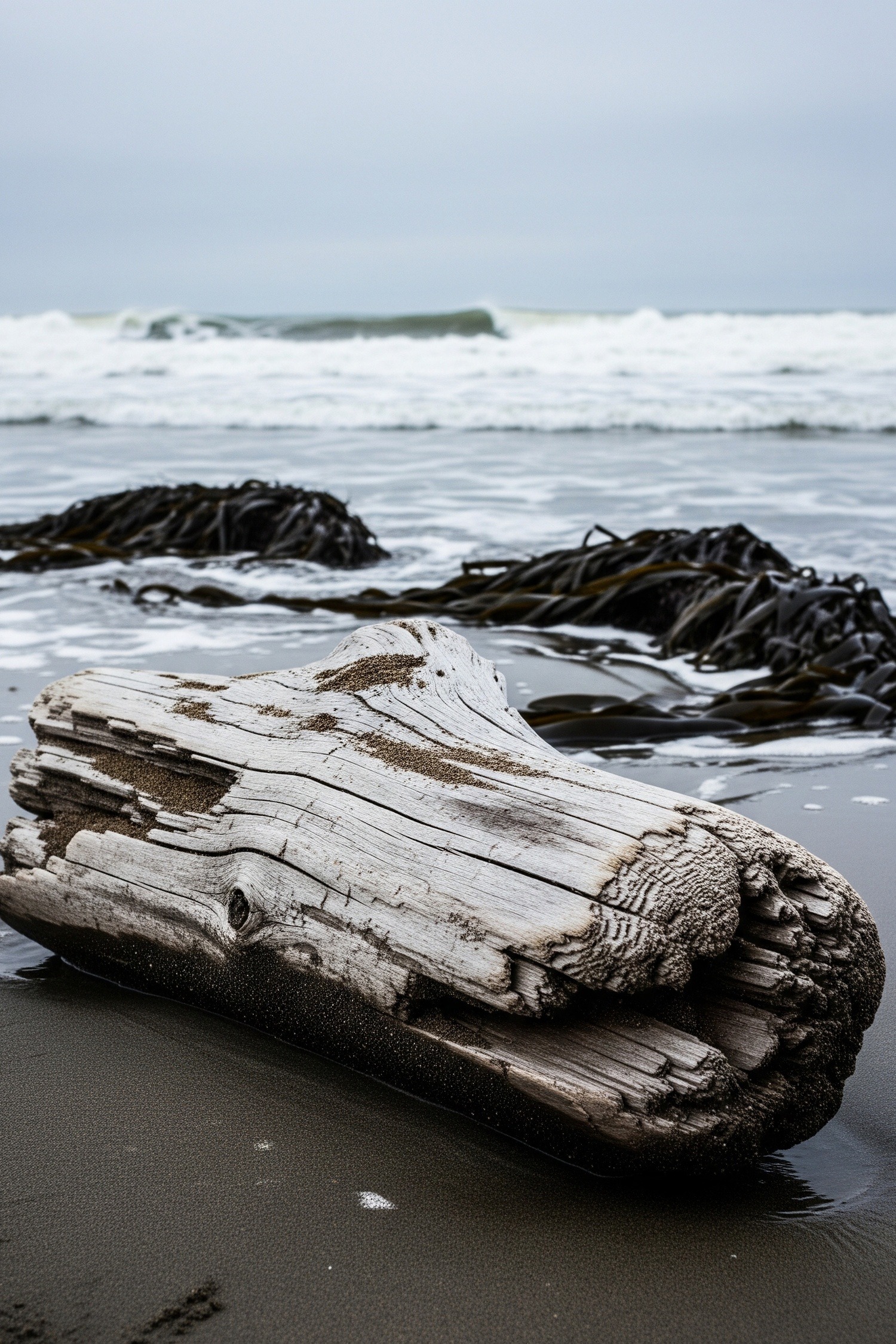
Where did the belief in driftwood folklore begin?
The idea takes root in places where the sea was the only reliable narrator. Before charts, barometers, and forecasts, a coastal community read the ocean through what it gave and took. A piece of wood that endured a North Atlantic gale — where waves regularly top 10 metres — had clearly been through something. Folklorists studying these traditions describe a worldview in which the wood’s arrival was read as intention rather than physics — a way of thinking the documented history of driftwood and its uses shows recurring across many coastal cultures. The sea had carved it, tested it, and chosen to release it onto a particular shore.
This logic intensified in treeless lands. Iceland and the Faroes had almost no native timber. Wood that floated in from elsewhere was not a curiosity — it was building material, fuel, the raw stock of boats and homes. When something that scarce and useful arrives unbidden from a hostile sea, the temptation to read purpose into it is enormous. Scarcity breeds significance.
So the wood became more than wood. It became a sign that the ocean, for once, had given rather than taken.
How communities turned driftwood into talismans
Finding the right log on the right morning meant something specific. The sea had selected you. In the Faroe Islands, families kept driftwood finds for years, and some pieces moved between generations as protective objects — talismans against the very waters that had shaped them. The wood that survived the storm was thought to carry the storm’s endurance into the home that kept it. This same instinct to hold onto objects the sea returns runs through many maritime cultures, and our collection of stories about what the ocean gives back traces how widely the pattern repeats.
Ownership rules formed around it. In several Nordic communities, custom dictated who had the right to driftwood that landed on a stretch of coast, and disputes over valuable logs were real. A single large, sound timber could be worth more than most household goods. The folklore and the economics reinforced each other — a chosen log was both spiritually significant and materially precious, and the two meanings were hard to separate.
The talisman wasn’t decoration. It was insurance, in the only currency the sea recognized.
What science later revealed about driftwood’s journey
The folklore assigned the journey to intention. Modern research traced it to rivers. Studies reported through outlets including BBC science coverage, drawing on dendrochronology — the dating of wood by its growth rings — have shown that much of the driftwood reaching Iceland and the North Atlantic originated thousands of kilometres away in the great Siberian rivers, the Yenisei, the Ob, and the Lena. Spring floods sweep felled trees into the Arctic Ocean, where sea ice locks them in and carries them across the basin over years before releasing them on distant shores.
That changes the scale of the story without diminishing it. A log on a Faroese beach might have begun as a tree in central Siberia, frozen into pack ice, drifted for several years across the Arctic, and finally washed up after a journey no person directed. The folklore was wrong about the mechanism and right about the gravity. These pieces really had survived an ordeal almost beyond comprehension.
The ocean didn’t choose. But the wood that arrived had genuinely been tested, and that part the old stories got exactly right.
Why does the old belief still resonate?
The belief persists in softened form because it answers a human need that data doesn’t. We are pattern-seeking by design, and a treeless community waiting on the sea for survival had every reason to read meaning into arrival. Anthropological work catalogued through institutions like the Smithsonian Institution documents how object-based folklore tends to cluster exactly where material life is precarious — where the stakes of a single find are high enough to demand a story.
Here’s the thing about driftwood folklore: it survived because it was useful, not because it was true. A belief that the sea chooses encourages you to walk the shore at dawn, to value what you find, to keep it and care for it. The story produced behavior that kept timber-poor communities supplied. Whether the ocean had intentions was beside the point — the people who believed it had were the people who gathered the wood.
That’s why the tradition didn’t vanish when dendrochronology explained the drift. It simply moved from survival into memory.
What a warming Arctic means for the old belief
The strange afterlife of driftwood folklore is that climate change may be quietly ending the phenomenon it describes. The wood reaches northern shores because Arctic sea ice locks Siberian logs in place and ferries them across the basin over several years. As that ice thins and retreats, fewer logs get trapped, and those that do may sink or rot before completing the crossing. Researchers studying Arctic driftwood as a record of past ice extent have noted that modern arrivals are already changing in volume and origin.
There’s an irony worth sitting with. For centuries, a washed-up log was read as the sea making a choice. Now the supply of that “chosen” wood depends on a frozen conveyor belt that human warming is dismantling. The folklore framed driftwood as a gift from an eternal, deciding ocean. The science reveals it as the output of a specific, fragile system — one with an expiry date we’re accelerating.
Future generations on those shores may walk the same beaches at dawn and find nothing. The sea will not have stopped choosing. The ice will simply have stopped delivering.
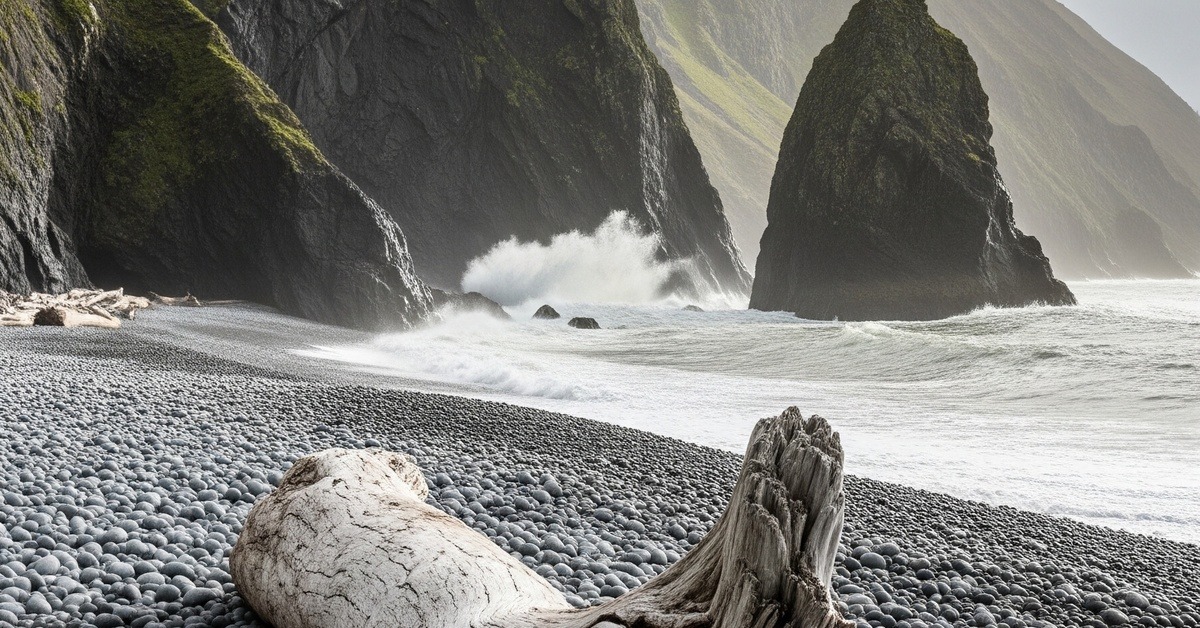
Where to See This
- The Faroe Islands, North Atlantic — windswept beaches still receive Arctic driftwood; best visited in summer when the long days open the rugged coastline.
- National museums in the Faroes and Iceland hold driftwood artifacts and document the tradition of keeping logs as protective objects.
- For a curious traveler: on any northern shore after a storm, look for bark-stripped, salt-cured logs — the smoothed, silvered wood is the kind old folklore would have called “chosen.”
By the Numbers
- 10+ metre waves are routine in North Atlantic winter storms, the conditions the wood survived.
- Several years is the typical drift time for a log frozen into Arctic sea ice before it lands.
- Thousands of kilometres separate Siberian source rivers from Icelandic and Faroese beaches.
- Near-zero native timber grew in Iceland and the Faroes, making driftwood essential.
- Generations — some Faroese families kept driftwood talismans across multiple lifetimes.
Field Notes
- Dendrochronology can pinpoint a driftwood log’s origin forest by matching its growth rings to regional tree-ring records, confirming the Siberian source for much North Atlantic wood.
- In treeless Iceland, driftwood was historically so valuable that rights to coastal stretches were tied to the timber they yielded, and the best logs went into churches and boats.
- The “chosen wood” belief reframes the folklore’s accuracy: the wood really had endured a multi-year ordeal across the Arctic, even if no intention guided it.
- One thing researchers still debate is how sharply Arctic ice loss will reduce future driftwood supply, since less sea ice means fewer logs locked in and carried across to northern shores.
Frequently Asked Questions
Q: What does driftwood folklore actually claim?
It holds that the sea deliberately chose which pieces of wood survived a storm and reached the shore, so a washed-up log was a delivery rather than debris. Across the Faroe Islands, Iceland, and the Pacific Northwest, finding one was read as being selected by the ocean. Some communities kept these logs for years as protective talismans. The belief was strongest in treeless regions where driftwood was a vital and scarce resource.
Q: Where does North Atlantic driftwood really come from?
Much of it originates in the great rivers of Siberia — the Yenisei, Ob, and Lena. Spring floods sweep felled trees into the Arctic Ocean, where sea ice encloses them and carries them across the basin over several years. They finally wash up on Icelandic, Faroese, and other northern shores. Dendrochronology, which dates wood by its growth rings, confirmed this long-distance journey and overturned the older assumption of a local source.
Q: Why did people treat driftwood as a talisman?
Because in timber-poor coastal regions, driftwood was both materially precious and symbolically powerful. A log that survived 10-metre North Atlantic waves seemed to carry the storm’s endurance, and keeping it was believed to extend that protection to the household. The folklore also encouraged useful behavior — walking the shore, valuing finds, and conserving wood — in places where every usable timber mattered for boats, homes, and fuel.
Q: Is there any truth behind driftwood folklore?
The mechanism was wrong, but the instinct was right. The sea has no intentions, yet the wood that arrived really had survived an extraordinary ordeal — a multi-year journey across the Arctic, locked in ice. So the folklore’s sense that these pieces had been “tested” was accurate, even though no force selected them. The belief endured because it produced practical behavior, not because it described physics correctly.
Editor’s Take — Sarah Blake
What stays with me isn’t whether the sea chooses — it doesn’t. It’s that the old story was more accurate than it had any right to be. A Faroese family clutching a driftwood talisman believed it had endured the storm. It had. It just endured a far stranger storm than they imagined, frozen in Arctic ice for years, drifting from a Siberian riverbank no one in those islands would ever see. Folklore reached for the right awe and missed only the route.
We tend to think science replaces folklore, that explanation kills wonder. But trace one silvered log back to its Siberian forest, across years of pack ice and thousands of kilometres of black water, and the explanation is stranger than the superstition ever was. The sea didn’t choose the wood. Something far larger and more indifferent did. So which version, really, should leave you standing longer on the shore at dawn?
Illustrations are AI-generated. Article fact-checked and human-edited.