Why Do Cats Get the Zoomies? The Midnight-Energy Science
You’re half-asleep at 2:14 a.m. when a paw-shaped freight train explodes off the back of the couch, ricochets off the rug, and disappears under the bed — and you ask, again, why do cats get the zoomies. The short answer is that a small, well-rested ambush predator is doing exactly what evolution built it to do. The longer answer involves a brain region called the suprachiasmatic nucleus, a misunderstood nerve, and a surprising amount of “we don’t actually know yet.”
Key Facts
- Veterinary behaviorists call zoomies “FRAPs” — Frenetic Random Activity Periods — and most episodes last only 10-30 seconds.
- Cats are crepuscular, not nocturnal: their hunting clock is set for dawn and dusk, which in a modern apartment becomes roughly 5 a.m. and 10 p.m.
- The average house cat sleeps 12-16 hours a day, banking energy for short, explosive activity windows.
- Dr. Alison Gerken, a veterinary behaviorist at the San Francisco SPCA, has stated there is no definitive research explaining why FRAPs happen — most expert explanations are well-reasoned theory, not proof.
- In a cat over 10 years old, sudden new “zoomies” can be a warning sign for hyperthyroidism, which Cornell’s Feline Health Center identifies as the most common endocrine disease in older cats.
In short: The zoomies are healthy, normal predator-software running on a well-fed couch lion — usually pent-up energy meeting a crepuscular hunting clock. They become a problem only when they look different: a senior cat newly racing nightly, weight loss, or a scared, fleeing body posture instead of a playful one.
Key Facts
- Veterinary behaviorists call zoomies FRAPs—Frenetic Random Activity Periods—and most episodes last only 10–30 seconds.
- Cats are crepuscular, not nocturnal; their hunting clock peaks at dawn and dusk.
- The average house cat sleeps 12–16 hours a day, banking energy for short, explosive bursts.
- Dr. Alison Gerken, a veterinary behaviorist at the San Francisco SPCA, notes there is no definitive research explaining why FRAPs happen.
- In cats over 10, sudden new zoomies can signal hyperthyroidism, which Cornell’s Feline Health Center calls the most common endocrine disease in older cats.
In short: The zoomies are Frenetic Random Activity Periods (FRAPs), usually lasting 10–30 seconds—normal predator behavior in a well-fed, well-rested cat that sleeps 12–16 hours a day. They peak at dawn and dusk because cats are crepuscular. No definitive research explains them, but sudden new zoomies in senior cats can signal hyperthyroidism.
What the Zoomies Actually Are
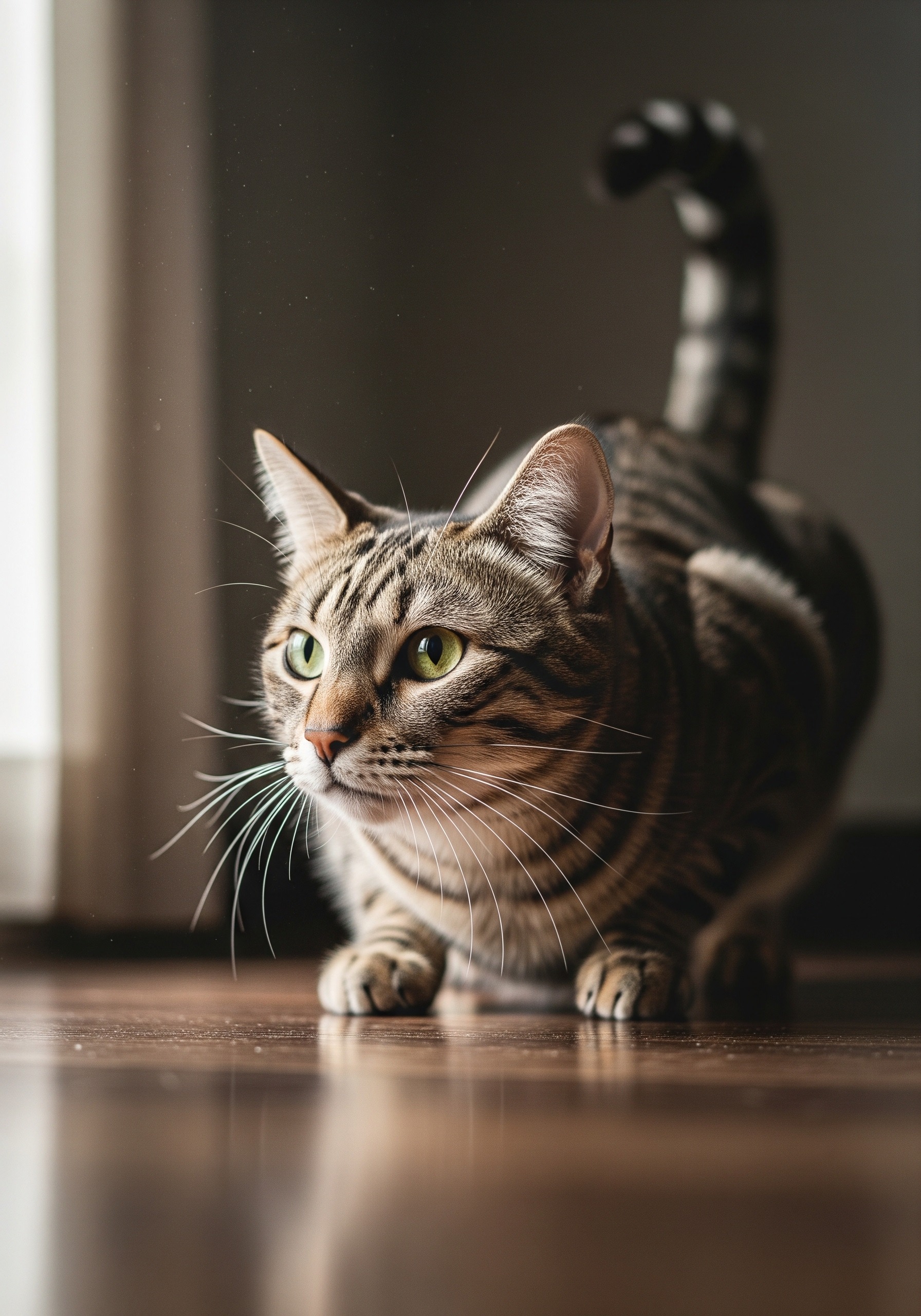
The technical name is the Frenetic Random Activity Period, or FRAP. It is not a quirk of one weird tabby. It shows up in cats, dogs, ferrets, foxes, even rabbits, which is a strong clue that whatever is driving it is older than domestication.
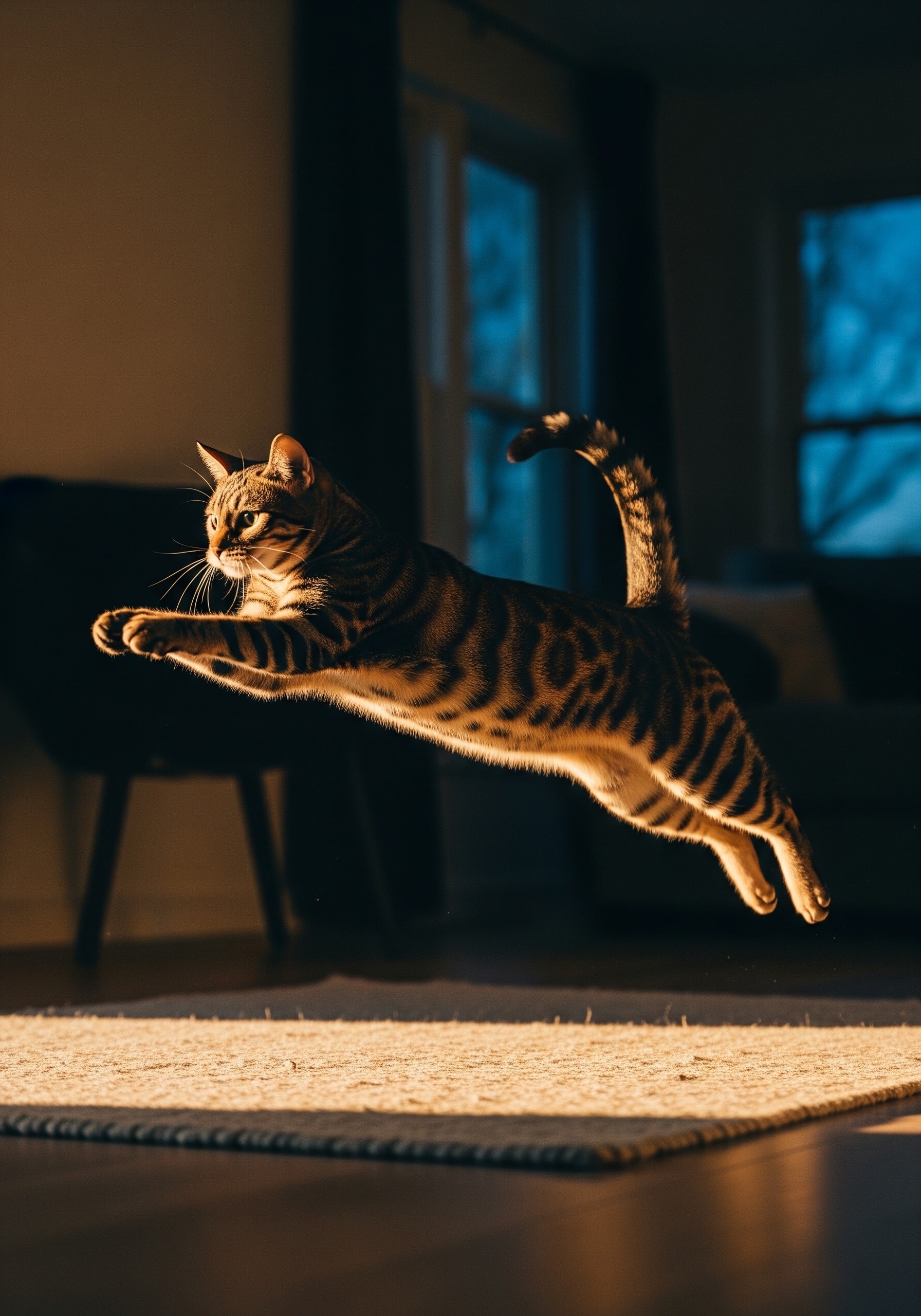
A FRAP has a recognizable shape. The cat freezes for a half-second — pupils dilate, hindquarters tighten — then explodes into a 10 to 30 second sprint with sudden direction changes, skid-pivots, and frequently a leap onto something they should not be leaping onto. Then it ends as abruptly as it started, usually with the cat sitting down to groom one shoulder as if nothing happened.
That last detail matters. A genuine FRAP has a clean off-switch. Healthy zoomies end in a stretch and a groom, not in panting, hiding, or a third and fourth round.
Why Do Cats Get the Zoomies? The Real (Incomplete) Answer
Here is the honest version that the top results tend to skip: nobody has proven the mechanism. Dr. Gerken, the San Francisco SPCA behaviorist quoted in PetMD‘s reporting, has been direct about it — there is no definitive research on why cats get the zoomies. What we do have is a stack of very good theories that point at the same animal from different angles.
{IMAGE_2}
The strongest theory is energy budgeting. A healthy adult cat sleeps 12 to 16 hours a day, and a kitten more like 18. That sleep is not laziness; it is a strategy. Cats evolved as solitary ambush hunters whose meal — a single mouse, a single bird — is worth only a few minutes of explosive effort. Resting all day and then spending the saved energy in short, violent bursts is exactly how a wild cat survives. The couch lion still runs that program. By the time the lights go out, the tank is full and the program triggers.
The second theory is the hunt itself. A FRAP is, structurally, a complete predation sequence with the prey edited out: stalk, pounce, sprint, kill-bite onto a toy or a sock. Indoor cats with no real mice to chase route the sequence inward and chase the only thing left — themselves, a shadow, you, your foot.
The third, less-discussed theory is endorphin release. Brisk exercise floods a mammal brain with feel-good neurochemistry, and it is plausible — though not yet measured in cats specifically — that the zoomies are partly self-reinforcing. The cat sprints because the sprint feels good, the same way a dog circles before lying down. Plausible, not proven. That distinction matters more than most cat blogs admit.
Why Do Cats Get the Zoomies at Night?
This is the question that drives most middle-of-the-night Google searches, and the answer is older than your apartment building. Cats are crepuscular — their activity peaks twice a day, at dawn and at dusk, the same windows in which their natural prey (small rodents, ground-feeding birds) is most active and most catchable. The internal clock that runs this schedule lives in the suprachiasmatic nucleus, a tiny region above the optic chiasm that synchronizes mammals to light. Your cat’s SCN does not care that you have a 9 a.m. meeting.
Inside a quiet, dark apartment, “dusk” effectively stretches across the evening and into the early morning. The cat woke up energized at the biologically correct time. The only thing missing is something to hunt.
There is also a feedback loop most owners don’t notice. If a cat learns that 3 a.m. zoomies eventually produce a human stumbling toward the food bowl — even just to make the chaos stop — the behavior gets paid, and the behavior stays. Behaviorists call this intermittent reinforcement, and it is the single most stubborn training pattern in any species. If your cat’s nightly demolition derby is escalating, the most useful question is not “what is wrong with my cat” but “what am I accidentally paying for.”
Why Do Cats Get the Zoomies After Pooping?
The post-litter-box sprint is real, it has a nickname — “poophoria” — and the most popular explanation has a quiet problem that almost no article mentions.
The popular explanation comes from Dr. Anish Sheth, a gastroenterologist at the University of Pennsylvania, who proposed that a large bowel movement stimulates the vagus nerve, the long cranial nerve that runs from the brainstem through the abdomen. Stimulating it can drop heart rate and blood pressure, producing a brief light-headedness that, the theory goes, registers in cats as a tiny euphoric rush — and the rush triggers the sprint.
Here is the inconvenient detail: vagal stimulation typically produces relaxation, not a sprint. That is the contradiction Dr. Sheth himself has acknowledged, and the BBC Science Focus coverage of poophoria flags it openly. The vagus-nerve story is the best one we have, but it is not closed.
Three other explanations probably matter at least as much. First, evolutionary hygiene: in the wild, scent left behind at a defecation site is a predator advertisement, and a fast exit is good survival policy. Second, plain physical relief — anyone who has had a stomach bug recognizes the energy that returns the moment the discomfort lifts. Third, simple aversion: many cats actively dislike their litter box, and the sprint is just a “get me out of here.” The most useful working answer is probably all four at once.
Kittens, Adults, Seniors: The Zoomies Across a Cat’s Life
Zoomies are not constant across a lifespan, and the shape of the curve is one of the more useful diagnostic tools an owner has.
Kittens are FRAP machines. From roughly eight weeks to a year, the predation circuitry is being rehearsed against everything in the apartment — your ankles, the curtain rod, an empty Amazon box, the cat. Multiple short, intense episodes per day is normal and healthy.
Adult cats from about two to seven still zoomie, but the episodes are fewer, shorter, and more predictable — usually clustered at dusk and after meals. A confident adult cat with environmental enrichment may go a day or two between visible FRAPs without anything being wrong.
Senior cats, past about ten, should be tapering. A senior cat that suddenly starts having frequent, intense, nightly zoomies after years of calm is not “rediscovering kittenhood.” That is the pattern Cornell’s Feline Health Center and the International Cat Care behavior team flag as worth a vet visit, because in that age bracket it overlaps with hyperthyroidism, hypertension, and cognitive dysfunction syndrome — three very treatable conditions when caught early.
Healthy Zoomies vs. Zoomies That Need a Vet
Most owners ask the wrong question. It is not “are zoomies bad?” — they are almost always fine. The right question is “do these zoomies look the same as last month’s?” Sudden change is the signal. Here is the side-by-side most articles never give you, drawn from the consensus of veterinary behaviorists at UC Davis, the San Francisco SPCA, Cornell, and International Cat Care.
Quick reference: when are zoomies fine, and when do they call a vet?
| Signal | Healthy zoomies | Worth a vet call |
|---|---|---|
| Duration | 10-30 seconds, then over | Several minutes, or repeating in waves |
| Body language | Ears forward or neutral, tail up, playful chirps | Ears flat, dilated pupils, hiding after, vocalizing in distress |
| Age + frequency | Kitten/adult, predictable rhythm | Senior cat (10+) with sudden new nightly episodes |
| Other changes | Eating, drinking, weight all stable | Weight loss despite huge appetite, increased thirst, vocalizing at night |
| Recovery | Ends in a stretch and a groom | Ends in panting, hiding, or apparent disorientation |
The right-hand column does not diagnose anything by itself. It just tells you the next thing to do is a phone call, not a Google search. Hyperthyroidism in particular is sneaky — Cornell estimates it is the most common endocrine disease in cats over ten, and one of its earliest signs is exactly this profile: a calm older cat that suddenly seems wired, eats more, and loses weight anyway.
Cat Zoomies Explained: What to Do When the Lightning Hits
The honest, slightly boring truth is that you mostly do not need to do anything during a FRAP. It will be over in less than a minute. The work happens between episodes.
Move the play. A daily 10-15 minute structured play session with a wand toy — feathers, a string, anything that triggers the stalk-chase-pounce loop — drains the same energy budget the 3 a.m. sprint is spending. Behaviorists call this “redirecting the predatory sequence,” and it is the single most consistent recommendation across the UC Davis, San Francisco SPCA, and Cornell behavior teams. End the session with a meal, so the cat completes the wild sequence: hunt, catch, eat, groom, sleep. That sequence is the one piece of feline software that reliably produces a calm cat.
Move the food. A puzzle feeder turns a 30-second bowl-empty into a 20-minute working hunt. For most apartment cats, this single change does more for nighttime peace than any other intervention.
Stop paying for the chaos. If the 3 a.m. zoomies reliably end with you stumbling to the kitchen, the behavior is being trained — by you, accidentally, on the worst possible schedule. An automatic timed feeder that releases a small breakfast at 5 a.m. takes you out of the loop completely.
And clear the path. The most common zoomie injury, in my time talking with cat owners, is not the cat — it is the human stepping on a pen or a shoelace at full sprint. Pick up the floor before bed. Your tax bill on living with a small, furry, well-rested predator.
Frequently Asked Questions
Q: Are cat zoomies a sign of a happy cat?
A: Usually, yes. Playful FRAPs with relaxed ears, an upright tail, and a clean stop are a sign of a healthy, well-rested, well-fed cat doing what its body was built for. The exceptions are the ones in the table above — sudden changes in a senior cat, fearful body language, or zoomies that don’t end.
Q: Why does my cat get the zoomies at 3 a.m. every single night?
A: Two things stacked. The biological clock in the suprachiasmatic nucleus is waking the cat at the species-correct hour, and a household routine — late dinner, no evening play, then a stumbling 3 a.m. feeding — may be accidentally training the timing. Move the play session and the last meal to right before your own bedtime, and the schedule often shifts within two weeks.
Q: Why does my cat get the zoomies after pooping?
A: The leading theory, proposed by Dr. Anish Sheth at the University of Pennsylvania, involves the vagus nerve and a brief light-headed rush — though Dr. Sheth himself notes vagal stimulation usually causes relaxation, not sprinting, so the picture isn’t complete. Evolutionary “leave the smell behind” instinct, physical relief, and litter-box aversion are probably all part of it too.
Q: Should I be worried about my older cat’s new zoomies?
A: Worth a check, yes. A senior cat that suddenly develops frequent nighttime zoomies after years of calm is on a short list of warning signs for hyperthyroidism (very common in cats over 10, per Cornell), high blood pressure, or feline cognitive dysfunction syndrome. All three are very treatable when caught early. A basic senior blood panel will rule them in or out.
Sources
- Cornell University College of Veterinary Medicine — Cornell Feline Health Center, Hyperthyroidism in Cats
- International Cat Care — Cognitive Dysfunction Syndrome in Cats
- PetMD — interviews with Dr. Alison Gerken, DVM, DACVB (San Francisco SPCA) and Dr. Elizabeth Stelow, DVM, DACVB (UC Davis Veterinary Medical Teaching Hospital)
- BBC Science Focus Magazine — “The (very adorable) reasons cats get the zoomies after pooping,” reporting on Dr. Anish Sheth (University of Pennsylvania)
- Virginia Tech Veterinary Teaching Hospital — Senior Cat Health: Recognizing Hyperthyroidism
The zoomies are not a glitch. They are the moment a small, perfectly engineered predator remembers what it is. Watch one carefully sometime — the freeze, the pivot, the kill-bite on a hair tie — and you are watching a hunt that ran for a million years before it ended up in your living room. Mostly, the right response is to enjoy it, clear the floor, and laugh. And every so often, when the rhythm changes and the cat looks new to itself, the right response is a phone call to the vet. Both are part of loving the same animal.
Illustrations are AI-generated. Article fact-checked and human-edited. Our editorial standards.