The Blue Jay Isn’t Actually Blue — Here’s What You’re Seeing
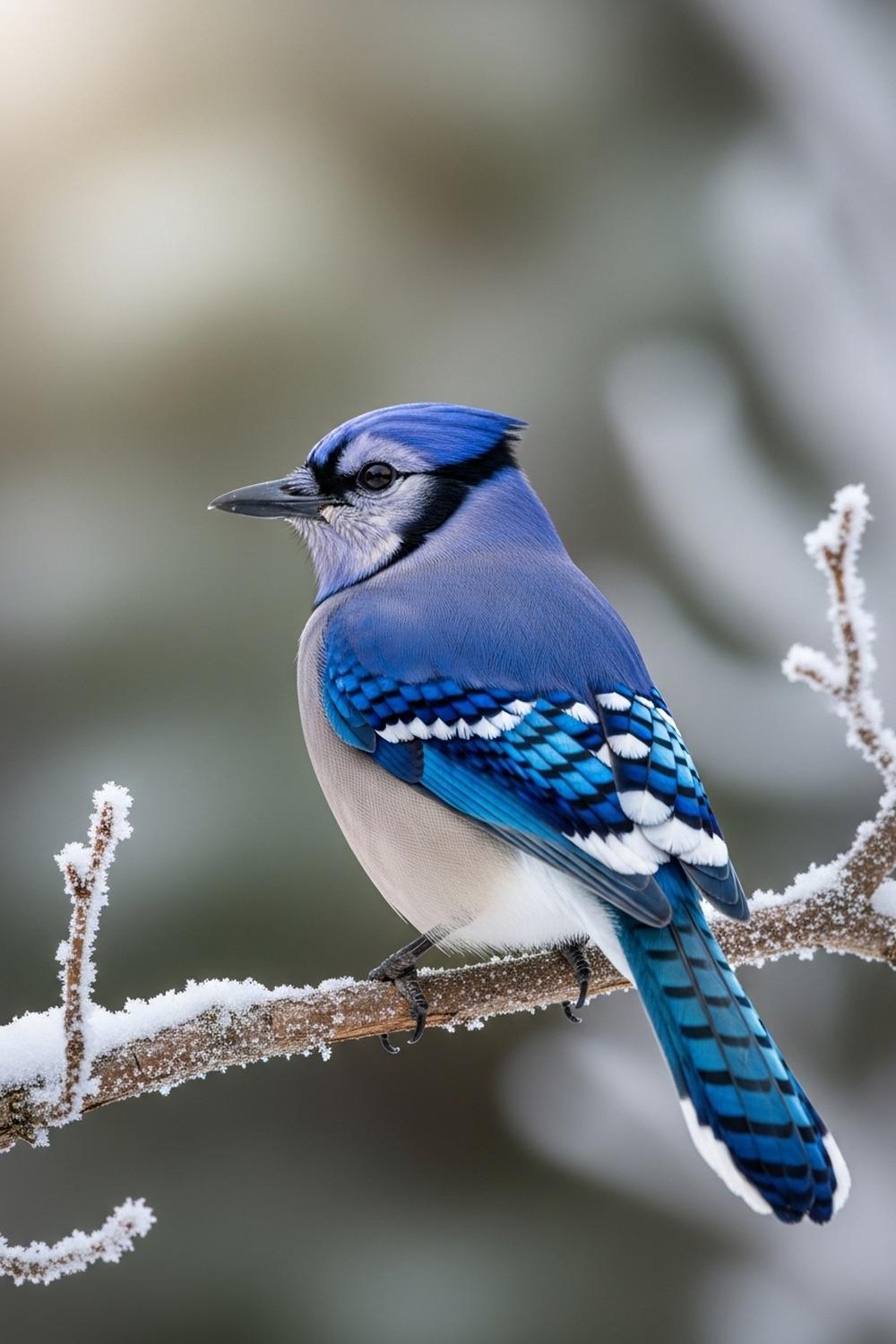
A blue jay lands on your fence. That blue — that absolutely perfect, electric blue — isn’t there. Not really. There’s no blue pigment in that feather at all, which means you’re looking at something closer to a magic trick than a bird.
I spent an embarrassing amount of time reading about this, and the moment it clicked, I couldn’t stop. A color that disappears the second you change the angle. A feather that’s been engineered at scales so small we needed electron microscopes just to see what birds have been doing for 400 million years.
Key Facts
- A blue jay’s feather contains zero blue pigment; its color comes entirely from structural coloration, with microscopic air-filled spheres in keratin scattering blue light at around 450 nanometers
- Researcher Richard Prum at Yale has spent decades proving blue jay feathers contain no chemical dye
- Morpho butterfly wing ridges sit 200 nanometers apart, a spacing verified by University of Ghent researchers in the 1970s
- A single blue jay feather contains roughly 300,000 medullary cells in the colored portion, none containing blue pigment
- Fossilized feathers from the Eocene epoch, 40 to 56 million years ago, still retain structural coloration signatures in electron microscopy scans
In short: A blue jay’s vivid blue contains zero pigment. Structural coloration birds produce color through microscopic air-filled spheres in keratin that scatter blue light at 450 nanometers, the same physics used by Morpho butterflies and peacocks. Because structure not chemistry creates it, the color never fades and survives 40 million years in fossils.
The Blue That Isn’t Actually There
Here’s what a blue jay’s feather is actually made of: zero blue pigment. None. Researchers like Richard Prum at Yale have spent decades proving this — there’s no chemical dye in those feathers, just pure architecture. The surface is built from microscopic air-filled spheres nested inside keratin, each one sized to scatter one specific wavelength: blue light, around 450 nanometers. That’s it. That’s the entire trick.
Pull a blue jay feather inside. Hold it up to the light. Now tilt it.
Watch what happens.
The blue shifts. It goes gray. Sometimes it goes almost invisible. The feather didn’t change — you changed your angle, and the geometry stopped working. It’s less like paint and more like pointing a mirror at the sky, except the mirror is built from structures smaller than the wavelength of visible light.
How Feathers Became Engineers
The mechanism is called structural coloration, and honestly, it’s elegant as hell. Those air-filled spheres in the feather’s medullary cells work as a photonic crystal — meaning when white light hits them, most wavelengths either pass through or get absorbed, but blue wavelengths bounce back coherently, reinforcing each other until your eye sees pure, saturated blue. The feather doesn’t just reflect blue. It builds it from raw light.
What kept me reading about this for another hour: the precision required. You can’t just make tiny spheres and call it a day. The size has to be exact. A few nanometers off, and you get green instead of blue, or violet, or something completely different. That’s not metaphorical engineering — it’s actual engineering, tuned by millions of generations of birds that scattered the right wavelengths and happened to survive because of it.
Evolution solving a photonics problem before humans even knew what photonics was.
The Morpho, the Peacock, and the Jewel Beetle Walk Into a Lab
Structural coloration birds don’t hold a monopoly on this trick. The Morpho butterfly in the Amazon does almost the same thing — microscopic ridges on the wing scales scatter blue light so efficiently that the shimmer is visible from a quarter mile away. Peacocks do it with a twist: their feather barbules contain photonic crystals arranged in two-dimensional grids, which is why the color shifts so dramatically with every movement. And then there’s the jewel beetle from Southeast Asia, whose exoskeleton is engineered layer by nanometer-precise layer to produce iridescence that’ll outlast any pigment ever made.
Nature figured this out independently, across multiple continents, in completely different species.
That’s convergent evolution signaling something: this solution works.
It solves a very specific problem.
How do you make a color that never fades?
Pigment Breaks. Structure Lasts.
Pigment degrades. Sunlight breaks it down. Time breaks it down. You can see this in every old painting, every faded textile, every photograph that’s been left in a window too long. But a structurally colored feather? There’s no chemistry to degrade. The color persists as long as the microscopic architecture does.
Researchers have found evidence of structural coloration preserved in fossilized feathers from 40 million years ago — the color still encoded in the nanoscale geometry, long after any pigment would’ve turned to dust. The color was baked into the shape, not the chemistry.
Engineers at Harvard, MIT, and several European universities are now trying to reverse-engineer this. A structurally colored surface doesn’t need dye. It doesn’t fade under UV light. You can tune it to any wavelength by adjusting the geometry. The blue jay’s feather, it turns out, is a better piece of engineering than most things we’ve actually built on purpose.
By the Numbers
- Morpho butterfly wing ridges: 200 nanometers apart. That’s a measurement so precise it took electron microscopy to verify — researchers at the University of Ghent figured this out in the 1970s.
- Structural colors can be up to 30 times more saturated than pigment-based colors under the same lighting.
- A single blue jay feather contains roughly 300,000 medullary cells in the colored portion. Each one packed with air-sphere arrays. None of them contain a single molecule of blue pigment.
- Fossilized feathers from the Eocene epoch — 40 to 56 million years ago — still retain structural coloration signatures in their electron microscopy scans, making them among the oldest color records we have.
Field Notes
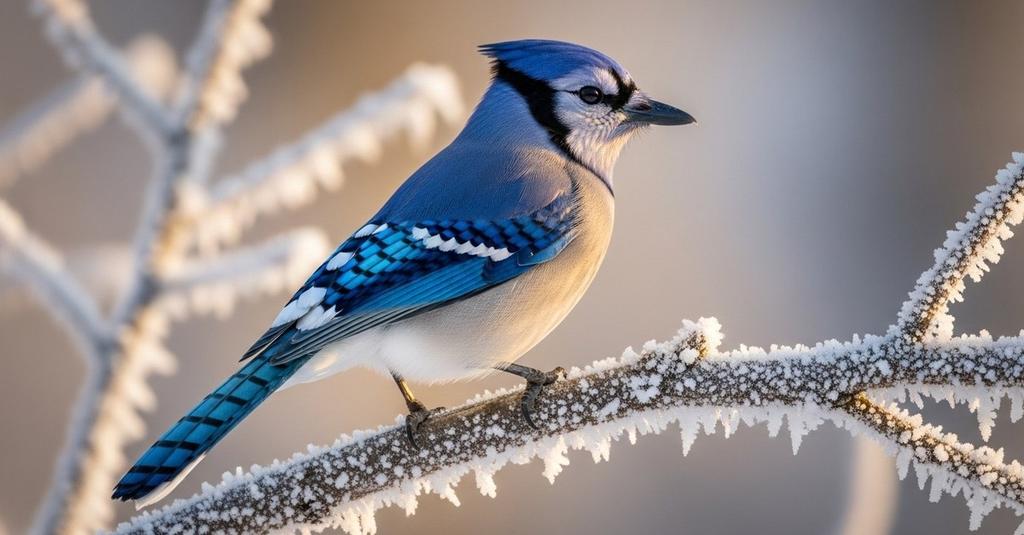
- Blue jays shift color depending on light. Photographers shooting in overcast conditions have documented this consistently — the same bird photographs greenish or grayish until direct sunlight hits it. It’s the angle, always the angle.
- The peacock’s eye-spot isn’t a single color. It’s at least four distinct photonic crystal structures working simultaneously, different layers producing different colors at different viewing angles — the same spot flashing green, blue, and gold in a single display.
- Morpho butterfly wings actually work as humidity sensors. The color visibly shifts when moisture enters the microstructure. Scientists are now exploring this property for breathable, color-changing smart textiles.
What Birds Teach Us About Color Itself
The deeper you go into structural coloration birds, the weirder basic assumptions about color become. We think of color as a fixed property — the sky is blue, grass is green, an apple is red. But color is always negotiation: light plus surface plus observer, all three at once. The blue jay’s feather just makes that negotiation visible. When the physics shifts, the blue vanishes. The feather wasn’t lying. It was showing you exactly what it was doing. You just didn’t speak the language.
This matters beyond ornithology. Researchers building next-generation displays, solar panels, and medical imaging are all looking at structural coloration for answers. If you can engineer color at the nanoscale without pigment, you can build surfaces that respond to specific wavelengths with extraordinary precision. Cancer detection. Satellite sensors. Optical computing. The blue jay solved a problem that human engineers are still working on, and it solved it millions of years ago.
A bird lands on a branch. You see blue. You’re actually watching 400 million years of evolution perform a physics demonstration in real time, using geometry so precise it took electron microscopes to decode. The color isn’t a lie. It’s a different kind of truth — one that exists only where you’re standing when the light arrives.
“
Frequently Asked Questions
Q: Why does a blue jay’s feather have no blue pigment?
A blue jay’s feather contains zero blue pigment because its color comes from structure, not chemistry. The feather surface is built from microscopic air-filled spheres nested inside keratin, each sized to scatter blue light at around 450 nanometers. Yale researcher Richard Prum has spent decades proving there is no chemical dye in these feathers. A single feather contains roughly 300,000 medullary cells in its colored portion, none holding a molecule of blue pigment.
Q: What is structural coloration in birds?
Structural coloration is the production of color through microscopic physical architecture rather than pigment. In birds, air-filled spheres in feather cells act as a photonic crystal: when white light hits them, most wavelengths pass through or are absorbed, but blue wavelengths bounce back coherently, reinforcing each other until the eye sees saturated blue. The effect is angle-dependent, so tilting a blue jay feather makes the blue shift gray. Structural colors can be up to 30 times more saturated than pigment-based colors.
Q: Do other animals use structural coloration like birds?
Yes. Structural coloration evolved independently across multiple species through convergent evolution. The Morpho butterfly in the Amazon has wing ridges 200 nanometers apart that scatter blue light visible from a quarter mile away, verified by University of Ghent researchers in the 1970s. Peacocks use photonic crystals in two-dimensional grids, producing dramatic color shifts with movement. The Southeast Asian jewel beetle uses nanometer-precise layered exoskeletons to produce lasting iridescence.
Q: Why does structural color last longer than pigment?
Pigment degrades over time because sunlight and chemistry break down the dye molecules, which is why old paintings, textiles, and photographs fade. Structural color has no chemistry to degrade; it persists as long as the microscopic architecture survives. Researchers have found structural coloration preserved in fossilized feathers from 40 million years ago, with the color still encoded in nanoscale geometry long after any pigment would have turned to dust. This durability is why engineers at Harvard and MIT are reverse-engineering it.
Illustrations are AI-generated. Article fact-checked and human-edited. Our editorial standards.