The Tonga Eruption: Earth’s Most Powerful Modern Blast
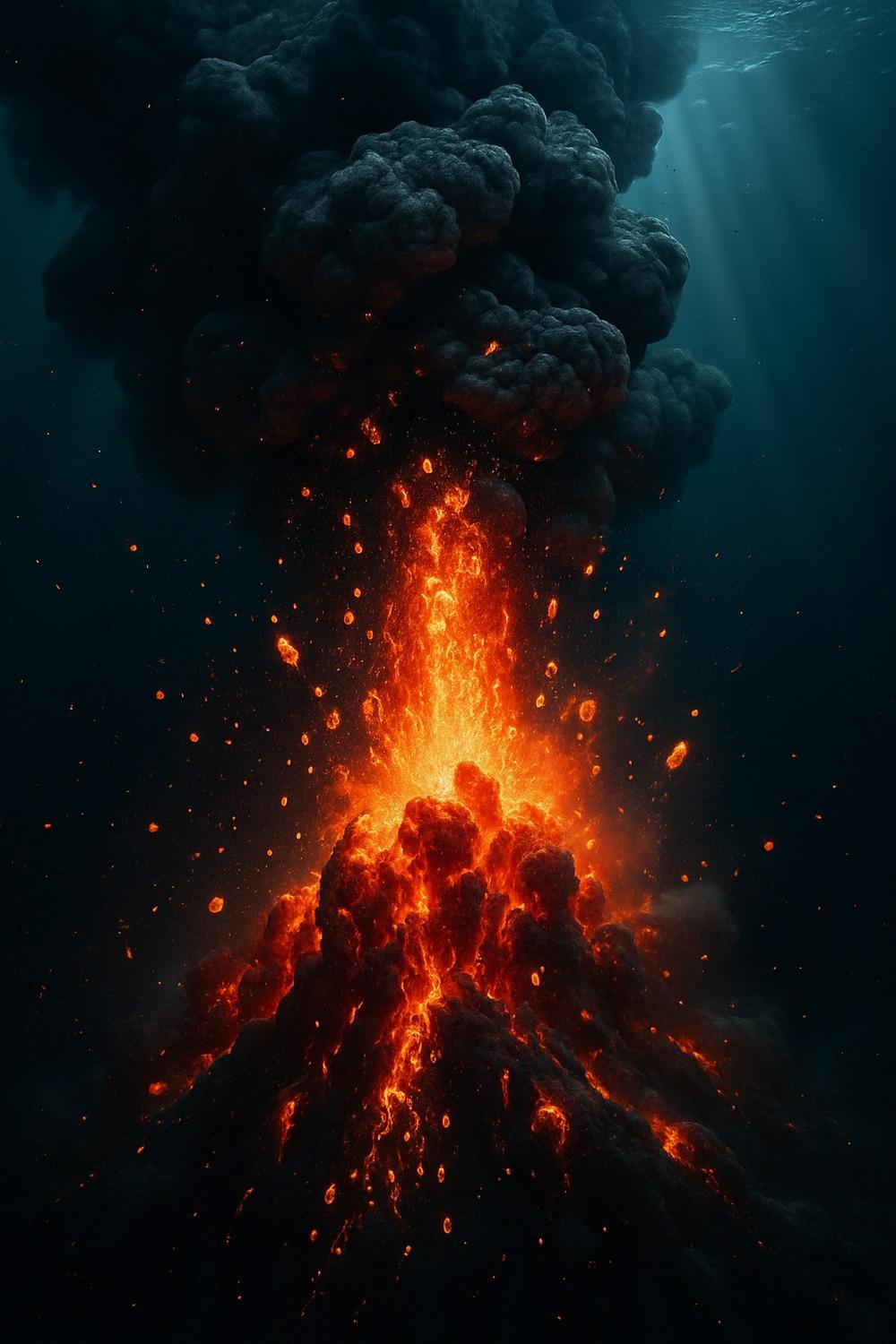
A submarine volcano rewrote what scientists thought they knew about explosive force when the Hunga Tonga eruption detonated beneath the Pacific in January 2022. The ocean floor didn’t just erupt — it punched through the stratosphere and altered Earth’s atmospheric chemistry in ways that broke fifty years of volcanic precedent. And almost nobody saw it coming.
In a matter of minutes, one of the most powerful geological events in recorded history unfolded at the bottom of the sea near the Tonga archipelago. Scientists are still unpacking what happened. And the deeper question — how many eruptions like this have gone completely unnoticed — doesn’t have a comfortable answer.
Key Facts
- The Hunga Tonga-Hunga Ha’apai eruption occurred on January 15, 2022, at approximately 04:14 UTC
- The eruption plume reached approximately 58 kilometers in altitude, the highest ever recorded for a volcanic event in the modern satellite era
- It injected roughly 146 teragrams of water vapor into the stratosphere, about 10% of the total pre-existing stratospheric water vapor budget
- USGS estimated the energy yield at 4 to 18 megatons of TNT, roughly 500 times the Hiroshima atomic bomb
- The atmospheric pressure wave circled the globe at least 4 complete times before becoming undetectable, and a communications blackout cut off Tongatapu for 3 days
In short: The Hunga Tonga eruption submarine volcano event of January 15, 2022 sent a plume 58 kilometers high, injected 146 teragrams of water vapor into the stratosphere, and released energy roughly 500 times the Hiroshima bomb. It broke 50 years of volcanic precedent by warming rather than cooling the atmosphere.
The Submarine Volcano That Rewrote the Record Books
Before January 15, 2022, the Hunga Tonga–Hunga Haʻapai seamount had shown restlessness. Minor eruptions in 2009 and 2014 built temporary islands that surf and wind quickly erased. But on that date, it did something categorically different. According to the United States Geological Survey (USGS), the eruption released energy equivalent to somewhere between 4 and 18 megatons of TNT — conservative estimates place it at roughly 500 times the yield of the atomic bomb dropped on Hiroshima.
The eruption column punched through the stratosphere and reached an altitude of approximately 58 kilometers, a height that no volcanic plume had reached in the modern instrumental record. Satellite imagery captured the shockwave expanding outward at the speed of sound, a concentric ring of compressed air spreading across the Pacific like a stone dropped into still water. What made this eruption so remarkable wasn’t just its brute force — it was the mechanism underneath.
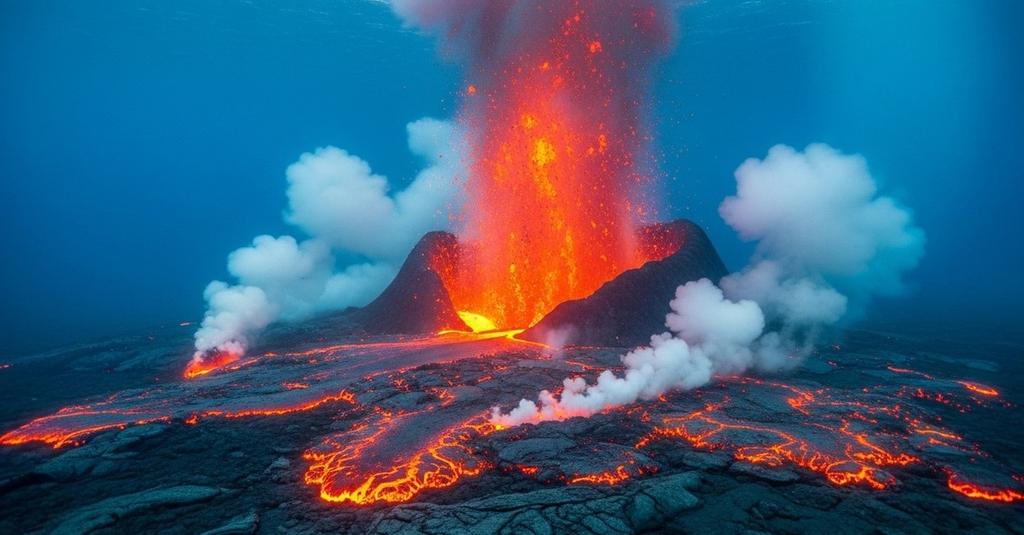
Most people picture volcanoes as slow, grinding events — lava pushing toward the sea over days or weeks. This was an explosion. Seawater interacted with the superheated magma in a process called a phreatomagmatic eruption, converting liquid to steam almost instantaneously. The violence of that phase transition is what drove the blast. It’s the geological equivalent of dropping water onto white-hot metal — except the “metal” was a column of magma and the “water” was the entire Pacific Ocean pressing down from above. The eruption lasted roughly eleven hours in its most intense phase. In that window, it reshaped the seafloor around it, erased most of the island that had formed in previous eruptions, and triggered tsunamis that struck coastlines as far away as Japan and Peru.
Eleven hours. The planet barely broke a sweat.
When the Atmosphere Itself Became the Story
What they didn’t expect was what the eruption did to Earth’s stratosphere. Volcanologists anticipated destruction — but this was different. In the days that followed, researchers at NASA’s Jet Propulsion Laboratory in Pasadena, California, identified an unprecedented injection of water vapor into the stratosphere — not water droplets, not ice crystals, but actual gaseous water vapor thrust to an altitude where it doesn’t belong.
Their 2022 analysis, published in the journal Geophysical Research Letters, estimated that the eruption injected roughly 146 teragrams of water vapor — about 10% of the total water already present in the stratosphere — in a single event. Why does this matter? Because major volcanic eruptions typically dry the stratosphere out by injecting sulfur dioxide, which forms aerosols that cool the planet. Tonga did the opposite. It’s a reminder that the natural world doesn’t always follow its own rules — or rather, it follows rules we haven’t finished learning.
For another example of a seemingly impossible natural system defying expectations, consider how a sealed glass ecosphere remained alive for 26 years with no human interference — nature finding pathways we didn’t predict.
Scientists at the National Oceanic and Atmospheric Administration (NOAA) tracked the water vapor plume as it spread globally over the following months. Early modeling in 2022 and 2023 suggested the injection could contribute a small but measurable warming effect — perhaps 0.035°C above baseline for a period of years — by trapping additional infrared radiation. That’s not apocalyptic, but it’s significant. No volcanic eruption in the modern record had ever added heat to the climate system, and watching a species of atmospheric phenomena disappear while an entirely new one emerges, you stop calling it a trend. They’d only ever subtracted it, temporarily, through sulfate aerosols. Tonga quietly broke that pattern.
Barometers at weather stations across six continents registered the pressure wave. It circled the globe multiple times — at least four full circuits tracked by instruments before the signal became indistinguishable from background noise. The last time scientists recorded anything similar was the 1883 eruption of Krakatoa, and that comparison tells you exactly how long the planet waits between events of this scale.
The Tsunami No One Fully Predicted
Standard tsunami warning systems failed to respond quickly enough to the Tonga event, and the reason is quietly alarming. The USGS and NOAA both acknowledged in post-event reviews that detection algorithms tuned for seismic triggers were effectively blind to this particular threat. Conventional tsunami detection is calibrated for seismic events — earthquakes that displace the seafloor and send predictable waves radiating outward. The Tonga eruption generated its tsunami primarily through a different mechanism: the atmospheric pressure wave traveling across the ocean surface, pushing water ahead of it.
According to a 2022 analysis by researchers at the University of Michigan, this atmospheric coupling effect — sometimes called a Lamb wave tsunami — is poorly represented in existing warning infrastructure. (And this matters more than it sounds because here’s the thing: the system was built around the eruptions and earthquakes it had already seen. It wasn’t ready for this one.) National Geographic’s own post-eruption reporting captured just how unprepared global monitoring systems were for the scale and character of what unfolded.
In Peru, two women drowned on a beach — an ocean away from the eruption, their deaths caused by a wave generated by atmospheric pressure rather than seafloor displacement. The Hunga Tonga eruption submarine volcano event generated waves that arrived at some locations before tsunami warning messages were issued. In Japan, ports registered unusual sea-level changes hours after the initial blast. The Pacific Tsunami Warning Center issued and then revised multiple bulletins as scientists struggled to characterize what they were seeing in real time.
Coastal communities on Tonga itself had almost no warning time. The islands closest to the eruption were struck within minutes. The primary Tongan island of Tongatapu lost communications for nearly three days when the submarine fiber optic cable connecting it to the outside world was severed by volcanic debris. Aid organizations were navigating blind. The satellite phone networks that filled the gap were already straining under the load. When the scale of the destruction finally came into focus, the world had already lost three days it couldn’t get back.
How It Unfolded
- 2009 — The Hunga Tonga–Hunga Haʻapai seamount erupted for the first time in the modern record, briefly building a small volcanic island that eroded within weeks.
- 2014–2015 — A second eruptive sequence built a more substantial island connecting the two existing islets, creating landmass that persisted and was formally mapped by NASA researchers.
- December 2021 — Low-level eruptions resumed, prompting Tongan authorities to issue precautionary advisories; seismological networks registered elevated activity in the weeks before the main event.
- January 15, 2022 — The catastrophic eruption occurred at approximately 04:14 UTC, triggering tsunamis, a global pressure wave, and the largest stratospheric water vapor injection ever recorded instrumentally.
By the Numbers
- 58 km — Maximum altitude of the eruption plume, the highest ever recorded for a volcanic event in the modern satellite era (NASA, 2022).
- 146 teragrams — Estimated mass of water vapor injected into the stratosphere, roughly 10% of the total pre-existing stratospheric water vapor budget (Geophysical Research Letters, 2022).
- ~500× — Energy yield of the eruption relative to the Hiroshima atomic bomb, based on USGS energy estimates of 4–18 megatons TNT equivalent.
- 4+ — Complete circuits the atmospheric pressure wave made around the globe before becoming undetectable by barometric instruments.
- 3 days — Duration of communications blackout on the main island of Tongatapu after the submarine fiber optic cable was severed by volcanic debris.
Field Notes
- University of Bath researchers analyzing post-eruption satellite data in late 2022 found that the eruption temporarily created detectable ionospheric disturbances — ripples in the electrically charged layer of the upper atmosphere — that interfered with GPS signals across the Pacific Basin, an effect not previously documented at this scale from a volcanic source.
- Every continent’s infrasound monitoring station operated by the Comprehensive Nuclear-Test-Ban Treaty Organization — a network built to detect clandestine nuclear weapons tests — triggered simultaneously when the atmospheric pressure wave passed. The Tonga event registered on all of them at once.
- Roughly 80% of Earth’s volcanic activity occurs on the ocean floor, yet fewer than 30% of submarine volcanic systems are considered adequately monitored — meaning events comparable to Tonga may have occurred undetected in the pre-satellite era, and possibly since.
- Scientists still can’t fully explain why the 2022 eruption was so dramatically more powerful than the 2014–2015 activity at the same location. The geometry of the magma chamber, the rate of seawater ingress, and the depth of the vent at the time of eruption are all being modeled, but no single explanation has achieved consensus.
Frequently Asked Questions
Q: What made the Hunga Tonga eruption submarine volcano event so much more powerful than a typical volcanic eruption?
The key was the interaction between seawater and magma at relatively shallow depth. When magma contacts water rapidly, the water flashes to steam in an explosive process called phreatomagmatic eruption. At Hunga Tonga–Hunga Haʻapai, the geometry of the eruption in January 2022 allowed enormous volumes of seawater to interact with the magma column almost simultaneously, releasing energy far more explosively than a subaerial or deep-sea eruption would have allowed.
Q: Did the Tonga eruption affect global climate?
Yes, though not in the way most volcanic eruptions do. Normally, major eruptions cool the climate temporarily by injecting sulfate aerosols into the stratosphere. Tonga’s exceptionally high plume carried an unprecedented volume of water vapor instead. Water vapor is a greenhouse gas, so the 2022 injection produced a modest warming signal rather than cooling. NOAA researchers estimated a potential temperature effect of approximately 0.035°C sustained over several years — small in absolute terms, but unique in the instrumental record.
Q: Why didn’t tsunami warning systems detect the Tonga tsunami in time?
A common misconception is that tsunami warning systems monitor the ocean itself. In practice, most systems detect seismic activity and model wave propagation from earthquake-generated seafloor displacement. The Tonga tsunami was driven partly by an atmospheric pressure wave — a Lamb wave — traveling at the speed of sound across the ocean surface. This mechanism isn’t well-represented in standard warning algorithms. The University of Michigan and NOAA both published post-event analyses in 2022 identifying this gap as a critical vulnerability requiring new detection infrastructure.
Editor’s Take — Dr. James Carter
What stays with me isn’t the raw power of this event — it’s the communications blackout. Three days where Tonga was essentially invisible to the outside world, not because of a failure of technology but because a volcano severed the cable on the ocean floor and nobody had a backup. We’ve built a civilization that depends on submarine infrastructure we can’t protect and can barely repair. The eruption was extraordinary. Our vulnerability to the next one is completely ordinary — and that’s the part worth losing sleep over.
The Hunga Tonga–Hunga Haʻapai eruption didn’t change the planet in any lasting, visible way. The island it built is mostly gone again. The water vapor it launched will dissipate. The pressure wave is silence now. But it revealed something structural: a world that monitors its own surface obsessively while the deep ocean floor — host to 80% of all volcanic activity — operates almost entirely beyond our sight. What else is building down there, in the dark and the pressure, accumulating energy we won’t measure until it’s already moving toward us?
“
Illustrations are AI-generated. Article fact-checked and human-edited. Our editorial standards.