China’s Glass Bridges That Fake-Shatter Beneath Your Feet
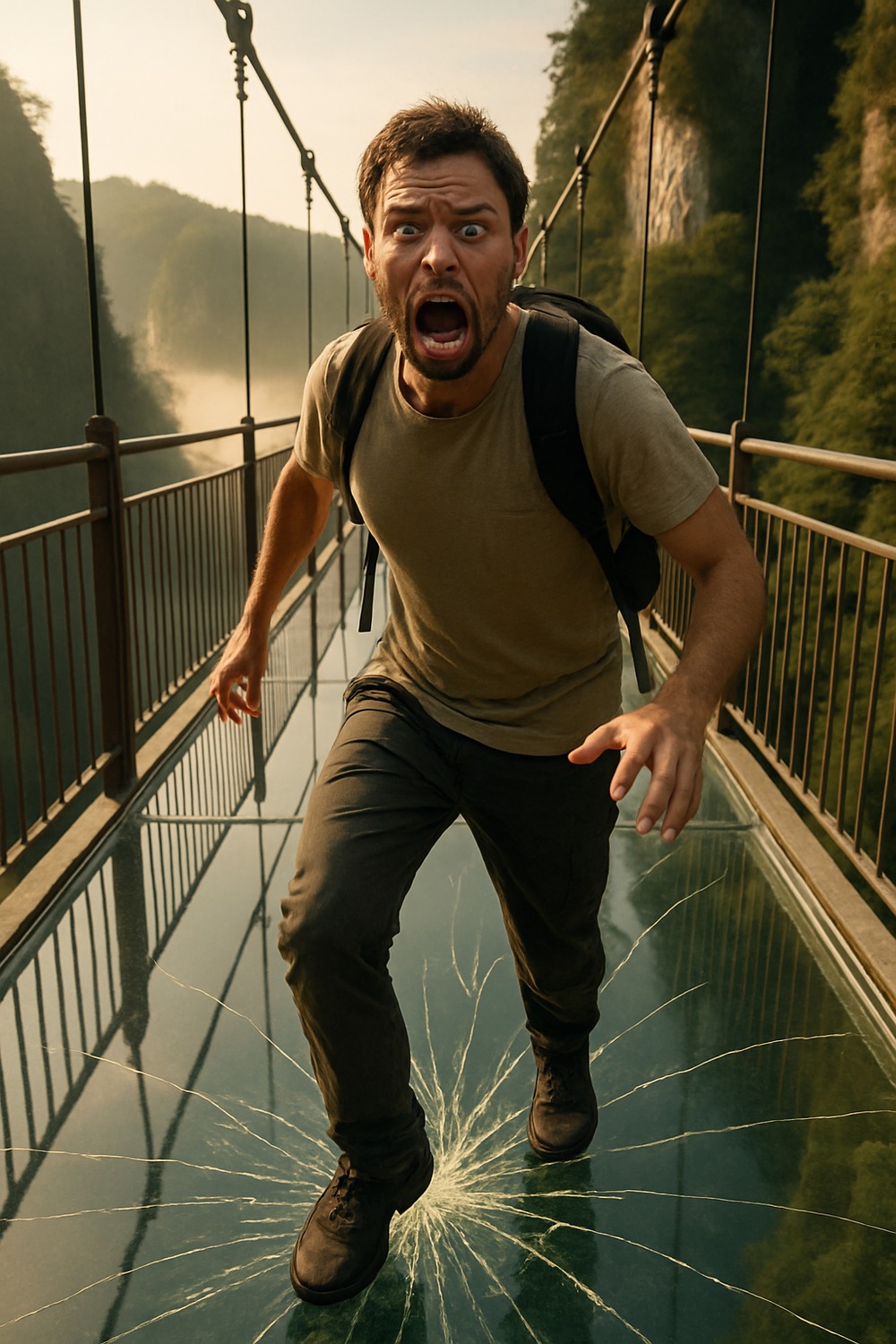
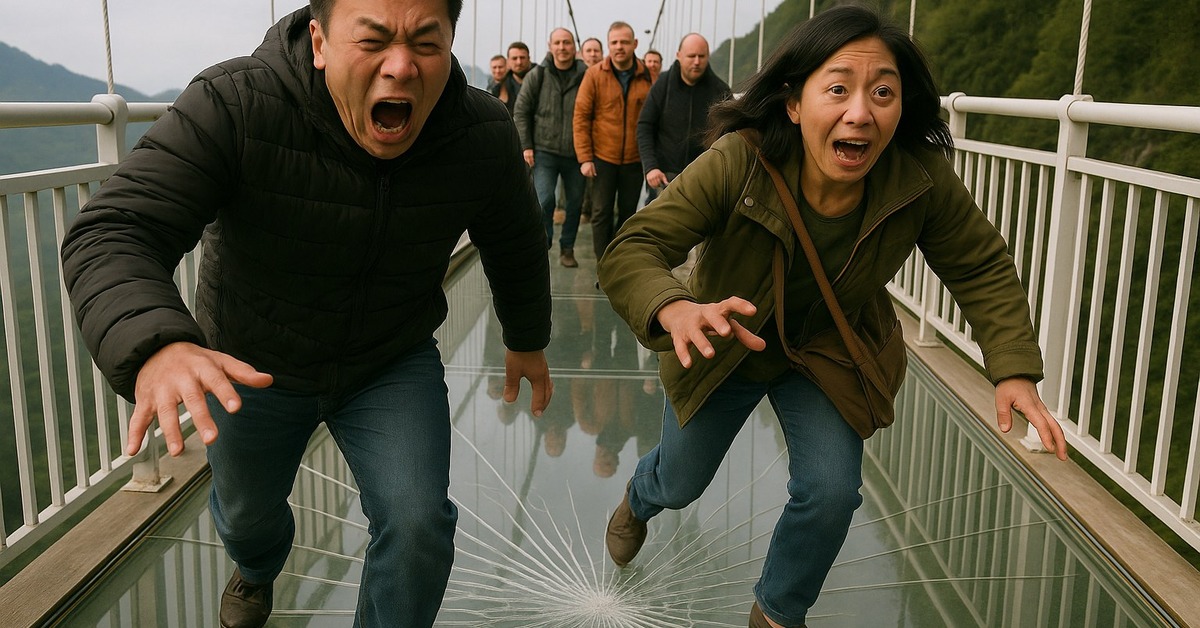
More than 2,000 glass bottom bridges exist in China — and the most psychologically brutal ones aren’t the tallest. They’re the fake ones. Visitors step out over a 300-meter drop, the floor splinters beneath them with a sound like a gunshot, and every survival instinct fires at once. The bridge is fine. The shattering isn’t real. And none of that information arrives in time to matter.
High above the gorges of Hunan Province, a country has turned controlled terror into a tourism industry. The fake-shattering bridge at Shiniuzhai National Geological Park is only the most viral example of an architectural movement that has reshaped how China thinks about thrill, infrastructure, and the psychology of fear. But how did a nation end up building more transparent walkways than the rest of the world combined — and why did some of them decide that real wasn’t scary enough?
How China’s Glass Walkways Conquered the Mountains
The story of glass bottom bridges in China doesn’t begin with a single architect or a government decree. It begins with the Zhangjiajie Grand Canyon Glass Bridge in Hunan Province, which opened in August 2016 and immediately broke six world records, including the longest and highest glass-bottomed bridge on the planet at the time — 430 meters long and suspended 300 meters above the canyon floor. Designed by Israeli architect Haim Dotan, the bridge was so overwhelmed by visitors that it was forced to close just 13 days after opening. The Zhangjiajie Grand Canyon Glass Bridge became a global flashpoint, demonstrating with brutal clarity that transparent glass walkways over vertiginous drops weren’t just an engineering curiosity — they were a phenomenon.
Within months, local governments across Hunan, Hebei, Guizhou, and Sichuan were commissioning their own versions. What followed was less a building boom than a controlled avalanche. China’s National Tourism Administration had already identified adventure tourism as a growth sector in its 2015–2020 strategic plan, and glass bridges fit the brief with almost suspicious precision. They required relatively modest land footprints. They could be retrofitted into existing scenic areas. And they generated extraordinary social media content — which, in the mid-2010s, was rapidly becoming the most powerful marketing tool a regional government could deploy. The infrastructure investment paid for itself, repeatedly, in ticket sales and viral reach.
By 2022, China had more than 2,000 glass-bottomed structures across its national parks and scenic areas. No other country is even close. The speed of construction was astonishing — and it created pressures that would surface, sometimes spectacularly, in the years ahead.
The Illusion Engineers Behind the Fake Shattering
When Shiniuzhai installed its sensor-triggered shattering illusion in 2016, the engineering behind it was deceptively simple but psychologically sophisticated. Pressure sensors embedded in the glass panels detect footsteps. The moment a visitor’s weight crosses a threshold, a hidden projector or screen layer activates, overlaying a pre-rendered fracture animation on the transparent surface. Simultaneously, a directional speaker system fires a precisely timed crack — not a generic breaking sound, but a recording engineered to match the acoustic signature of laminated safety glass under stress. The entire sequence plays out in under 400 milliseconds.
That’s fast enough to bypass conscious skepticism and hit the nervous system directly. It’s worth noting that this kind of deliberate sensory manipulation has deep roots in the theme park industry, but applying it to public infrastructure was genuinely new territory. The viral videos that followed weren’t accidents — they were the product. Much like how the algorithms that shape our sense of direction online are engineered to feel invisible, the Shiniuzhai illusion was engineered to feel catastrophically real.
What the system exploits is proprioception (researchers actually call this the body’s “sixth sense” — its internal map of its own position in space). When visual data — fracturing glass — conflicts violently with proprioceptive data — feet still solid on a surface — the brain doesn’t average the two inputs. It panics. This is the same mechanism that makes virtual reality motion sickness so debilitating and why optical illusions can feel physically disorienting even when you intellectually understand how they work. The Shiniuzhai designers hadn’t just built a tourist attraction. They’d built a controlled experiment in sensory override.
Some visitors laughed immediately. Others couldn’t move for minutes. A handful reportedly refused to cross at all once the illusion triggered, even after staff explained the trick. Fear, it turns out, doesn’t always update when evidence arrives.
The Real Safety Story Beneath the Glass
Here’s the thing: the glass bottom bridges China has constructed are, in most cases, extraordinarily safe — far safer than the spectacle of their design implies. The glass used in these structures is not ordinary tempered glass. It’s typically a laminated safety glass composite, sometimes three or more layers deep, engineered to remain structurally intact even when individual panels crack. Engineers at the China Academy of Building Research have subjected test panels to sledgehammer strikes, and the glass holds its load-bearing capacity even with visible damage. A 2019 inspection report from the Hunan Provincial Department of Housing and Urban-Rural Development found that the overwhelming majority of inspected glass bridges met or exceeded national safety standards.
The dramatic aesthetic — the void below, the transparency, the illusion of exposure — is precisely that: an aesthetic. As Smithsonian Magazine has reported on similar engineering marvels, the perceived danger and the actual danger are often operating in entirely different registers. The data left no room for ambiguity on this point — and the engineers knew it before the first tourist ever set foot on the glass.
That said, the boom in construction wasn’t without incident. In 2021, a glass walkway at Longgang National Geological Park in Chongqing sustained damage during a windstorm, leaving a visitor stranded temporarily before rescue teams arrived. The incident prompted China’s Ministry of Culture and Tourism to issue updated inspection protocols requiring mandatory load testing every six months and real-time structural monitoring on bridges over 100 meters in length. Non-compliance triggers immediate closure. The regulatory response was faster than most observers expected from a sector that had grown so quickly.
Several structures now use smart glass panels embedded with strain gauges that transmit real-time stress data to control rooms. If a panel’s load reading approaches 80% of its rated capacity, an alert triggers automatically. The glass bottom bridges China has built have, in a real sense, been made to watch themselves.
Glass Bottom Bridges China Keeps Building — and Why
Why does this matter? Because the economic logic reshaped entire regions, not just individual parks.
Zhangjiajie’s glass bridge charged an entry fee of 138 yuan — roughly $19 USD — at launch. In its first operational year, despite the early closure, the broader Zhangjiajie Grand Canyon scenic area reported a 56% increase in tourist arrivals compared to 2015. Ticket revenue for the park system exceeded 200 million yuan in 2017 alone. For rural and mountainous counties that had limited agricultural output and virtually no manufacturing base, a single glass bridge could transform a local economy within a single fiscal year. Villages within 20 kilometers of a new glass bridge attraction saw average household income rise by 23% within three years of opening, driven primarily by hospitality, transport, and local crafts — a figure the Henan Province government documented explicitly in a 2020 report on rural tourism infrastructure. That’s not a marginal effect. That’s structural economic transformation delivered via transparent walkway.
And the competition between scenic areas drove an escalating arms race of spectacle. After Zhangjiajie’s records, operators began commissioning bridges that incorporated fog machines, lighting effects, and themed narrative experiences around the crossing. One bridge in Guizhou province introduced a simulated “crumbling rope bridge” sequence where sections of the glass appeared to swing and separate — all effect, no structural movement. Another in Hebei built a section that activated recorded screaming from previous visitors when newcomers stepped onto certain panels. The gamification of fear had found its platform.
Engineers at Tongji University in Shanghai have published research examining what they call the “spectacle-safety paradox” in glass bridge design: the more terrifying a bridge appears, the more rigorous its actual safety specifications tend to be, because operators can’t afford the liability — or the viral catastrophe — of a real failure.
What Glass Bridges Reveal About How We Process Fear
There’s a larger story inside all of this, and it isn’t really about bridges. It’s about the human nervous system’s relationship with height and transparency, and what happens when engineers deliberately weaponize that relationship. Acrophobia — the fear of heights — is one of the most conserved fear responses in the mammalian brain, with neurological roots that predate Homo sapiens by millions of years. When your visual field shows open space below your feet, your amygdala fires before your prefrontal cortex has a chance to evaluate whether the surface you’re standing on is structurally adequate. The glass bottom bridges China has perfected are, in a neuroscientific sense, hacking a system that evolved to keep primates alive in forest canopies.
Transparency itself — not altitude — turns out to be the primary fear driver. Dr. Graham Davey, Emeritus Professor of Psychology at the University of Brighton, has studied phobia acquisition and the role of visual triggers in height-fear responses for decades. His work suggests that a solid steel bridge at 300 meters doesn’t trigger the same physiological response as a glass one at 50 meters. The glass, paradoxically, makes shorter drops feel more dangerous than taller opaque ones. The fake-shattering illusion at Shiniuzhai compounds this with calculated precision: it takes an already-elevated fear state and injects exactly the visual stimulus the brain is most primed to treat as catastrophic.
Visitors who’ve crossed the bridge report the experience in almost identical terms: a moment of absolute conviction that they are falling, followed by disbelief, followed — frequently — by laughter. The laughter is the tell. It’s relief. It’s the nervous system’s reset signal after a threat that never materialized.
How It Unfolded
- 2011: China’s first commercial glass walkway opens at Tianmen Mountain in Hunan Province, a modest 60-meter ledge path that becomes a domestic tourist sensation and plants the seed for everything that follows.
- 2016: The Zhangjiajie Grand Canyon Glass Bridge opens in August, shatters six world records, and closes 13 days later under the weight of its own visitor numbers — a closure that paradoxically amplified global media coverage.
- 2016: Shiniuzhai National Geological Park deploys its sensor-triggered fake-shattering illusion system, and the resulting visitor videos go globally viral within days, spawning copycat installations across multiple provinces.
- 2022: China’s glass-bottomed bridge and walkway count surpasses 2,000 individual structures, prompting the Ministry of Culture and Tourism to issue its most comprehensive safety inspection framework to date, including mandatory real-time structural monitoring requirements.
By the Numbers
- 2,000+: glass-bottomed bridges and walkways built in China since the mid-2010s, more than the rest of the world combined (Ministry of Culture and Tourism, 2022)
- 430 meters: the length of the Zhangjiajie Grand Canyon Glass Bridge at opening in 2016, then the world’s longest glass-bottomed bridge
- 300 meters: the height above the canyon floor at which the Zhangjiajie bridge is suspended — roughly the height of the Eiffel Tower
- 56%: increase in tourist arrivals to Zhangjiajie Grand Canyon scenic area in the first operational year of the glass bridge
- 23%: average household income rise in villages within 20 kilometers of a new glass bridge attraction within three years of opening (Henan Provincial Government, 2020)
Field Notes
- Shiniuzhai’s fake-shattering illusion activates within 400 milliseconds of a visitor’s step — fast enough to bypass conscious skepticism and trigger a genuine startle-fear response before rational processing can intervene. Engineers tested multiple timing sequences before settling on sub-half-second activation as the most effective threshold.
- Laminated safety glass used in most Chinese glass bridges holds its load-bearing capacity even with visible cracks across multiple layers — meaning a panel can look dramatically broken and still safely support several adult visitors standing on it simultaneously.
- Several newer glass bridges in Guizhou and Sichuan provinces have begun incorporating augmented reality headsets as optional additions to the crossing experience, layering fictional narratives — dragons, historical battles — onto the real landscape below. The fear response, operators report, decreases when visitors are wearing headsets, possibly because the AR layer reintroduces a cognitive buffer.
- Researchers still can’t fully explain why some visitors who intellectually understand the Shiniuzhai illusion is fake still can’t bring themselves to cross after it triggers. The relationship between conscious knowledge and the body’s fear response remains imperfectly understood — and this bridge, inadvertently, has become a real-world laboratory for that question.
Frequently Asked Questions
Q: Are glass bottom bridges in China actually safe to walk on?
Yes — overwhelmingly so, despite their terrifying appearance. The glass bottom bridges China has built use laminated safety glass panels, often three or more layers deep, that are load-tested to support far more weight than any realistic visitor load. A 2019 inspection by the Hunan Provincial Department of Housing and Urban-Rural Development found the vast majority of inspected structures met or exceeded national safety standards. Since 2022, real-time structural monitoring is mandatory for bridges over 100 meters in length.
Q: How does the fake-shattering illusion at Shiniuzhai actually work?
Pressure sensors beneath the glass panels detect a visitor’s footstep and trigger a two-part response: a fracture animation projected or displayed on the transparent surface, and a precisely engineered sound recording of breaking laminated glass played through directional speakers. The entire sequence activates in under 400 milliseconds — fast enough to register as a genuine threat before the rational brain can evaluate the situation. The effect is psychological, not structural. The glass doesn’t move or weaken in any way.
Q: Why do people still feel terrified even when they know the shattering is fake?
The fear response triggered by the Shiniuzhai illusion operates below conscious knowledge. The amygdala — the brain’s threat-detection center — responds to the visual and auditory stimuli before the prefrontal cortex can apply rational evaluation. Dr. Graham Davey’s research at the University of Brighton on phobia acquisition suggests that transparency itself amplifies height-fear responses independently of actual risk. Knowing the bridge is safe doesn’t always override the body’s verdict. Fear, it turns out, doesn’t reliably update in real time.
Editor’s Take — Dr. James Carter
What strikes me most about the fake-shattering bridge isn’t the engineering — it’s what it reveals about our relationship with information. Visitors know, often before they step onto the glass, that the shattering is a trick. Staff tell them. Signs warn them. And still the illusion works. Still they drop to their knees. If we can’t override a fear response with direct knowledge in a controlled environment, it forces an uncomfortable question: how much of what we call ‘rational decision-making’ is actually just fear wearing a suit?
China’s glass bridges were built to sell tickets. But they’ve become something stranger and more revealing: a mass public experiment in the gap between what we know and what our bodies believe. Every person who freezes mid-span, heart hammering, knowing perfectly well the floor won’t give way, is demonstrating something fundamental about human cognition that no laboratory has replicated at this scale. More than 2,000 structures, millions of crossings, and the same involuntary terror, repeated. What else, you have to wonder, do we think we know — but haven’t actually felt?