Popcorn Lung: The Chemical Hiding in Your Microwave Bag
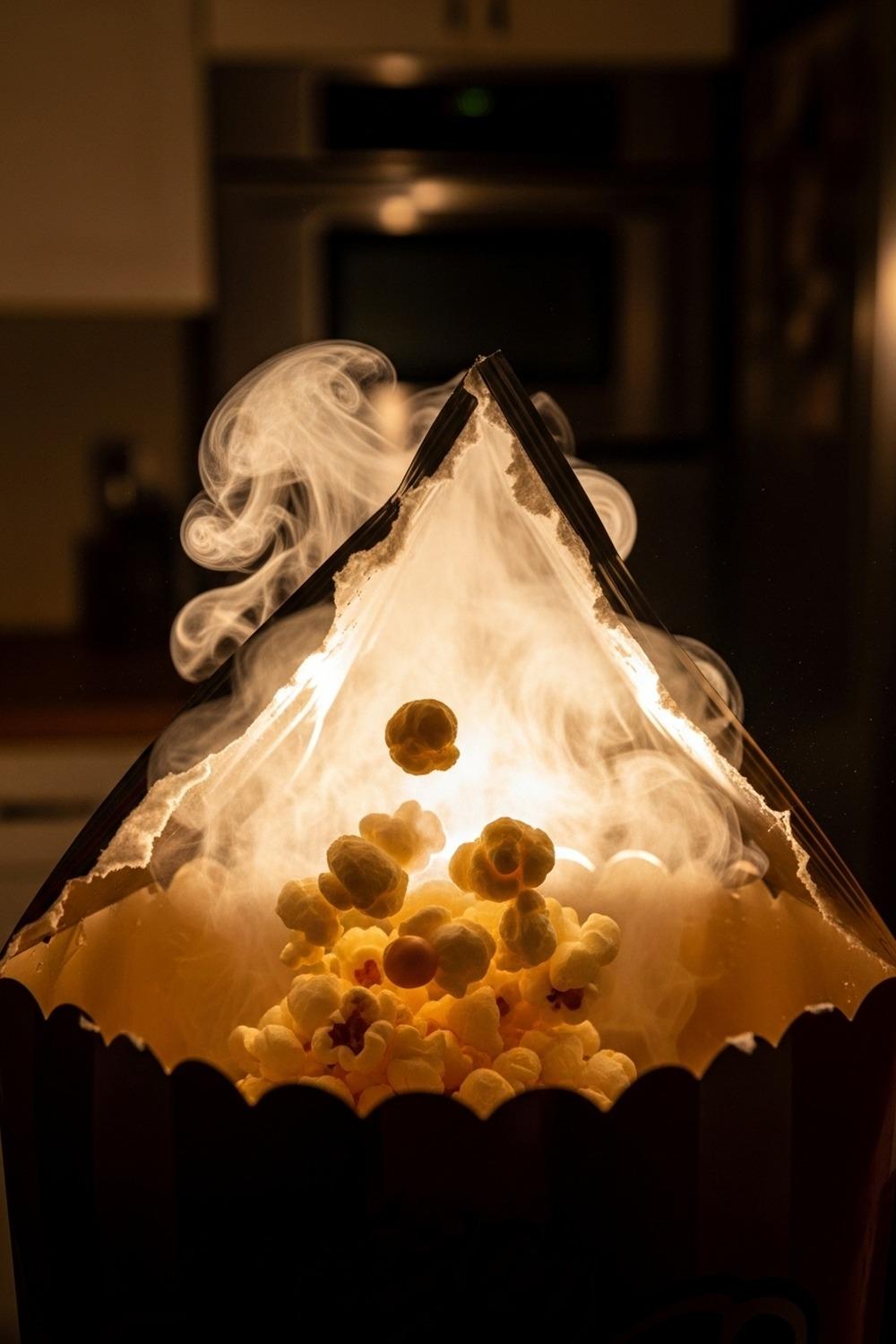
You open the bag. The warm, buttery steam rises toward your face — and what you’re actually breathing in is popcorn lung diacetyl, a compound so effective at mimicking the smell of real butter that flavor chemists built an entire industry around it. For the workers who made this product, respirators were standard equipment by the late 1990s. For you, there was no warning at all.
Wayne Watson wasn’t a factory worker. He was a Denver man who ate microwave popcorn every day for years — opening each bag close to his face, inhaling the steam. By the time doctors figured out what was happening to him, his airways had already begun to scar shut.
In 2012, a jury handed him $7.27 million.
The chemical responsible had been studied, flagged, and quietly managed inside factories for over a decade. Consumers were never told.
Key Facts
- In 2012, a Denver jury awarded Wayne Watson $7.27 million, the first successful consumer lawsuit tied to diacetyl inhalation from microwave popcorn.
- NIOSH launched its first formal investigation of popcorn workers’ lung disease in 2000, after eight workers at a Jasper, Missouri plant were diagnosed with obliterative bronchiolitis.
- Diacetyl scars the bronchioles, the lung’s smallest airways at roughly 0.5 to 1 millimeter wide, causing the irreversible condition bronchiolitis obliterans.
- A 2015 Harvard T.H. Chan School of Public Health study led by Dr. Joseph Allen found diacetyl in 39 of 51 flavored e-cigarette products tested.
- OSHA did not issue a permissible exposure limit for diacetyl until 2016, and ConAgra and Pop Weaver had voluntarily begun removing it from popcorn by 2007.
In short: The compound behind popcorn lung diacetyl is a butter flavoring that scars the lungs’ smallest airways when inhaled, causing irreversible bronchiolitis obliterans. A 2000 NIOSH investigation followed eight diagnosed workers, and in 2012 consumer Wayne Watson won $7.27 million. A 2015 Harvard study later found diacetyl in 39 of 51 flavored e-cigarettes.
What Diacetyl Actually Does Inside Your Airways
Diacetyl is a naturally occurring compound — it forms during fermentation and gives real butter part of its flavor. That’s the reassuring part. The alarming part is what happens when it’s heated, vaporized, and inhaled repeatedly at high concentrations.
The compound attacks the bronchioles — the lung’s smallest airways, each roughly 0.5 to 1 millimeter wide — triggering an inflammatory response that, over time, causes irreversible scarring. Scar tissue slowly plugs the bronchioles. Air can’t get through. The medical term is bronchiolitis obliterans, and it is as brutal as the name suggests. The condition is permanent. There’s no procedure to reverse it, no medication to undo the fibrosis.
NIOSH began formally investigating popcorn workers’ lung disease in 2000, after a cluster of cases appeared at a Jasper, Missouri microwave popcorn plant — eight workers with an extraordinarily rare lung condition, all in one facility. What they discovered rewired how occupational health specialists thought about food flavoring. Before 2000, diacetyl was considered safe for consumption — and it essentially is, when swallowed. The body metabolizes it without drama. But inhalation is a completely different exposure pathway, one that food safety regulators simply hadn’t prioritized. The compound doesn’t just irritate tissue. It appears to trigger an autoimmune-like cascade, causing the body to attack its own airway lining.
Workers who spent years mixing flavoring concentrate — the job with the highest airborne diacetyl exposure — showed the most severe disease. Some were in their thirties. Some needed lung transplants. Here’s the detail that cuts through everything else: they weren’t being reckless. They were doing ordinary jobs, in legal facilities, using approved ingredients. The danger wasn’t hidden from them through malice so much as through ignorance — and then, later, through delay. By the time protective standards existed, hundreds of workers had already been diagnosed.
How the Industry Knew Before Consumers Did
The Flavor and Extract Manufacturers Association (FEMA) had classified diacetyl as “generally recognized as safe” (GRAS) for decades, a designation that applied strictly to ingestion, not inhalation. That distinction mattered enormously. Regulatory frameworks for food ingredients weren’t designed to evaluate what happens when a chemical is aerosolized in a factory — or in a kitchen. It’s a gap that allowed a serious hazard to move undetected through an entire supply chain.
Internal documents later surfaced in litigation showing that at least one major flavoring manufacturer — International Flavors & Fragrances — had received internal warnings about respiratory risks as early as the late 1990s. Why didn’t this knowledge reach the public sooner? Because the systems designed to protect workers and consumers operated in separate regulatory universes.
By 2007, several major popcorn manufacturers, including ConAgra and Pop Weaver, had announced they would phase out diacetyl from their products, switching to substitute compounds. The moves were voluntary. OSHA didn’t issue a formal permissible exposure limit for diacetyl until 2016 — and even then, it was an emergency temporary standard aimed specifically at flavoring manufacturing workers, not a comprehensive consumer protection measure. The substitute compounds that replaced diacetyl in many products introduced their own uncertainty. 2,3-pentanedione, a close chemical relative, showed similar toxicity in animal studies conducted by NIOSH in 2012.
The industry had swapped one potentially harmful compound for another that regulators had even less data on.
Wayne Watson’s verdict in 2012 changed the legal landscape in one specific way: it confirmed that consumer-level exposure — not just factory-level — could cause popcorn lung. His attorneys demonstrated that daily home use, combined with the habit of inhaling steam directly from the opened bag, could generate diacetyl concentrations comparable to occupational exposure. The bag itself wasn’t passive. It was a delivery mechanism.
The Science of Smell and Why It Fools Us
There’s a reason diacetyl became ubiquitous in artificial flavoring: it works extraordinarily well. The human olfactory system responds to it as a reliable cue for fat — for richness, for calories, for the warmth of cooked food. Flavor chemists understood this intuitively long before neuroscience confirmed it, and they built an entire industry of artificial butter flavoring on that single molecule’s power. The artificial flavor industry grew explosively through the mid-twentieth century, driven by the processed food boom and an assumption that synthetic flavor compounds — present in tiny quantities — couldn’t cause meaningful harm. That assumption held for most compounds. Diacetyl was the exception that exposed the rule’s limits, and watching a sensory signal become a public health crisis, you realize how thoroughly we’ve confused “small amount” with “safe amount.”
The compound’s very effectiveness as a flavor signal — the fact that it mimics something the brain is primed to find appealing — made it nearly impossible to phase out without consumer pushback about taste. And the popcorn lung diacetyl story also illustrates how sensory pleasure can override risk perception. People don’t associate a good smell with danger. The warm, buttery steam from a microwave bag triggers associations with safety, comfort, home. That psychological reality made it harder for public health messaging to gain traction.
Researchers at the Harvard T.H. Chan School of Public Health noted in a 2015 review that consumer risk awareness around inhalation hazards in food products remained dramatically lower than awareness of dietary risks from the same products (and this matters more than it sounds). We worry about what we eat. We don’t think much about what we breathe while cooking it. The more appealing the aroma — the more successfully the chemical does its job — the more deeply you tend to inhale it. The entire marketing appeal of microwave popcorn was that smell. Open the bag, breathe it in. That was the experience being sold. And the experience was the exposure.
Popcorn Lung Diacetyl Today: What’s Changed, What Hasn’t
Most major U.S. microwave popcorn brands removed diacetyl from their formulations between 2007 and 2012, following the combination of litigation pressure, NIOSH findings, and a handful of high-profile media investigations. But the compound didn’t disappear from the food supply. Diacetyl remains legally present in hundreds of other flavored products — certain candies, baked goods, cooking oils, and margarines — where inhalation exposure is considered minimal because those products aren’t typically heated in sealed bags and opened face-first.
The occupational risk in flavoring manufacturing plants also persists. A 2019 report from NIOSH documented ongoing cases of obliterative bronchiolitis among flavoring workers, suggesting that regulatory standards introduced after 2000 had not fully closed the exposure gap at manufacturing level.
The problem didn’t end with the popcorn aisle. It moved. By 2015, researchers at Harvard’s T.H. Chan School of Public Health — led by Dr. Joseph Allen — published a study finding diacetyl in 39 of 51 flavored e-cigarette products tested. The concentrations varied, but the finding arrived at a moment when millions of people, many of them teenagers, had adopted vaping as a supposedly safer alternative to cigarettes. The specific long-term inhalation risk of diacetyl from e-cigarettes remains under active study, partly because obliterative bronchiolitis can take years to manifest — you don’t know what you’re building toward until you’re already most of the way there. That latency is part of what makes the compound so dangerous from a public health standpoint. By the time symptoms appear, the damage is done.
Regulators have moved. They haven’t moved fast. The FDA added diacetyl to a list of chemicals under review for e-cigarettes in 2016. Several countries — including Canada and some EU member states — have imposed tighter restrictions on diacetyl in flavoring applications than the United States has. What’s changed is the awareness. What hasn’t fully changed is the speed of institutional response relative to the pace at which new delivery systems for the compound keep appearing.
How It Unfolded
- Late 1990s: Workers at Gilster-Mary Lee Corporation’s microwave popcorn plant in Jasper, Missouri, begin reporting severe breathing difficulties — a cluster that would eventually draw federal investigators.
- 2000: NIOSH launches its first formal health hazard evaluation of a popcorn manufacturing plant, identifying diacetyl as the primary suspect compound in workers’ lung disease.
- 2007: ConAgra and Pop Weaver announce voluntary removal of diacetyl from their microwave popcorn products, triggering an industry-wide reformulation push.
- 2012: Wayne Watson wins a $7.27 million jury verdict in Denver — the first successful consumer (non-worker) lawsuit tied to diacetyl inhalation from microwave popcorn.
- 2015: Harvard researchers publish findings that diacetyl appears in 39 of 51 tested flavored e-cigarette products, expanding the popcorn lung conversation far beyond popcorn.
- 2019: NIOSH documents continued cases of obliterative bronchiolitis among flavoring industry workers, signaling that occupational exposure remains an unresolved problem.
By the Numbers
- $7.27 million: The jury award to Wayne Watson in 2012 — the landmark consumer liability verdict that established home exposure as legally actionable.
- 39 of 51: Flavored e-cigarette products found to contain diacetyl in the 2015 Harvard T.H. Chan School of Public Health study led by Dr. Joseph Allen.
- 0.5–1 mm: The diameter of a human bronchiole — the airway that diacetyl scarring permanently obstructs in bronchiolitis obliterans cases.
- 100×: The estimated difference in diacetyl concentration between factory air and a consumer’s kitchen — yet Watson’s home exposure still crossed a clinical threshold.
- 8: The number of workers at the original Jasper, Missouri facility diagnosed with obliterative bronchiolitis in the cluster that launched the first NIOSH investigation in 2000.
Field Notes
- In 2000, NIOSH investigators at the Jasper, Missouri plant found diacetyl airborne concentrations in the mixing room that were hundreds of times higher than in the general factory floor — the workers who mixed the raw flavoring concentrate were far more severely affected than those on the packaging line, revealing that proximity to the concentrated compound was the critical variable.
- Bronchiolitis obliterans is so rare outside of popcorn and flavoring workers that when it appears in a non-transplant patient, it’s considered a diagnostic red flag for chemical inhalation exposure — physicians who don’t know to ask about diacetyl exposure frequently misdiagnose it as COPD or severe asthma for months.
- Natural diacetyl is present in real butter, beer, wine, and certain fermented cheeses — and none of those sources have been linked to popcorn lung, because the concentrations are vastly lower and the exposure pathway (eating, not sustained inhalation of heated vapor) is fundamentally different.
- Researchers still can’t definitively establish a safe inhalation threshold for diacetyl in consumer settings — the data from factory studies involves far higher concentrations than home use generates, and no clinical trial can ethically expose human subjects to incremental doses to find the floor. That uncertainty is exactly what makes the e-cigarette question so difficult to close.
Frequently Asked Questions
Q: Is popcorn lung diacetyl still in microwave popcorn sold today?
Most major U.S. brands — including Act II, Orville Redenbacher, and Pop Secret — removed diacetyl from their formulations between 2007 and 2012, following litigation and NIOSH pressure. However, some store-brand and imported products may still contain it, and the substitute compound 2,3-pentanedione used by some manufacturers showed similar lung toxicity in NIOSH animal studies as early as 2012. Reading ingredient labels doesn’t reliably reveal this — “artificial butter flavor” can mean many things.
Q: Can you actually get popcorn lung from eating microwave popcorn at home?
Wayne Watson’s 2012 verdict confirmed it’s legally and medically possible, but it’s important to understand the mechanism. The risk doesn’t come from eating the popcorn — it comes from inhaling the steam released when the bag is opened. Watson’s specific habit of burying his face in the opened bag and inhaling deeply, repeated daily for years, generated cumulative inhalation exposure that his pulmonologist testified was clinically significant. Casual, occasional microwave popcorn consumption with normal ventilation is a far lower-risk scenario than Watson’s daily routine.
Q: Does vaping cause popcorn lung diacetyl damage the same way factory exposure does?
This is where the science remains genuinely unresolved. The 2015 Harvard study confirmed diacetyl’s presence in many flavored e-cigarettes, and the inhalation pathway is direct — which is the relevant concern. But obliterative bronchiolitis develops over years, and the modern vaping epidemic is still too recent to have produced long-term pulmonary follow-up data at scale. What researchers at NIOSH and the Harvard T.H. Chan School of Public Health agree on is this: the mechanism of harm is biologically plausible, and the absence of confirmed mass cases doesn’t mean the risk isn’t real. It may mean it hasn’t fully arrived yet.
Editor’s Take — Dr. James Carter
What stays with me about this story isn’t the verdict, or even the chemistry. It’s the respirators. Factory workers were wearing them in the same decade that microwave popcorn was being marketed as the perfect family snack. Someone along the supply chain knew enough to protect the people making the product — and didn’t have the courage, or enough institutional pressure, to say a word about the people consuming it. That gap between institutional knowledge and public disclosure is where most preventable health crises actually live.
Popcorn lung diacetyl didn’t emerge from a rogue laboratory or a reckless experiment. It came from a butter flavoring that smelled wonderful, passed every relevant safety test that was applied to it, and turned out to be tested in the wrong way for the wrong exposure route. The bronchioles scarred in the Jasper factory and in Wayne Watson’s Denver kitchen are a record of that gap — between how we regulate what we swallow and how little we’ve historically thought about what we breathe. The next time a warm, artificial aroma rises toward you from something heated and sealed, it’s worth asking: which tests, exactly, has this passed?
“
Illustrations are AI-generated. Article fact-checked and human-edited. Our editorial standards.