The Dog Who Walked 11 Miles Through a Strange City to Find Her
An 11-mile walk through Memphis. A dog who’d been in the house for maybe a week. And nobody expected him to make it back — except he did, and he sat on the porch like he’d known exactly where he was going the entire time.
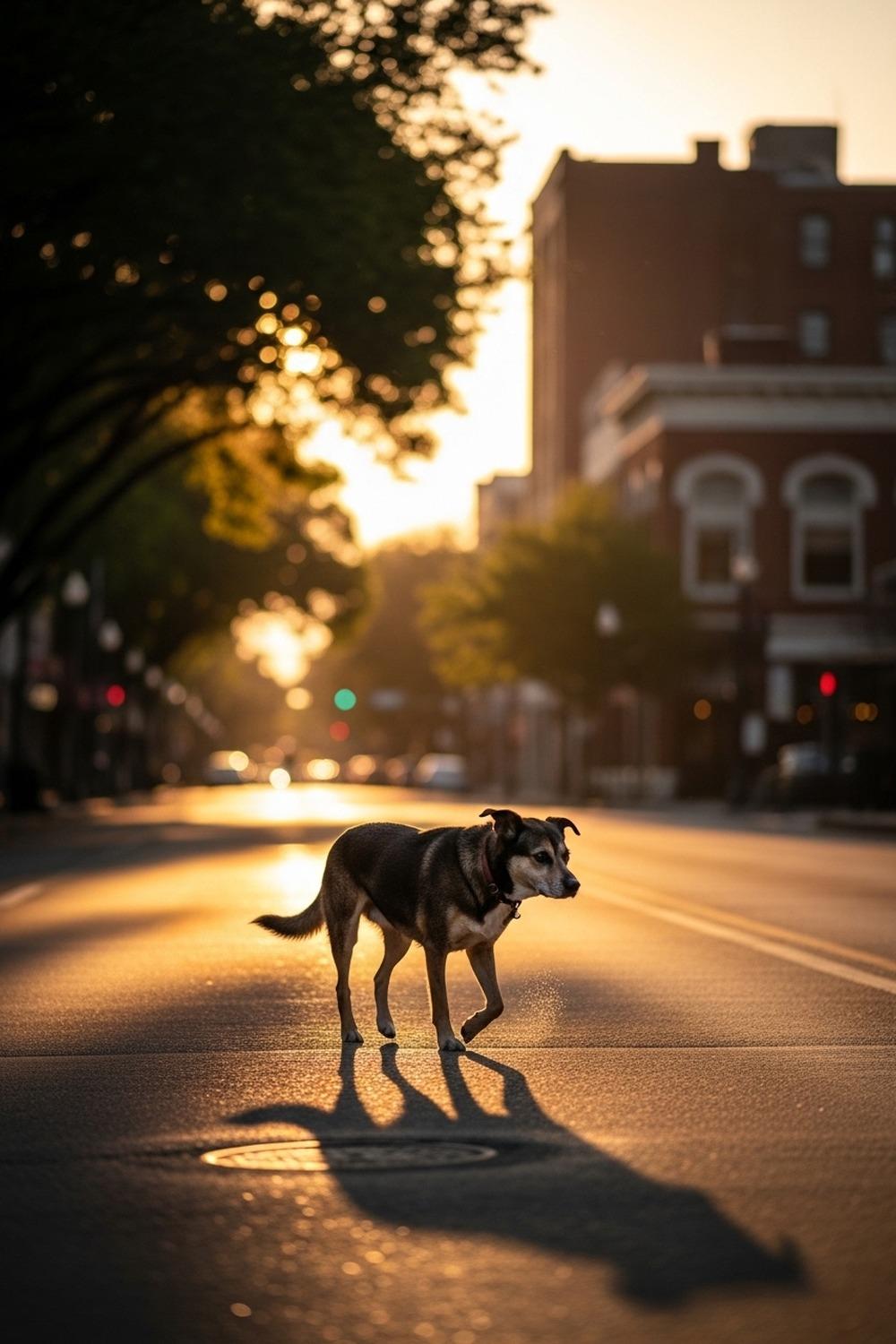
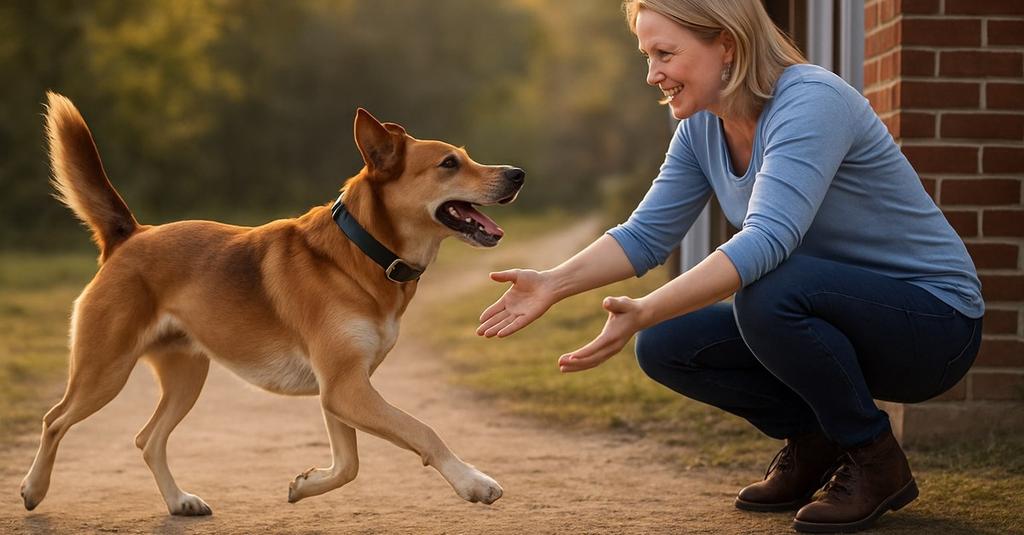
Hank was a foster dog being treated for heartworm when his temporary caregiver moved him across town to a new home. One day the door came unlocked — how, nobody’s quite sure — and he just… left. For two days he walked through neighborhoods that meant nothing to him, streets he’d never seen, intersections that should’ve confused him completely. And then he found her porch. The woman who’d had him for days. Just sitting there when she opened the door. Waiting like he’d never left.
Key Facts
- Hank the foster dog walked roughly 11 miles across Memphis over two days to return to a woman who had cared for him for about a week
- A dog’s nose contains up to 300 million olfactory receptors, compared to about 6 million in humans, roughly 50 times more sensitive
- Under optimal conditions, dogs can detect a scent source from up to 12 miles away
- Bobbie the Wonder Dog traveled approximately 2,500 miles from Indiana to Oregon in 1923 over about six months
- A 2013 Czech study found dogs oriented along a north-south magnetic axis before heading home in about 70% of trials, regardless of wind direction
In short: The dog navigation instinct that carried Hank 11 miles across Memphis to find a woman he barely knew blends scent mapping, magnetic sensitivity, and oxytocin-driven bonding. With 300 million olfactory receptors and detection ranges up to 12 miles, dogs build spatial maps science still cannot fully explain.
How Dog Navigation Instinct Actually Works
So here’s the thing about how dogs navigate: it’s not GPS. It’s not even close to what we do. Researchers think it’s weirder than that.
A dog’s nose contains up to 300 million olfactory receptors. You’ve got about 6 million. That’s not just “better” — that’s a completely different sensory world. According to canine olfaction studies, Dr. Alexandra Horowitz at Barnard College has argued that dogs don’t see space the way we do. They smell it. They’re constructing rich, detailed spatial maps from scent trails humans can’t even detect. Every block of Memphis probably looked (smelled?) different to Hank than it does to us.
But it gets weirder.
Dogs have demonstrated sensitivity to Earth’s magnetic field. They tend to align their bodies along a north-south axis when they rest. Some researchers believe this magnetic awareness might help them orient over long distances — the same way migratory birds navigate across continents. Which means what Hank was doing might’ve been closer to dead reckoning than following a single scent trail. He might’ve been using multiple navigation systems at once.
The Nose Knows More Than We’ve Admitted
Under the right conditions — low wind, moist air, nothing interfering — dogs can detect scent sources from up to 12 miles away. Hank walked 11. Think about that for a second. That’s not a coincidence you can just dismiss. It suggests he was following something chemically real. A gradient of familiar scent pulling him through Memphis street by street, block by block, like a map written in molecules.
The bizarre part? He didn’t really know her.
A few days of contact. Maybe a handful of meals, some attention, a warm room. That was apparently enough to encode her as a destination worth crossing an entire city to reach. Dogs don’t bond on any schedule we fully understand. You can read about other extraordinary animal senses in our deep-dive on this-amazing-world.com — but honestly, the more I dug into the research, the more it felt like we’re missing something fundamental about how animals experience connection.
Dog Navigation Instinct Has a Long, Strange History
Hank isn’t even unusual.
The scientific literature on dog navigation instinct goes back decades. And it keeps producing cases that don’t fit neatly into any single explanation. There’s Bobbie the Wonder Dog, who found his way from Indiana to Oregon in 1923 — roughly 2,500 miles. There are documented cases from World War II of dogs returning to their handlers across bombed European cities where nothing looked familiar anymore. And there are studies showing that dogs taken far from home can orient back toward it before they’ve even had a chance to detect familiar scent — which means something else is happening at the start, some internal compass clicking on.
The research keeps reaching the same dead end: we don’t fully understand this.
Every time scientists think they’ve mapped the mechanism, a case like Hank’s comes along and sits quietly on the doorstep, waiting for a better explanation.
What Bonding Does to a Dog’s Brain
Here’s what I kept reading about for way too long at 2am: oxytocin. When a dog bonds with a human, the same neurochemical that drives human pair bonding and parental attachment floods their system. It’s not metaphorical. It’s biological. Studies from Azabu University in Japan, led by researcher Miho Nagasawa, showed that sustained eye contact between dogs and their owners triggers measurable oxytocin spikes in both species. A genuine loop. And it forms fast. Days sometimes.
Which reframes everything about Hank’s 11-mile walk. He wasn’t being loyal in some vague, noble sense. He was following a neurochemical pull as real and urgent as hunger or thirst.
The bond doesn’t wait for the brain to catch up. It just moves.
By the Numbers
- 300 million olfactory receptors in a dog’s nose versus 6 million in humans — roughly 50 times more sensitive.
- Dogs can identify a scent trail up to 12 miles away under optimal conditions. Hank’s 11-mile journey was right at the functional edge of that range. That’s either amazing luck or something more precise.
- Bobbie the Wonder Dog — approximately 2,500 miles traveled across the United States in 1923 over six months. Still the most documented long-distance homing record.
- In a 2013 Czech study, dogs allowed to run freely in forests consistently oriented along a north-south magnetic axis before heading home. 70% of trials. Regardless of wind direction.
Field Notes
- Dogs have a dedicated olfactory region of the brain that’s proportionally 40 times larger than the equivalent in humans. Scent isn’t one sense among many for them. It’s the dominant channel through which they process reality.
- Search-and-rescue dogs can track a scent trail more than four days old, detecting residual skin cells and volatile organic compounds that have settled into the ground long after a person has left.
- Research in Frontiers in Psychology found that dogs can distinguish between the scent of identical twins — something scientists had assumed impossible. Their olfactory discrimination is more precise than we gave it credit for.
Why This Story Deserves More Than Sentimentality
Hank’s story gets shared because it’s warm. Because it ends on a porch with a door opening. But the dog navigation instinct underneath it is pointing at something researchers haven’t fully solved — a convergence of magnetic sensitivity, scent memory, spatial cognition, and neurochemical bonding that no single field has completely mapped.
These aren’t separate systems.
They’re integrated in ways science is only beginning to trace. Hank wasn’t using one trick. He was using everything at once. And we still don’t have a framework that explains how all of it works together.
Understanding how animals navigate — how they hold a destination in mind across days and miles and complete disorientation — has implications for how we think about memory, about identity, about what it means to know a place or a person.
Hank sat on that porch for a reason science can partly explain and partly can’t. He got adopted on the spot. Sometimes the research and the story arrive at the same ending. He walked 11 miles and got to stay. That’s the whole thing. If this kind of story keeps you up at night, there’s more at this-amazing-world.com — and the next one is even stranger.
Frequently Asked Questions
Q: How does dog navigation instinct actually work?
Dogs do not navigate like humans using vision and GPS-style mapping. Their nose holds up to 300 million olfactory receptors versus about 6 million in people, so they construct detailed spatial maps from scent. Under low wind and moist air, dogs can detect a scent source from up to 12 miles away. They also show sensitivity to Earth’s magnetic field, aligning along a north-south axis, which researchers believe aids long-distance orientation much like migratory birds.
Q: How far did Hank the dog actually travel to get home?
Hank walked roughly 11 miles through Memphis neighborhoods he had never seen, over a span of about two days, to reach the porch of a woman who had fostered him for only about a week. That distance sits right at the functional edge of canine scent detection, which under ideal conditions reaches roughly 12 miles. He arrived and sat on her porch, and was adopted on the spot.
Q: Can dogs really sense Earth’s magnetic field?
Yes. A 2013 study conducted in the Czech Republic observed that dogs allowed to run freely in forests consistently oriented their bodies along a north-south magnetic axis before heading home, in about 70% of trials and regardless of wind direction. Dogs also tend to align north-south when resting. Researchers believe this magnetic awareness may function like an internal compass, helping them orient over long distances before they even detect a familiar scent.
Q: Why would a dog travel so far for someone it barely knew?
Bonding in dogs is partly neurochemical. Studies from Azabu University in Japan, led by Miho Nagasawa, showed that sustained eye contact between dogs and humans triggers measurable oxytocin spikes in both species, the same hormone behind human parental and pair bonding. This loop can form within days. So Hank’s 11-mile walk likely followed a biological pull as urgent as hunger, encoding a person met only briefly as a destination worth crossing a city to reach.
Illustrations are AI-generated. Article fact-checked and human-edited. Our editorial standards.