Japan Is Giving Away Abandoned Homes for Free — Here’s Why
Japan has 9 million empty houses sitting in the countryside, and some of them will cost you literally nothing to own. The catch? You have to actually live there. That’s the part that keeps getting lost in the story.
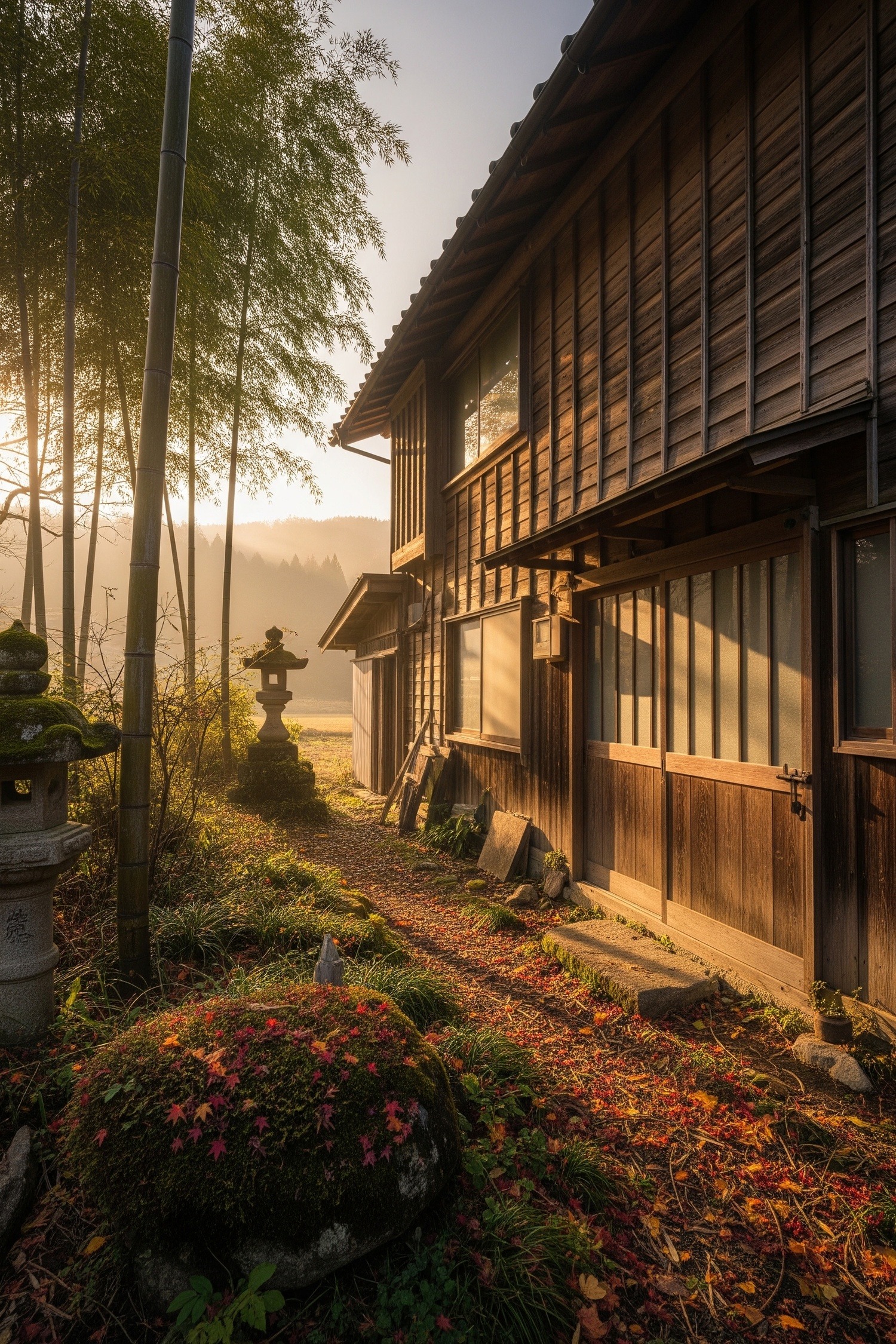
They’re called Akiya — abandoned homes scattered across rural prefectures like Akita, Shimane, and Kochi. Most of them are structurally sound. Most of them are being given away because the people who built them left, and nobody’s coming back. This isn’t happening by accident. This is Japan’s answer to a problem that’s about to become everyone else’s problem too.
Key Facts
- Japan has roughly 9 million empty rural houses, with 8.49 million vacant homes projected to exceed 10 million by 2033.
- Japan’s population has been declining since 2008, making it the first developed nation to shrink.
- Abandoned homes called Akiya cluster in rural prefectures such as Akita, Shimane and Kochi.
- Municipal Akiya banks list properties sometimes for ¥500,000 or even free, in exchange for living there and renovating.
- Greater Tokyo’s metro area holds about 37 million people, the most populous urban zone on Earth.
In short: Japan has around 9 million empty rural houses — 8.49 million vacant, projected over 10 million by 2033 — as its population shrinks since 2008. These abandoned Akiya cluster in rural prefectures and are listed on municipal Akiya banks, sometimes free, if buyers live there and renovate. The catch: renovation costs and the pull of Tokyo’s 37-million metro.
Why Japan Abandoned Homes Are Everywhere Now
It starts with a number: Japan’s population has been declining since 2008. The first developed nation to actually shrink. Not slowly. Hiroshi Yoshida, a demographer at Tohoku University, called it “a slow-motion implosion” — villages losing a third of their residents in a single generation. Rural prefectures are hemorrhaging people faster than anywhere else on earth.
So what happens to the houses?
They stay. Japan’s inheritance laws make it bizarrely difficult to sell or demolish an abandoned home. Families hold onto title deeds for decades out of sentiment, obligation, or just sheer exhaustion at trying to navigate the paperwork. The aging crisis has created this situation where you’ve got 8.49 million vacant homes — a figure projected to exceed 10 million by 2033 — and nobody knows what to do with them.
The house sits. The garden goes wild. Years pile up.
The Demographic Math Behind the Empty Houses
To grasp why this is structural rather than temporary, follow the numbers downward. A population shrinks when deaths consistently outnumber births, and Japan crossed that threshold years ago. Its fertility rate has hovered well below the roughly 2.1 children per woman needed simply to keep a population stable. That gap doesn’t show up overnight. It compounds, generation by generation, like interest running in reverse.
Here’s the part that makes housing the visible symptom. A village built for, say, two hundred families in 1965 was sized for the people who lived there then. Those people aged. Their children moved to the cities for work. The grandchildren were born — if they were born at all — in Osaka or Yokohama, not in the family home. When the last elderly resident of a house passes away, there is frequently no one left in the region to move in. The supply of houses was fixed decades ago at a population peak. The demand has simply evaporated beneath it.
This is why Akiya cluster so heavily in the countryside and barely register in the big cities. Tokyo and its satellites are still gaining residents even as the nation as a whole contracts. The empty houses are not spread evenly across Japan — they pool in exactly the places young people left. A vacant home, in this sense, is a kind of demographic fossil: it records the moment a community stopped renewing itself.
How the Akiya Bank System Actually Works
Japan’s response came in the form of Akiya banks — municipal platforms where local governments list abandoned properties for sale. Sometimes for ¥500,000. Sometimes for free. That last fact kept me reading for another hour.
A traditional wooden farmhouse in Nagano? Yours for about $3,500. A property in Tokushima with zero asking price, provided you commit to living there and renovating within a set timeframe. These aren’t ruins. Most are just unloved. You can see some of the most extraordinary places at this-amazing-world.com.
The renovation requirement is everything. Municipalities aren’t being generous — they’re desperate. A family moving into a dying village means tax revenue, school enrollment, maybe a local shop that doesn’t close. The house is the bait. The community is what they’re actually trying to save.
It helps to understand what an Akiya bank actually is administratively. It is not a national portal or a polished real-estate marketplace. It is a patchwork of local-government listing pages, each run by a town or city hall, each with its own format, its own forms, and its own definition of what counts as a vacant home. Some towns layer incentives on top of the listing itself: relocation grants, subsidies toward renovation, even stipends for families with young children who agree to stay for a fixed number of years. The logic is consistent everywhere — a town would rather pay you to revive a derelict house than watch it collapse, lower the value of the homes around it, and eventually have to demolish it at public expense.
Japan Abandoned Homes and the Pull of the Cities
To understand why Japan abandoned homes pile up like this, you have to understand what Tokyo represents. It’s not just a city. It’s a gravitational force pulling 37 million people into the greater metro area — the most populous urban zone on earth. For a young person growing up in rural Akita, the math is simple and brutal.
Stay, or leave.
Most leave. Schools close when enrollment drops. Hospitals consolidate. Trains stop running. Each departure makes the next one more likely. This is the feedback loop nobody designed but everyone enabled. And it’s accelerating.
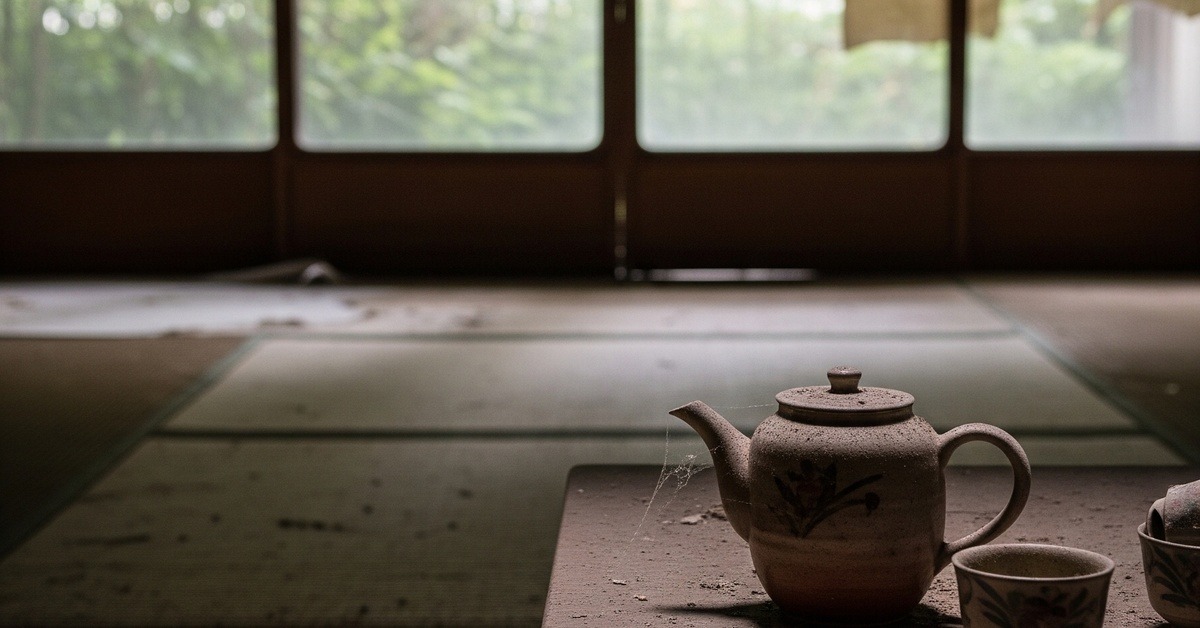
What gets left behind inside these homes — the furniture, the photographs, the half-finished projects, the lives that relocated without looking back — that’s the part nobody talks about. Some Akiya buyers have reported walking into homes where the table was still set.
The Hidden Catch Nobody Warns You About
Here’s the thing — a free house in Japan isn’t quite as simple as it sounds. Many Akiya properties come with significant renovation costs, and traditional Japanese wooden construction requires specialized craftsmen, specific materials, and a tolerance for the unexpected. One buyer in Hyogo prefecture discovered the renovation bill was twelve times the purchase price of the home itself.
There’s also the language barrier. The paperwork. Local registration requirements. For foreign buyers, it gets worse — a web of residency rules that can make the dream feel like navigating a maze you didn’t ask to enter. Japan only recently relaxed restrictions on foreign Akiya purchases, and the rules vary dramatically by municipality. Some towns actively recruit international residents. Others make it deliberately hard.
Why a Wooden House Costs So Much to Bring Back
The renovation surprise isn’t bad luck — it’s built into how these homes are made. A traditional Japanese house is a timber frame, often with mud-and-lattice walls, a heavy tiled roof, and tatami floors laid over wood that breathes with the seasons. That construction is beautiful and, in its prime, remarkably durable. But it is unforgiving when neglected.
Leave such a house unheated and unventilated for a decade in a humid climate and three things tend to go wrong at once. Moisture works into the timber, inviting rot and wood-boring insects. The roof, which carries enormous weight, develops leaks that quietly soak the structure beneath. And the systems modern buyers expect — insulation, updated wiring, a sealed bathroom, earthquake-resistant reinforcement — were often never there to begin with. Bringing the house up to a livable, code-aware standard can mean rebuilding it from the frame outward.
There’s a deeper reason these homes were so easy to walk away from in the first place. In Japan, houses have long been treated as depreciating assets rather than appreciating ones. A wooden home is frequently assumed to lose most of its market value within a few decades, with the land beneath it holding what worth remains. That cultural accounting means there was little financial incentive to maintain or sell an aging rural house, and little market to buy one. The Akiya glut is partly the residue of an entire system that quietly assumed old houses were meant to be discarded.
By the Numbers
- 8.49 million vacant homes counted in Japan’s 2018 housing survey, projected to exceed 10 million by 2033.
- Rural prefectures like Akita have vacancy rates exceeding 20% — one in five homes sitting empty, a proportion that rivals post-industrial American cities like Detroit at their lowest point.
- The most extreme Akiya listings have sold for ¥1 — roughly one U.S. cent — with buyers required to sign renovation and occupancy agreements.
- Tokyo’s land prices average over ¥1 million per square meter in prime residential areas, creating a gap between urban and rural property values that has no real equivalent in the Western world.
Field Notes
- Several Akiya properties come with fully furnished interiors — beds, kitchen appliances, wardrobes of clothing — because the original owners had no practical way to remove everything before relocating.
- Over 800 distinct Akiya bank platforms operate across different municipalities, and they’re not standardized. A home listed as “free” in one prefecture might carry renovation conditions worth tens of thousands of dollars in another.
- Remote workers from Europe, Australia, and North America have started moving into these programs, with municipalities in Okayama and Wakayama running English-language outreach campaigns specifically designed to recruit foreign residents.
What Actually Happens When Strangers Move In
It’s tempting to read the Akiya story as a tidy fairy tale: empty house, eager newcomer, village reborn. The reality on the ground is messier and far more interesting. When an outsider — Japanese city-dweller or foreigner — takes over a rural home, they inherit more than walls. They inherit a place with its own rhythms, obligations, and quiet expectations.
Rural Japanese communities often run on dense webs of mutual responsibility: neighborhood associations, shared maintenance of irrigation channels and roads, seasonal festivals that need bodies to carry the shrine. A newcomer who treats the house as a holiday investment and never appears tends to remain a stranger. The ones who succeed are usually the ones who show up — who learn enough of the language to greet neighbors, who join the local cleanup days, who let an elderly farmer down the road teach them how the place works.
This is precisely the dynamic the municipalities are betting on. A house refilled by someone who plants a garden, sends a child to the surviving school, and buys vegetables at the one remaining shop does more than occupy a structure. It slows, even briefly, the feedback loop of decline. That’s why occupancy and renovation clauses sit at the heart of nearly every free listing. The town isn’t selling a building. It’s trying to buy back its own future, one resident at a time.
What This Moment Actually Means for the World
Japan abandoned homes aren’t just a quirky real estate opportunity. They’re a preview of what’s coming.
South Korea’s watching. Parts of southern Europe are watching. Swaths of rural America are watching. The same forces are building everywhere — urbanization, falling birth rates, aging populations, economic gravity pulling people toward density. Japan just got there first, and it’s been forced to get creative faster.
Italy offers the closest Western parallel: a wave of dying hill towns that began selling crumbling houses for a single euro on the condition that buyers renovate within a few years. Spain and Portugal have their own emptying interiors, the so-called hollowed-out countryside. South Korea, with one of the lowest birth rates on earth, is arguably tracking Japan’s trajectory even more steeply. None of these places copied each other. They simply arrived at the same demographic crossroads and reached for the same improvised tool — give the house away, attach strings, hope someone stays.
What Japan’s really experimenting with is whether a community can be rebuilt from the outside in. Whether strangers — domestic or foreign — can take the bones of a place and breathe something new into it without erasing what made it worth saving. That’s not a real estate question anymore. It’s philosophical.
And the answer matters.
It matters to every rural town quietly losing its young people. Every country watching its countryside hollow out. Every person who’s ever wondered if they could just start somewhere different. The Akiya program is an accidental invitation. Whether anyone truly answers it — and what they build when they do — is still being written.
Nine million empty houses. Thousands of villages waiting. A government quietly offering the keys to anyone willing to show up and stay. Japan’s Akiya story is equal parts economic puzzle, cultural elegy, and genuinely open question — and it’s only getting more complicated from here.
Frequently Asked Questions
Q: What are Akiya houses?
Akiya are abandoned homes scattered across rural Japanese prefectures such as Akita, Shimane and Kochi. Most are structurally sound — just unloved — and are being given away because the people who built them left and nobody returned. Japan has roughly 9 million such empty houses, with 8.49 million vacant homes projected to exceed 10 million by 2033. They are listed on municipal Akiya banks, sometimes for ¥500,000 and sometimes for free.
Q: Why does Japan have so many empty houses?
Because of demographic decline. Japan’s population has been shrinking since 2008 — the first developed nation to do so — with a fertility rate well below the 2.1 children per woman needed for stability. Villages sized for their 1965 populations emptied as residents aged and their children moved to cities. Inheritance laws also make it hard to sell or demolish a home, so families hold deeds for decades and the houses simply sit, gardens going wild.
Q: Can you really get a free house in Japan?
Sometimes, yes — but with conditions. Municipal Akiya banks list properties for as little as ¥500,000 or even zero asking price, provided the buyer commits to living there and renovating within a set timeframe. A traditional wooden farmhouse in Nagano might cost about $3,500. Municipalities aren’t being generous but desperate: a family moving in means tax revenue, school enrollment and maybe a local shop surviving. The house is bait to save the community.
Q: What’s the catch with buying an Akiya?
A free house isn’t as simple as it sounds. Many Akiya carry significant renovation costs, and traditional Japanese wooden construction needs specialized craftsmen and specific materials — one buyer in Hyogo prefecture found the renovation bill was twelve times the home’s purchase price. There are also language barriers, paperwork and the patchwork nature of Akiya banks. And the deeper pull works against revival: Tokyo’s 37-million metro keeps drawing young people away from the countryside.
Illustrations are AI-generated. Article fact-checked and human-edited.