Ladybug Facts for Kids: The Truth Behind the Spots
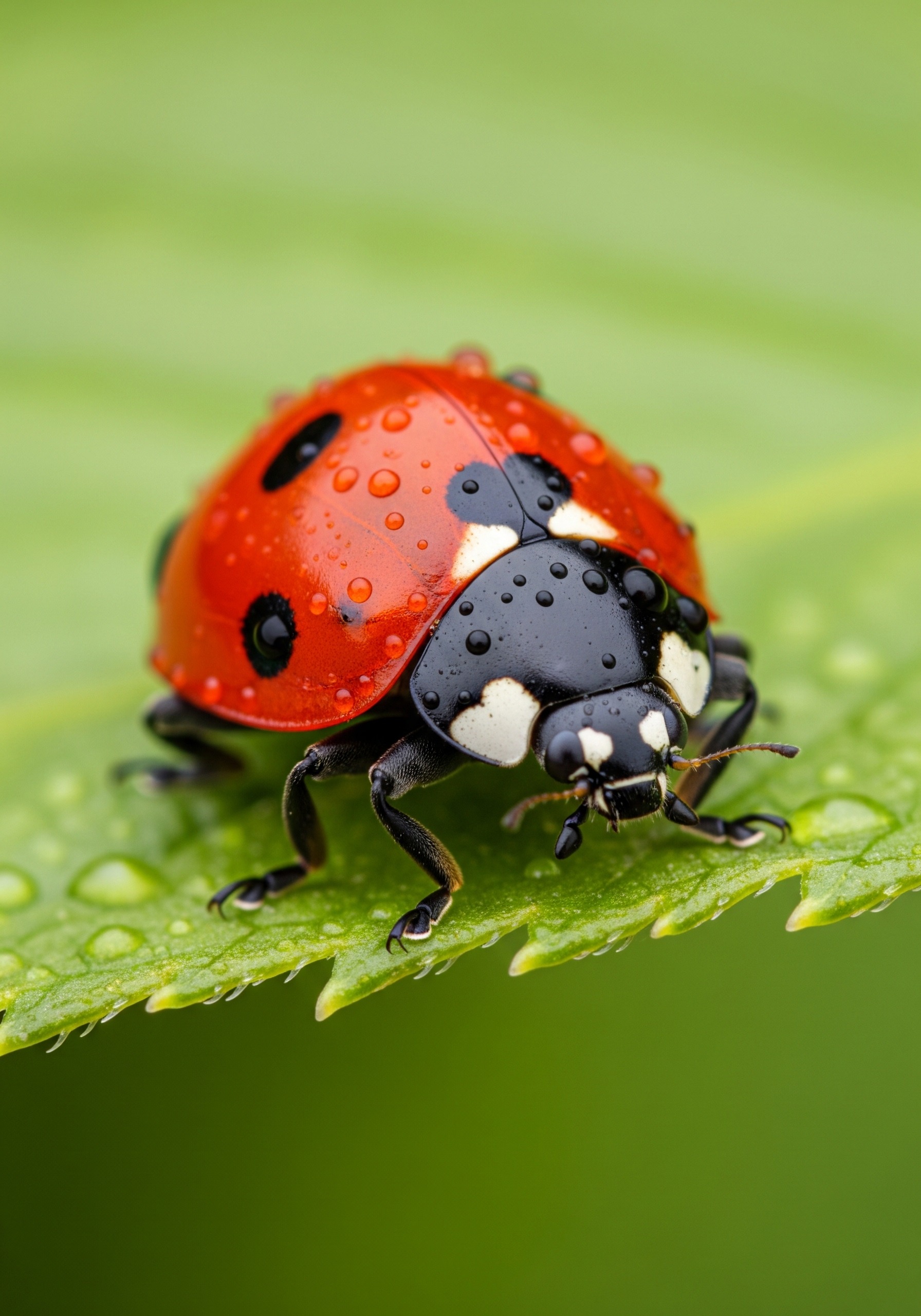
Some of the best ladybug facts for kids start with a surprise — that famous red beetle in the garden isn’t really a bug at all. It’s a beetle. And those tiny dots on its back? They don’t tell you how old it is. They tell you which kind of ladybug you’re looking at.
Key Facts
- There are roughly 5,000 species of ladybugs (also called ladybird beetles) around the world, in colors from red and orange to yellow, pink, and even mostly black.
- One ladybug can eat up to 5,000 aphids over its lifetime — that’s hundreds of garden pests every week.
- When a ladybug feels scared, it leaks a smelly yellow juice from its knees. Scientists call this “reflex bleeding.”
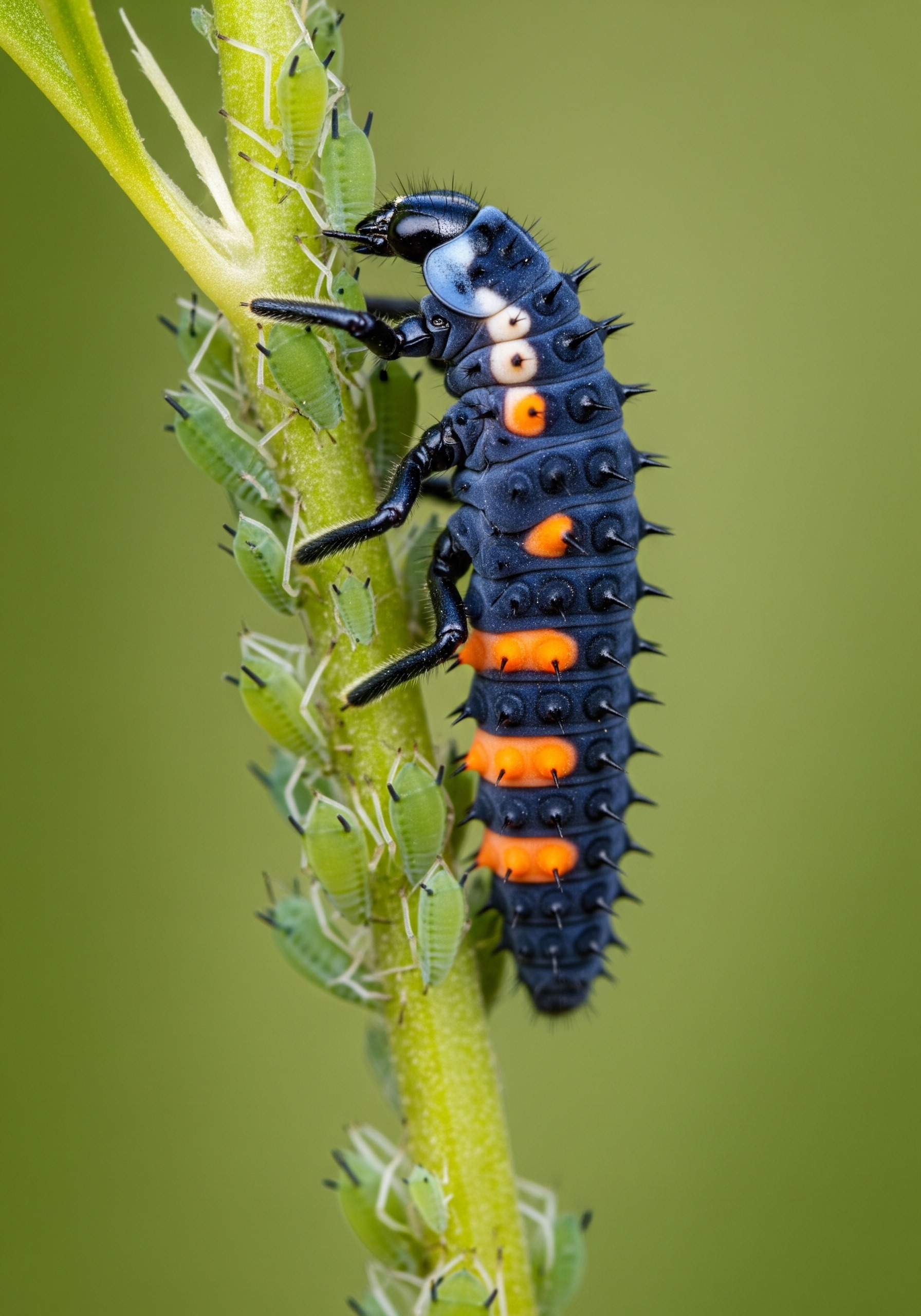
- A baby ladybug looks like a tiny black-and-orange alligator. Most kids would never guess it’s the same animal.
- Cornell University runs a real citizen-science effort — the Lost Ladybug Project — where children’s backyard photos help scientists track which native species are disappearing.
In short: Ladybugs are beetles in disguise, gardeners’ best friends, and quietly fascinating from the moment they hatch to the moment they cluster by the thousands to survive winter. Most of the “ladybug facts” kids learn at school are part right and part myth — and the real story is even cooler.
Key Facts
- There are roughly 5,000 species of ladybugs, also called ladybird beetles, in colors from red and orange to yellow, pink, and even mostly black.
- One ladybug can eat up to 5,000 aphids over its lifetime, with an adult eating around 50 aphids a day and a larva sometimes 400 in a single week.
- Ladybugs are not true bugs but beetles of the order Coleoptera, family Coccinellidae, whose name comes from a Latin word meaning scarlet.
- When frightened, a ladybug performs reflex bleeding, leaking a smelly yellow fluid (hemolymph) from the joints in its legs.
- Cornell University runs the Lost Ladybug Project, a citizen-science effort where children’s backyard photos help track disappearing native species.
In short: Ladybugs are beetles rather than true bugs, and they are gardeners’ allies, with a single one eating up to 5,000 aphids in its life. Their spots identify the species rather than their age, and when scared they defend themselves with reflex bleeding.
What Is a Ladybug, Really?
Here’s the first plot twist. The “bug” in ladybug is misleading. True bugs belong to a group called Hemiptera — think aphids, cicadas, stink bugs — and they suck their food through straw-shaped mouths. Ladybugs belong to a completely different order: Coleoptera, the beetles. Their wings are armored. Their jaws chew sideways. Beetles are the largest animal group on Earth, with more than 350,000 named species, and the ladybug is one of their tiny, polished celebrities.
British children call them ladybirds. American children call them ladybugs. The scientific name for the whole family is Coccinellidae, from a Latin word meaning “scarlet” — a fancy way of saying “the bright-red ones.” Either spelling, same creature. Ladybird facts for kids in London and ladybug facts for kids in Chicago are about the exact same animal.
How did the name “lady” get attached? Turns out it’s a piece of medieval history. European farmers in the Middle Ages watched their crops being eaten alive by aphids — and then swarms of red beetles arrived and saved everything. The farmers thanked the Virgin Mary, “Our Lady,” and called the helpful insects “beetles of Our Lady.” Centuries later, that shortened to ladybug.
A Rainbow of Ladybugs (Not Just Red)
If you only know the red ones, you’ve barely met the family. Real ladybugs come in red, orange, yellow, pink, brown, black, and even iridescent metallic shades. Some have a few bold spots. Some have no spots at all. Some are practically painted with stripes.
The storybook ladybug — red with seven black dots — is Coccinella septempunctata, the seven-spotted ladybug. It was actually imported into North America from Europe in the 1950s and 60s to fight crop pests. Native American ladybugs, like the nine-spotted (New York’s state insect), are still around but much harder to find today.
Color is the ladybug’s billboard. Bright red on black is a warning sign biologists call “aposematism” — basically a flashing label that reads, “I taste terrible. Don’t eat me.” Birds learn fast. One bad mouthful and they leave ladybugs alone for the rest of their lives.
{IMAGE_2}
The Spots Myth (and What Spots Really Tell You)
A myth that gets passed around every classroom: count the spots, and you know how old a ladybug is. It sounds charming. It also happens to be completely wrong.
The number of spots is fixed for each species. A two-spotted ladybug has two spots its whole life. A fourteen-spotted has fourteen. The pattern is genetic, like a thumbprint, and it’s set before the beetle ever leaves its pupal case. A ladybug doesn’t gain new spots as it grows up any more than a kid grows extra fingers.
So if spots aren’t a calendar, what are they? They’re an identity card. Entomologists — scientists who study insects — count and place the spots to work out which species they’re looking at. Some species are even named after their spot count: Coccinella septempunctata literally means “seven-spotted scarlet beetle” in Latin.
That’s also the most useful trick if you want to identify a ladybug in your own backyard. Don’t ask “how old?” Ask “how many spots, what shape, what color?” Then you’ve got a real clue, the same way a scientist would start.
How a Ladybug Eats 5,000 Aphids
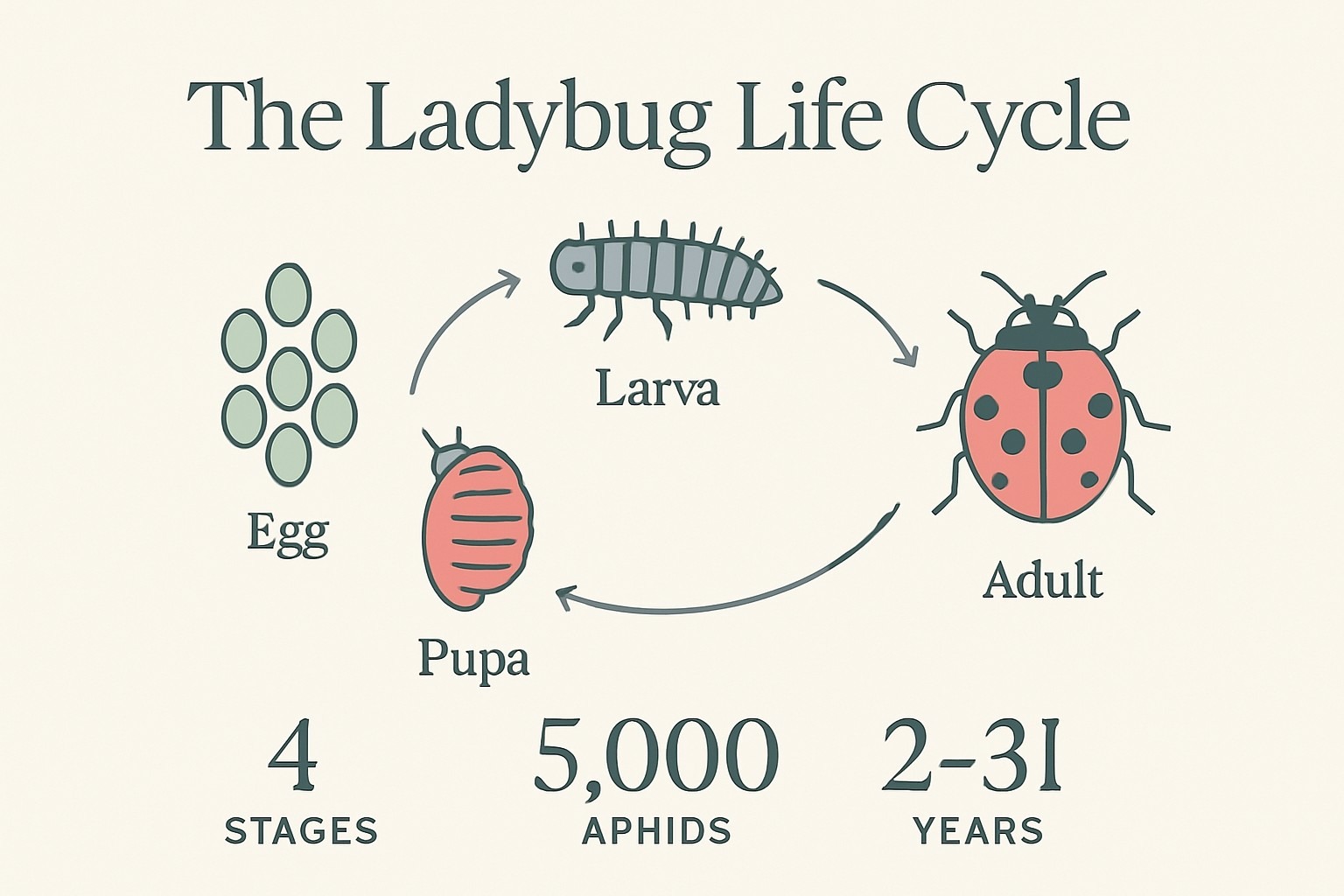
Here’s the headline gardeners love: across its short life, a single ladybug can eat up to 5,000 aphids. An adult ladybug eats around 50 aphids a day, and a hungry larva — the alligator-like baby — can pack away even more, sometimes 400 in a single week.
They don’t just chase aphids. Ladybugs hunt mealybugs, mites, scale insects, whiteflies, and the eggs of other small pests. A handful of ladybugs in a tomato patch can keep aphids from destroying a whole crop without a single drop of pesticide. The next time someone calls insects “creepy crawlies,” remember that ladybugs are essentially free, flying pest control with a built-in design budget.
Ladybugs go through four stages: egg, larva, pupa, adult. The mother lays bright yellow eggs in clusters on the underside of a leaf — often right beside an aphid colony, so her babies have lunch the moment they hatch. The larva looks nothing like its parent. It’s spiky, dark, and orange-spotted, and it eats so much it can outgrow its skin four times in a few weeks before turning into a polka-dotted pupa and finally a familiar adult beetle.
Yellow Knee Juice — The Ladybug’s Stinky Secret
Pick up a ladybug gently and you might notice a tiny yellow drop on your fingertip. That’s not pee. That’s the ladybug’s emergency defense system, and it has a real scientific name: reflex bleeding.
When a ladybug is frightened, it deliberately leaks a small amount of its own blood — properly called hemolymph — out of the joints in its legs. The fluid is loaded with bitter alkaloid chemicals (one of them is even named “coccinelline,” after the beetles themselves). To a hungry bird or spider, it tastes awful and sticks to the mouth. Most predators spit the ladybug out and remember the lesson forever.
It’s a real-life superpower, and it explains why ladybugs spend their lives strolling slowly across leaves in plain sight. They don’t need camouflage. They’ve got chemistry.
Spot These Five Ladybugs in Your Backyard
Ladybug-watching is the cheapest hobby in nature.
All you really need is a porch, a magnifying glass, and patience. Here are five species commonly spotted across North America and Europe — print this table, take it outside, and see how many you can find.
| Species | Color & Spots | Size | Tell-Tale Sign |
|---|---|---|---|
| Seven-spotted | Red with 7 black spots | 7–8 mm | The classic “storybook” ladybug; very common in gardens. |
| Convergent | Red-orange, up to 13 spots | 4–7 mm | Two slanted white lines on the back like little train tracks. |
| Asian (Harlequin) | Orange to red, 0–22 spots | 5–8 mm | White “M” shape behind the head — the give-away. |
| Two-spotted | Red with 2 large black spots | 4–5 mm | Very small; sometimes black with red spots instead. |
| Nine-spotted | Red-orange with 9 black spots | 5–7 mm | Rare today; New York’s state insect. |
One trick: ladybugs often warm up on bright leaves in the morning sun before they fly. That’s the easiest moment to snap a phone photo without scaring them.
The Newcomer With Too Many Spots
If you keep finding ladybugs inside your house every fall — clustered on a window frame, crawling along a curtain rod — you’ve probably met the Asian or harlequin ladybug, Harmonia axyridis. It was brought into North America in the 1980s to help control crop pests. It worked too well.
Harlequins are enthusiastic eaters, enthusiastic breeders, and (this is the awkward part) enthusiastic eaters of native ladybug eggs. Since their arrival, several once-common American species — including that nine-spotted in the table above — have become hard to find. In some parts of the eastern United States, they appear to have vanished almost entirely.
How do you know if the ladybug on your kitchen window is a harlequin? Look at the spot right behind its head. If you see a white “M” or “W” shape on a black background, you’re looking at a harlequin. Native species usually have plain black or white markings there — no letter.
This is a rare case where a non-native insect has caused real ecological harm to ladybugs that once seemed everywhere — and the average kid with a phone camera can actually help document the change. For a deeper look at the seven-spotted ladybug’s family tree and how all these species evolved their warning colors, our longer guide on 50 million years of ladybug evolution is a good next step.
Ladybug Facts for Kids Who Want to Help Real Scientists
Here’s where ladybug fun facts for kids stop being homework and start being a job. Entomologist John Losey of Cornell University runs the Lost Ladybug Project, a real citizen-science effort that began in 2008 because so many native species were quietly disappearing.
The idea is simple. A kid (or anyone) photographs a ladybug, uploads it with the date and location, and a team of scientists confirms the species. Over the years, this network of backyard photographers has logged tens of thousands of sightings — including rediscoveries of the nine-spotted ladybug in places researchers had nearly given up on. Losey and his team have used the data in peer-reviewed papers about how invasive species push native ones out.
What that means for the average child with a phone camera is unusually direct: a single backyard photo can be a real data point in real science. Few homework assignments ever beat that. If your family wants to put ladybugs to work in your own garden too, the practical side of how they hunt aphids is laid out in our piece on ladybugs as nature’s tiny pest controllers.
Frequently Asked Questions
Q: Do ladybugs bite people?
A: Most native ladybugs do not bite. The Asian (harlequin) ladybug will sometimes give a tiny nibble if it lands on bare skin and the skin is sweaty or salty. It isn’t venomous and it doesn’t hurt much — about as sharp as a pinch from a blade of grass.
Q: How long do ladybugs live?
A: In the wild, most ladybugs live about one to two years, with two to three years possible in good conditions. They spend much of that time hibernating through the cold months in huge clusters under bark, leaves, or rocks.
Q: Are ladybugs really good luck?
A: In many cultures — including in England, Germany, and Italy — having a ladybug land on your hand is considered lucky. Scientifically, the “luck” is mostly that ladybugs eat the pests that would otherwise eat the plants people depended on for food. The folklore tracks the biology.
Q: Where do ladybugs go in winter?
A: They hibernate in groups, sometimes thousands strong. In California, Convergent ladybugs fly into the mountains every autumn and pile up under leaves and logs by the bucket-load. It looks unreal — a forest floor that seems to be glowing red.
Sources
- The Lost Ladybug Project, Cornell University (John Losey and team)
- National Geographic Kids — Ladybug species profile
- Smithsonian National Museum of Natural History — beetle classification
- U.S. Department of Agriculture (USDA) — biological control reports on Coccinellidae
- University of Kentucky College of Agriculture — entomology fact sheets on lady beetles
Next time a small red-and-black creature lands on your sleeve, don’t just count the spots. Count the millions of aphids it has already eaten, the chemistry hiding in its knees, the science being done because a kid somewhere took a phone picture and sent it in. That’s a real ladybug. The cartoon was the easy part.
Illustrations are AI-generated. Article fact-checked and human-edited. Our editorial standards.