384 Left: The North Atlantic Right Whale’s Final Count
Somewhere in the cold Atlantic, 384 enormous animals are moving through shipping lanes, feeding grounds, and calving waters — the entire remaining population of the North Atlantic Right Whale, recorded this October by the North Atlantic Right Whale Consortium. Not a projection. Not a worst-case model. The actual count of living individuals. Fewer than the seating capacity of a small-town cinema, spread across one of Earth’s most trafficked ocean corridors.
They’re filtering copepods right now. Nursing calves. Following migratory routes their species has traced for millions of years through waters that have become unrecognizable in the span of a single human lifetime. The animals haven’t changed. Everything around them has. And at 384 individuals, margin for error stops being a concept and becomes a biological fact.
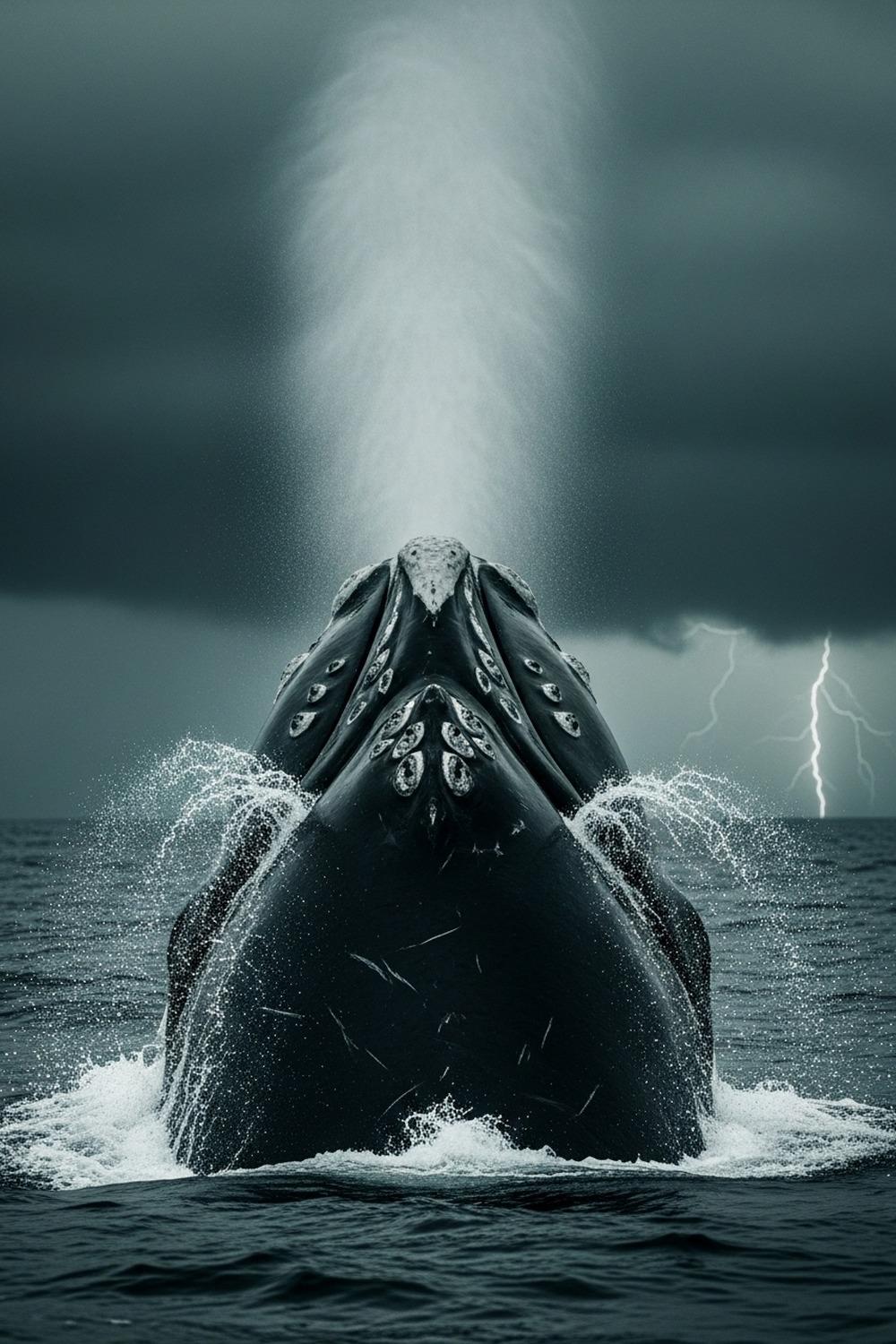
Key Facts
- The North Atlantic Right Whale population 2025 count is 384 individuals, per the North Atlantic Right Whale Consortium’s October 2025 estimate.
- Only about 70 reproductively active females remain in the entire species, the primary bottleneck on recovery.
- In 2017, 17 whales died in a single calendar year, a mortality event the population had not recovered from eight years later.
- The population peaked at approximately 483 individuals around 2011, meaning it has lost nearly a fifth of its count in roughly 14 years.
- 85 percent of right whale carcasses examined between 2017 and 2024 showed evidence of entanglement scarring, per NOAA Fisheries.
In short: The North Atlantic Right Whale population 2025 count is 384 individuals, down from a peak of 483 in 2011. With only about 70 reproductive females left, the species is Critically Endangered, driven toward extinction by fishing gear entanglement and ship strikes. Conservation measures have slowed but not reversed the decline.
What the 2025 North Atlantic Right Whale Count Really Means
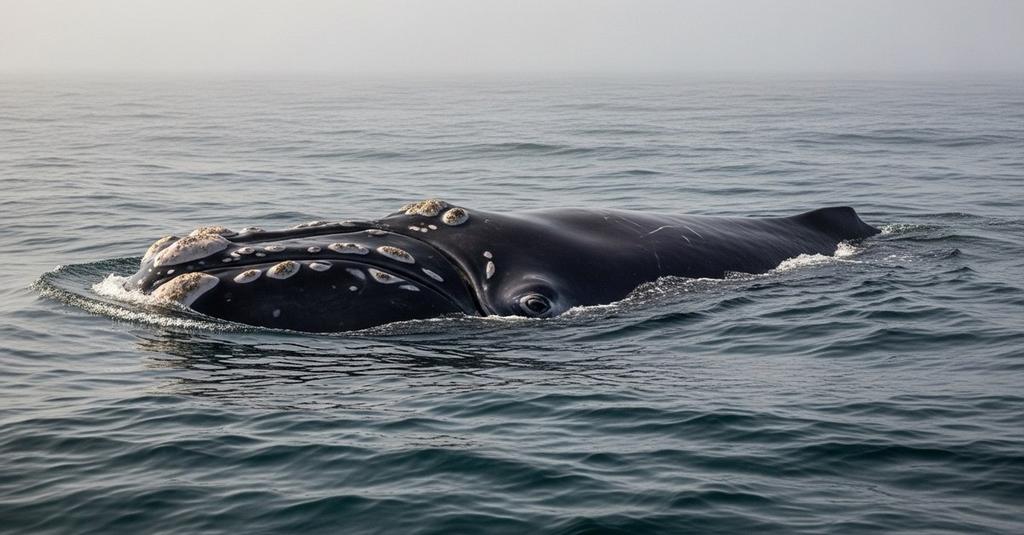
How does a species get counted when there are only 384 left? Since the 1980s, the North Atlantic Right Whale Consortium — researchers from the New England Aquarium, Woods Hole Oceanographic Institution, and dozens of partner organizations — has maintained an exhaustive photo-identification catalog. Individual whales are recognized by distinctive callosity patterns on their heads, the same way humans are identified by fingerprints. That database, now spanning four decades, shows what the October 2025 population estimate confirms: a species declining, with some fragile stabilization signals, but nothing resembling recovery. Conservation biologists at the International Union for Conservation of Nature classify the North Atlantic Right Whale as Critically Endangered — the last classification before Extinct in the Wild. At 384 individuals, the species sits well within catastrophic fragmentation territory according to population geneticists.
Numbers like this carry a specific biological terror.
It’s not just scarcity — it’s the reproductive math underneath. Approximately 70 reproductively active females exist across the entire population. Seventy. These females don’t breed every year. They produce one calf every three to ten years, a reproductive rate that made perfect sense when lifespan was long and mortality stayed low. It makes no sense now. Every time a reproductive female dies — by rope, by ship hull, by chronic stress from entanglement injuries — the species loses not just one animal but years, possibly decades, of potential recovery. The arithmetic is unforgiving, and it compounds in ways that spreadsheets don’t quite capture until you sit with the numbers long enough to feel what they mean.
In 2017, 17 whales died in a single calendar year. The population at the time couldn’t absorb it. Six years later, the North Atlantic Right Whale population 2025 count confirms what biologists feared: they still haven’t recovered from that catastrophic year. Seventeen deaths. The equivalent of losing nearly five percent of an already critically depleted species in twelve months.
How Ship Strikes and Fishing Gear Are Driving Extinction
Right whales don’t die mysterious deaths. The killers are known, documented, and in most cases, entirely preventable. Entanglement in fishing gear — particularly the vertical buoy lines used in lobster and crab fisheries throughout the Gulf of Maine and Canadian Maritimes — is the leading cause of injury and death. A right whale that swims into a buoy line doesn’t always die immediately. It may drag gear for months, ropes cutting into blubber, restricting movement, preventing proper feeding, creating infections that spread slowly through tissue. NOAA Fisheries researchers studying carcass data between 2017 and 2024 found that more than 85 percent of right whales examined showed evidence of entanglement scarring at some point in their lives. The ones that survive carry those injuries forward — weakened, stressed, less likely to successfully reproduce.
Chronic stress compounds across generations. The ocean’s largest animals are being worn down by gear designed for creatures a fraction of their size, and that accumulation is now visible in the population’s reproductive rates. It’s a slow violence, and watching a species disappear at this speed, you stop calling it a trend. Here’s the thing: there’s a useful parallel in how even ocean creatures far smaller and seemingly more protected can face invisible pressures — much like the cryptic survival strategies of pygmy seahorses reveal how species can be pushed toward invisibility long before we realize they’re disappearing.
Ship strikes are the second major cause of death. Right whales cruise at roughly six kilometers per hour and spend significant time at or near the surface, resting in what researchers call logging behavior. Container ships and tankers traveling the same Atlantic corridors reach speeds of 25 knots or more. The physics are brutal and simple. NOAA introduced mandatory vessel speed restrictions in 2008 through the Ship Strike Rule, requiring vessels over 65 feet to slow to 10 knots or less in designated seasonal management areas. Studies published between 2009 and 2022 showed those speed zones reduced strike risk by an estimated 80 to 90 percent in areas where they applied.
Coverage gaps are the problem. Whales don’t stay inside designated zones. As ocean temperatures shifted, so did whale distributions. Right whales have moved. Warming Gulf of Maine waters have driven their primary prey — the tiny crustaceans called Calanus finmarchicus — to shift northward and deeper, and the whales have followed, appearing in Canadian waters where shipping lane protections were, until recently, almost nonexistent. The prey moved. The whales followed. The ships were already there. Canada’s 2019 expanded speed restrictions in the Gulf of St. Lawrence came too late for several animals.
A Warming Ocean Reshuffles the Last of Their Food
The Gulf of Maine is warming faster than approximately 99 percent of the world’s ocean surface. A landmark 2021 analysis published in Science by researchers from the Gulf of Maine Research Institute documented this single fact with precision. Cascading consequences followed — most people haven’t fully reckoned with what it means for right whales. Calanus finmarchicus, the dense, lipid-rich copepod that right whales depend on to build fat reserves for migration and reproduction, is declining in abundance in historically reliable feeding areas.
Right whales need to consume up to 2,200 pounds of copepods per day when feeding is good. As copepod concentrations thin and shift, the whales must work harder and travel further to meet basic caloric needs. A whale that can’t feed adequately in summer arrives at the calving grounds in winter metabolically compromised. Females in poor body condition, research from the New England Aquarium’s Anderson Cabot Center has shown, are significantly less likely to become pregnant and more likely to produce calves that don’t survive their first year.
But here’s what complicates the despair: the North Atlantic Right Whale population 2025 figure of 384 may actually reflect a slight stabilization compared to the trajectory of 2017 to 2021, when some models projected the species could fall below 300 individuals within a decade. Conservation measures — expanded speed zones, gear modifications trialed in U.S. and Canadian waters, improved real-time whale detection systems using aerial surveys and acoustic monitoring — appear to have slowed the decline. Slowed, not stopped. The distinction matters because it means the interventions being tested actually work. This is both the most hopeful and most frustrating fact in the entire story. The 2025 count is not good news. It’s a catastrophe that, for the moment, isn’t accelerating at its worst-case rate.
Climate change has turned what was already a crisis into a moving target. The whales’ behavior is changing. Their range is expanding unpredictably. Protections designed for a species that followed predictable seasonal corridors are struggling to keep pace with animals forced to improvise.
North Atlantic Right Whale Population 2025: What Recovery Would Actually Require
In 2022, NOAA Fisheries released its final rule on Endangered Species Act protections for right whales, mandating sweeping changes to the American lobster fishery — one of the most economically significant and politically contentious fisheries on the Eastern Seaboard. The rule required a 98 percent reduction in the risk of serious injury or death from entanglement in U.S. commercial fishing gear within ten years. Gear modifications — ropeless fishing technology, weaker breaking-strength ropes, area closures — were the primary tools. Legal challenges followed. Implementation has been partial and contested. But the underlying science hasn’t changed: NOAA’s own models estimated that without significant gear changes, right whale mortality from entanglement would continue to exceed the rate at which the population could reproduce. The fishing industry pushed back hard. More whales would die than could be born. The math doesn’t negotiate.
Ropeless fishing — systems where traps are retrieved using an acoustic trigger rather than a surface line — eliminates the entanglement risk almost entirely during the time gear is in the water. The technology works. Field trials conducted by the Center for Coastal Studies in Provincetown, Massachusetts between 2019 and 2024 demonstrated reliable performance across different ocean conditions. A single ropeless unit can cost between $2,000 and $5,000. The lobster fleet numbers in the tens of thousands of vessels. The scale of the ask is enormous, even if the logic is airtight. The barrier isn’t engineering — it’s cost, adoption, and the political will to mandate a transition that affects tens of thousands of fishing operations across multiple U.S. states and Canadian provinces.
Meanwhile, autonomous underwater listening systems have been deployed throughout Canadian right whale habitat since 2018 by researchers at Dalhousie University in Halifax, building real-time acoustic detection networks that can alert shipping traffic when whales are nearby. In trial periods, the system worked. It reduced ship speeds in critical areas. Whether it scales to the level needed across an entire ocean corridor remains the defining conservation question of the next decade.
What 384 Means for the Future of an Ancient Animal
Four to six million years — that’s how long the North Atlantic Right Whale has been swimming these Atlantic corridors, depending on which fossil record you’re reading. They survived the end of the Pleistocene. They survived the transformation of the Atlantic coastline. Roughly 200 years of industrial whaling followed by a century of industrial shipping and commercial fishing is what they didn’t survive. The species was hunted nearly to extinction in the 17th and 18th centuries precisely because it was the “right” whale to kill: slow, coastal, and it floated when dead. By the early 20th century, the population had collapsed to numbers that looked terminal.
Commercial whaling was eventually stopped. Recovery came — slowly, painfully, to a peak of around 483 individuals estimated in 2011. And then it started falling again. That trajectory — collapse, partial recovery, renewed decline — is what makes the North Atlantic Right Whale population 2025 figure so specifically devastating. This isn’t a species that never had a chance. It’s a species that was given a chance, showed signs of taking it, and is now being pushed back toward the edge by human industries that have proven remarkably resistant to modification.
The biological window for recovery is not closed. But it’s narrow, and it gets narrower every year that regulatory action is delayed, every year a reproductive female dies wrapped in rope, every year the Gulf of Maine runs a degree warmer than it did before.
Stand at the bow of a research vessel off the coast of Nova Scotia in August and watch a right whale surface fifty meters away. The exhale — the V-shaped blow that identifies the species at distance — comes up slow and deliberate, misting the cold air. The animal beneath is the size of a school bus, unhurried, ancient. It surfaces. It breathes. It disappears. And somewhere on a database in Boston, a researcher records a callosity pattern and adds one more tick to a count that sits, this October, at 384.
Where to See This
- The Bay of Fundy, between New Brunswick and Nova Scotia (Canada), is one of the most reliable summer feeding areas — whale-watching vessels operate from Digby and Grand Manan Island from July through September, following strict federal approach guidelines that keep boats at minimum 500-meter distances.
- The New England Aquarium’s Anderson Cabot Center for Ocean Life (andersoncabotcenterforoceanlife.org) leads much of the primary right whale research and publishes updated population data, calf counts, and entanglement records publicly each season.
- The North Atlantic Right Whale Consortium’s annual report, released each October, is the most authoritative single document tracking the species’ status — it’s publicly accessible and readable for non-specialists willing to sit with difficult numbers.
By the Numbers
- 384 — confirmed individual North Atlantic Right Whales remaining, per the North Atlantic Right Whale Consortium’s October 2025 population estimate.
- ~70 — estimated number of reproductively active females in the entire species; the primary bottleneck on any possible recovery.
- 17 — whales killed in a single year (2017), a mortality event the population has not fully recovered from eight years later.
- 483 — the approximate peak population recorded around 2011, meaning the species has lost nearly a fifth of its total count in roughly 14 years.
- 85% — proportion of right whale carcasses examined between 2017 and 2024 showing evidence of entanglement scarring at some point in their lives (NOAA Fisheries).
Field Notes
- Right whales produce a distinctive V-shaped blow — the split caused by their two separate nostrils positioned wide apart on the rostrum — visible from several kilometers in calm conditions. Researchers first used this feature to identify them from aircraft in systematic aerial surveys beginning in the 1980s, a method still in use today alongside drone surveillance and acoustic monitoring buoys.
- A right whale’s callosity pattern — the rough, whitish skin growths on the head — is unique to each individual and doesn’t change over a lifetime, making photo-ID cataloguing more reliable than tagging for long-term population tracking.
- Unlike most large whale species, right whales don’t breach dramatically or display behavior that makes them easy to spot at distance. They spend enormous amounts of time at or just below the surface, nearly motionless — a behavioral trait that made them easy targets for 18th-century whalers and still makes them uniquely vulnerable to ship strikes today.
- Researchers at the Anderson Cabot Center still cannot fully explain why some reproductively active females go years, sometimes over a decade, without producing a calf — beyond body condition alone. Whether chronic entanglement stress, acoustic disturbance, or prey availability disrupts reproduction at a hormonal level remains an open question with direct consequences for any recovery projection.
Frequently Asked Questions
Q: What is the current North Atlantic Right Whale population in 2025, and is it increasing or decreasing?
The North Atlantic Right Whale population 2025 count is 384 individuals, according to the North Atlantic Right Whale Consortium’s October 2025 report. The trajectory over the past decade has been one of decline, with a peak of approximately 483 animals around 2011. There are tentative signs the rate of decline has slowed due to conservation interventions, but the species has not yet returned to a state of measurable net growth. With only ~70 reproductive females remaining, biologists do not consider recovery underway.
Q: Why can’t we simply stop fishing and shipping near right whale habitat to protect them?
The geographic reality makes blanket exclusions economically and politically unworkable — right whales share their habitat with some of the most economically productive fisheries and shipping lanes on the North American coastline. The approach being pursued instead involves targeted speed restrictions in documented whale concentration areas, time-area fishing closures during peak whale presence, and gear technology transitions like ropeless fishing. The evidence suggests these targeted measures, if fully implemented, would be sufficient to allow recovery — the challenge is the gap between what science recommends and what regulations currently mandate.
Q: Isn’t the North Atlantic Right Whale basically the same as other right whale species — are they all this endangered?
This is a common misunderstanding. There are three recognized right whale species, and they’re in very different situations. The Southern Right Whale numbers approximately 10,000 to 15,000 individuals and is classified as Least Concern. The North Pacific Right Whale may be the most critically endangered large whale on Earth, with estimates as low as 30 to 50 individuals in the eastern population. The North Atlantic Right Whale, at 384, sits between these extremes — past the point of easy recovery, not yet past the point of possible recovery. They’re distinct populations with distinct threats, and conservation status should not be conflated across species.
Editor’s Take — Alex Morgan
What I keep returning to is the 2011 peak. Four hundred and eighty-three animals. The population was actually moving in the right direction. We knew what was killing them. We had the technology to reduce the harm. And in the fourteen years since, the number has dropped by nearly a fifth anyway — because the political will to act matched neither the urgency of the science nor the pace of the threats. Three hundred and eighty-four isn’t a story about a mysterious extinction. It’s a story about a decision, made repeatedly, to prioritize economic disruption over biological reality. That decision is still being made.
There’s a certain kind of grief that comes with abundance remembered. Whalers once reported right whales so thick in certain bays that small boats couldn’t row through without striking them. That abundance funded fortunes, built cities, lit lamps across a continent. Now a research team celebrates when the annual calf count reaches double digits. The ocean those whales navigated hasn’t forgotten what it held. The question — the one that will define the next decade of conservation biology on the North Atlantic — is whether 384 is the number we look back on as the lowest point, or the last count before the count became impossible to take.
Illustrations are AI-generated. Article fact-checked and human-edited. Our editorial standards.