Office Cats With Jobs at a Tokyo Software Company
Eleven office cats with jobs run a software company in Tokyo, business cards and all. There’s a clerk. A manager. An auditor. None of them have ever stayed awake through a meeting. They sleep in laps, patrol the desks, and have an entire office rebuilt around their needs. This is not a gimmick.
The company is Qnote Inc., tucked into central Tokyo, and its experiment with cats is now two decades deep. The first cat arrived in 2004. Today the office holds eleven, roaming a workspace fitted with custom shelving, scratch-proof surfaces, and a dozen dedicated litter areas. The staff insist it works. The obvious question is whether that feeling holds up to actual evidence.
Key Facts
- Qnote Inc., a Tokyo software firm, employs eleven cats with their own printed business cards and job titles.
- The company adopted its first office cat in 2004, expanding the roster over roughly two decades.
- The office was renovated specifically for the cats, with twelve dedicated litter areas, custom wall shelving, and scratch-resistant surfaces.
- Japan uses the word karoshi, meaning death from overwork, reflecting one of the world’s most demanding work cultures.
- A 2008 study at the University of Minnesota linked cat ownership to a significantly lower risk of fatal heart attack.
In short: At Qnote Inc. in Tokyo, eleven office cats with jobs hold formal titles and business cards, and the office was renovated around them. Staff report lower stress and stronger team bonds. In a country with a word for death by overwork, the cats function less as a quirk than as a deliberate buffer against burnout.
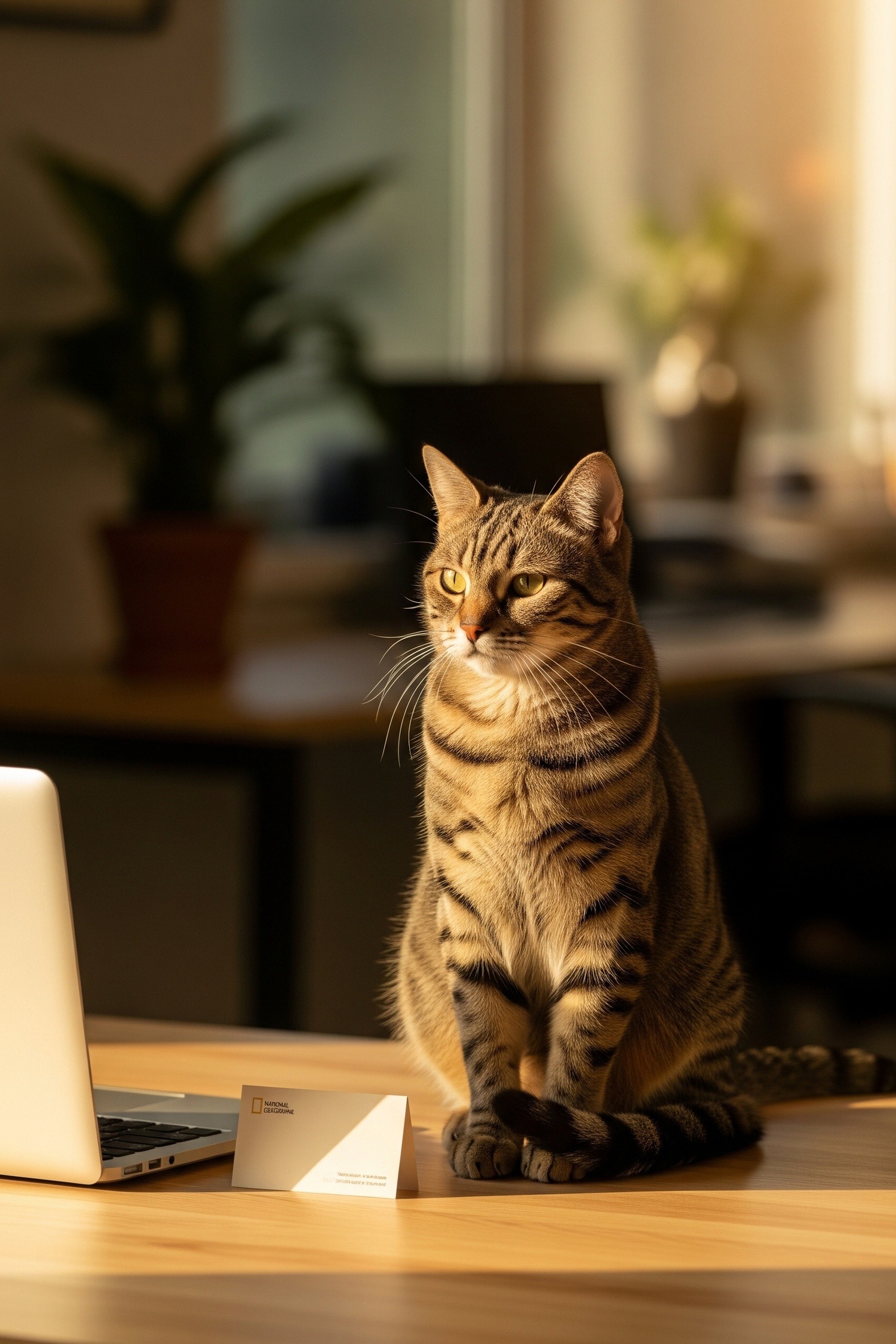
What do office cats with jobs actually do all day?
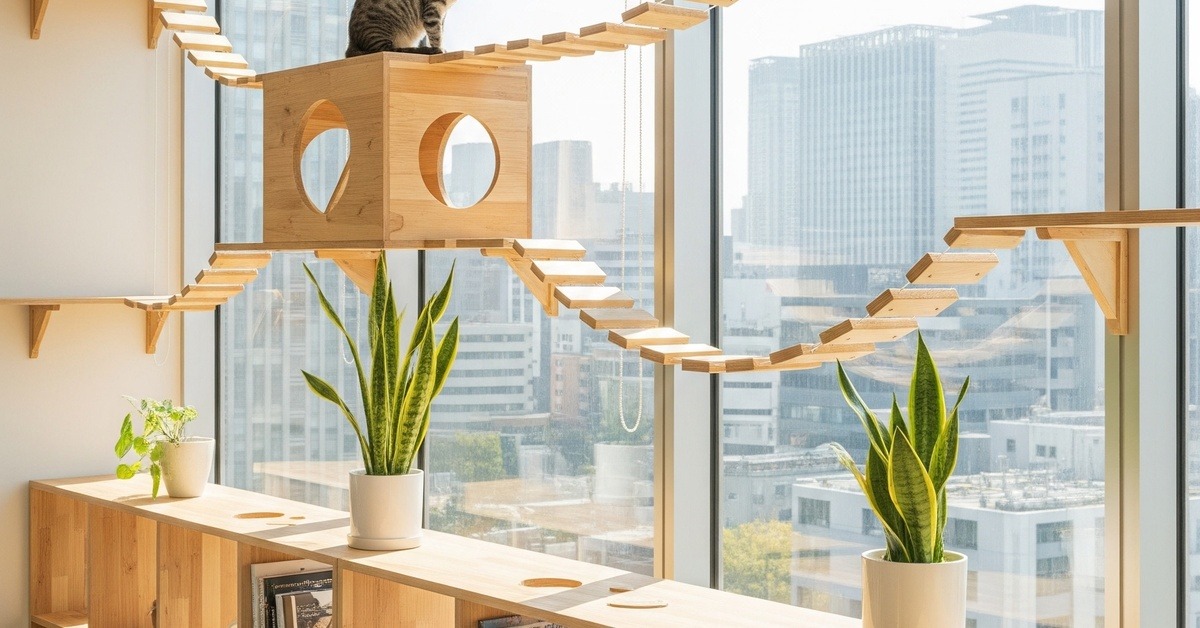
Officially, not much. The titles are a joke the company commits to fully. One cat is listed as a clerk, another as a manager, a third as an auditor, and each carries a printed business card bearing its name and position. Visitors to Qnote Inc. can, in theory, exchange cards with a cat. The roster has grown since the first adoption in 2004 to eleven animals, all of whom wander the office freely rather than living in a designated pen. The renovation that followed was thorough. Twelve litter areas were installed so no cat is ever far from a toilet. Wooden shelves were mounted up the walls and across the ceiling line to give the animals elevated walkways. Surfaces throughout were chosen to survive claws. The point was never decoration. It was to make the office genuinely livable for a cat, which in turn makes it calmer for the humans.
Unofficially, the cats do the most important thing of all: they interrupt. A coder hunched over a screen for three hours gets a tail across the keyboard and has to stop. Someone tensing before a deadline finds a warm animal settling into their lap. These interruptions are small, but they break the grind of continuous high-focus work, the kind of work that quietly wears people down. Here’s the thing about a cat in an office: it has zero respect for your schedule, and that turns out to be the medicine.
So the cats hold no real duties. They hold something better. They hold attention, briefly, and give it back rested.
Why a Tokyo company built its office around cats
To understand the decision, you have to understand the backdrop. Japan has one of the most punishing work cultures on Earth, demanding enough that the language contains a specific word for its worst outcome: karoshi, death from overwork. Cases of employees collapsing from heart failure or stroke after extreme hours have been documented for decades, and the government has repeatedly tried to legislate limits. Against that pressure, Qnote’s choice reads less like a quirky HR perk and more like a quiet act of resistance. The company decided that the cure for a brutal workplace might be a soft, indifferent animal asleep on the printer. If you’re curious how deeply animals shape human well-being, the broader story of the bond between people and the creatures they keep close threads through cultures everywhere, but rarely this literally in a corporate office.
The mechanism the company is betting on is well documented. Stroking a calm animal lowers cortisol, the body’s primary stress hormone, and nudges blood pressure down. The effect is measurable within minutes. Over a workday, repeated small doses of that calming contact can blunt the chronic stress that drives burnout. Qnote didn’t run a clinical trial, but it didn’t need to. It read the room, the country, and the science, and acted.
The staff back the decision in plain terms. They report lower stress and warmer relationships with colleagues. A shared cat is a shared topic, a reason to pause together.
The science behind cats and human stress
The instinct that animals calm us isn’t folklore. It has been studied for years across several institutions. According to reporting and research gathered by the BBC, interacting with companion animals reliably reduces markers of physiological stress in humans. The clearest single finding came from the University of Minnesota, where a long-term study presented in 2008 followed thousands of people and found that cat owners had a notably lower risk of dying from a heart attack than people who had never owned a cat. The researchers attributed the gap, at least in part, to the stress-buffering effect of the animals. You can read more about the documented health effects of the human-pet relationship and how scientists measure it.
The biology is fairly direct. Petting an animal triggers a release of oxytocin, the bonding hormone, while simultaneously lowering cortisol and slowing the heart. The counterintuitive part is that this works even with an aloof animal. A cat doesn’t need to adore you, the way a dog might, for the contact to register in your nervous system. Its presence alone, its movement across the room, the rhythm of it, seems to be enough. That’s why a creature famous for indifference makes such an effective office colleague.
There’s a limit worth stating plainly. None of this means a cat replaces sane working hours, fair pay, or a manager who respects boundaries. A company that overworks its people and points to the office cat as proof it cares has missed the point entirely. The animals soften the edges of a hard job; they don’t redesign it. What Qnote got right is that it paired the cats with a culture that actually values rest, rather than using them as decoration over the same old grind. The buffer only works when the thing being buffered is also being addressed.
What office cats with jobs reveal about the future of work
Qnote sits at the leading edge of a slow shift. Across Japan and increasingly elsewhere, employers have begun treating mental well-being as an operational concern rather than a personal one. Some firms now offer nap rooms, walking meetings, or on-site therapists. A handful, following Qnote’s lead, have introduced office pets under formal policies, complete with allowance budgets for adopting staff cats. The cat office, once an outlier, is becoming a recognizable model for a kind of humane workplace design that the demanding 2020s economy increasingly demands.
The cause-and-effect that interests workplace researchers is retention. Burnout is expensive. Replacing a skilled software engineer can cost a company many months of that worker’s salary in lost productivity and hiring. If a roster of cats keeps employees calmer and more loyal, the animals pay for their kibble many times over. The numbers favor the cats, even before you count the goodwill.
Qnote, for its part, keeps adopting. The cats come from shelters and strays, and the company frames their presence as both a benefit and a small rescue. Each one renovated the office a little more in its favor.
How It Unfolded
- 2004 — Qnote Inc. adopts its first office cat, beginning the experiment.
- 2008 — a University of Minnesota study links cat ownership to lower heart-attack risk, reinforcing the science.
- 2010s — the office is renovated around the cats, with shelving, scratch-proof surfaces, and twelve litter areas.
- 2020s — the roster reaches eleven cats with business cards, and the model spreads to other firms.
By the Numbers
- 11 — cats currently employed at Qnote, each with a job title and business card.
- 2004 — the year the first office cat was adopted.
- 12 — dedicated litter areas built into the renovated office.
- ~30% — lower heart-attack risk among cat owners in the University of Minnesota study.
- 20+ years — the span Qnote has run its office-cat program.
Field Notes
- Each Qnote cat carries a real printed business card with its name and title, and visitors can exchange cards with them.
- The stress-lowering effect of petting an animal appears within minutes, measurable as a drop in cortisol and blood pressure.
- Cats reduce stress even though they’re famously aloof, suggesting mere presence, not affection, drives much of the benefit.
- Researchers still debate how much of the heart-health link is the animal itself versus the lifestyle of people who choose to keep one.
Frequently Asked Questions
Q: Do office cats with jobs really reduce workplace stress?
The evidence points that way. Petting a calm animal lowers cortisol and blood pressure within minutes, and staff at Qnote Inc. consistently report lower stress and stronger bonds with colleagues. A 2008 University of Minnesota study even tied cat ownership to a roughly 30% lower risk of fatal heart attack. The office cats aren’t a substitute for reasonable hours, but as a buffer against the chronic stress that drives burnout, the science supports the staff’s experience.
Q: How many cats work at the Tokyo company, and what are their jobs?
Qnote Inc. employs eleven cats, each with a printed business card and a mock title such as clerk, manager, or auditor. They hold no real duties; the titles are a joke the company commits to fully. The first cat was adopted in 2004, and the roster grew over two decades. The office was later renovated around them, with custom shelving, scratch-resistant surfaces, and twelve dedicated litter areas spread throughout the workspace.
Q: Why would a company in Japan specifically want office cats?
Japan has a notoriously demanding work culture, severe enough that the language has a word, karoshi, meaning death from overwork. Against that backdrop, Qnote’s cats function as a deliberate counterweight to burnout rather than a novelty. The company is betting that small, repeated moments of calm contact across a workday blunt the chronic stress that wears employees down. In a country battling overwork at a national level, a lap full of sleeping cat is a pointed statement.
Q: Is having pets in the office actually good for business?
It can be. Burnout is expensive, and replacing a skilled employee can cost many months of their salary. If office cats keep staff calmer and more loyal, they reduce turnover and lift morale, easily offsetting the cost of their care. Qnote frames the cats as both an employee benefit and a small rescue effort, since the animals come from shelters and strays. A growing number of firms in Japan and elsewhere now follow similar pet-in-office policies.
Editor’s Take — Sarah Blake
The detail I keep returning to isn’t the business cards. It’s that a country which coined a word for working yourself to death decided the antidote was a creature that does nothing, owes nothing, and naps on the keyboard at the worst possible moment. There’s a quiet philosophy in that. The cats don’t make anyone more productive. They make the office a place a human can survive being productive in. Maybe that’s the more radical idea.
We build offices to extract focus from people, hour after hour, until something gives. A cat walking across a desk refuses that bargain on your behalf. It stops the work, demands the lap, and hands the worker back to themselves for ninety seconds. In a city famous for exhaustion, eleven animals with fake jobs are doing the most human thing in the building. What does it say that we needed cats to remind us to pause?
Illustrations are AI-generated. Article fact-checked and human-edited.