US Embassy in Caracas Reopens After Seven Years of Silence
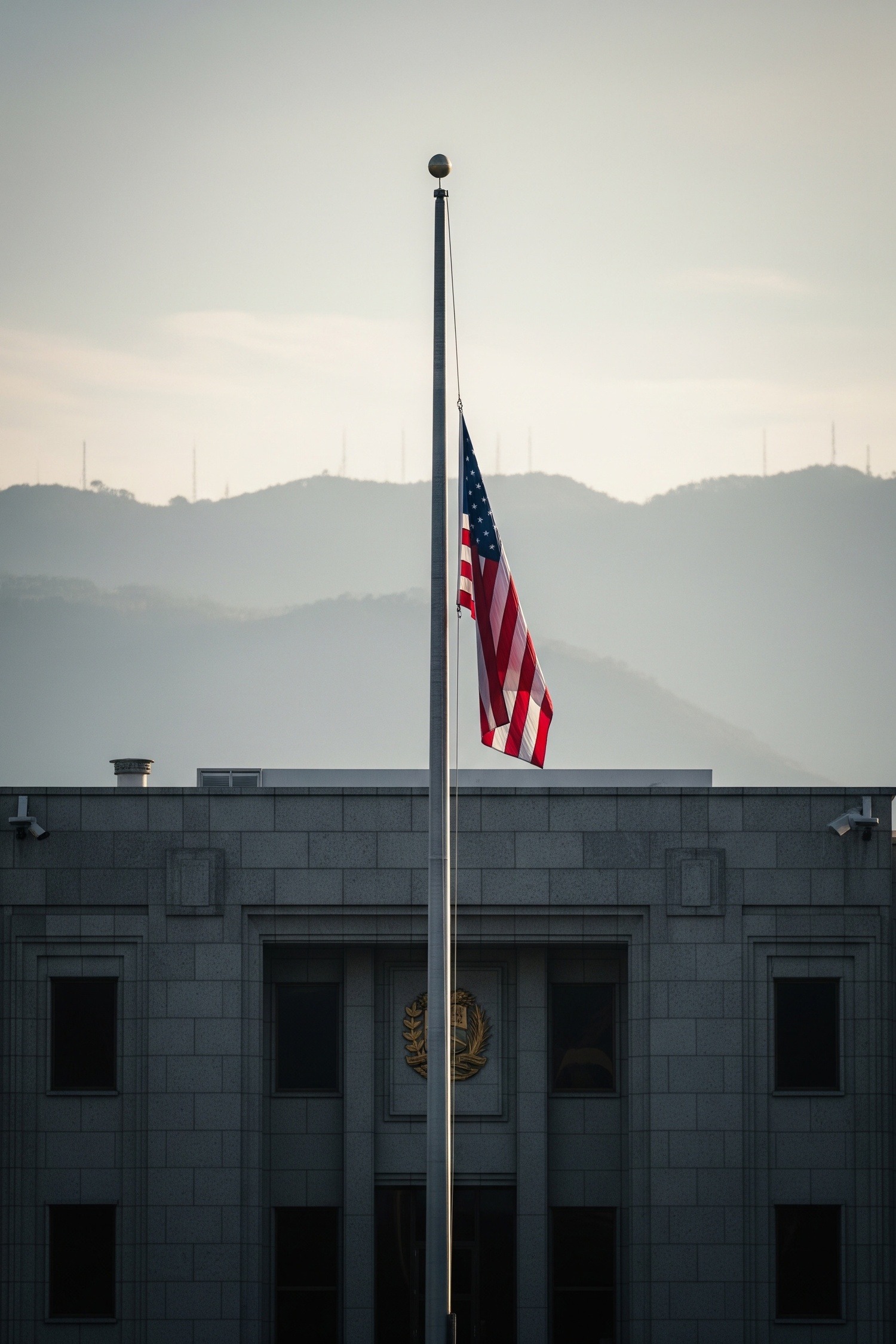
The Caracas embassy reopening ends seven years of silence. For seven years the American Embassy in Caracas sits dark. No flag. No ambassador. Just a building holding its breath. On March 14, 2026, that silence breaks. The Stars and Stripes climbs the pole again.
The flag rises over Venezuela for the first time since 2019, the year Washington severed diplomatic ties. That rupture followed the disputed re-election of Nicolás Maduro and an economic collapse without modern precedent in the region. A flag going back up a pole looks small. It isn’t. Behind it sits a question no one in either capital can answer yet.
Key Facts
- The US flag was raised over the Caracas embassy on March 14, 2026, the first time since the 2019 break in relations.
- Washington severed diplomatic ties with Venezuela in 2019 amid the disputed re-election of Nicolás Maduro.
- At its peak, Venezuelan inflation surpassed 1,000,000 percent, among the worst hyperinflation episodes in modern history.
- More than 7 million Venezuelans have left the country, the largest displacement crisis in the Western Hemisphere.
- Venezuela holds the world’s largest proven oil reserves, roughly 303 billion barrels according to OPEC figures.
In short: The Caracas embassy reopening on March 14, 2026 marked the first US flag raised over Venezuela since the 2019 diplomatic rupture. The break followed Nicolás Maduro’s disputed re-election and an economic collapse that drove more than 7 million people from the country.
Why did the United States close its Caracas embassy?
The break came fast in early 2019. After Maduro’s contested 2018 re-election, the United States recognized opposition figure Juan Guaidó as interim president, and Maduro responded by ordering American diplomats out within days. Washington withdrew its remaining staff that March, suspending operations entirely and leaving the chancery on the hill in Caracas dark. For a deeper look at how the country reached that point, the Venezuelan crisis reads like a slow-motion collapse: oil revenue mismanaged, sanctions tightening, public institutions hollowing out year by year.
What followed wasn’t just political. It was economic free fall. The bolívar lost so much value that prices doubled in days, then in hours. Shoppers carried cash in backpacks and shopping bags. Shelves emptied of flour, medicine, and toilet paper. The middle class evaporated almost overnight, its savings turned to confetti. By the time the embassy doors closed, the relationship between the two governments had hardened into something closer to a frozen standoff than an ordinary dispute.
Seven years is a long time for a building to hold its breath.
What does an embassy actually do?
An embassy is easy to dismiss as ceremony. It’s anything but. It’s where visas get processed, where citizens in trouble find help, where two governments keep a line open even when their leaders refuse to speak. When the Caracas post closed, ordinary Venezuelans lost a place to apply for travel and family reunification, and Americans in the country lost a safety net. The infrastructure of conversation simply vanished. Our overview of how nations keep talking through crisis traces just how much quiet, daily work flows through these walls.
Diplomacy rarely announces itself with fanfare. It moves in small gestures, an embassy reopened, a visa stamped, a phone call finally returned after months of silence. Each one signals that two countries still believe talking is worth something. The mechanism is unglamorous and slow, built on letters, encrypted cables, and careful protocol rather than grand summits and televised handshakes. Most of it the public never sees.
The flag is the visible part. The real machinery runs underneath, in the offices behind those once-dark windows.
Why does Venezuela’s stability matter beyond its borders?
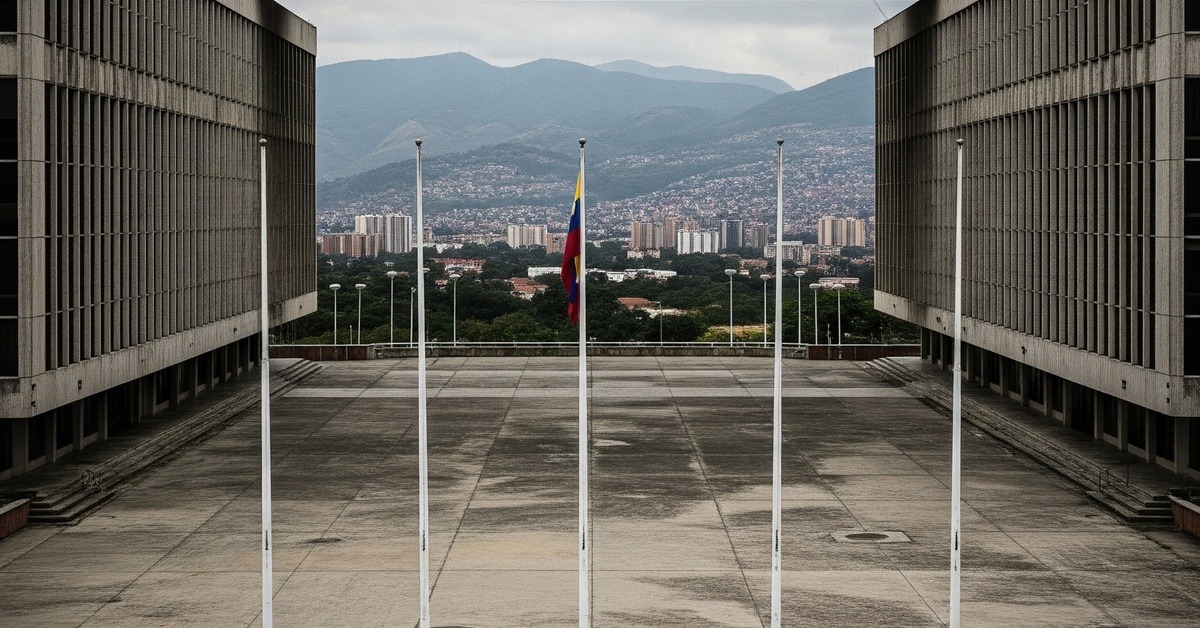
Geography makes Venezuela impossible to ignore. It shares a long Caribbean coastline and borders Colombia, Brazil, and Guyana. According to reporting compiled by the BBC, the country’s instability has rippled across South America for over a decade, straining neighbors that absorbed millions of migrants almost overnight. Colombia alone has taken in more than 2.8 million Venezuelans, reshaping its cities, labor markets, and public services in the process. When one nation buckles, the pressure spreads outward through every shared border.
Then there’s oil. Venezuela sits on the planet’s largest proven reserves, a fact that turns its domestic politics into a global concern. Cause and effect run in both directions: a stable Venezuela could steady regional energy markets and ease migration, while continued collapse keeps a vast resource locked behind dysfunction and sanctions. The Caracas embassy reopening lands squarely in the middle of that calculation, a small lever attached to very large stakes.
One country’s fate, stretched across an entire hemisphere.
What does the Caracas embassy reopening signal?
Reopening a post is not the same as reconciliation. It’s a first step, deliberately modest. A 2026 thaw of this kind usually starts with logistics, not declarations: reopening consular services, restoring channels for trade and migration talks, slowly rebuilding the staff that left in 2019. The flag-raising on March 14 was the symbol, captured in a single photograph. The substance comes later, in months and years of careful, unglamorous work that no camera will bother to record.
History offers a sobering pattern here. Restored diplomatic relations can advance or stall depending entirely on what happens in the years after the ceremony. A reopened embassy is an invitation, not a guarantee. Whether it leads to normalized relations, eased sanctions, or simply a steadier line of communication depends on choices both governments have yet to make, and on pressures neither fully controls.
For now, the doors are open, and the lights are back on.
It helps to remember how rare full ruptures actually are. Even adversaries usually keep some thread of contact alive, an interests section hosted by a friendly third country, a back channel run through neutral intermediaries. A complete embassy shutdown, with the flag down and the staff gone for years, sits at the extreme end of diplomatic estrangement. That’s why the reopening carries weight beyond its modest ceremony. Restoring a fully closed post is harder, and signals more, than simply resuming talks that never entirely stopped. Both governments know the gesture cost something to make.
What does the reopening mean for the 7 million who left?
The largest displacement crisis in the Western Hemisphere didn’t happen in a war zone. It happened in supermarkets and pharmacies, as families weighed whether to stay and watch their savings vanish or walk across a border with what they could carry. More than 7 million people made that choice between roughly 2015 and 2024. Many crossed on foot through the Darién Gap or settled in makeshift neighborhoods across Colombia, Peru, and Brazil, sending money home through whatever channels survived.
An embassy reopening doesn’t reverse that. It can’t call those families back or rebuild the lives that scattered across a continent. What it might do, slowly, is restore the paper trail that displacement destroys: passports, visas, legal status, the documents that let a person exist officially in another country. That’s the quiet, bureaucratic kind of help that rarely makes headlines but changes a single life completely. For millions in limbo, a functioning consulate is not symbolism. It’s a lifeline.
The flag rose for the cameras. The visas matter for everyone else.
How It Unfolded
- 2017–2018: Venezuela’s economic crisis deepens, hyperinflation surges past 1,000,000 percent, and mass emigration begins in earnest.
- 2019: The US recognizes Juan Guaidó, Maduro expels American diplomats, and Washington shutters the Caracas embassy.
- 2023–2024: Migration out of Venezuela passes 7 million people, the largest displacement crisis in the Western Hemisphere.
- March 14, 2026: The Stars and Stripes is raised over the Caracas embassy for the first time in seven years.
By the Numbers
- 7 years: how long the Caracas embassy sat closed, 2019 to 2026.
- More than 7 million: Venezuelans who have left the country.
- Over 1,000,000 percent: peak annual inflation during the crisis.
- ~303 billion barrels: Venezuela’s proven oil reserves, the world’s largest (OPEC).
- ~2.8 million: Venezuelan migrants hosted by neighboring Colombia.
Field Notes
- During the worst hyperinflation, the bolívar lost value so quickly that businesses sometimes reposted prices twice in a single day.
- The 7-million-plus outflow rivals refugee numbers usually associated with active war zones, yet it stems largely from economic collapse rather than open conflict.
- Venezuela’s oil wealth makes its crisis unusual: this is a nation rich in resources yet hollowed by mismanagement and sanctions.
- Analysts still can’t predict whether the reopening leads to full normalization. Restored embassies have, in other cases, preceded both lasting partnerships and renewed estrangement.
Frequently Asked Questions
Q: When did the Caracas embassy reopening happen?
The US flag was raised over the embassy in Caracas on March 14, 2026, marking the reopening after seven years of closure. The post had been shut since 2019, when Washington withdrew its diplomats during the diplomatic rupture with the Maduro government. The 2026 event was the first time the Stars and Stripes flew over Venezuela in that entire span. It signaled a tentative thaw rather than full normalization.
Q: Why did the United States break ties with Venezuela in 2019?
The break followed the disputed 2018 re-election of Nicolás Maduro, which the US and dozens of other countries refused to recognize. Washington instead backed opposition leader Juan Guaidó as interim president. Maduro responded by ordering American diplomats to leave, and the US suspended embassy operations in March 2019. The rupture unfolded against a backdrop of economic collapse, mass emigration, and tightening sanctions.
Q: How many people have fled Venezuela?
More than 7 million Venezuelans have left the country, making it the largest displacement crisis in the Western Hemisphere. Most settled in neighboring nations, with Colombia alone hosting roughly 2.8 million. The exodus was driven primarily by economic collapse, hyperinflation that topped 1,000,000 percent, and shortages of food and medicine. The scale is comparable to displacement figures usually seen in active war zones.
Q: Does reopening the embassy mean relations are fully restored?
No. Reopening a diplomatic post is a first step, not a full reconciliation. It typically restores consular services and reopens channels for communication, trade, and migration discussions. Whether the Caracas embassy reopening leads to normalized relations or eased sanctions depends on decisions both governments have yet to make. History shows that restored embassies can precede either lasting partnership or renewed estrangement.
Editor’s Take — Sarah Blake
The image that stays with me is the empty flagpole, bare for seven years while a country emptied out beneath it. A flag rising again isn’t sentiment, it’s infrastructure being switched back on. The harder truth is that 7 million people left during the silence, and a reopened embassy can’t call them home. What it can do is reopen the one thing the rupture closed: a place where two governments are forced, however reluctantly, to keep talking.
Diplomacy is the slow art of leaving a door unlocked. The flag over Caracas doesn’t fix an economy, reverse an exodus, or resolve a contested election. What it does is smaller and stranger: it admits that conversation hasn’t ended, only paused. Somewhere in that building, the lights are on again, the phones might ring, and a visa might get stamped. Whether anything grows from that depends on what gets said behind those windows in the years to come, and on whether the people who left ever see a reason to look back toward the country that drove them out. A flag is easy to raise. Trust takes far longer, and no ceremony can manufacture it.
Illustrations are AI-generated. Article fact-checked and human-edited.