55,000 Miles for One Teaspoon: The Truth About Honey
A single teaspoon of honey means 55,000 miles. That’s not a measurement anyone was looking for — it’s what you get when you actually count up all the flying.
There’s probably a jar of it in your kitchen right now. You’ve stirred it into tea, spread it on toast, maybe given it to a kid with a cough. What you haven’t thought about — because why would you — is that the thing cost more in collective labor than most objects you own. Not money. Actual work. Thousands of small bodies wearing themselves to nothing so you could have something sweet.
Key Facts
- A single teaspoon of honey represents about 55,000 miles of collective bee flight and visits to roughly two million flowers.
- A worker bee carries about 40 milligrams of nectar in her honey stomach, visiting 50 to 100 flowers per foraging trip.
- Hive bees fan their wings about 200 times per second to drop nectar’s water content from roughly 80% to below 18%, making it shelf-stable.
- A single bee produces about one-twelfth of a teaspoon of honey in her roughly six-week summer lifespan.
- The USDA estimated 2.7 million managed bee colonies in the U.S. as of 2023, with a colony producing up to 60 pounds of honey in a good year.
In short: Honeybee honey production is a staggering feat of collective labor: a single teaspoon represents about 55,000 miles of flight and two million flowers visited. One worker bee makes just one-twelfth of a teaspoon in her six-week life, while the hive fans nectar at 200 wingbeats per second to create a preservative that lasts millennia.
How This Actually Happens
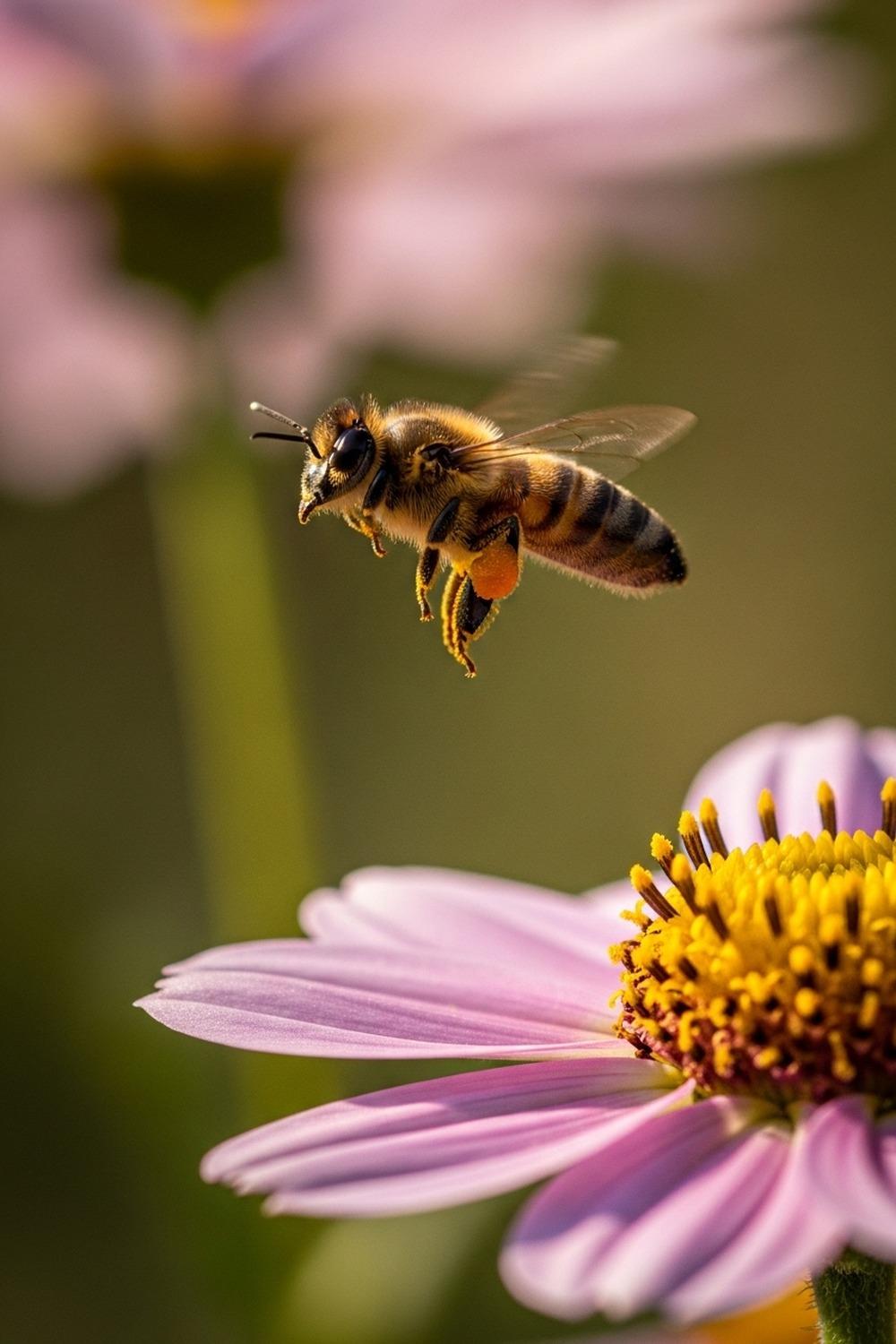
A worker bee hits somewhere between 50 and 100 flowers on a single trip out. She’s carrying nectar in an organ called a honey stomach — different from her actual digestive stomach, which is honestly kind of wild when you think about it — holding about 40 milligrams of the stuff. That’s approximately nothing. It’s less than a raindrop.
She flies home.
When she gets there, she regurgitates it mouth-to-mouth to another bee. Then another. Each transfer adds enzymes. The nectar molecules start breaking down. Then the hive does something remarkable: they fan it. Wings moving 200 times per second, creating an airflow precise enough to drop the water content from roughly 80 percent in raw nectar down to below 18 percent. Below that line, bacteria can’t survive. The liquid becomes shelf-stable. Becomes, technically, forever.
Thomas Seeley spent decades at Cornell studying this. The thing he kept coming back to was that you can’t understand what’s happening by watching one bee. The system only makes sense at the colony level. It’s not manufacturing. It’s a collective decision repeated ten thousand times.
One Bee’s Entire Contribution
Summer worker bee lifespan: six weeks.
Honey produced in that timeframe: one-twelfth of a teaspoon.
Not one teaspoon. Not even close. A twelfth of one. She’ll make hundreds of foraging trips. Tap thousands of flowers. Fly the equivalent of once and a half around the planet. Her wings will fray from the constant movement — not from age or disease, but from pure mechanical wear. They’ll literally stop working. She’ll drop somewhere mid-flight. A field. A parking lot. A garden. Nobody will notice. The colony won’t pause. The next bee steps in and keeps going.
The hive doesn’t grieve. It doesn’t pause. It continues.
The Math Behind the Jar
Two million flowers.
That’s how many individual flowers need to get visited for one teaspoon of honey to exist. Not an estimate. Not a round number designed to sound impressive. Two million. That requires roughly 10,000 bees all working in coordination, and they’re doing it without a foreman, without a plan, without anyone actually knowing what the endgame is. Scout bees find the good patches and they communicate the location using the waggle dance — one of the most precise navigation systems insects have — and somehow the entire workforce self-organizes around whatever flowers are producing right now. The efficiency of it kept me reading about this for hours. There’s something wrong about that level of coordination existing without central planning.
Here’s what gets stranger: the bees have no idea what honey is for in the way we mean it. They’re not thinking about feeding humans. They’re storing energy for winter. The fact that we find it delicious and built entire industries around it is completely irrelevant from the colony’s perspective.
Why This Starts to Feel Different
We call it a product. Something manufactured. But when you trace the actual chain — the scouting flights, the dances, the transfers, the fanning, the dying — it starts to feel like something else.
A relay race where the runners don’t survive to see the finish line.
The 55,000-mile figure stops being trivia and starts being a sum of individual exhaustion. A single colony can produce 60 pounds of honey in a good year. Do the math. It gets very large, very fast.
The Shelf-Life Problem
Honey doesn’t go bad. Not really. Archaeologists found honey in Egyptian tombs — 3,000 years old — that was still technically edible. No mold, no fermentation, no decay. The low water content, the acidic pH, and the hydrogen peroxide that bee enzymes produce naturally combine into an environment where bacteria literally can’t survive. It’s not an accident. It’s precision engineering. If the bees get the water percentage wrong, the honey ferments and the colony loses its winter supply. So they get it right, every time, without being told how.
We’ve been using it as a wound dressing for thousands of years. Modern research just confirmed what kept working: it actively stops bacterial growth. The bees weren’t making medicine. But they engineered one anyway, as a side effect of building themselves a perfect preservative.
The Numbers
- A colony during peak summer: 20,000 to 80,000 bees. The USDA estimates 2.7 million managed colonies in the U.S. as of 2023.
- Wing speed: 200 beats per second, which generates enough airflow to move nectar from 80 percent water to below 18 percent.
- The oldest confirmed honey sample came from a Georgian tomb dated to around 5,500 years ago. Still chemically intact.
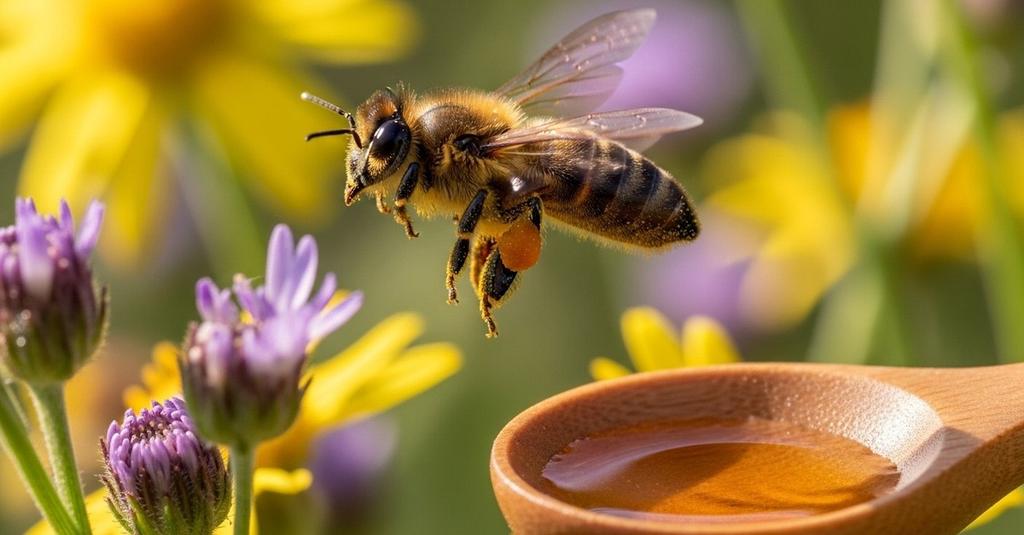
- A single bee produces about 1/12 teaspoon in her lifetime — meaning 12 bees minimum to fill one spoon, not counting the thousands more involved in processing.
Things That Will Change How You Think About This
- Honeybees recognize human faces using the same feature-configuration method we use. University of Queensland researchers found this out and nobody was expecting insects to do that.
- The waggle dance encodes both direction and distance: angle tells you where the flower patch is relative to the sun, duration tells you how far. Precise enough that researchers can decode which flowers the bee is describing. The bees invented precision GPS.
- Honey’s flavor and color come entirely from which flowers got visited. Buckwheat honey tastes almost like molasses. Acacia honey is nearly colorless. Manuka from New Zealand has antimicrobial properties strong enough for clinical wound dressing.
What This Actually Means
Honeybee honey production is a lesson in what sustained collective effort looks like. No single bee sees the finished product. No individual worker understands the system at scale. They each do one piece — fly, collect, pass, fan, die — and the result outlasts them by millennia. It makes you question what intelligence actually is. What purpose means. What labor is supposed to be.
There’s fragility underneath it all. Colony collapse disorder. Pesticide exposure. Habitat loss. These aren’t abstract threats. A third of human food depends on pollination. The bees aren’t just making honey. They’re holding part of the food supply together.
That teaspoon represents 55,000 miles of flight. Two million flowers. Thousands of short lives that ended before the jar was full. The bees had no idea they were doing anything extraordinary. They were just doing the next thing, then the next. Maybe that’s what makes it extraordinary. Find more at this-amazing-world.com.
“
Frequently Asked Questions
Q: How much flight and how many flowers does one teaspoon of honey require?
A single teaspoon of honey represents roughly 55,000 miles of collective bee flight and visits to about two million individual flowers. Producing it takes the coordinated effort of around 10,000 bees working without any central planner. A single worker bee contributes only about one-twelfth of a teaspoon across her entire six-week summer lifespan, after making hundreds of foraging trips and tapping thousands of flowers before her wings literally wear out.
Q: How do bees turn watery nectar into honey that never spoils?
Foraging bees collect nectar that is roughly 80% water and pass it mouth-to-mouth between hive bees, adding enzymes that break the nectar down. The hive then fans its wings about 200 times per second, creating airflow that drops the water content below 18%. Beneath that threshold bacteria cannot survive, so the honey becomes shelf-stable. Combined with acidic pH and natural hydrogen peroxide, this is why honey found in Egyptian tombs thousands of years old was still edible.
Q: Why is honeybee honey production important beyond making honey?
The same foraging system that produces honey also pollinates crops, and roughly a third of human food depends on pollination. The USDA estimated 2.7 million managed colonies in the U.S. as of 2023, with each colony producing up to 60 pounds of honey in a good year. Threats like colony collapse disorder, pesticide exposure, and habitat loss are therefore not abstract: declining bee populations endanger a significant portion of the global food supply, not just honey output.
Illustrations are AI-generated. Article fact-checked and human-edited. Our editorial standards.