Why Cats Walk in Silence: The Science of Padded Paws
Four thousand years of coevolution with prey have produced a cat paw biomechanics system that makes mechanical engineers look like they’re starting from scratch. A cat crosses gravel and disturbs nothing — not because it’s careful, but because the architecture of its foot is a precision instrument that does the work automatically. The softness everyone notices? That’s just the visible part of something far stranger happening underneath.
Most people assume cats walk quietly because they choose to. They don’t have to choose anything. The layered fat pads, the elastic skin, the way weight distributes across the contact surface — all of it works passively, without conscious control. What looks like stealth behavior is actually passive engineering. Understanding exactly how it works has implications that stretch far beyond your living room floor.
Key Facts
- A 2018 Royal Veterinary College study led by John Hutchinson used force-plate analysis to measure feline footfall across multiple gaits.
- Domestic cats generate peak ground reaction forces of approximately 110 to 130% of body weight during walking, lower proportionally than most comparably sized mammals.
- A Siberian tiger’s metacarpal pad can measure up to 4.3 inches (11 cm) across, with adipose cushioning 1.5 to 2 cm deep.
- 37 living species comprise Felidae, and all but the cheetah possess fully retractile claws, a structural convergence maintained across 10.8 million years.
- ETH Zurich’s 2020 compliant foot study found a 34% reduction in vibration transmission in cat-pad-inspired robotic feet versus rigid designs.
In short: Cat paw biomechanics explains why cats walk in silence: layered fat pads, collagen, and elastin passively spread impact force laterally, dissipating vibration before it becomes sound. A 2018 Royal Veterinary College study quantified this, and ETH Zurich found cat-inspired robotic feet cut vibration transmission by 34% on hard substrates.
How Cat Paw Biomechanics Absorbs Every Step
The digital pads — the five smaller pads near the toes — and the larger metacarpal or metatarsal pad at the center of the foot are not simply thick skin. Research published by the Royal Veterinary College in London has detailed the internal structure: each pad contains a dense matrix of adipose tissue, collagen fibers, and elastin, arranged in a way that functions like a multi-layer shock absorber. A 2018 study from the college’s Structure and Motion Laboratory, led by biomechanist John Hutchinson, used force-plate analysis and high-speed imaging to measure feline footfall across multiple gaits. The findings were striking: cats distribute peak ground reaction forces across a contact area disproportionately large for their body mass.
In plain terms: a 10-pound cat hits the ground with far less localized pressure than you’d expect, because the anatomy of the cat’s foot is built to spread that load instantly and passively. When impact force is distributed laterally rather than transmitted vertically through a rigid structure, vibration bleeds out before it can travel. Think of the difference between dropping a stone on concrete versus dropping it onto a thick foam mat. The foam doesn’t just soften the impact — it intercepts the wave. Cat pads do exactly this, but with a biological material that resets between every step, thousands of times per day, without wearing out at the rate any synthetic equivalent would.
But here’s the thing: the pads also contain a high concentration of sensory nerve endings — Meissner’s corpuscles and Pacinian corpuscles — that feed real-time tactile data back to the cat’s nervous system. Every surface sends a signal before the full weight commits. It’s simultaneous cushioning and reconnaissance.
Silent Hunters Built from the Ground Up
Why does this matter? Because silence isn’t the only function cat paw biomechanics serves.
Efficiency is what evolution was actually selecting for. Reducing ground vibration means reducing energy lost through each step. A cat that generates less vibration wastes less momentum. Over the course of a hunt that might involve dozens of slow, measured strides across unpredictable terrain, that efficiency compounds. This is the same principle that drives engineers to study animal locomotion when designing legged robots — the most efficient movers in nature tend to be the quietest ones too.
The silence isn’t a strategy layered on top of movement. The silence is the movement.
The same structural adaptation that makes cats nearly imperceptible to prey also makes them metabolically economical. You’ll find analogous pad structures across the entire family Felidae, from a sand cat picking through Saharan rock to a snow leopard descending a Himalayan ridge. And speaking of animals whose bodies have been shaped by extraordinary evolutionary pressure, the same logic applies to creatures far stranger than cats — the gliding adaptations of the Sunda flying lemur show how a single anatomical feature can solve multiple survival problems simultaneously. Unlike dogs, whose claws make a distinctive click on hard floors because they’re always extended, domestic cats keep their claws sheathed inside dorsal skin folds when walking. The Royal Veterinary College’s 2018 motion analysis confirmed that in a standard walking gait, claw contact with the substrate is minimal to zero. Claws only deploy for climbing, gripping, or the terminal phase of a pounce. This design choice — and evolution does make choices, over millions of years — eliminates an entire category of potential noise.
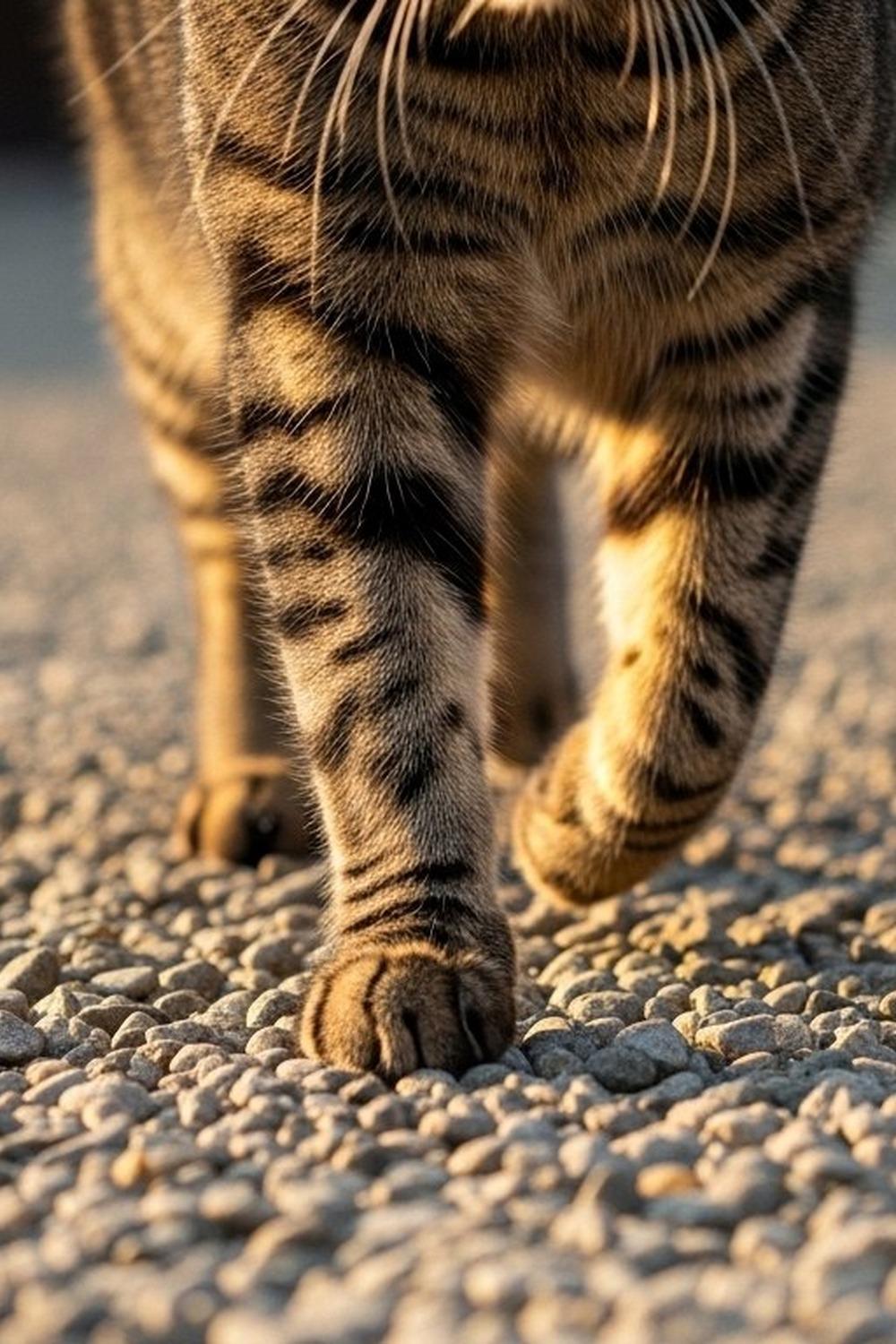
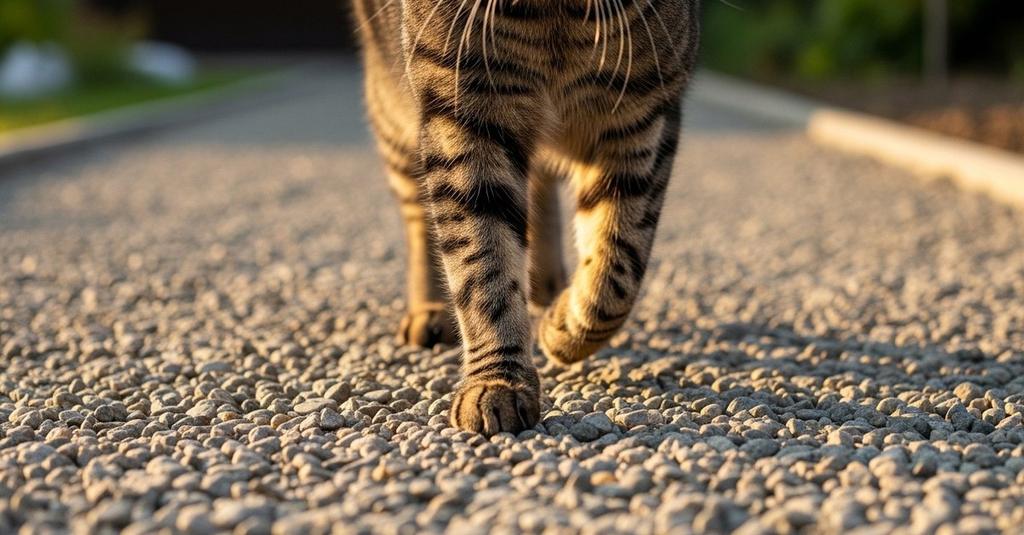
Watch a domestic cat cross a hardwood floor some time. Really watch. The foot doesn’t slap down. It doesn’t roll heel-to-toe the way a human foot does. It places, near-simultaneously across the whole pad surface, then lifts cleanly. There’s no skid. No scrape. Just contact and release, over and over, in near-total silence.
Big Cats Scale the Same System Enormously
A domestic cat weighs between 4 and 10 pounds. A Siberian tiger — the largest living cat — can reach 660 pounds. Yet both use fundamentally the same pad structure, and both move with a silence that seems to defy their mass. What makes the cat paw story genuinely remarkable is how consistently the same architecture scales across body sizes that differ by two orders of magnitude.
Wildlife ecologists working in Russia’s Sikhote-Alin Biosphere Reserve have documented on multiple occasions the difficulty of hearing an approaching tiger until it is dangerously close, even in conditions — dry leaves, loose gravel — where most large animals are audible from a considerable distance. A National Geographic survey of big cat research has highlighted this paradox: the bigger the cat, the more dramatic the silence feels, because our intuition tells us that mass should produce sound. And our intuition, in this case, has been consistently wrong for millennia.
Cat paw biomechanics at the tiger scale involves proportionally thicker pad tissue — Amur tigers have pads that can measure nearly four inches across, with fat layers deep enough to absorb impacts from a running gait that briefly puts the animal’s full weight through a single foot. Researchers at the Zoological Society of London used ground-penetrating pressure sensors in controlled environments to measure tiger footfall in 2021. Despite the animal’s mass, peak pressure per square centimeter during slow walking was comparable to that recorded in much smaller felids.
There’s a cheetah footnote worth adding here. Cheetahs are the one major exception in the family: their claws are only semi-retractile, functioning more like a sprinter’s cleats for traction at high speed. Their pads are harder and less deeply cushioned than other large felids. They are, accordingly, the noisiest of the big cats at the walk. The tradeoff is explicit — they sacrificed silence for speed, and the foot structure tells the story precisely.
What Engineers Learned from Cat Paw Biomechanics
Between 2010 and 2023, Boston Dynamics, MIT’s Computer Science and Artificial Intelligence Laboratory, and ETH Zürich’s Robotic Systems Lab all cited feline locomotion as a model for developing legged robots that can navigate unstable terrain quietly and efficiently. The biomechanics of cat paws has moved from zoology into applied robotics and materials science in ways that would have seemed speculative two decades ago.
The challenge in robotics isn’t just building a leg that absorbs impact — it’s building one that absorbs impact passively, without active computation per step. Active correction requires processing time and energy. Cat pads solve this at the material level. The compliance is built into the tissue. The robot equivalent would be a foot material that deforms under load, redistributes pressure, and returns to shape — a synthetic analog to adipose tissue and elastic skin that engineers are still iterating toward. A 2020 paper from ETH Zürich’s Legged Robotics group measured energy dissipation in compliant robotic foot designs against rigid equivalents across varied terrain. Compliant feet — those approximating the cat pad model — reduced vibration transmission through the leg structure by 34 percent and reduced acoustic footfall signature by a measurable margin on hard substrates.
Thirty-four percent is significant. It means quieter drones, more stable search-and-rescue robots, and prosthetic limb designs that generate less impact stress at the residual limb interface. The cat, in other words, has been consulting on engineering problems it didn’t know existed. Veterinary medicine has made its own use of the research. Understanding pad tissue structure has improved treatment protocols for pad injuries in working cats — from farm mousers to military working animals — and informed the design of therapeutic booties for cats with conditions like plasma cell pododermatitis, where the pad tissue itself becomes inflamed (and this matters more than it sounds, because the same anatomy that produces silence also tells veterinarians exactly what to protect when it fails).
Where to See This
- Sikhote-Alin Biosphere Reserve, Primorsky Krai, Russia: one of the best places on Earth to study Amur tiger locomotion in the wild; most accessible to researchers in late winter (February–March) when snow preserves detailed track impressions and tiger movement is more concentrated around prey corridors.
- The Structure and Motion Laboratory at the Royal Veterinary College, Hatfield, UK (rvc.ac.uk/research/research-centres-and-units/structure-and-motion): the leading institution for felid biomechanics research, regularly publishing on cat locomotion, force-plate studies, and comparative anatomy across the Felidae family.
- For a close-up look at pad mechanics without leaving home: place a camera at floor level and film a domestic cat walking across a glass surface lit from below — the pad contact pattern and pressure distribution become directly visible, and what you’ll see will permanently change how you watch a cat move.
By the Numbers
- Domestic cats generate peak ground reaction forces of approximately 110–130% of body weight during walking — lower proportionally than most comparably sized mammals, per Royal Veterinary College force-plate data (2018).
- A Siberian tiger’s metacarpal pad can measure up to 4.3 inches (11 cm) across, with adipose cushioning layers estimated at 1.5–2 cm in depth.
- 37 living species comprise Felidae, and all but the cheetah possess fully retractile claws combined with deeply cushioned digit pads — a structural convergence maintained across 10.8 million years of felid evolution.
- ETH Zürich’s 2020 compliant foot study found a 34% reduction in vibration transmission in cat-pad-inspired robotic feet versus rigid designs on hard substrates.
- A domestic cat takes approximately 1,300–1,500 steps per mile, meaning the pad compression-and-recovery cycle occurs millions of times across a cat’s lifetime without measurable structural degradation under normal conditions.
Field Notes
- Researchers at the Sikhote-Alin Reserve photographed a complete Amur tiger track sequence in 2019 where the animal had crossed a 40-meter gravel path without displacing a single stone detectably — confirmed by comparison photographs taken before and after the crossing. The tiger weighed an estimated 420 pounds.
- Cat pads contain eccrine sweat glands — one of the few places on a cat’s body that produces sweat. This moisture isn’t thermoregulatory; it improves grip on smooth surfaces by slightly increasing friction, functioning like chalk on a climber’s hands.
- The coloration of a cat’s pads typically correlates with coat color: black cats usually have black pads, orange cats have pink or orange-tinted pads, and tortoiseshell cats often have multicolored pads — a direct expression of melanin distribution in the skin tissue.
- Researchers still can’t fully explain why cat pads don’t callous and harden with age the way human foot pads do under similar mechanical load. The tissue maintains its compliance over a lifetime of use. The mechanism preventing progressive stiffening remains incompletely understood, and identifying it could have significant implications for human soft-tissue repair medicine.
Frequently Asked Questions
Q: What exactly makes cat paw biomechanics so effective at reducing sound?
Cat paw biomechanics works through layered passive compliance rather than any active adjustment by the animal. Each pad contains fat tissue and elastin arranged to deform on contact, distributing force laterally across the full pad surface instead of transmitting it vertically as a sharp impact. That lateral spread dissipates the mechanical wave before it can radiate as sound through the ground or vibrate up the leg. The result is a footfall that generates measurably less acoustic energy than the cat’s body weight would suggest.
Q: Do big cats have the same silent-walking ability as domestic cats?
Yes — and the silence scales more impressively than most people expect. Siberian tigers, the largest living cats at up to 660 pounds, have proportionally thicker and broader pads that perform the same shock-absorption function at dramatically higher loads. Field researchers in Russia’s Sikhote-Alin Reserve have documented tigers approaching to within close range on dry leaf litter without being heard. The Zoological Society of London’s 2021 pressure-sensor study confirmed that peak impact pressure per square centimeter during tiger walking is comparable to values recorded in much smaller felids — the distribution mechanism holds across the size range.
Q: Is it a myth that cats always land on their feet — and does this connect to their paw structure?
The “always lands on its feet” claim is an oversimplification, though cats do possess a remarkable righting reflex — a rapid mid-air body rotation that aligns the feet downward during a fall. This is separate from pad function, but the two systems work together on landing: the righting reflex ensures the pads are the first point of contact, and the pad structure then absorbs the impact. Cats falling from significant heights can and do injure their pads, particularly their carpal pads — the small pads higher up the foreleg that act as a secondary impact brake. The system is extraordinary, but it has limits.
Editor’s Take — Alex Morgan
What stays with me about cat paw biomechanics isn’t the cats — it’s the engineers. That teams at ETH Zürich and MIT are spending grant money trying to replicate something a housecat does without thinking, millions of times a day, across a lifetime, without maintenance or degradation — that’s the real story. We don’t have a synthetic material that performs this well at this scale for this long. Evolution filed the patent on compliant foot design roughly ten million years ago, and we’re still catching up. The gap between what biology solved and what engineering has achieved is, honestly, humbling.
Every time a cat drops from a counter and lands without a sound, it’s demonstrating something materials science can’t yet fully match. The adipose layers compress, the elastin rebounds, the load spreads and vanishes, and the cat walks away without registering that anything happened at all. The engineering is invisible precisely because it works perfectly. Which raises a question worth sitting with: how many other solutions to problems we consider unsolved are already walking around our houses, asking to be fed, completely indifferent to our admiration?
Illustrations are AI-generated. Article fact-checked and human-edited. Our editorial standards.