The Ghost Shark Existed Before Dinosaurs. We Just Found One.
A ghost shark chimaera just showed up on camera at 1,200 meters down, skin nearly transparent, moving like it had nowhere to be. And here’s what knocked me sideways — this thing was already ancient when dinosaurs were just getting started.
Off New Zealand’s coast, researchers sent a camera into water that sunlight has never touched. What came back was footage of something alive. Something that’s been doing its thing in the dark for 400 million years. A chimaera. The ghost shark. Just drifting.
Key Facts
- Chimaeras first appeared approximately 400 million years ago during the Devonian period, roughly 170 million years before the first dinosaurs.
- The ghost shark chimaera was filmed at 1,200 meters depth off New Zealand by NIWA, where Dr. Brit Finucci studies the animals.
- At 1,200 meters, pressure reaches roughly 120 times that at sea level, with temperatures near freezing and zero light.
- Around 50 chimaera species are currently described by science, with researchers estimating dozens more exist.
- Less than 25% of the global ocean floor has been mapped at high resolution, and the deepest confirmed chimaera sighting was around 2,600 meters.
In short: The ghost shark chimaera, a deep-sea relative of sharks filmed at 1,200 meters off New Zealand by NIWA, is a lineage roughly 400 million years old, predating dinosaurs by about 170 million years. With cartilage skeletons, fused beak-like teeth, and near-translucent skin, this living footage gives researchers a rare behavioral baseline.
The Ghost Shark Chimaera That Predates Almost Everything
Chimaeras technically belong to the same class as sharks and rays — Chondrichthyes — but they split off from that family tree so impossibly long ago that calling them “sharks” misses the point entirely. They’re their own thing. Dr. Brit Finucci at New Zealand’s National Institute of Water and Atmospheric Research (NIWA) has spent years with these animals. She talks about each encounter like you’re standing at the edge of something vast.
The lineage predates the dinosaurs by nearly 170 million years.
Sharks showed up late. Chimaeras were already there, grinding mollusks in the dark, evolving in ways we’re only now starting to piece together. These aren’t living fossils in the way people lazily use that phrase. They’ve been changing the whole time — just in directions we couldn’t see.
What Makes This Animal Unlike Any Other
Most fish have multiple gill slits. Chimaeras have one — covered by smooth skin that gives them this sculpted look, like something an artist designed. Their teeth aren’t teeth. They’ve fused into hard, beak-like plates for crushing. Skeletons aren’t bone either. Cartilage. The flexible stuff that shapes your nose. That last fact kept me reading for another hour, trying to picture it.
And the one filmed off New Zealand?
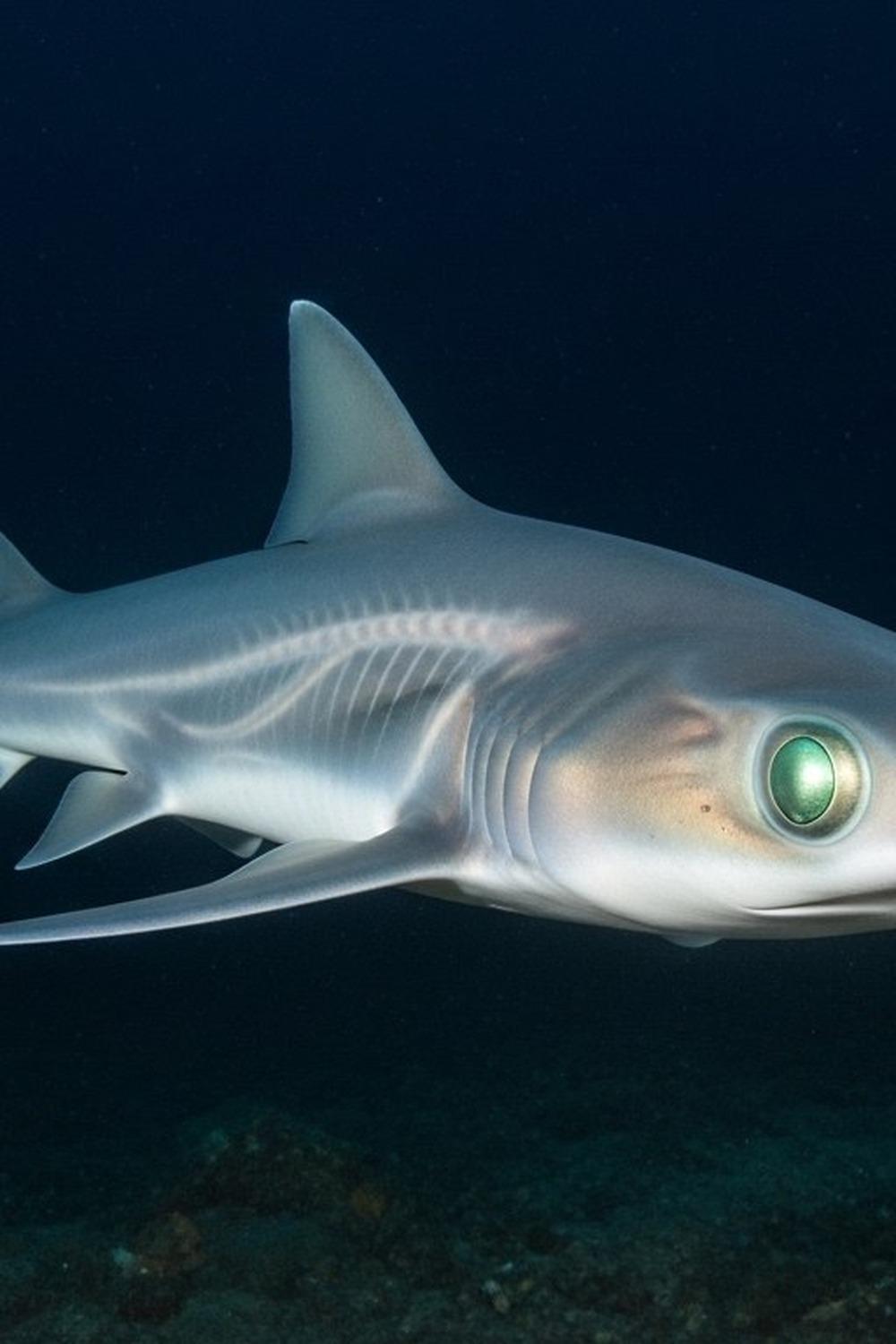
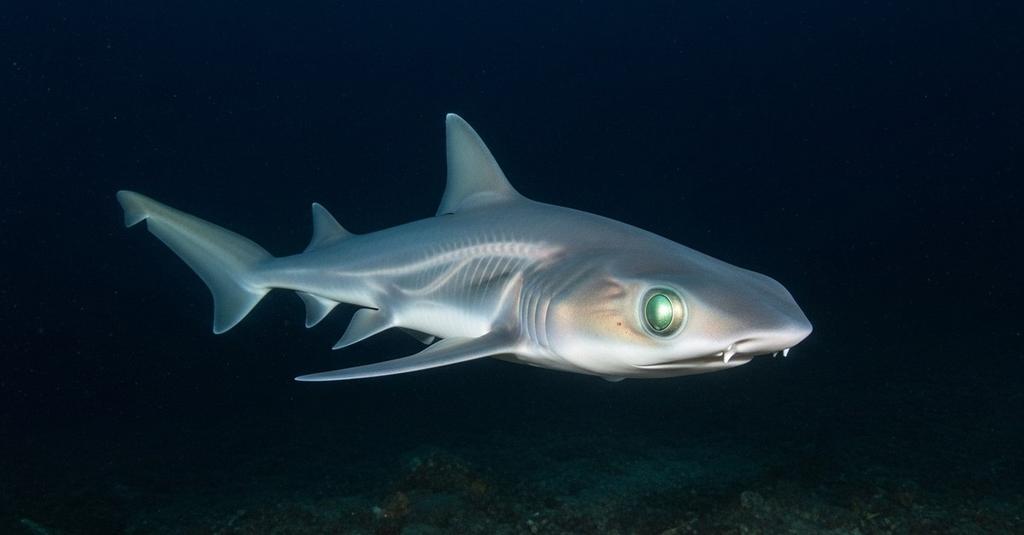
Nearly translucent skin. The camera picked up faint outlines underneath — veins, muscle bundles, maybe something else entirely — visible right through the surface. It looked less like a fish and more like a ghost in a fish suit. Which is why the name stuck so hard it never came off.
For a deeper look at what makes deep-sea life structurally alien, this breakdown of extreme ocean biology puts it in perspective.
Living in a World Without Light or Mercy
At 1,200 meters, pressure hits roughly 120 times what you’d feel on a beach. Temperature hovers near freezing. Zero light. Not a photon. The ghost shark chimaera doesn’t care. Those massive upward-angled eyes? They’re built to catch bioluminescent flickers from other creatures, turning the faintest signal into something usable. Evolution doesn’t waste energy on accidents. Those eyes exist because they work down there.
We know almost nothing about how they actually live.
Do they migrate vertically? School? How long do they live? Most of what we know comes from dead specimens dragged up as bycatch. Not from living animals in their real environment. This footage changes that fundamental gap.
The Rarity of Seeing One Alive — And What It Cost
Getting cameras to 1,200 meters isn’t casual. The equipment has to survive pressure that would flatten an unprotected human instantly. Research vessels operated by NIWA are some of the few platforms capable of deploying remotely operated vehicles (ROVs) that can film at these depths. Most ghost shark chimaera encounters on record are brief, accidental, or posthumous.
This one wasn’t. The animal appeared. Hovered. Kept moving. Unbothered by us watching.
That behavioral data alone is significant. Scientists don’t just get footage of what it looks like. They get footage of what it does.
Here’s the Thing About Deep-Sea Discovery in 2024
We’ve mapped more of Mars than the ocean floor. Less than 25% of the seafloor has been mapped to any decent resolution. Everything below 200 meters remains one of Earth’s least-explored environments. Finding a living ghost shark chimaera on camera isn’t just biology. It’s a reminder that the most alien worlds aren’t in other solar systems.
They’re underneath us right now.
The reason chimaeras are so poorly studied isn’t just depth. It’s rarity relative to other deep-sea species. Even trawl surveys in areas where they’re known to exist often come up empty. This footage gives researchers something they’ve never had: behavioral baseline. How the animal moves. How it responds to light. What depth range it prefers. Years of data compressed into a single encounter.
By the Numbers
- Chimaeras first appeared approximately 400 million years ago during the Devonian period — roughly 170 million years before the first dinosaurs evolved, per the Chimaera Wikipedia entry.
- Around 50 recognized species currently described by science. Researchers estimate dozens more exist in unexplored zones.
- The deepest confirmed chimaera sighting was at approximately 2,600 meters — deep enough that sunlight has never existed there, not even theoretically.
- Less than 25% of the global ocean floor has been mapped at high resolution, meaning the habitat of the ghost shark chimaera is mostly unknown territory.
Field Notes
- Lateral line system — pressure-sensitive canals running their body — lets chimaeras detect water movement in total darkness and “feel” prey before seeing it.
- Male chimaeras have retractable clasping organs on their foreheads called tenacula, with no real equivalent in any other living animal. Scientists still debate what they’re for during mating.
- Unlike sharks, which must keep moving to breathe, chimaeras can breathe through their nostrils while stationary. That hovering, motionless behavior seen in the footage? They weren’t being lazy. They were being efficient.
Why Finding One Now Still Matters Deeply
Every living ghost shark chimaera encounter adds something irreplaceable to the record. Not just biological data. Evolutionary narrative. These animals carry 400 million years of adaptive history in their cartilaginous skeletons, their fused tooth plates, their pressure-adapted bodies. They’ve survived five mass extinction events, including the one that killed the dinosaurs. Whatever they’re doing down there works.
Deep-sea mining proposals are already targeting the seafloor habitat chimaeras depend on. Understanding what actually lives there — not just in preserved jars, but in the dark, doing whatever this is — is the first step toward making decisions about what we’re willing to lose.
A creature that’s been swimming in the dark for 400 million years just appeared on camera, nearly see-through, indifferent to our existence. That’s not a footnote. That’s the whole story of life on this planet, compressed into one quiet moment. We found it. Now the question is what else is down there. There’s more at this-amazing-world.com — and the next one is even stranger.
Frequently Asked Questions
Q: What is a ghost shark chimaera?
A chimaera is a deep-sea fish belonging to the class Chondrichthyes, the same class as sharks and rays, but it split from that family tree so long ago that calling it a shark misses the point. Chimaeras have a single gill slit covered by smooth skin, teeth fused into hard beak-like plates for crushing, and cartilage skeletons rather than bone. The species filmed off New Zealand had nearly translucent skin, earning the name ghost shark.
Q: How old is the chimaera lineage?
Chimaeras first appeared approximately 400 million years ago during the Devonian period, roughly 170 million years before the first dinosaurs evolved. Sharks actually showed up later. Chimaeras have survived five mass extinction events, including the one that killed the dinosaurs. They are not living fossils in the lazy sense of the phrase; they have continued changing the entire time, just in directions researchers are only now beginning to piece together.
Q: Where was the ghost shark chimaera filmed?
The ghost shark chimaera was filmed at 1,200 meters depth off New Zealand’s coast by researchers at the National Institute of Water and Atmospheric Research (NIWA), where Dr. Brit Finucci studies the animals. At that depth, pressure reaches roughly 120 times what you would feel at a beach, the temperature hovers near freezing, and there is zero light. Most chimaera encounters on record are brief, accidental, or come from dead specimens, making living footage rare.
Q: Why does filming a living chimaera matter?
Most of what science knows about chimaeras comes from dead specimens dragged up as bycatch, not living animals in their environment. The New Zealand footage provides a behavioral baseline researchers have never had: how the animal moves, how it responds to light, and what depth range it prefers. This matters because deep-sea mining proposals are already targeting the seafloor habitat chimaeras depend on, and less than 25% of the ocean floor has been mapped at high resolution.
Illustrations are AI-generated. Article fact-checked and human-edited. Our editorial standards.