Ancient Water Under the Sahara Desert: How Old, Really?
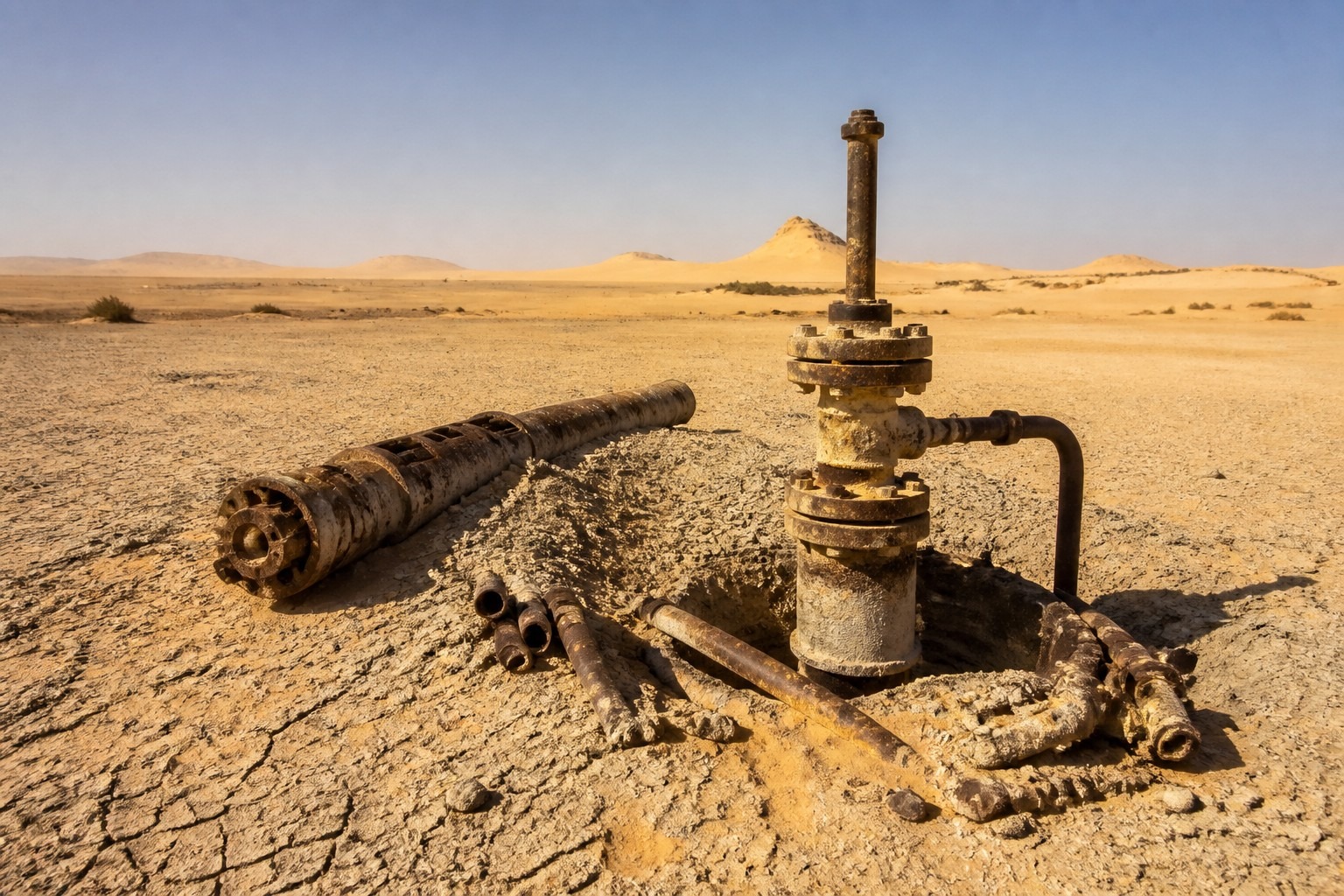
In 1953, a drilling crew hunting for oil in the southern Libyan desert punched through the sandstone and struck the wrong prize entirely: the ancient water under the Sahara desert. No oil worth the trouble — instead, an inland sea nobody knew existed, sitting silent beneath the driest place on Earth. They had found the edge of what we now call the Nubian Sandstone Aquifer System, the largest known reserve of fossil water on the planet.
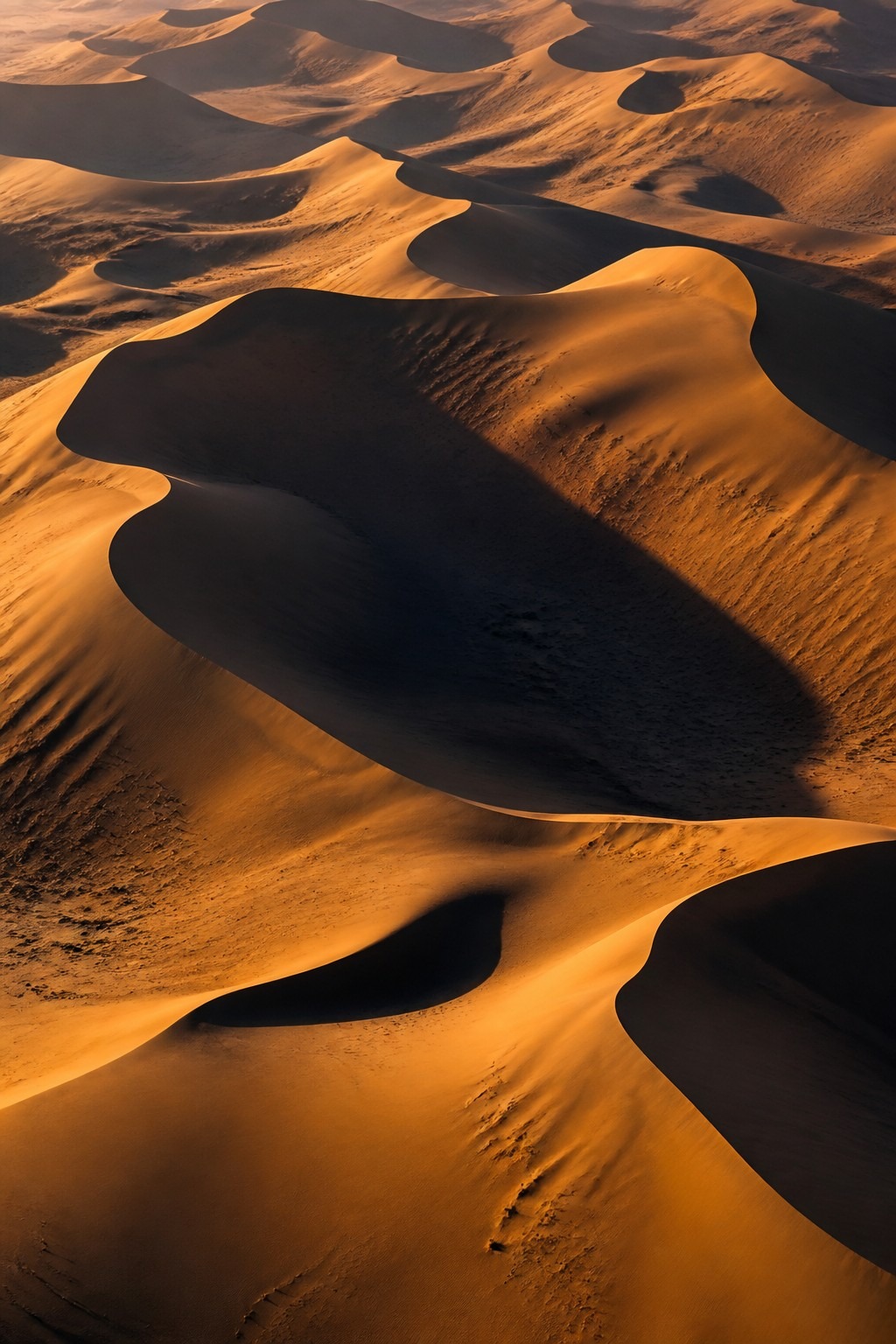
That accidental strike is where most popular accounts begin and end. They repeat a number — “150,000” — and quietly get it wrong. So let’s do what the top search results don’t: separate what this water is from how old it is, and explain how anyone could possibly know either.
Key Facts
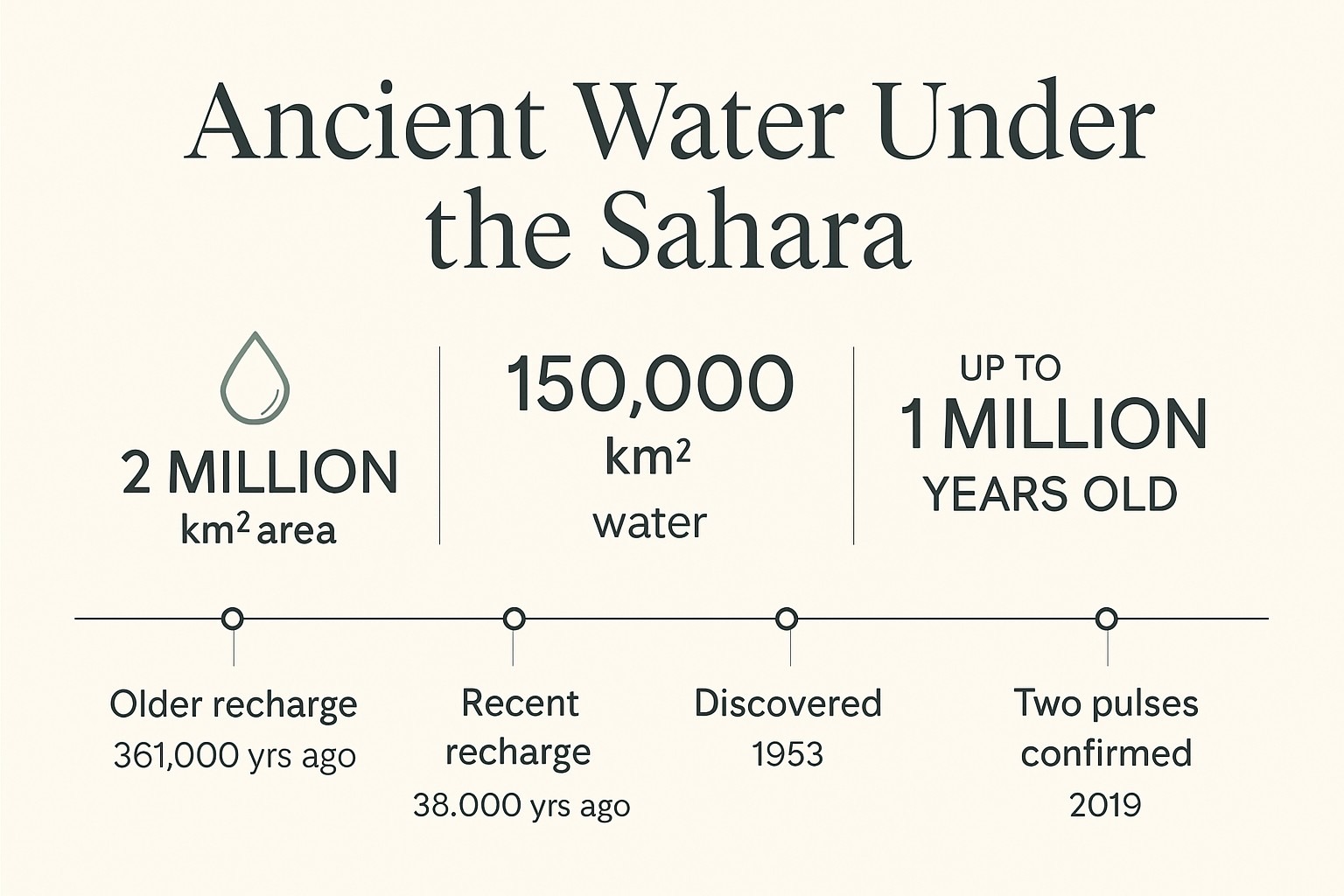
- The Nubian Sandstone Aquifer System spreads under roughly 2,000,000 square kilometres of rock shared by Egypt, Libya, Sudan and Chad.
- It holds an estimated 150,000 cubic kilometres of fossil groundwater — the largest known reserve of fossil water on Earth.
- A 2004 study led by Neil Sturchio dated deep Nubian groundwater to roughly 200,000 up to about one million years old.
- The dating used krypton-81, a radioactive isotope with a half-life of about 229,000 years, cross-checked against chlorine-36.
- The water was found accidentally in 1953 by oil drillers in southern Libya.
In short: The Nubian Sandstone Aquifer beneath the Sahara is the largest known fossil-water reserve: about 150,000 cubic kilometres under two million square kilometres of Egypt, Libya, Sudan and Chad. The popular 150,000-years-old figure confuses volume with age — deep water is actually up to a million years old, dated using krypton-81 and confirmed by chlorine-36.
An inland sea no one was looking for
The Nubian Sandstone Aquifer System spreads under roughly two million square kilometres of rock — a footprint bigger than Alaska, shared by Egypt, Libya, Sudan and Chad. Locked inside that sandstone is an estimated 150,000 cubic kilometres of groundwater. For scale, that is on the order of twenty times the water in all five North American Great Lakes, or several centuries of the Nile’s entire annual discharge held motionless underground.
Here’s the part that reframes everything: this is fossil water. It was not put there by last year’s rain, or last century’s. It fell during ancient wet periods and has been sealed in the rock ever since, receiving almost nothing back today. Hydrologists use a blunt analogy — this water behaves like oil, not like a river. You can pump it, but you cannot refill it on any human timescale. Every litre withdrawn is a litre gone.
Which raises the obvious question the encyclopedic pages skate past. If nobody watched it arrive, how do we know when it did?
The ancient water under the Sahara desert, in three numbers
Almost every article on this topic trips over the same confusion, blurring three completely different measurements into one figure. Untangling them is the single most useful thing you can take from this page.
| What it measures | The number | In plain terms |
|---|---|---|
| Area | ~2,000,000 km² | The ground it lies under — four countries |
| Volume | ~150,000 km³ | How much water is stored — not an age |
| Age | up to ~1,000,000 years | When the deepest water last fell as rain |
The famous “150,000” is the volume in cubic kilometres. Somewhere along the retelling it mutated into “150,000 years old,” and the mistake spread. The real age is far larger and far stranger — and it took a technique borrowed from nuclear physics to read it.
{IMAGE_2}
How old is the water under the Sahara, really?
The honest answer is: it depends which drop you sample. Water near the recharge margins is young by these standards. Water drawn from deep beneath central Egypt is not.
In 2004, a team led by geochemist Neil Sturchio, then working with Argonne National Laboratory and the University of Illinois at Chicago, published a landmark result in Geophysical Research Letters. Their measured ages for deep Nubian groundwater ranged from roughly 200,000 to about one million years. One million. The oldest water they tested had been sitting underground since a time when our own species did not yet exist.
So the correct headline is not “150,000-year-old water.” It is water up to a million years old, stored in a reservoir 150,000 cubic kilometres in size, under two million square kilometres of desert. Three numbers, three meanings — and getting them straight is the difference between a fact and a rumour.
The krypton clock: dating water carbon can’t touch
Radiocarbon, the workhorse of archaeology, is useless here. It runs out of road after about 50,000 years, and this water is twenty times older than that. To read a million-year clock, Sturchio’s team reached for something rarer: krypton-81.
Krypton-81 is a radioactive isotope produced in the upper atmosphere and dissolved in rain in vanishingly small amounts. Once that rainwater sinks underground and is sealed off, no new krypton-81 gets in — and what’s there decays on a clock with a half-life of about 229,000 years, ideal for reading hundreds of thousands of years. The trouble is the atoms are absurdly scarce: roughly one krypton-81 atom for every trillion trillion ordinary atoms in the water. Counting them meant developing a laser-based atom-trap method sensitive enough to catch individual atoms one at a time. The researchers cross-checked those ages against a second, independent isotope, chlorine-36 — and the two clocks agreed.
That agreement matters more than any single date. Two unrelated physical processes, pointing to the same age, is how a claim moves from plausible to trusted. It is also why this water is arguably the best-dated fossil groundwater on Earth.
A green Sahara, twice over
The isotopes carry a second message, and it is a haunting one. The chemistry of the water — its balance of heavy and light hydrogen — records the climate of the rains that made it. Read that record, and the Sahara stops being an eternal wasteland.
Work using krypton-81 on the Nubian system, reported by Reika Yokochi and colleagues in the Proceedings of the National Academy of Sciences in 2019, found not one ancient downpour but two distinct recharge pulses. The more recent pulse arrived less than 38,000 years ago, its moisture traced to the Mediterranean. The older pulse fell around 361,000 years ago, fed by tropical plumes reaching up from the Atlantic. (That study focused on the Nubian sandstone reaching into the Negev, but it reads the same buried archive.)
Two separate wet epochs, from two different oceans, hundreds of thousands of years apart. The desert we call permanent has bloomed green more than once — a landscape of rivers, lakes and grazing animals where dunes now run to the horizon. The water under the sand is, quite literally, a frozen snapshot of those wetter Earths.
- 1953 — Oil drillers in southern Libya hit fresh water instead of crude.
- Early 1980s — Libya begins the Great Man-Made River project to tap it.
- 2004 — Sturchio’s team dates the deepest water to ~1 million years (krypton-81 + chlorine-36).
- 2019 — Yokochi’s team resolves two separate recharge pulses (~38,000 and ~361,000 years ago).
- Today — Four nations draw from a reserve that no longer refills.
The Great Man-Made River: pumping the past dry
Knowing the water was there was one thing. Reaching it at scale was another. Beginning in the early 1980s, Libya launched what it called the Great Man-Made River — still the largest network of its kind on Earth. More than 1,300 wells, most sunk over 500 metres deep, feed some 4,000 kilometres of concrete pipe wide enough to drive through, carrying roughly 6.5 million cubic metres of water a day north to the coastal cities.
It is a genuine engineering marvel, and it is drinking from a well that does not fill. There is the tension in a sentence: the more successfully the past is pumped to the surface, the faster a one-time inheritance is spent. Calling this supply “renewable” would be a bookkeeping fiction — at any real rate of extraction, the ledger only runs one direction.
A clock shared by four nations
So how long does it last? This is where the sources genuinely disagree, and it’s worth being honest about why. Optimistic estimates, spread thin across the whole two-million-square-kilometre volume, reach into the thousands of years. Pessimistic ones, focused on the places actually being pumped hard, warn of local exhaustion in mere decades. Both can be true at once, because an aquifer is not a single bathtub — it drains fastest exactly where the straws are.
The deeper problem is that no one owns this water alone. Egypt, Libya, Sudan and Chad all draw from the same body of rock, and groundwater does not respect borders. A well pumping hard in one country lowers the water table under its neighbour. There is no river to divide, no visible flow to meter — only a shared, silent, finite store, and no binding treaty that fully governs how the four states spend it down.
Recent hydrogeological work through the 2020s has only sharpened the picture, mapping steepening drawdown around the heavily pumped zones. The physics is not really in dispute. Fossil water taken faster than a non-existent recharge can replace is, by definition, being mined.
What it leaves us
Turns out the most remarkable thing about the Sahara isn’t the sand. It’s what the sand is keeping — rain that fell before the pyramids, before writing, before us, still held in the dark exactly as it arrived. We are, in the most literal sense, drinking a wetter world’s weather.
Quick answers
Will it run out? Not everywhere, and not soon everywhere — but yes, locally. Because it barely recharges, any zone pumped harder than its near-zero refill rate is being permanently drawn down. The debate is over where and how fast, not whether.
Who owns it? No one, cleanly. The reserve lies under Egypt, Libya, Sudan and Chad at once, and groundwater ignores the borders drawn on the surface — which is precisely what makes managing it so fraught.
Sources and notes
- Sturchio, N.C. et al. (2004), “One million year old groundwater in the Sahara revealed by krypton-81 and chlorine-36,” Geophysical Research Letters (work centred at Argonne National Laboratory and the University of Illinois at Chicago).
- Yokochi, R. et al. (2019), radiokrypton study of dual moisture sources in the Nubian Sandstone Aquifer, Proceedings of the National Academy of Sciences.
- International Atomic Energy Agency (IAEA) — Isotope Hydrology programme on the Nubian Sandstone Aquifer System.
- Encyclopaedia Britannica — Great Man-Made River (pipeline length, well count, daily output).
- Argonne National Laboratory — public reporting on krypton-81 atom-trap dating.
The water under the Sahara is a message from a greener Earth, written in isotopes and delivered a million years late. We have finally learned to read it — just as we are learning how quickly a message that took an ice age to write can be spent in a single human lifetime.
Frequently Asked Questions
Q: How old is the water under the Sahara?
It depends which drop you sample. Water near the recharge margins is relatively young, but water drawn from deep beneath central Egypt is not. A 2004 study led by geochemist Neil Sturchio measured ages ranging from roughly 200,000 to about one million years. So the accurate headline is water up to a million years old — not the widely repeated 150,000-year-old water, which confuses the age with the volume figure.
Q: What does the 150,000 figure actually mean?
It is the volume, not the age. The aquifer holds an estimated 150,000 cubic kilometres of water — on the order of twenty times all five North American Great Lakes. Somewhere in the retelling, that number mutated into 150,000 years old, and the mistake spread. Three different measurements get blurred: an area of about 2 million square kilometres, a volume of about 150,000 cubic kilometres, and an age of up to a million years.
Q: How can scientists date water that old?
Radiocarbon runs out after about 50,000 years, so Sturchio’s team used krypton-81, a radioactive isotope dissolved in rain in tiny amounts. Once water is sealed underground no new krypton-81 enters, and what is there decays with a half-life of about 229,000 years — ideal for hundreds of thousands of years. Counting the absurdly scarce atoms required a laser atom-trap method; the ages were cross-checked against chlorine-36.
Q: Why is it called fossil water?
Because it fell during ancient wet periods and has been sealed in the rock ever since, receiving almost nothing back today. Hydrologists say it behaves like oil, not like a river — you can pump it, but it cannot be refilled on any human timescale, so every litre withdrawn is gone. Isotopes show the Sahara had at least two green, rainy epochs, one under 38,000 years ago and one around 361,000 years ago.
Illustrations are AI-generated. Article fact-checked and human-edited. Our editorial standards.