White Sands Footprints: How Old Are They Really?
Ask how old the White Sands footprints are, and you’ll keep hitting one number that refuses to behave: 23,000 years. For most of the last century the textbook answer to “when did people reach the Americas?” was tidy and confident — around 13,000 years ago, a band of Clovis hunters walking south through a gap in the ice. Then a stretch of dried lakebed in New Mexico started printing a different story into the mud. The strange part isn’t just that the footprints are old. It’s that scientists spent four years trying to prove they weren’t — and failed.
Key Facts
- 61 human footprints were excavated from the Lake Otero lakebed in White Sands National Park, New Mexico, and reported in Science in 2021.
- They date to roughly 21,000-23,000 years old, within the Last Glacial Maximum.
- The tracks run through seven distinct soil layers, meaning people returned over a span of about 2,000 years.
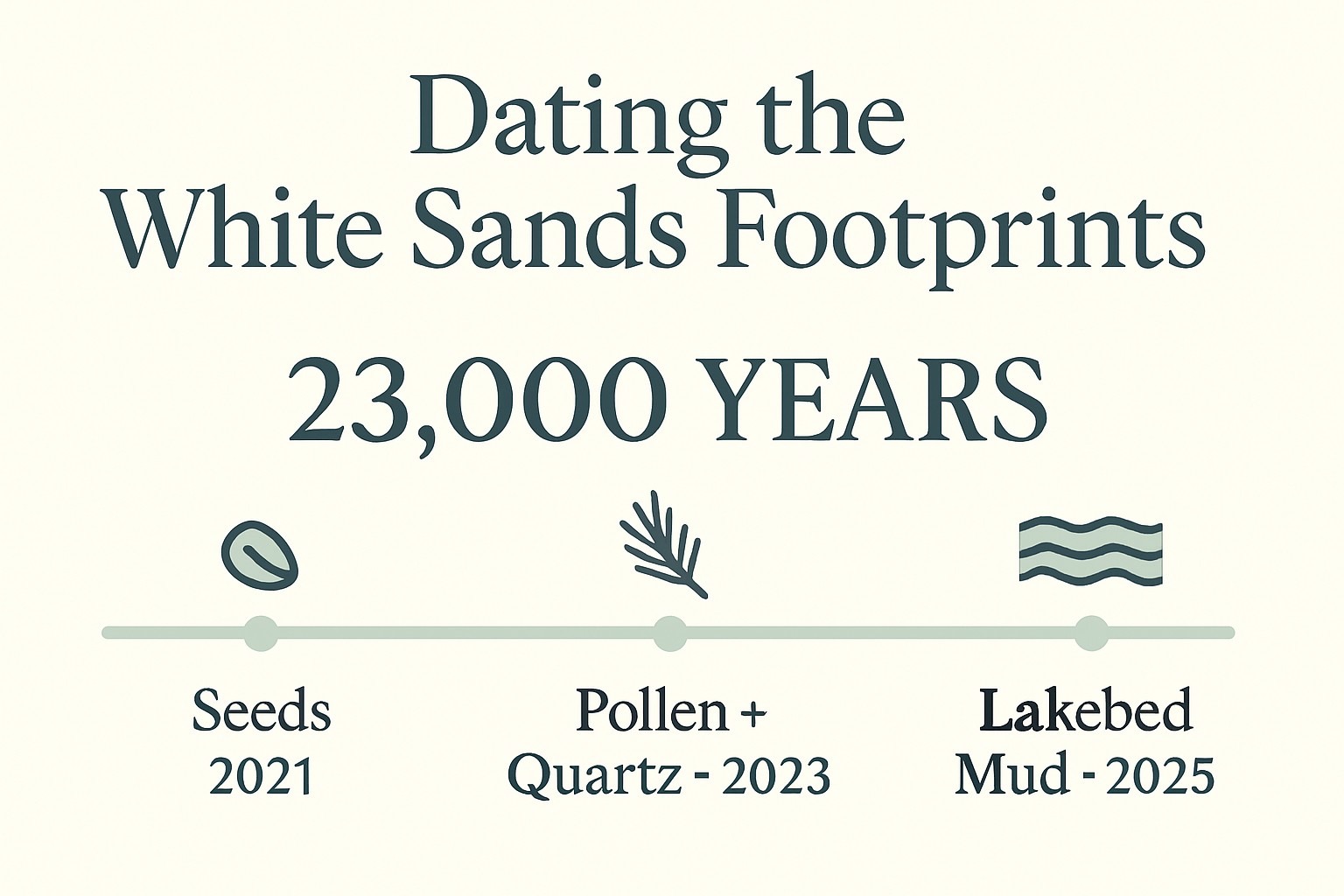
- The age was confirmed by three materials across three studies: Ruppia seeds (2021), conifer pollen plus OSL (2023), and lakebed mud dated in two labs (2025, 20,700-22,400 years).
- The site now rests on roughly 55 consistent radiocarbon dates from three separate materials.
In short: Sixty-one human footprints at White Sands, New Mexico, date to roughly 21,000-23,000 years ago, about 10,000 years earlier than the Clovis-first model allowed. First reported in Science in 2021, the age was confirmed by three independent materials and methods across the 2021, 2023 and 2025 studies.
Sixty-one footprints on a dead lake — what was actually found
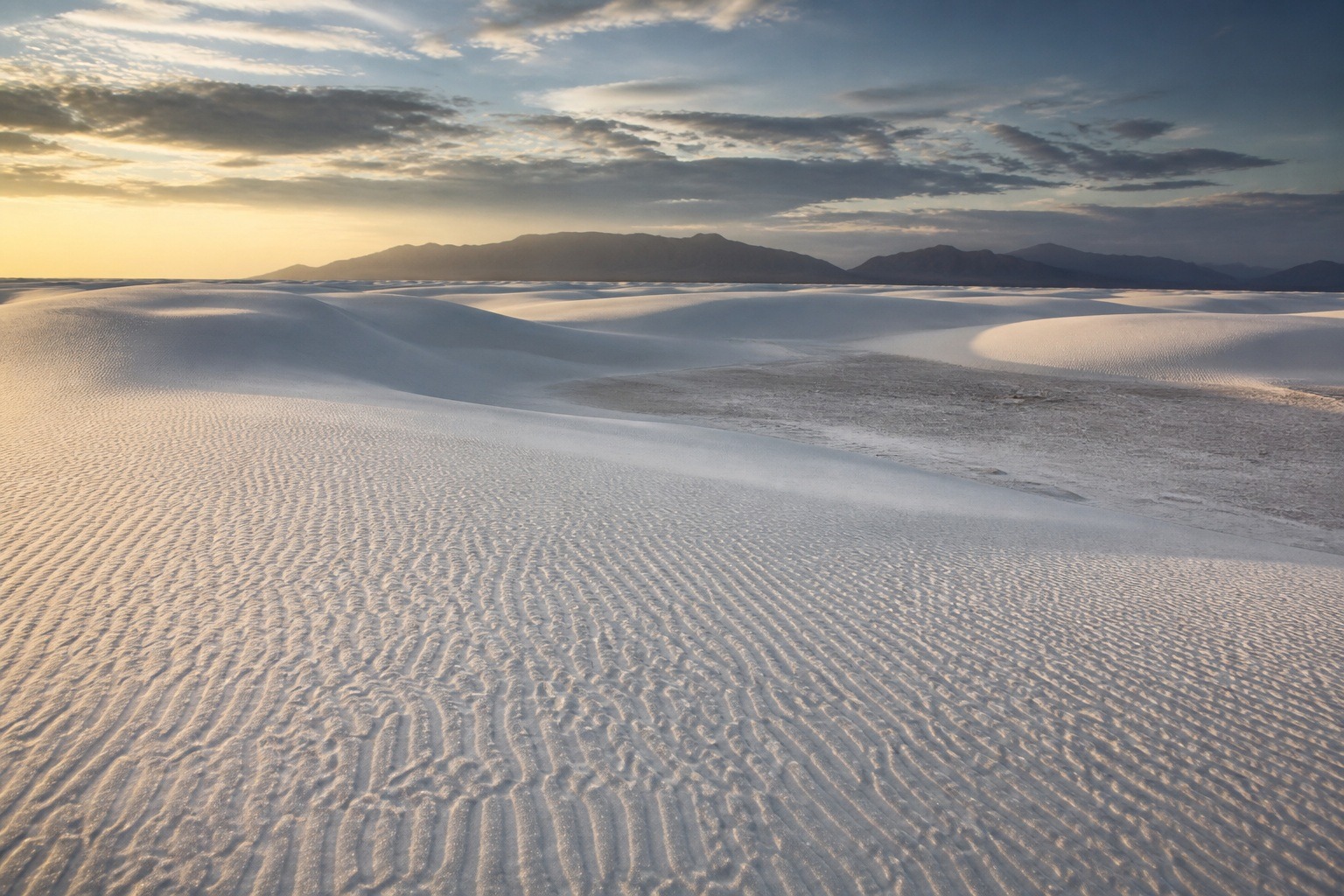
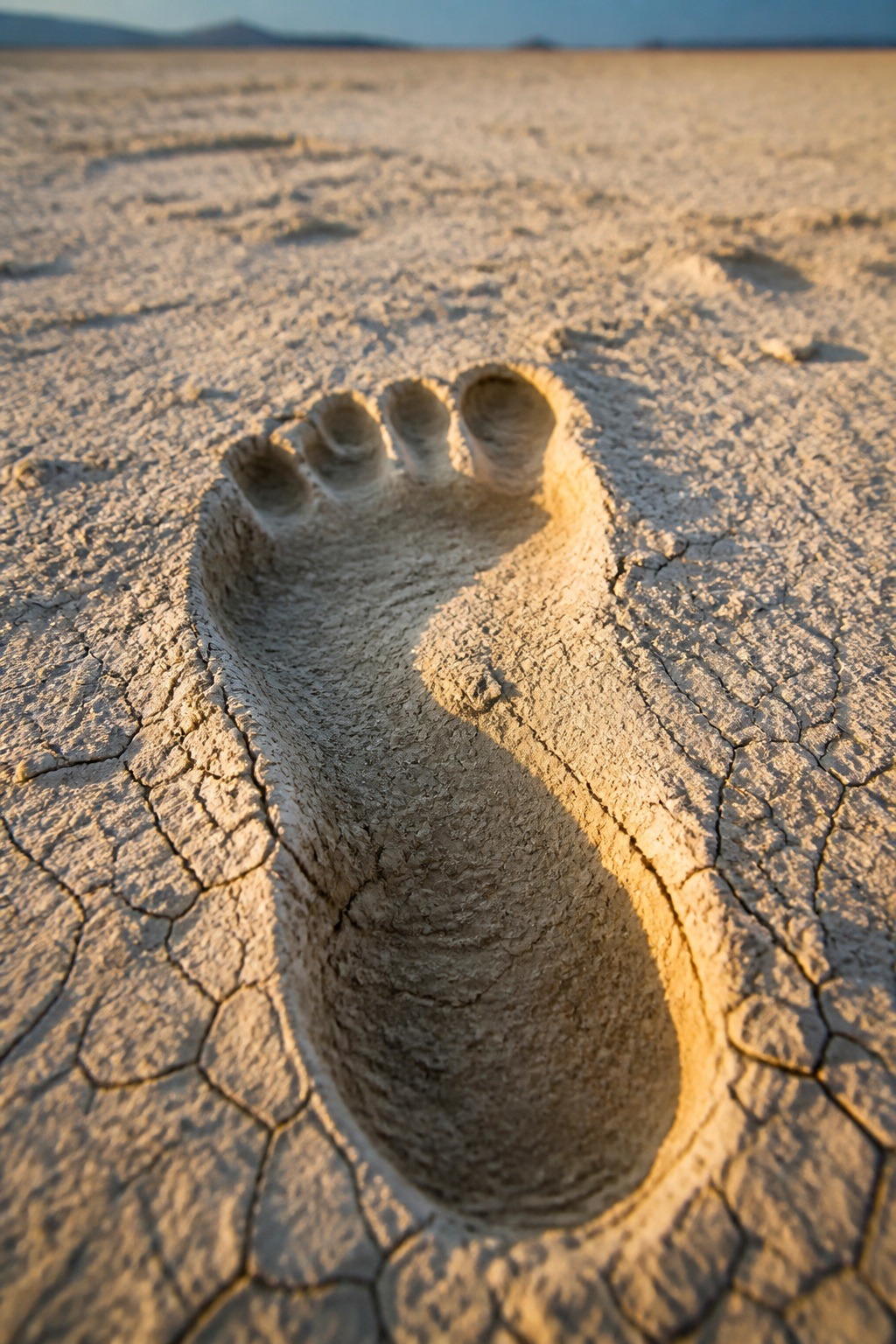
The setting is White Sands National Park, in the Tularosa Basin of southern New Mexico. Today it’s gypsum dunes and heat shimmer. Twenty-three thousand years ago it was the muddy shoreline of Lake Otero, a shallow Ice Age lake that swelled and shrank with the seasons. People walked across that soft margin, and the mud did what mud does — it held the shape of a heel, a toe splay, a hurried stride, then dried and buried it.
Researchers from the U.S. National Park Service and Bournemouth University excavated 61 human footprints from a single locality on the old lakebed, and reported them to the world in the journal Science in 2021. These aren’t isolated smudges. The tracks run through seven distinct soil layers, meaning people returned to this shore again and again across a span of roughly 2,000 years. Alongside the human prints are the tracks of the animals they shared the basin with: mammoth, giant ground sloth, dire wolf, an entire vanished ecosystem pressed into the same ground.
What makes a footprint so valuable is that it can’t be moved. A stone tool or a bone can wash downstream and land in older or younger sediment, muddying the dates. A footprint is fixed in the exact layer where a foot pressed down. If you can date that layer, you’ve dated the moment.
How old are the White Sands footprints? The 23,000-year number that broke the timeline
Here’s where the trouble started. To pin an age on the tracks, the original 2021 team, which included geologist Matthew Bennett of Bournemouth University, radiocarbon-dated the seeds of a tiny aquatic plant — Ruppia cirrhosa, or ditch grass — found in the same sediment layers as the footprints, both above and below them. The seeds returned ages of roughly 21,000 to 23,000 years.
That number lands squarely inside the Last Glacial Maximum, the coldest, iciest pulse of the last Ice Age, when massive sheets sealed off the northern route into the continent. If it held, it meant humans were already living deep in North America some 10,000 years earlier than the Clovis-first model allowed — and they were south of the ice while the ice was at its worst. You don’t quietly add ten thousand years to human history in the Americas. The dating world did not stay quiet.
{IMAGE_2}
Why scientists didn’t believe it at first — the “old carbon” seed problem, in plain English
The skepticism wasn’t stubbornness. It pointed at a real, well-known flaw, and it’s worth understanding because it’s the hinge the whole story turns on.
Radiocarbon dating works by measuring carbon-14, a radioactive form of carbon that living things absorb from the air while alive and stop absorbing at death. Count how much is left, and you get an age. But aquatic plants cheat. Ruppia grows underwater and pulls its carbon not from the air but from the water around it — and Lake Otero sat on limestone-rich ground. That bedrock leaches ancient, carbon-14-depleted carbon into the water. A plant drinking that “hard water” is born looking chemically old. This is the hard-water reservoir effect, and it can make a seed’s radiocarbon age read thousands of years older than the plant actually was.
Critics ran with it. If the seeds were contaminated, they argued, the true age of the footprints might be far younger — perhaps as recent as 13,500 to 15,500 years, which would fold the whole site neatly back into the conventional timeline. It was a fair challenge. And it meant one plant’s chemistry was the only thing standing between “interesting” and “rewrites the peopling of a continent.” That’s a fragile place for a revolution to stand.
Does the date really hold up? Three materials, three labs, one answer
So the site’s defenders did the honest thing: they went looking for a way to date the footprints that didn’t depend on Ruppia at all. If the seeds were the weak link, throw them out and see if the age survives on completely different evidence.
In 2023, a USGS-led team including Jeff Pigati and Kathleen Springer published a second study in Science using two entirely independent methods. First, they radiocarbon-dated pollen from conifer trees — land plants that breathe atmospheric carbon and are immune to the hard-water problem. Second, they used optically stimulated luminescence (OSL), a technique that measures how long grains of quartz sand have been buried in the dark, no carbon involved at all. Both pointed to the same window as the seeds.
Then in 2025, a University of Arizona team led by geoarchaeologist Vance Holliday closed the door. Publishing in Science Advances, they radiocarbon-dated the ancient lakebed mud itself — a third, completely different material — and split the samples between two independent laboratories. Both labs returned 20,700 to 22,400 years. Across all three studies and two research groups, the site now rests on roughly 55 consistent radiocarbon dates from three separate materials. When you have to be wrong three different ways, in three different labs, to make the young age true, the young age isn’t the simple explanation anymore.
| Study | Material dated | Method | Result |
|---|---|---|---|
| 2021 · Science | Ruppia seeds | Radiocarbon | ~21,000–23,000 yrs |
| 2023 · Science | Conifer pollen + quartz sand | Radiocarbon + OSL | Same window |
| 2025 · Science Advances | Lakebed mud (two labs) | Radiocarbon | 20,700–22,400 yrs |
Who left the tracks? Teenagers, toddlers, and a labor of fetch-and-carry
Numbers rewrite textbooks. People are what make a lakeshore feel human, and the White Sands tracks are unusually intimate about who was there.
When researchers measured the footprint sizes, a pattern jumped out: most of the prints were made by teenagers and younger children, many in the range of about 9 to 14 years old. Adult tracks are comparatively scarce. One leading interpretation is a division of labor — adults were off doing the skilled, dangerous work of hunting or hide-processing, while the “fetch-and-carry” jobs near the water fell to adolescents, with small children tagging along at their heels. Youngsters hauling supplies back and forth would stamp the shoreline far more often than a few adults passing through once.
One trackway makes the abstraction almost unbearably vivid. A single set of prints shows someone — likely a young woman or a teenager — carrying a toddler on one hip, occasionally setting the child down, then picking it up again, the small feet appearing and vanishing beside the larger ones. On the return journey, the child’s prints are gone. It’s a snapshot of an errand run 23,000 years ago, and it reads like a page torn from a diary no one meant to leave behind.
What it proves — and where the pseudoscience begins
A find this big attracts a lot of noise, and the honest thing to do is separate the load-bearing facts from the fantasy that has grown up around them online. The tracks are genuinely astonishing without any embellishment — which is exactly why the embellishments do harm.
Belief: The prints belong to “six-toed” beings or aliens.
Evidence: No. They are ordinary five-toed human feet; apparent extra toes are mud smearing and pressure distortion, well understood in ichnology.
Belief: This proves the first Americans arrived by boat, hugging the Pacific coast.
Evidence: A coastal “kelp highway” migration is a serious, plausible hypothesis — but it is not proven by these footprints. The tracks show people were here, not how they got here.
Belief: Vikings, lost maritime races, or a specific known individual left them.
Evidence: Pure speculation with zero support. The footprints are anonymous; anyone attaching a named culture to them is inventing it.
What is actually proven: Humans stood on the shore of Lake Otero roughly 21,000–23,000 years ago, repeatedly, across two millennia. That’s it. That alone is enough to move the story.
Why a Last Glacial Maximum date rewrites the peopling of the Americas
To feel why 23,000 years is so disruptive, you have to picture the map at that moment. During the Last Glacial Maximum, two continental ice sheets — the Laurentide and the Cordilleran — merged across Canada into a frozen wall. The famous “ice-free corridor,” the inland gap Clovis-first models had people walking through, was slammed shut. It didn’t reopen enough to travel until roughly 13,000 to 14,000 years ago.
So if people were already living in New Mexico 23,000 years ago, they could not have used the corridor to get there — it wasn’t open yet. They arrived earlier, by a different route (the Pacific coast is the front-runner), and they were established deep in the continent while the north was still locked in ice. That single logical squeeze is what “rewrites history” actually means here. It’s not a slogan; it’s a door that was physically closed, with people already on the wrong side of it.
That is the quiet power of White Sands: it didn’t merely find older footprints, it forced an entire field to attack a date for four years and then watch that date win on independent evidence three times over. You can still read the older documentaries and articles that call this an “open debate.” As of 2026, that framing is out of date — the disagreement they describe has been answered. For a deeper look at how these tracks reshape the arrival story, see our companion piece on how the White Sands footprints rewrite human arrival in America.
The short answer
The short answer: The White Sands footprints are about 21,000 to 23,000 years old, confirmed by three different dating materials in independent laboratories — which means humans were living in North America during the Last Glacial Maximum, thousands of years before the old Clovis-first timeline allowed. The debate over whether the date is real is, for practical purposes, closed.
Sources and notes
- Bennett, Bustos, Pigati et al. (2021), Science — original radiocarbon dating of Ruppia cirrhosa seeds, 21,000–23,000 years.
- Pigati, Springer, Honke et al. (2023), Science — independent confirmation via conifer-pollen radiocarbon and quartz optically stimulated luminescence.
- Holliday, Bennett, Windingstad et al. (2025), Science Advances — radiocarbon dating of lakebed mud, 20,700–22,400 years, two independent laboratories.
- U.S. Geological Survey and White Sands National Park (National Park Service) — site context, footprint count, stratigraphy, and Lake Otero setting.
The dunes at White Sands look like the emptiest place on Earth. But beneath the gypsum lies the oldest firmly-dated crowd in the Americas — children and teenagers running errands along a lake that dried up long before the pyramids, before farming, before almost everything we call history. They didn’t leave their names. They left something harder to argue with: their footprints, still walking.
Frequently Asked Questions
Q: How old are the White Sands footprints?
Radiocarbon and luminescence dating place them at roughly 21,000 to 23,000 years old, squarely within the Last Glacial Maximum. That means humans were living deep in North America some 10,000 years earlier than the traditional Clovis-first timeline of about 13,000 years ago allowed, and they were south of the ice while massive sheets sealed off the northern route.
Q: Why did scientists doubt the first date?
The original 2021 age relied on seeds of Ruppia, an aquatic plant that absorbs carbon from water rather than air. Lake Otero sat on limestone, which leaches ancient, carbon-14-depleted carbon into water, the hard-water reservoir effect, potentially making seeds read thousands of years too old. Critics argued the true age might be as recent as 13,500 to 15,500 years.
Q: How was the age finally confirmed?
Two independent research groups tested different materials. A 2023 USGS-led study dated conifer pollen and used optically stimulated luminescence on buried quartz sand. A 2025 University of Arizona team radiocarbon-dated the lakebed mud itself, split between two labs, both returning 20,700 to 22,400 years. Across all studies the site rests on about 55 consistent dates.
Q: Why are footprints better evidence than tools?
A footprint cannot be moved. A stone tool or bone can wash downstream and settle into older or younger sediment, muddying its date. A footprint is fixed in the exact layer where a foot pressed down, so dating that layer dates the moment a person walked there. The White Sands tracks are locked into their original sediment.
Illustrations are AI-generated. Article fact-checked and human-edited. Our editorial standards.