Why Do Panda Keepers Wear Panda Costumes? The Real Reason
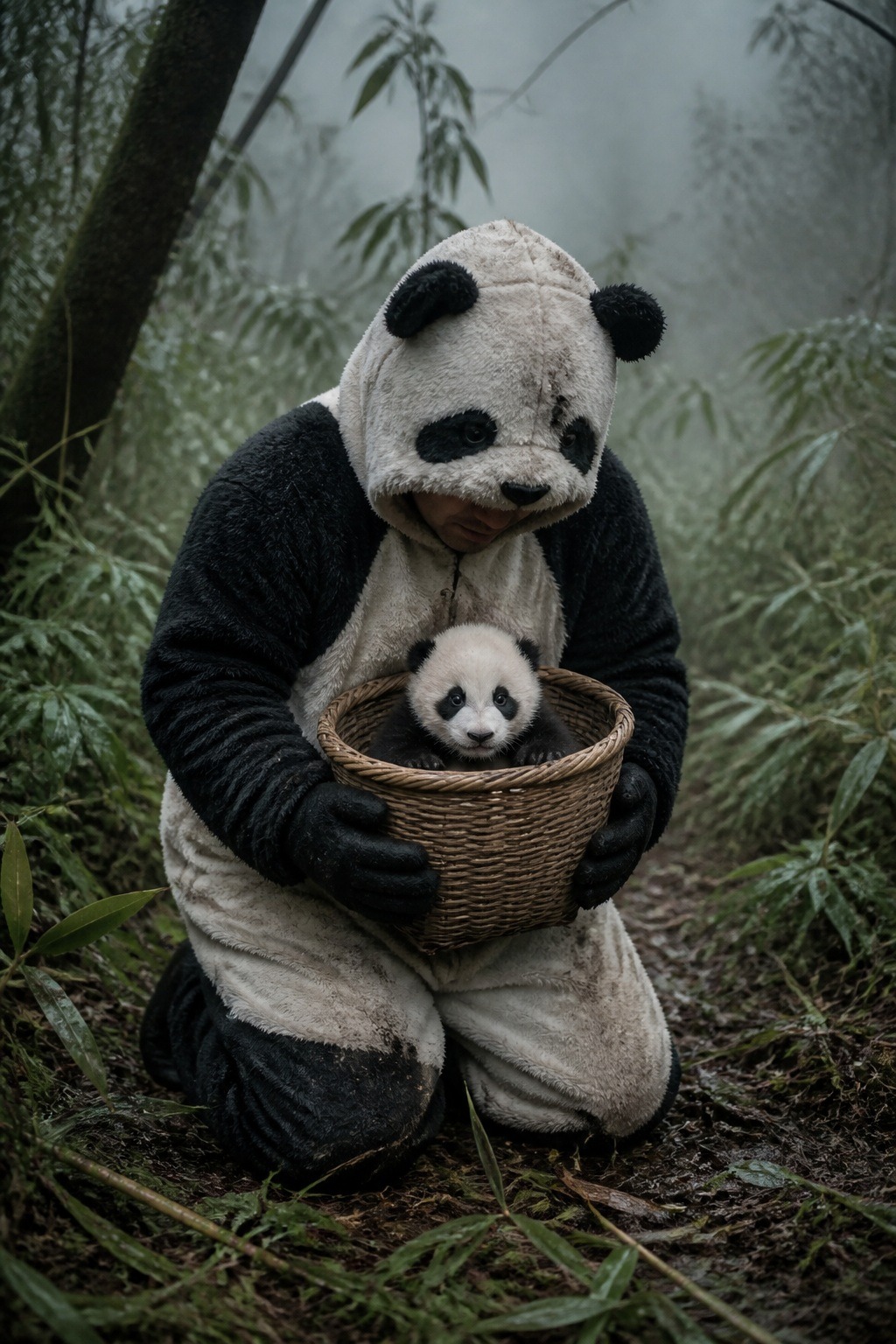
The photos look like a costume-party mishap, and the question they raise — why do panda keepers wear panda costumes — turns out to have an answer far stranger than any punchline. A lumpy black-and-white suit, a real cub cradled in a basket, a grown adult smeared head to foot in something you would not want on your clothes. It reads as a gag. It is nothing of the sort. Behind that ridiculous outfit sits a twenty-year survival experiment, a dead panda who made it necessary, and a mother whose nose is the whole reason it works at all.
Key Facts
- The work is run by the China Conservation and Research Center for the Giant Panda (CCRCGP) at the Wolong Reserve and Hetaoping base in Sichuan.
- Keepers coat the panda costume in panda urine and feces before every shift so cubs do not imprint on humans.
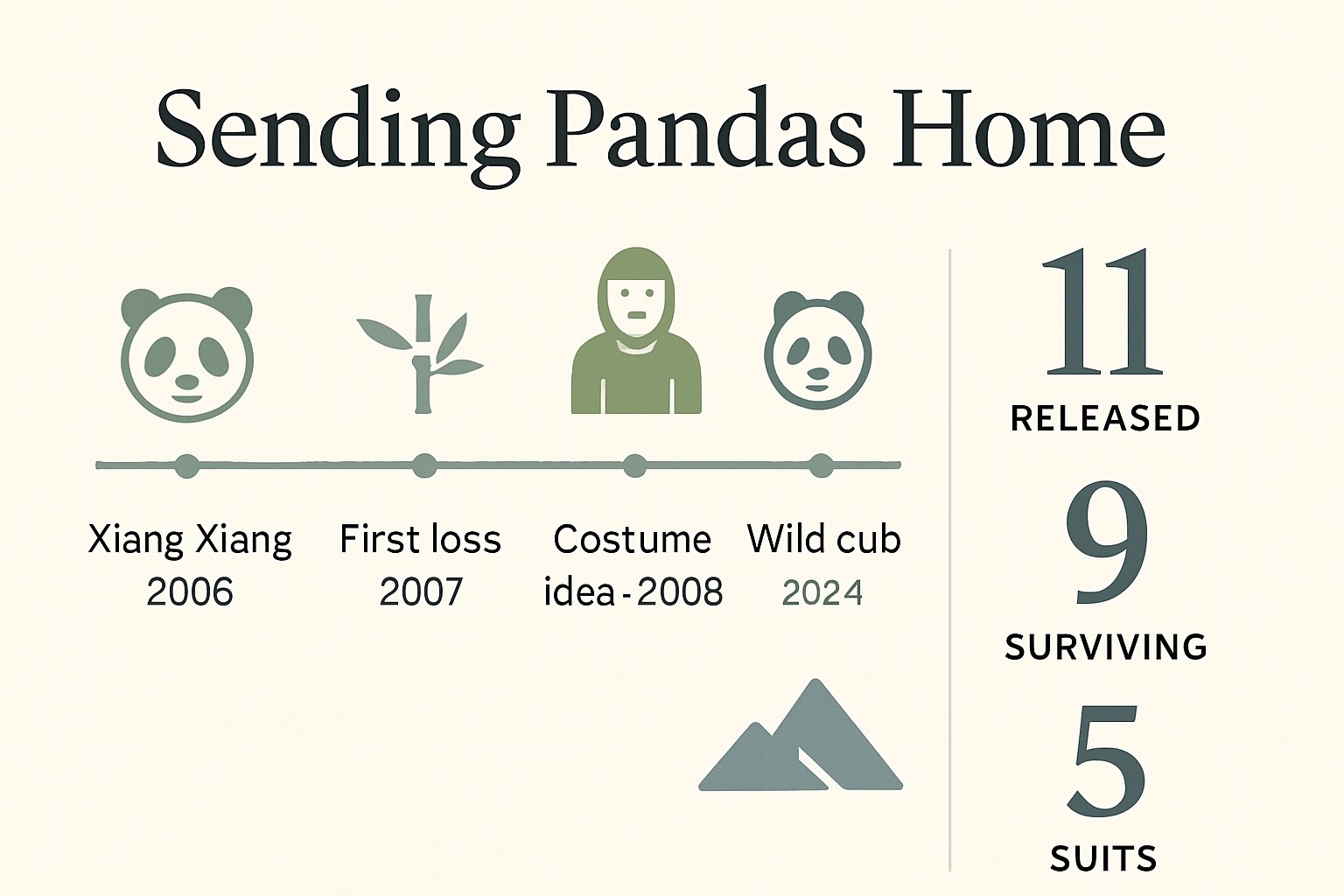
- Xiang Xiang, the first captive-bred panda released in April 2006, was found dead early in 2007, about ten months later.
- The disguise approach was proposed by Liu Dingzhen of Beijing Normal University around 2008, and the suit has gone through roughly five design versions.
- The modern mother-cub method keeps each cub with an experienced, wild-trained mother for around two years.
In short: Panda keepers wear scent-soaked panda costumes so captive-born cubs never learn that humans exist, which is vital for rewilding. The method followed the 2007 death of Xiang Xiang, the first released panda. The disguise fools the cub’s nose more than its poor eyes, and mainly reassures the watching mother.
The claim: it’s a cute publicity stunt. The evidence says otherwise.
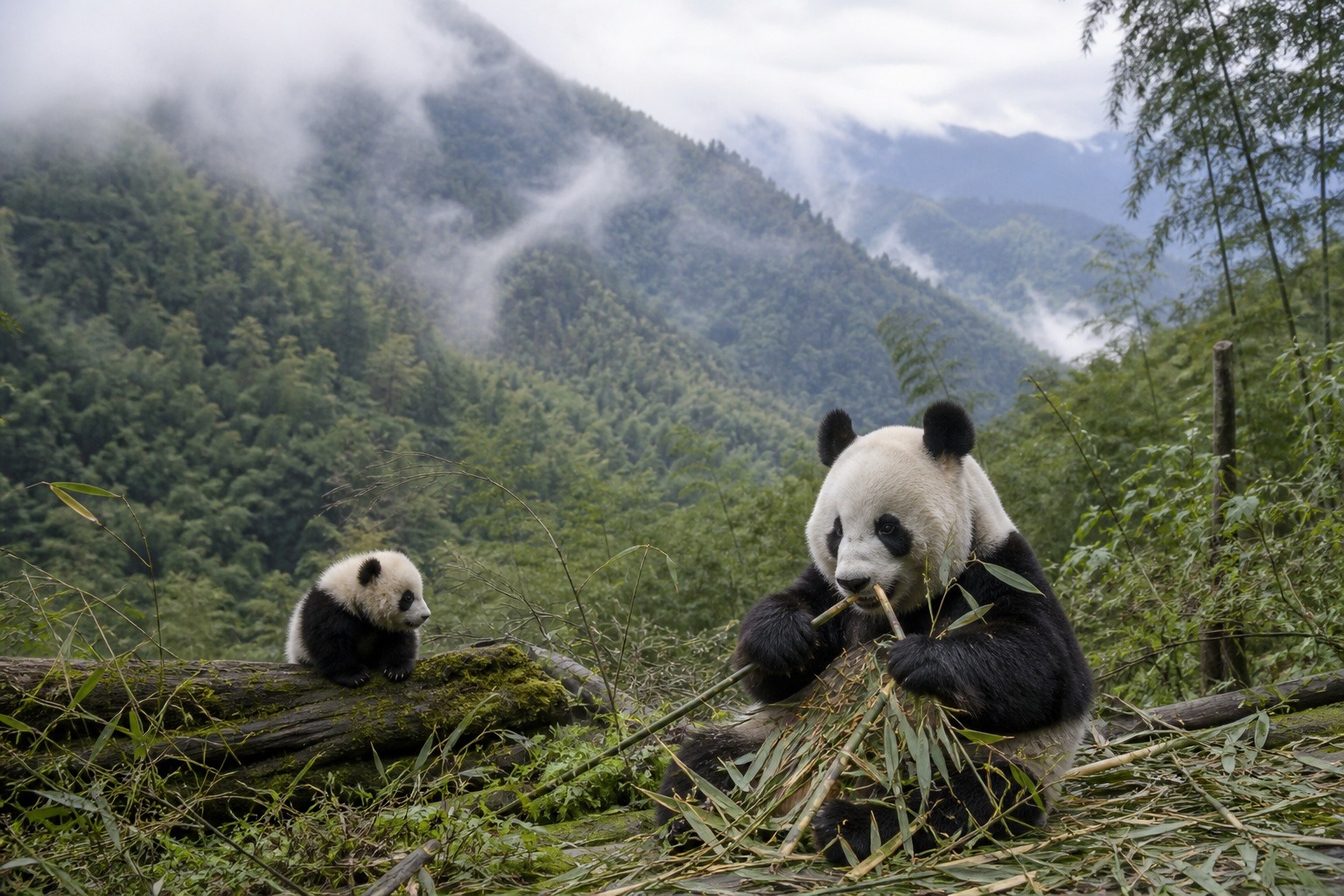
Scroll past the viral clips and you will see the same caption over and over: aren’t they adorable, playing dress-up for the cameras. That reading is wrong, and the people inside the suits would be the first to tell you so. This is the China Conservation and Research Center for the Giant Panda (CCRCGP), working out of the Wolong National Nature Reserve and its Hetaoping wild-training base in Sichuan. Nobody there is filming a promo.
The costume is a tool with one narrow job: to keep a captive-born cub from learning that humans exist. Every hour a cub spends bonding with a keeper is an hour it learns that the strange two-legged animal means food, warmth, safety. A panda that trusts people is a panda that walks toward a poacher, or loiters near a village, or simply forgets it is supposed to be afraid. In a rewilding program, tameness is not charming. It is fatal.
So why do panda keepers wear panda costumes — the real reason
Strip away the cuteness and the logic is cold. To release a captive-bred giant panda into the wild, you have to raise it without letting it imprint on you. That means no cooing, no cuddling, no human face attached to the good things in life. The suit is a blunt-force solution to a delicate problem — if the cub never clearly sees or smells a person, it never files “human” under “friend.”
Here’s the thing most write-ups skip: the visual disguise is almost the least important part. A cub’s eyesight is poor. What a young panda reads the world with is its nose, and a plush suit alone smells overwhelmingly of laundry detergent and the person sweating inside it. So the keepers do the thing that makes everyone squirm — they coat the costume in panda urine and feces before every shift.
{IMAGE_2}
The real reason the suits exist: a panda named Xiang Xiang
April 2006. A five-year-old male named Xiang Xiang walks out of a transport crate into the Wolong forest, radio collar blinking, the first captive-bred giant panda ever set free. He had spent three years in training — building dens, foraging, marking territory. For a few months, the experiment looks like triumph.
It isn’t. Wild male pandas do not welcome a stranger onto their turf, and Xiang Xiang, raised among people, has no idea how to lose a fight he never learned to avoid. He is attacked. In a later confrontation he climbs a tree to escape, falls, and is found dead early in 2007. Roughly ten months after the fanfare, the program’s proudest moment is a carcass on a mountainside.
That failure rewrote everything. The old model — take a cub, train it like a soldier, hand it a diploma and a collar — was buried with Xiang Xiang. What replaced it is the reason the costumes exist today.
Does the disguise actually fool a cub? What the science shows
The idea of dressing keepers as pandas is usually traced to Liu Dingzhen, a professor at Beijing Normal University whose lab studies biodiversity and behavior, who proposed the disguise approach for Wolong around 2008 — after Xiang Xiang, when the center was hunting for any way to cut human contact to zero. The test was never “does it look convincing to us.” It was “does the cub behave as if no human is present.”
Researchers watched for the tells a stressed or human-habituated cub gives off — vigilance, alarm calls, the body language of an animal that knows it is being handled. When keepers moved in full scent-treated costume, cubs largely carried on as if a fellow panda, not a person, had passed through. That behavioral evidence — not the Halloween optics — is what kept the program alive and iterating. The suit has since gone through roughly five design versions, each one refined by the keepers who actually wear it.
Why the suit has to smell like the right panda
Smearing a costume in bear droppings sounds like a punchline. It is precise chemistry. Giant pandas communicate largely through scent marks left by anogenital glands, and researchers of panda chemical signaling — work led over the years by scientists such as Ronald Swaisgood, formerly of the San Diego Zoo’s conservation research arm — have shown those marks are not generic “panda smell.” They encode the sex, the age, and the reproductive state of the animal that left them.
That detail changes everything about the smear. The goal is not merely to smell like a panda instead of a person. The goal is to smell like a specific kind of panda — an unrelated adult that poses no threat and no interest — so a mother nearby reads the disguised keeper as background, not danger. Get the chemical signature wrong and you don’t just fail to fool the cub; you risk alarming the one animal the whole method depends on. And that is the quiet genius of the scheme: the costume was never really for the cub — it was for the mother.
One backpack, one mother, ten seconds
Here is the part the viral clips flatten into a joke. The modern “mother-cub method,” built after Xiang Xiang, keeps each cub with an experienced, wild-trained mother for around two years, moving them together through a staircase of enclosures at Hetaoping — from a small pen, up to a semi-wild forest paddock of many hectares, toward true release. The keepers exist to weigh the cub, check its health, move it between stages. To do any of that, they have to get the cub away from its mother for a few seconds — a cub that, like every giant panda, began life astonishingly tiny and helpless and owes its survival almost entirely to her.
Can you actually take a cub from a giant panda mother without a catastrophe? Barely. Studies of captive giant panda rearing — including peer-reviewed work by Rebecca Snyder and colleagues on early-rearing behavior — document how fast and how fiercely maternal recognition kicks in: a mother can identify her own cub by its call within roughly the first couple of days, and she will retrieve that cub from any non-mother adult the instant she sees it. Which is exactly why the handoff only works when she is deeply distracted — usually by a pile of high-value bamboo set just out of sight of the basket.
So the entire operation balances on ten quiet seconds. A costumed keeper lifts a cub into a carrier while the mother’s head is buried in bamboo. It works because her attention is elsewhere. And on the day it doesn’t — the day she looks up, recognizes the small shape being carried off, and comes to take her cub back — the protocol simply stops. That is not a failure of the method. That is the method working exactly as designed: the mother, not the human, has the final say.
The scoreboard: eleven released, nine alive
The numbers are where this stops being a curiosity and becomes a genuine conservation story. Since 2003, CCRCGP has released eleven captive-born giant pandas into their native habitat, and nine are known to survive. Tao Tao, released into the Liziping Nature Reserve in October 2012, was the first success of the mother-cub method — a cub who learned foraging and predator-avoidance not from a trainer but from his mother, Cao Cao. In 2024, Tao Tao became the first rewilded panda known to father offspring, folding captive genes back into the wild gene pool.
- 2006–2007 — Xiang Xiang, first captive-bred release, dies after fights with wild males; the old training model ends.
- ~2008 — Prof. Liu Dingzhen (Beijing Normal University) proposes the human-disguise approach at Wolong.
- Oct 2012 — Tao Tao, first mother-cub-method panda, released into Liziping; still alive.
- 11 released / 9 surviving — captive-born pandas returned to the wild, 2003–2024.
- ~5 — costume design versions iterated by keepers.
Recent reporting adds a human face to the figures. Keeper Mu Shijie (also romanized Mou Shijie) has been described in 2025 coverage as having hands-on-handled ten of the eleven reintroduced pandas — the man in the suit for most of the program’s history. That kind of continuity is not a footnote; it is a big part of why the protocol keeps improving instead of resetting.
Belief versus evidence
Sort the myths from what the record actually supports:
- “It’s a photo-op / PR stunt.” → It’s a rewilding protocol at a research center; cubs are being prepared for release, not filmed for laughs.
- “The costume fools the cub because it looks like a panda.” → The scent matters more than the sight; cubs read the world by smell, so the suit is coated in panda urine and feces.
- “Any panda smell will do.” → Panda scent marks are sex- and age-coded; the aim is to read as a harmless unrelated adult, not just “a panda.”
- “They raise the cub in the suit alone.” → The cub is raised by a real wild-trained mother for about two years; keepers only intervene briefly.
In short: keepers wear panda suits smeared in bear scent so captive-born cubs never learn to trust humans — a method born from Xiang Xiang’s death in 2007 and proven when Tao Tao survived after 2012. The disguise is really aimed at the mother panda, whose two-year raising of her own cub, not any human trainer, is what turns a zoo-born bear into a wild one.
Sources and notes
- China Conservation and Research Center for the Giant Panda (CCRCGP), Wolong National Nature Reserve — program figures and Hetaoping wild-training stages.
- Global Times — 2025 reporting on the reintroduction program and keeper Mu Shijie.
- Pandas International and Giant Panda Global — records on Tao Tao’s 2012 release and 2024 offspring.
- Snyder, R. J., Zhang, A. J., Zhang, Z. H., et al., “Behavioral and developmental consequences of early rearing experience for captive giant pandas,” Journal of Comparative Psychology (2003).
- Research on giant panda chemical communication, including work by Ronald Swaisgood and colleagues, San Diego Zoo conservation research.
- South China Morning Post (2022) and National Geographic / Ami Vitale photography — documentation of the costume program.
The costume will always look absurd, and maybe it should — a reminder that saving a species sometimes means a grown scientist standing in a forest, dressed as a bear, reeking of one, holding his breath for ten seconds while a mother panda decides whether to look up. The dignity is not in the suit. It’s in what the suit protects: an animal that, if the plan holds, will never know a human touched it at all.
Frequently Asked Questions
Q: Why do panda keepers wear panda costumes?
To keep captive-born cubs from imprinting on humans before release into the wild. A panda that trusts people will walk toward a poacher or loiter near a village. The suit lets keepers weigh, check and move cubs without the animal learning that the two-legged animal means food and safety. In a rewilding program, tameness is not charming; it is fatal.
Q: Why is the costume covered in panda waste?
Because a cub reads the world mainly with its nose, not its poor eyes, and a plush suit alone smells of laundry detergent and the person sweating inside it. So keepers coat the costume in panda urine and feces before every shift. Scent marks encode a panda’s sex, age and reproductive state, so the goal is to smell like a specific harmless adult and reassure the mother.
Q: Who was Xiang Xiang?
Xiang Xiang was a five-year-old male, the first captive-bred giant panda ever set free, released in Wolong in April 2006 after three years of training. Wild males did not welcome the stranger onto their turf; in a later confrontation he climbed a tree, fell, and was found dead early in 2007. His death, about ten months after release, rewrote the whole program.
Q: Does the disguise actually fool a cub?
The test was never whether it looks convincing to humans but whether cubs behave as if no person is present. When keepers moved in full scent-treated costume, cubs largely carried on as if a fellow panda had passed through, without the vigilance or alarm calls of a handled animal. That behavioral evidence kept the program alive; the suit has had about five design versions.
Illustrations are AI-generated. Article fact-checked and human-edited. Our editorial standards.