The Amazon Soy Moratorium Explained: 20 Years, Then Gone
In April 2006, a Greenpeace report titled Eating Up the Amazon landed in newsrooms and boardrooms across Europe, and the Amazon soy moratorium explained in this article traces straight back to it. The report followed a chicken nugget backwards — from a McDonald’s counter in Britain, through European feed mills, to soybeans grown on freshly bulldozed rainforest in Brazil. Within weeks, retailers were leaning on their suppliers. Within months, the world’s largest grain traders had signed a promise nobody expected them to keep. They kept it for almost twenty years.
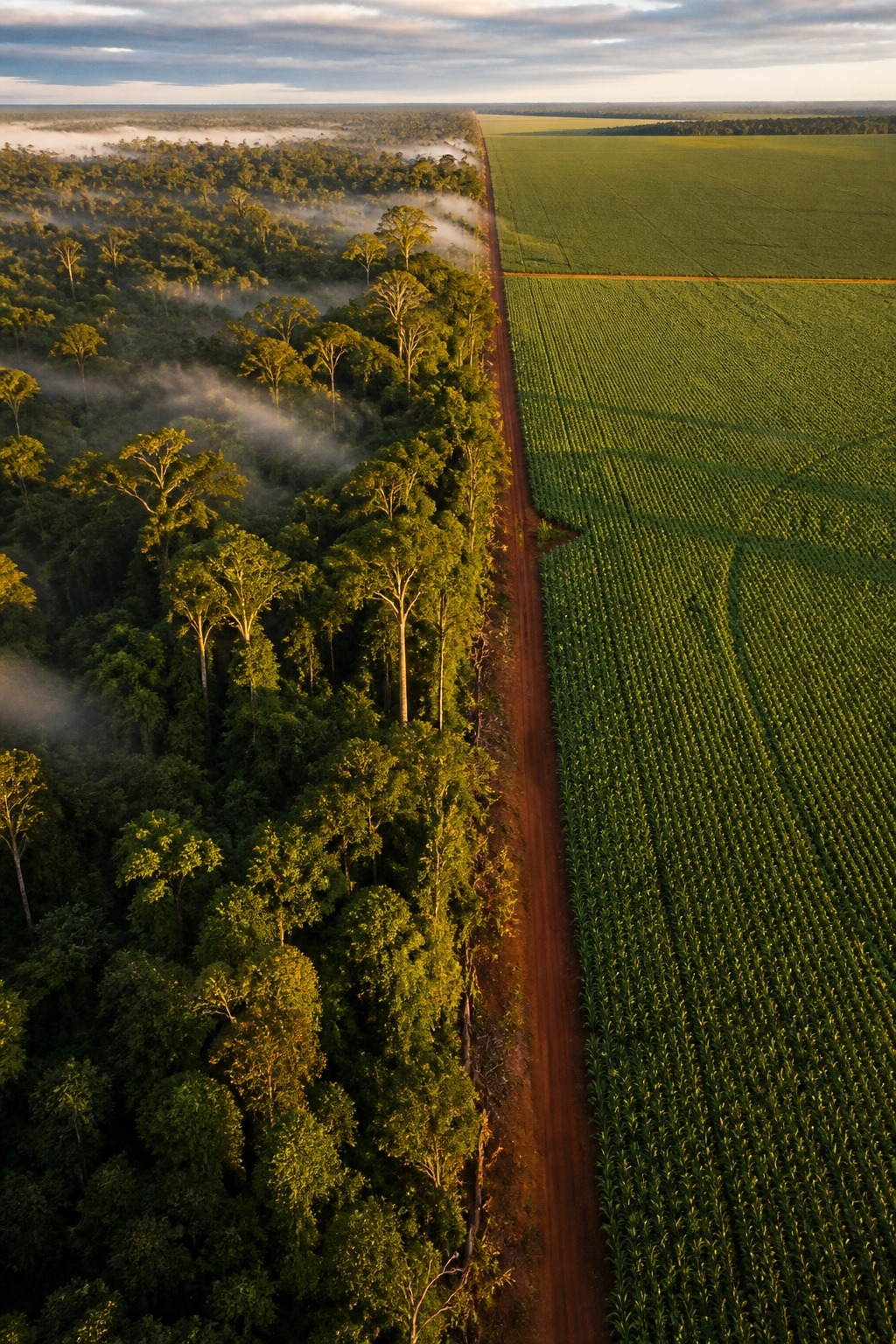
Key Facts
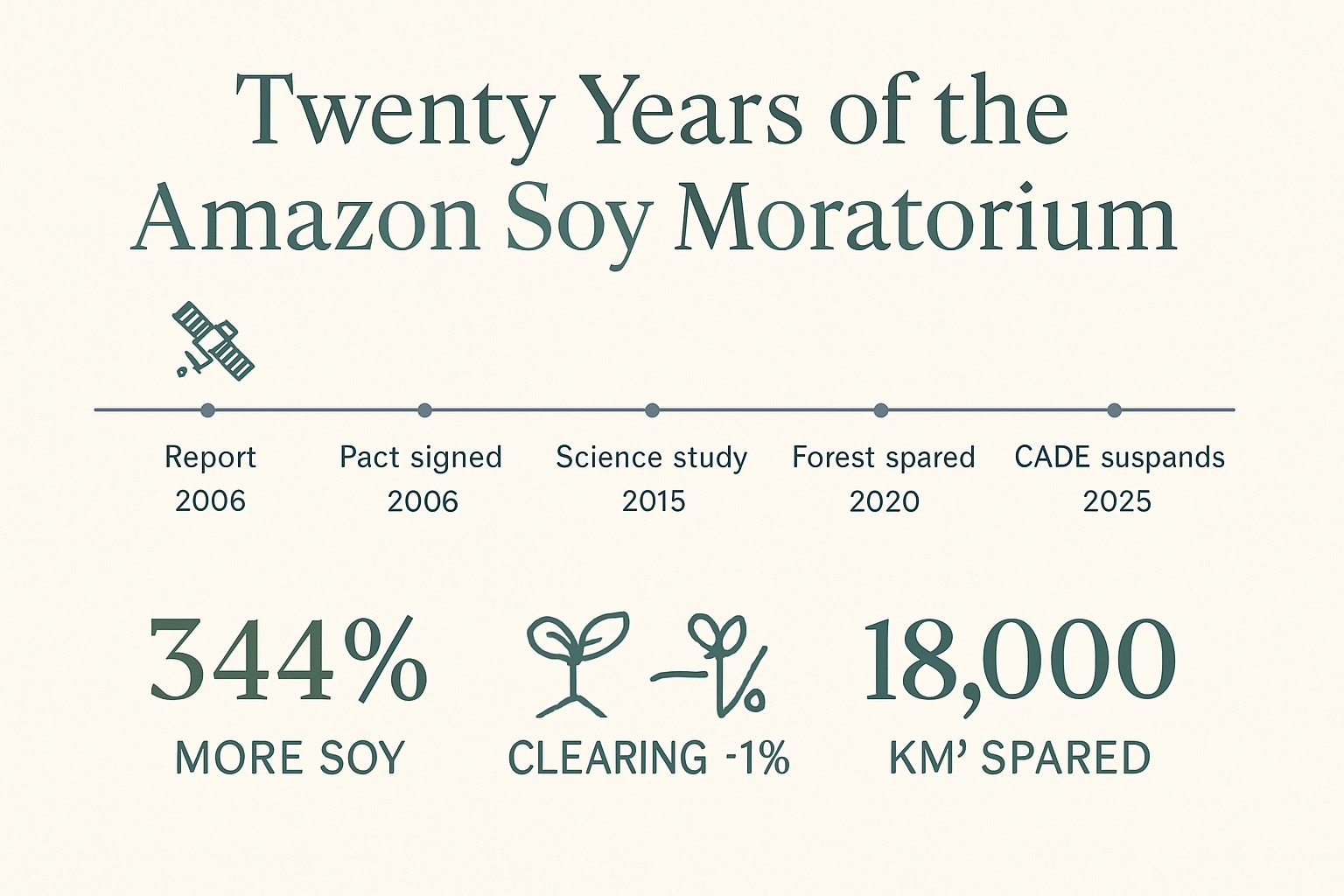
- The moratorium was triggered by Greenpeace’s April 2006 report Eating Up the Amazon and signed by traders in July 2006.
- The reference cutoff date was later moved to 22 July 2008 to match Brazil’s revised Forest Code.
- Signatory traders (Cargill, Bunge, ADM, Amaggi via ABIOVE and ANEC) handle roughly 90% of the soy leaving the Brazilian Amazon.
- New soy on freshly cleared forest fell from about 30% to roughly 1% (Gibbs et al., Science, 2015); about 18,000 sq km was spared in the first decade (Heilmayr et al., Nature Food, 2020).
- Brazil’s antitrust regulator CADE ordered the pact suspended in September 2025, effective 1 January 2026; ABIOVE withdrew on 5 January 2026.
In short: The Amazon Soy Moratorium was a 2006 pact in which grain traders refused to buy soy from newly cleared Amazon forest. Monitored by satellite, it cut soy-driven clearing from about 30% to 1% and spared roughly 18,000 sq km in its first decade. Brazil’s antitrust regulator ordered it suspended from January 2026.
The Amazon Soy Moratorium explained: a promise pinned to a date
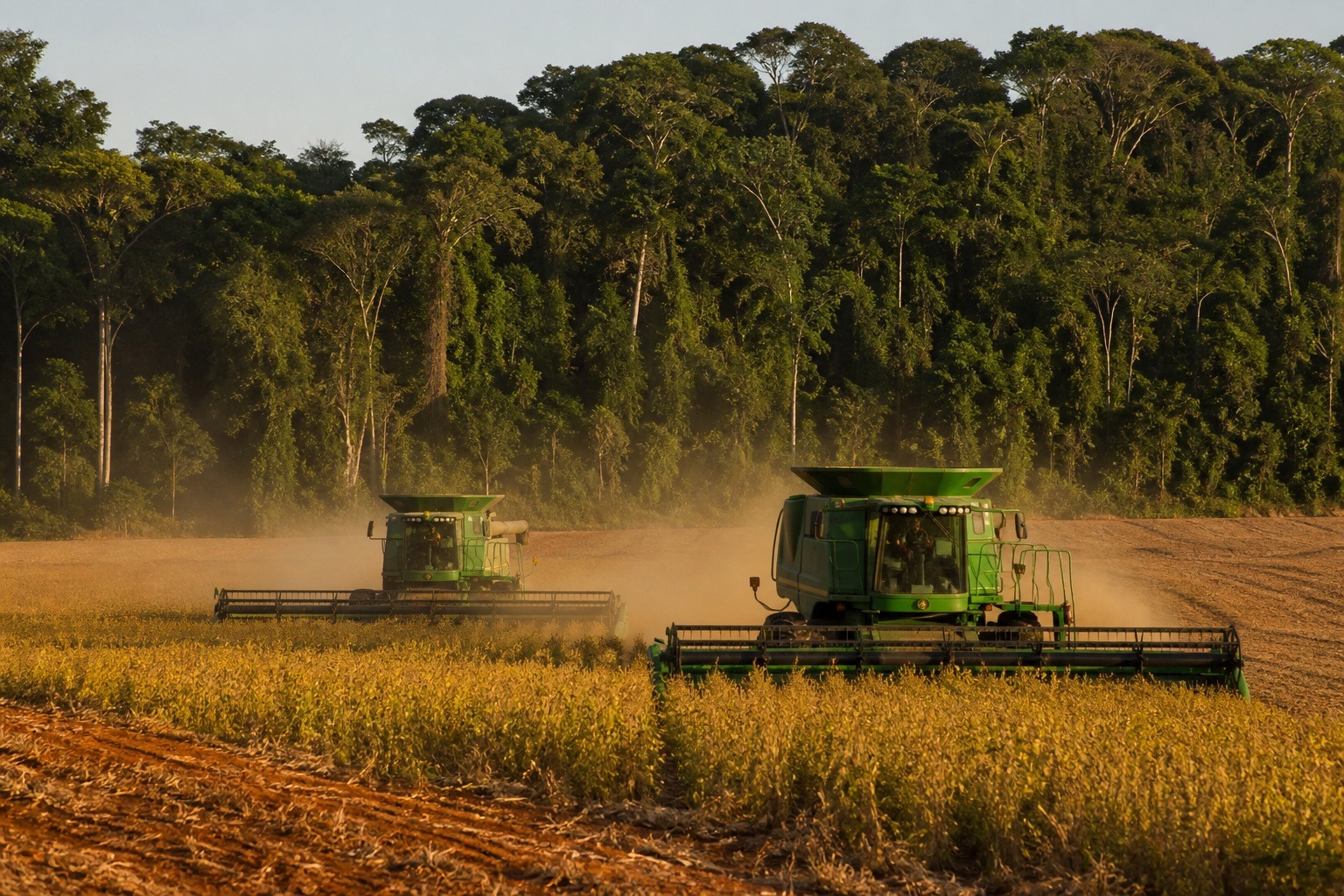
Strip away the acronyms and the deal is almost absurdly simple. The traders who move Brazilian soy — Cargill, Bunge, ADM, Amaggi and the rest, acting through the industry bodies ABIOVE and ANEC — agreed not to buy soybeans from any Amazon farm that had cleared primary forest to plant them. No clearance, no sale. That single rule became the Amazon Soy Moratorium, the first time a whole commodity sector had drawn a line in the forest and enforced it against itself.
Everything hangs on a date. The original line was July 2006: clear forest after it, and your beans were blacklisted. Later the reference date was moved to 22 July 2008, to match the baseline in Brazil’s revised Forest Code. The logic of the cutoff is the clever part — it doesn’t punish old clearing, only new. A farm sitting on land opened in the 1990s could sell freely. Take a chainsaw to standing forest next season, and every signatory trader would refuse your harvest. Since those signatories handled roughly 90% of the soy leaving the Brazilian Amazon, refusal was not a symbolic gesture. It was a closed door on your only market.
- Apr 2006 — Greenpeace’s Eating Up the Amazon; McDonald’s and European retailers pressure suppliers
- Jul 2006 — Traders sign the moratorium; the cutoff is set
- 2008 — Reference date aligned to 22 July 2008, matching Brazil’s Forest Code
- 2015 — Gibbs et al., Science: soy-linked clearing falls from ~30% to ~1%
- 2020 — Heilmayr et al., Nature Food: ~18,000 km² of forest spared in the first decade
- Sep 2025 — Brazil’s antitrust regulator CADE orders the pact suspended
- 1 Jan 2026 — Suspension takes effect
- 5 Jan 2026 — ABIOVE withdraws; the big traders walk
- 30 Dec 2026 — EU deforestation rules (EUDR) begin for large operators
How a satellite 700 kilometres up gets a farm blacklisted
Here is the piece almost every explainer skips as “too technical,” which is a shame, because it is the most remarkable part. A voluntary promise means nothing without a way to catch cheats. The moratorium borrowed one from Brazil’s space agency.
INPE, the National Institute for Space Research, has watched the Amazon from orbit since 1988. Two systems do the work. PRODES produces the official annual deforestation map, tracing each new clearing as a precise polygon. DETER fires faster, near-real-time alerts (the same imagery that flags illegal gold mining and cattle pasture). The moratorium’s monitoring group takes those polygons and lays them over farm boundaries drawn from the Rural Environmental Registry — the public CAR database every landholder must file. Where a fresh clearing polygon overlaps a registered soy property, the farm is flagged. Flagged farms go onto a blacklist the signatory traders share. And a blacklisted farm cannot sell to the companies that buy nine of every ten tonnes.
So the chain runs: pixel, to polygon, to property, to blacklist, to a trader saying no at the silo. No inspector has to walk the field. Stripped of the slogans, the moratorium’s real achievement was narrower and more durable than either side admits — it proved a supply chain can be policed from orbit, and that, not the hectares, is the part worth copying.
{IMAGE_2}
The numbers: 344% more soy, and clearing that nearly vanished
The headline result is genuinely startling, and it comes from Holly Gibbs and colleagues at the University of Wisconsin–Madison, writing in Science in 2015. Before the pact, about 30% of new soy in the Brazilian Amazon was planted on land cleared within the previous year. After it, that figure fell to roughly 1%. Soy stopped eating the forest almost overnight.
The obvious worry was that farmers would simply stop growing soy. They did the opposite. Across the monitored municipalities, the planted soy area grew by around 344% between 2009 and 2022, while forest clearing in those same towns dropped by about 69%. More beans, less loss — the two curves went their separate ways.
| Indicator | Before 2006 | Moratorium era |
|---|---|---|
| New soy on freshly cleared forest | ~30% | ~1% |
| Soy planted area, monitored towns (2009–2022) | baseline | +344% |
| Forest clearing, monitored towns (2009–2022) | baseline | −69% |
| Amazon forest spared, first decade (Nature Food) | — | ~18,000 km² |
How much forest did that actually save? The most careful estimate comes from Robert Heilmayr of the University of California, Santa Barbara, and co-authors in Nature Food in 2020: roughly 18,000 square kilometres kept standing over the moratorium’s first decade — an area larger than the state of Connecticut. That is the honest number. It is smaller than some of the figures thrown around in campaign material, and it is more convincing precisely because it survived peer review.
Why the farmers didn’t actually lose
The moratorium is usually framed as environmentalists versus agribusiness. That framing is mostly wrong, and the reason sits in plain sight in the Gibbs data. Soy more than doubled in the Amazon without new forest loss because farmers planted land that had already been cleared — old cattle pasture, degraded and underused, sitting idle.
Here’s the thing the row over farmers versus forests usually misses: Brazil is not short of open land. The country holds tens of millions of hectares of low-productivity pasture, and the peer-reviewed consensus is that crops could expand on it for years without touching a single standing tree. So did farmers lose out? The data says no — output rose, exports rose, and the deforested-land route was closed off as a convenience rather than a necessity. The moratorium didn’t cap Brazilian soy. It just changed where it grew.
The honest part: the Cerrado paid the bill
A cheerleader’s account would stop there. An honest one can’t. The moratorium protected one biome — the Amazon rainforest — and drew no line at all around its neighbour, the Cerrado, the vast tropical savanna that spreads across Brazil’s centre.
The Cerrado has taken the pressure. It was Brazil’s most deforested biome for two years running, losing more than 652,000 hectares of native vegetation in 2024 alone, much of it to soy. Reviews now put cumulative loss of the Cerrado’s native cover above half. A rule that guards rainforest but ignores savanna can quietly shift the damage next door — leakage, in the jargon — and that is part of what happened here. The Cerrado’s tragedy is that it is a grassland, not a forest, so it never fit the moratorium’s definition and, as we’ll see, may not fit Europe’s either.
January 2026: how a twenty-year deal came apart
Then, almost twenty years in, it fell apart.
The trigger was political. Mato Grosso — Brazil’s largest soy state and the frontier at the heart of the story — passed a law stripping tax breaks from companies that applied environmental standards stricter than state law required. The moratorium was exactly such a standard. Overnight, honouring the pact carried a tax penalty. Then Brazil’s antitrust authority, CADE, weighed in, ruling that traders agreeing among themselves not to buy certain soy looked like collusion; it ordered the arrangement suspended, effective 1 January 2026. On 5 January 2026, ABIOVE formally withdrew, and the major traders — Cargill, ADM, Bunge, Amaggi and others — walked away from the promise they signed in 2006.
What the collapse might cost is now a live research question. IPAM, the Amazon Environmental Research Institute in Brasília, has modelled the end of the moratorium and projects that cumulative Amazon deforestation could run about 30% higher by 2045 than the total recorded up to 2024, with states like Amazonas and Acre hit hardest. A single voluntary sentence, it turns out, may have been holding back a great deal of forest.
What replaces it — Brussels, a public registry, and land that never needed the rule
The deal did not die into a vacuum. Three things are moving to fill the gap, and none is a clean substitute.
First, Europe. The EU Deforestation Regulation (EUDR) will bar soy, beef, cocoa and other commodities linked to post-2020 clearing from the European market. After repeated delays, enforcement for large operators begins 30 December 2026 — the same year the private pact collapsed, turning a voluntary industry deal into a public trade law. The catch is real, though: the EUDR’s legal definition of “forest” largely excludes savanna, which leaves the Cerrado exposed all over again, and smaller mid-stream traders are harder to police than a handful of giants. Second, transparency. The same CAR registry and INPE satellites that powered the blacklist still exist and still publish, so the monitoring spine outlives the agreement even if the enforcement muscle is gone.
Third, and least discussed, is a quiet rebuke to the whole framing. Indigenous-managed territories in the Brazilian Amazon recorded near-zero soy-driven clearing both before and after the moratorium. The blueprint the world spent two decades negotiating had, in effect, already been running on Indigenous land — not because a trader refused a purchase, but because the people living there never cleared the forest in the first place.
Sources and Notes
- Gibbs, H. K. et al. (2015). “Brazil’s Soy Moratorium.” Science, 347(6220), 377–378.
- Heilmayr, R., Rausch, L. L., Munger, J. & Gibbs, H. K. (2020). “Brazil’s Amazon Soy Moratorium reduced deforestation.” Nature Food, 1, 801–810.
- IPAM Amazônia — Instituto de Pesquisa Ambiental da Amazônia, deforestation modelling, 2025–2026.
- INPE — Brazilian National Institute for Space Research, PRODES and DETER monitoring systems.
- Mongabay reporting on the CADE suspension and ABIOVE withdrawal, 2025–2026; EU Deforestation Regulation, Official Journal of the EU.
Questions readers ask. Is the Amazon Soy Moratorium still in effect in 2026? No. CADE’s suspension took effect on 1 January 2026 and ABIOVE withdrew on 5 January 2026; the monitoring data survives, but the binding pact does not. How much forest did it actually save? The best peer-reviewed figure is Heilmayr’s ~18,000 km² over the first decade — larger than Connecticut — not the inflated totals sometimes quoted.
Twenty years is a long life for a handshake. The Amazon Soy Moratorium was never a law, never perfect, and never covered the savanna it should have — yet it moved a soy boom off the rainforest and proved a supply chain can be watched from space. Whether Brussels and a public registry can hold that line without the traders’ signature is the open question of the next two decades. The satellites are still overhead, still counting. What they record now is up to us.
Frequently Asked Questions
Q: What is the Amazon Soy Moratorium?
It is a 2006 agreement in which the traders who move Brazilian soy, including Cargill, Bunge, ADM and Amaggi through ABIOVE and ANEC, agreed not to buy soybeans from any Amazon farm that cleared primary forest to plant them. Since signatories handle about 90% of Amazon soy, refusal effectively closed a farm’s only market rather than being a symbolic gesture.
Q: Did the moratorium actually reduce deforestation?
Yes. Holly Gibbs and colleagues found in Science in 2015 that new soy planted on recently cleared forest fell from about 30% before the pact to roughly 1% after. A 2020 Nature Food study led by Robert Heilmayr estimated about 18,000 square kilometres of forest kept standing over the first decade, an area larger than Connecticut.
Q: How were cheating farms caught?
Through satellites. Brazil’s space agency INPE runs PRODES, which maps each new clearing as a precise polygon, and DETER, which fires near-real-time alerts. Monitors overlay those polygons on farm boundaries from the public Rural Environmental Registry. Where fresh clearing overlaps a registered soy property, the farm is blacklisted and signatory traders refuse its harvest.
Q: Did farmers lose out under the moratorium?
Mostly no. Soy planted area in monitored towns grew by around 344% between 2009 and 2022 while forest clearing there dropped about 69%. Farmers expanded onto already-cleared land, old degraded cattle pasture, of which Brazil holds tens of millions of hectares. More beans and less forest loss went together, undercutting the framing of farmers versus forests.
Illustrations are AI-generated. Article fact-checked and human-edited. Our editorial standards.