Sea Otters Are Fixing What Scientists Couldn’t
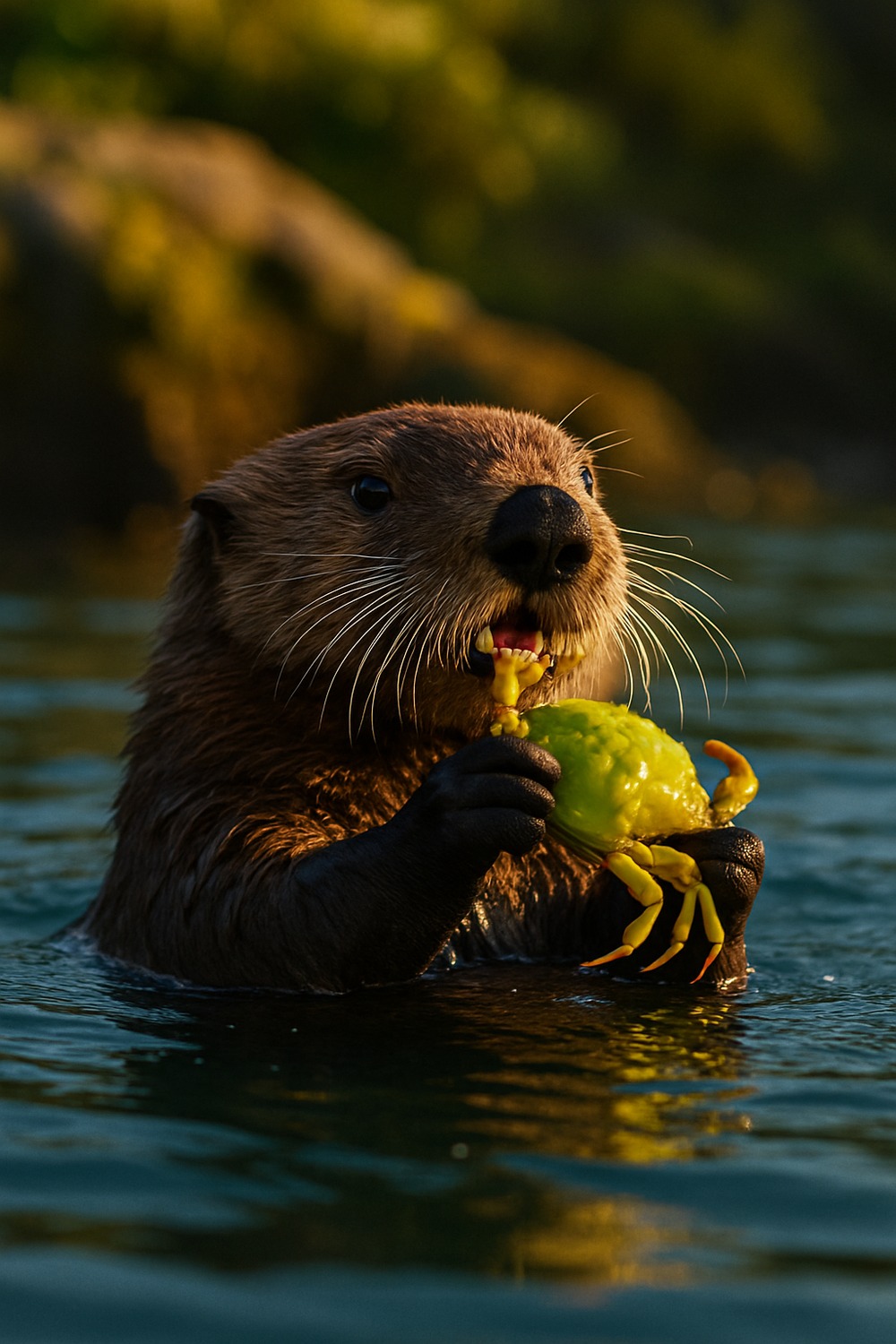
Nobody set out to run a crab control experiment at Elkhorn Slough. The otters just showed up hungry, and the data started getting weird in the best possible way. One adult otter can eat 25% of its body weight in crabs. Every single day.
Elkhorn Slough is a tidal estuary wedged between Monterey Bay and the agricultural runoff of California’s Central Valley — not the kind of place that makes headlines. But for the better part of two decades, something has been quietly unfolding there that’s making conservation researchers genuinely rethink their entire playbook. European green crabs had been tearing through the wetland’s eelgrass beds for years. Scientists deployed traps. They ran hand-collection programs. They built spreadsheets and wrote grant proposals and hired crews. Then the otters drifted back in, started eating, and somehow outperformed all of it.
Key Facts
- At Elkhorn Slough, a tidal estuary near Monterey Bay, sea otters suppressed invasive European green crabs and drove eelgrass recovery without human funding.
- Eelgrass coverage in otter-occupied zones increased by more than three times compared to otter-free areas, per research published in PNAS by Brent Hughes and colleagues.
- The Elkhorn Slough otter population grew from roughly 50 individuals in the 1980s to several hundred by the 2020s.
- An adult sea otter eats up to 11 kilograms of food per day, roughly 25 percent of its body weight.
- Sea otters are protected under the Marine Mammal Protection Act of 1972, and green crab densities can exceed 20 individuals per square meter in unmanaged estuaries.
In short: At California’s Elkhorn Slough, sea otters controlling invasive species outperformed funded human trapping programs, suppressing European green crabs and tripling eelgrass coverage in otter zones. As the otter population climbed from about 50 in the 1980s to several hundred today, this keystone predator reframed conservation toward reintroduction over costly intervention.
Sea Otters Versus Invasive Species: An Unlikely Battle
The European green crab arrived on American shores in the 1800s, almost certainly hitching a ride in ship ballast water, and has been aggressively colonizing places it was never meant to be ever since. At Elkhorn Slough, ecologist Brent Hughes started documenting something that sounds almost too convenient: otter territories showed dramatically reduced crab densities, and those reductions tracked directly with eelgrass recovery. The question his team kept returning to was almost embarrassingly straightforward — what if the answer was just letting a predator eat?
It sounds too clean. Nature rarely offers clean answers.
But the data from Elkhorn Slough kept pointing the same direction, year after year, plot after monitored plot. The crabs weren’t just being knocked back. They were being managed — continuously, efficiently, and for exactly zero dollars.
What Eelgrass Actually Does (And Why It Matters)
Eelgrass isn’t decorative. These underwater meadows are nurseries for juvenile fish, feeding grounds for migratory birds, and carbon sinks that pull down CO2 at rates comparable to terrestrial forests. When green crabs move through them — uprooting blades while digging for prey, crushing rhizomes under sheer population pressure — the damage doesn’t stay local. Lose the eelgrass, and you lose the fish. Lose the fish, and the food web starts fraying from the edges inward. You can read more about how coastal ecosystems collapse and rebuild at this-amazing-world.com, where the stories get stranger the deeper you go.
What surprised the researchers wasn’t that recovery happened. It was how fast.
They expected gradual improvement — the slow crawl of ecological restoration that usually takes decades to show up in measurements. What they got looked almost like a switch being flipped. Eelgrass beds in otter-occupied zones expanded. Fish returned. Water clarity improved, because healthier root systems were finally stabilizing sediment on the estuary floor again.
How Sea Otters Reshape an Ecosystem Without Trying
Sea otters are what ecologists call a keystone species — their presence produces effects on the ecosystem wildly disproportionate to their actual biomass. The concept isn’t new. But the Elkhorn Slough data handed researchers something rare: a genuine before-and-after comparison, same location, same invasive pressure, the only real variable being whether otters were present. In zones where sea otters controlling invasive species like green crabs became the norm, eelgrass coverage increased by more than three times compared to otter-free areas in some measurements. Three times.
And here’s the uncomfortable part for everyone who spent years and grant money on trap-based removal programs.
The otters didn’t just do it better. They did it continuously, adaptively, at scale — without funding cycles, without volunteer fatigue, without the logistical mess that derails most field programs. A hungry animal running on pure instinct outperformed coordinated human effort. That last fact kept me reading for another hour after I first found the Hughes study.
That’s the part that keeps marine biologists up at night.
The Numbers Behind the Recovery
Ecological recovery rarely moves in straight lines, and it almost never announces itself with a dramatic moment you can point to. The eelgrass didn’t return overnight. But when Hughes and his colleagues mapped the Slough’s meadows across multi-year periods, the pattern became impossible to ignore. The otter population at Elkhorn Slough had climbed from roughly 50 individuals in the 1980s to several hundred by the 2020s — and that growth curve tracked the eelgrass recovery almost precisely. Each additional otter wasn’t just one more hungry animal showing up at the buffet. It was a multiplier effect on crab suppression, on habitat stability, on the whole system’s capacity to hold itself together.
The implications reach well past California’s coastline. Wetlands worldwide are under pressure from invasive species, development, and climate shifts that keep rewriting the rulebook. If one recovered predator population can generate this kind of measurable restoration, it reframes what conservation actually looks like — less intervention, more reintroduction. Less fighting nature, more putting back the animals nature already designed for exactly this job.
By the Numbers
- Otter population at Elkhorn Slough: from ~50 individuals in the 1980s to several hundred by the 2020s, protected under the Marine Mammal Protection Act of 1972 (NOAA, 2023).
- Eelgrass coverage in otter-occupied zones increased by more than 3x compared to otter-free areas — documented in research published in PNAS by Brent Hughes and colleagues. That’s not a rounding error. That’s a different ecosystem.
- Up to 11 kg of food per day for an adult otter — roughly 25% of body weight, making them one of the most energetically demanding marine mammals alive relative to their size.
- Green crab densities can exceed 20 individuals per square meter in unmanaged estuaries.
- Eelgrass beds simply can’t survive that pressure without predator control pulling the numbers down.
Field Notes
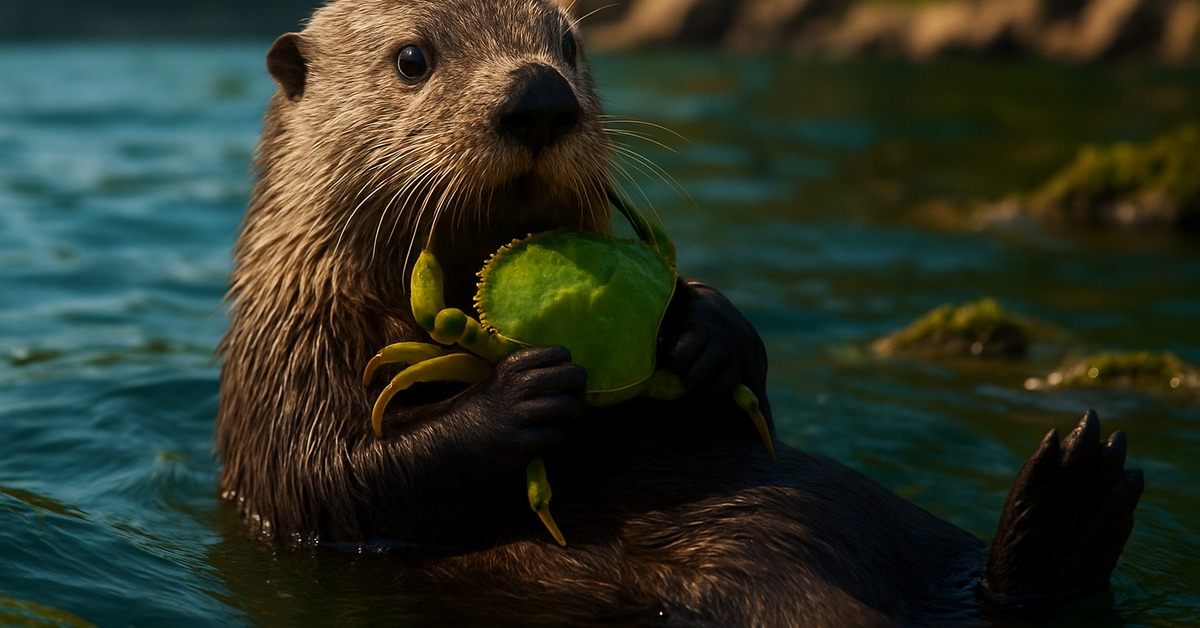
- Sea otters use rocks as tools to crack hard-shelled prey — and individual otters develop personal preferences for specific rocks, sometimes carrying a favorite tucked in a loose flap of skin under their armpit for days.
- Cooperative hunting, sort of. At Elkhorn Slough, researchers observed loose foraging groups that seem to herd crabs toward shallower water — not coordinated, exactly, but not purely coincidental either. Nobody’s quite sure what to call it.
- Green crabs don’t just eat eelgrass — their burrowing physically uproots plants, so a single crab destroys far more habitat than it consumes.
- Which is exactly why suppressing population density matters more than achieving total removal. You don’t need zero crabs. You need fewer crabs than the eelgrass can handle.
What This Means for Conservation’s Future
The Elkhorn Slough story isn’t a feel-good wildlife comeback dressed up as science. It’s a data point in a much larger argument about how humans approach ecosystem management — and whether the default assumption that intervention is always the answer has been costing us more than we’ve realized. The otter story keeps suggesting the same uncomfortable thing: sometimes the most powerful tool is the one that was already there before humans removed it.
Restoration ecology is increasingly focused not just on eliminating threats, but on returning the predators and processes that kept those threats in check for millennia before we showed up and rearranged everything. That shift has real stakes. Wetlands like Elkhorn Slough provide storm buffering, water filtration, carbon storage, and fishery support worth billions of dollars annually to coastal communities. Losing them to invasive species isn’t just ecological damage. It’s an economic one. And rebuilding them through predator recovery is, dollar for dollar, one of the most efficient investments the research points toward.
A small, whiskered animal floating on its back, cracking crabs against a rock — it’s not the image most people picture when they think about environmental restoration. But at Elkhorn Slough, that’s exactly what recovery looks like. The otters aren’t trying to save anything. They’re just hungry. And somehow, that turns out to be enough. If this kind of story is your thing, there’s more waiting at this-amazing-world.com — and the next one is even stranger.
Frequently Asked Questions
Q: How are sea otters controlling invasive green crabs at Elkhorn Slough?
At Elkhorn Slough, an estuary near Monterey Bay, sea otters drifted back in and began eating invasive European green crabs, which had been damaging eelgrass beds for years. Ecologist Brent Hughes documented that otter territories showed dramatically reduced crab densities, and those reductions tracked eelgrass recovery. An adult otter eats up to 11 kilograms of crabs and prey daily, suppressing crab populations continuously and for free.
Q: How much did eelgrass recover thanks to the otters?
Eelgrass coverage in otter-occupied zones increased by more than three times compared to otter-free areas, documented in research published in PNAS by Brent Hughes and colleagues. The recovery was also surprisingly fast, more like a switch flipping than the slow decades restoration usually takes. Eelgrass matters because it nurses juvenile fish, feeds migratory birds, and stores carbon at rates comparable to forests.
Q: Why are sea otters called a keystone species?
Sea otters are a keystone species because their presence produces effects on the ecosystem wildly disproportionate to their biomass. At Elkhorn Slough, the otter population grew from roughly 50 individuals in the 1980s to several hundred by the 2020s, and that growth tracked eelgrass recovery almost precisely. By suppressing green crabs that can exceed 20 per square meter, otters stabilized sediment, returned fish, and improved water clarity.
Illustrations are AI-generated. Article fact-checked and human-edited. Our editorial standards.