Only 10 Vaquitas Left — And They’re Almost Invisible
Somewhere between six and ten animals. That’s the entire species. Not the local population — the species. Every single vaquita porpoise alive on Earth right now could fit in a single room, and most people have never heard their name.
Off the coast of San Felipe, Mexico, a hydrophone drifts in the blue silence of the Gulf of California, listening for something barely louder than a whisper. Scientists, conservationists, and a handful of local fishermen are all waiting for the same thing: proof that the world’s rarest marine mammal is still out there, still breathing, still holding on.
Key Facts
- As of 2023, only an estimated six to ten vaquita porpoises remain alive, down from around 600 individuals in 1997.
- The vaquita (Phocoena sinus), meaning ‘little cow’ in Spanish, was only formally described by science in 1958.
- The vaquita’s entire habitat is roughly 2,235 square kilometers in the Gulf of California, one of the smallest ranges of any marine mammal.
- Vaquitas die as bycatch in gillnets set illegally for totoaba fish, whose swim bladders can sell for up to $20,000 USD on the black market.
- Mexico banned gillnets in the vaquita’s core habitat in 2017, but enforcement has been inconsistent and illegal fishing continues.
In short: The vaquita porpoise extinction crisis has left only six to ten animals in Mexico’s Gulf of California, down from 600 in 1997, a loss exceeding 98 percent in under thirty years. The cause is bycatch in gillnets set for totoaba fish. The species cannot be bred in captivity, so survival depends entirely on stopping the nets.
The Vaquita Porpoise Extinction Nobody Saw Coming
The vaquita — whose name literally means “little cow” in Spanish — was only formally described by science in 1958. Researcher Lorenzo Rojas-Bracho, who has spent decades tracking this species, estimates that as recently as 1997, there were still around 600 individuals in the Gulf of California. By 2023, that number had cratered to somewhere between six and ten.
That’s not a population decline. That’s a freefall.
How does a species go from hundreds to almost nothing in a single human lifetime? Turns out the answer is brutally simple. Gillnets. Strung silently below the surface to catch totoaba fish — whose swim bladders sell for tens of thousands of dollars on the black market in China — these nearly invisible walls of mesh don’t discriminate. A vaquita swims in. It doesn’t swim out.
Gillnets Are Killing the Gulf’s Last Ghost
Mexico banned gillnets in the vaquita’s core habitat in 2017, but the ban has been inconsistently enforced, and illegal fishing continues. Cartels have moved into the totoaba trade, making enforcement genuinely dangerous for inspectors and local officials alike. Environmental group conservation watchers have documented ongoing illegal activity in the so-called “zero tolerance zone” where the last vaquitas are known to roam.
A protected area that, in practice, isn’t always protected.
Some local fishermen remember spotting vaquitas on calm mornings — a silver shape rising from still water, exhaling softly, then gone. Those fishermen are now some of the strongest advocates for the species. They know what it means when the gulf goes quiet.
What It Takes to Count Ten Animals
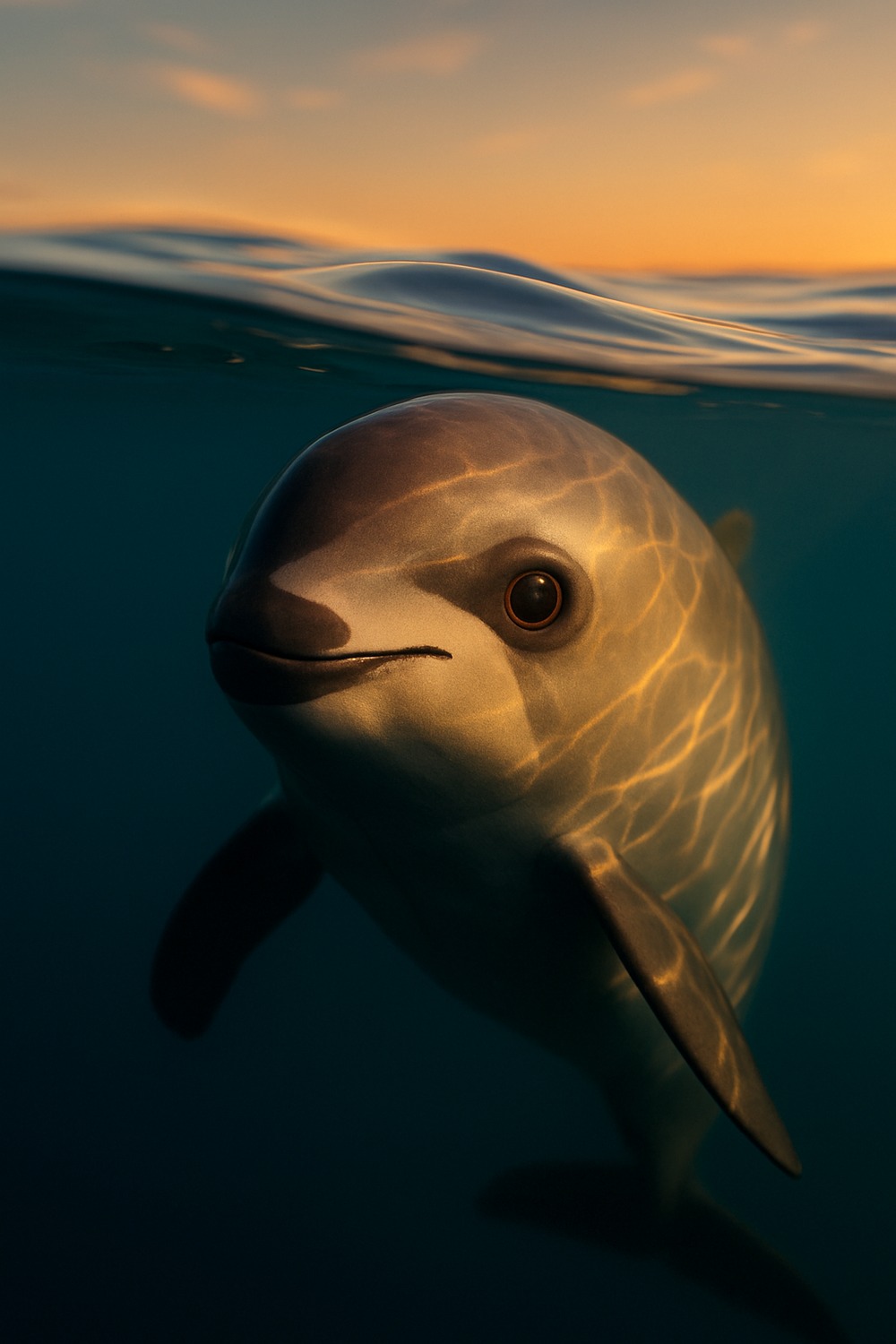
Counting vaquitas isn’t like counting elephants. You can’t fly a drone over the savanna and tally shapes. These animals are shy, small — barely five feet long, weighing around 95 pounds — and they surface with almost no fanfare. Researchers rely on acoustic monitoring, using hydrophones to detect the distinctive high-frequency clicks vaquitas use to navigate and communicate underwater. The vaquita porpoise extinction risk makes every single acoustic detection a reason to both celebrate and grieve at the same time.
Ten animals. That’s not a population. That’s a family reunion that could fit around a dinner table, and every one of them carries the entire future of their species.
The Totoaba Connection Nobody Talks About Enough
Here’s the thing — the vaquita isn’t even the target. It’s collateral damage in a black-market trade for a fish most people outside of Mexico and China have never heard of. The totoaba’s swim bladder, dried and smuggled, fetches prices comparable to gold. A single bladder can sell for $20,000 or more. That kind of money warps incentives in coastal communities where legal fishing barely covers fuel costs.
The gillnets go in. The vaquitas die. The totoaba bladders disappear into a luxury market thousands of miles away.
And the cruelest part? The totoaba itself is also critically endangered. Two species, trapped in the same net, both racing toward the same cliff edge. That last fact kept me reading for another hour — there’s something almost incomprehensible about destroying two irreplaceable things at once in pursuit of one of them.
By the Numbers
- An estimated 600 vaquitas existed in 1997 (IUCN, 2023) — meaning the current population loss exceeds 98% in under 30 years.
- Entire habitat: roughly 2,235 square kilometers. One of the smallest ranges of any marine mammal on Earth.
- A totoaba swim bladder can sell for up to $20,000 USD on the black market, making it gram-for-gram one of the most valuable wildlife contraband items in the world — more valuable by weight than cocaine in some markets.
- Smallest cetacean alive. Five feet. 95 pounds. Roughly the size of a large dog, yet harder to save than animals ten times its size.
Field Notes
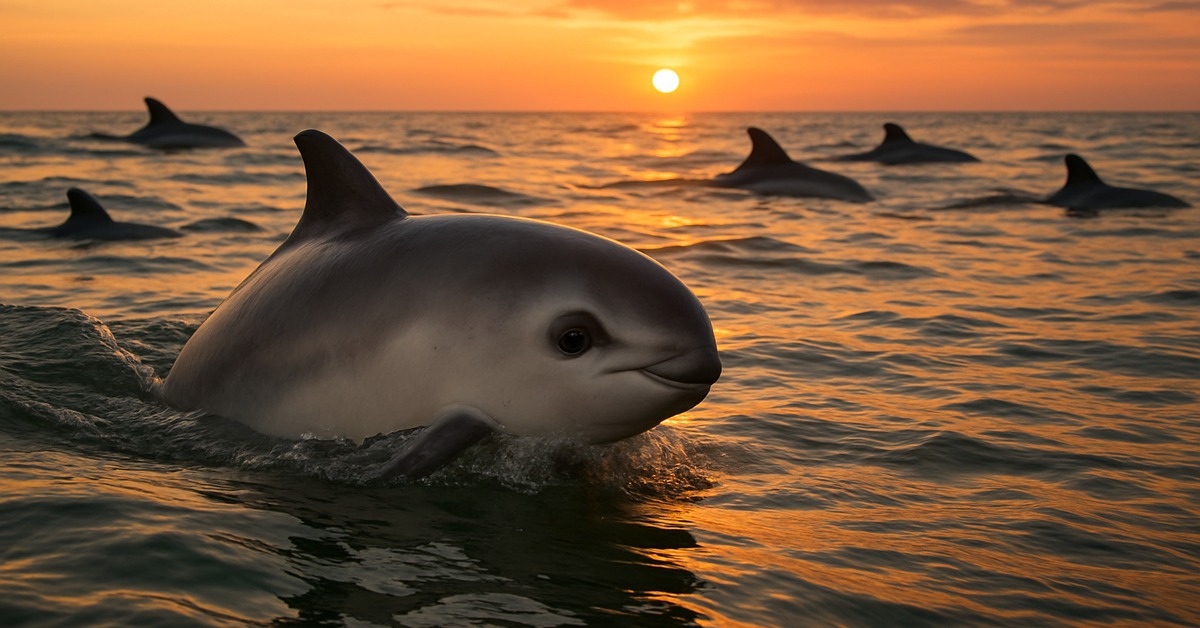
- Vaquitas rarely leap or breach. Their most visible behavior is a slow, rolling surface to breathe — so quiet that early researchers often mistook ripples in photos for fins. Their shyness, which likely evolved to avoid predators, now makes them nearly impossible to study up close.
- Genetically healthier than you’d expect.
- A 2022 study found surprisingly low levels of harmful genetic mutations in the vaquita population, suggesting that if fishing pressure were removed, the species could theoretically recover. The problem isn’t their DNA. It’s the nets.
- A 2017 attempt to capture vaquitas for a captive breeding program was abandoned after one animal died from the stress of capture — a reminder that even well-intentioned intervention can backfire catastrophically with a species this fragile.
Why Ten Animals Still Means There’s Hope
Conservation science has seen miracles before. The California condor was down to 27 individuals in 1987 before a captive breeding program pulled it back from the edge. The black-footed ferret was declared extinct, then rediscovered with 18 animals, and now numbers in the hundreds. The vaquita porpoise extinction isn’t inevitable — but it will happen without a fundamental change in enforcement, economic incentives, and international pressure on the black-market trade driving the crisis.
The window is open. Just barely.
What makes this different from those other recoveries is that we can’t capture vaquitas safely. We can’t breed them in tanks. The only way to save them is to make the ocean safe enough for the ones that are left. That means stopping the nets. Not slowing them. Stopping them. And that requires something much harder than science — it requires political will, international trade enforcement, and economic alternatives for fishing communities that have very few of them right now.
Ten animals in an ocean that once held hundreds. A species that doesn’t roar or rage — it just breathes, clicks softly in the dark, and keeps existing despite everything stacked against it. The vaquita porpoise extinction story isn’t over yet, but it’s close enough to the last page that every single day matters now. What happens next depends entirely on choices being made right now, by governments, by markets, and by people willing to pay attention long enough to actually do something. There’s more at this-amazing-world.com — and if this one got under your skin, the next one will too.
Frequently Asked Questions
Q: How many vaquita porpoises are left in 2023?
As of 2023, an estimated six to ten vaquita porpoises remain alive, the entire global population of the species. This is down from around 600 individuals in 1997, a collapse exceeding 98 percent in under thirty years. Every surviving animal lives in the upper Gulf of California off Mexico, making the vaquita the world’s most endangered marine mammal.
Q: What is driving the vaquita porpoise toward extinction?
Vaquitas die as accidental bycatch in gillnets, nearly invisible mesh walls set illegally to catch totoaba fish. A single totoaba swim bladder sells for up to $20,000 on the black market in China, warping incentives in coastal communities. Mexico banned gillnets in the vaquita’s core habitat in 2017, but enforcement is inconsistent and cartel involvement makes patrolling the zone dangerous.
Q: Can the vaquita be saved through captive breeding?
No. A 2017 attempt to capture vaquitas for a captive breeding program was abandoned after one animal died from the stress of capture, showing the species is too fragile to breed in tanks. A 2022 study found vaquitas are genetically healthy and could recover if fishing pressure ended. The only path to survival is making the ocean safe by stopping gillnets entirely.
Illustrations are AI-generated. Article fact-checked and human-edited. Our editorial standards.