The Cat Who Saved a Baby From Freezing to Death
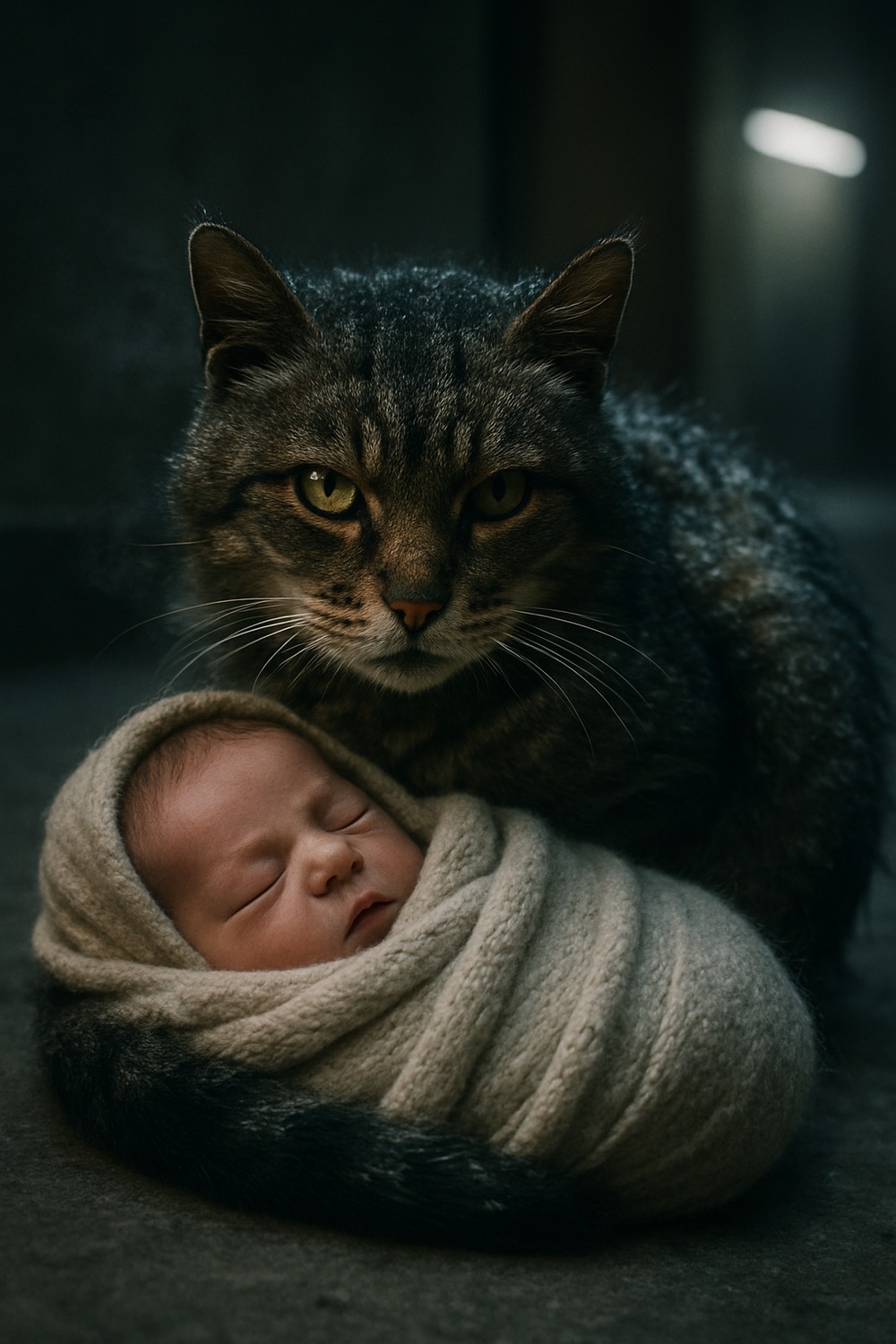
Here’s the thing about the cat saves abandoned baby Russia story — the part that doesn’t make the headlines is the part that matters most. Not that she stayed. Not even that she kept him warm. It’s that she called for help. Obninsk, January 2015. A newborn left in a freezing apartment entryway. The first living thing to reach him wasn’t human. And when she found him, she started making noise until the humans came.
She didn’t leave. Residents came when they couldn’t ignore the sound anymore — loud, persistent meowing climbing through walls and under doors. They found a baby, barely hours old, alive. What followed was a rush to the hospital, a story that circled the world, and a question that still doesn’t have a clean answer: how much of what she did was instinct, and how much of it was something harder to name?
Key Facts
- The incident occurred in Obninsk, Russia, in January 2015, when temperatures dropped well below minus ten degrees Celsius.
- Obninsk is roughly 100 kilometers southwest of Moscow with a population of about 115,000 and is best known as the site of the world’s first nuclear power plant.
- The newborn was taken to Kaluga Regional Hospital, where doctors confirmed he was alive and in stable condition after the cat — named Masha by residents — had stayed pressed against him.
- Domestic cats maintain a core body temperature between 38 and 39.2 degrees Celsius, measurably higher than the average human resting temperature of 37 degrees Celsius.
- Kangaroo Mother Care, a skin-to-skin contact protocol championed by the World Health Organization since the early 1980s, underpins the survival-medicine principle behind why Masha’s prolonged contact mattered clinically.
In short: In January 2015 in Obninsk, Russia, a stray stairwell cat named Masha pressed against an abandoned newborn in a freezing apartment entryway and meowed until residents found them. The baby reached Kaluga Regional Hospital alive. Cats run 1–2°C warmer than humans, and sustained contact mattered clinically.
The Cat Who Found Him First: What Happened in Obninsk
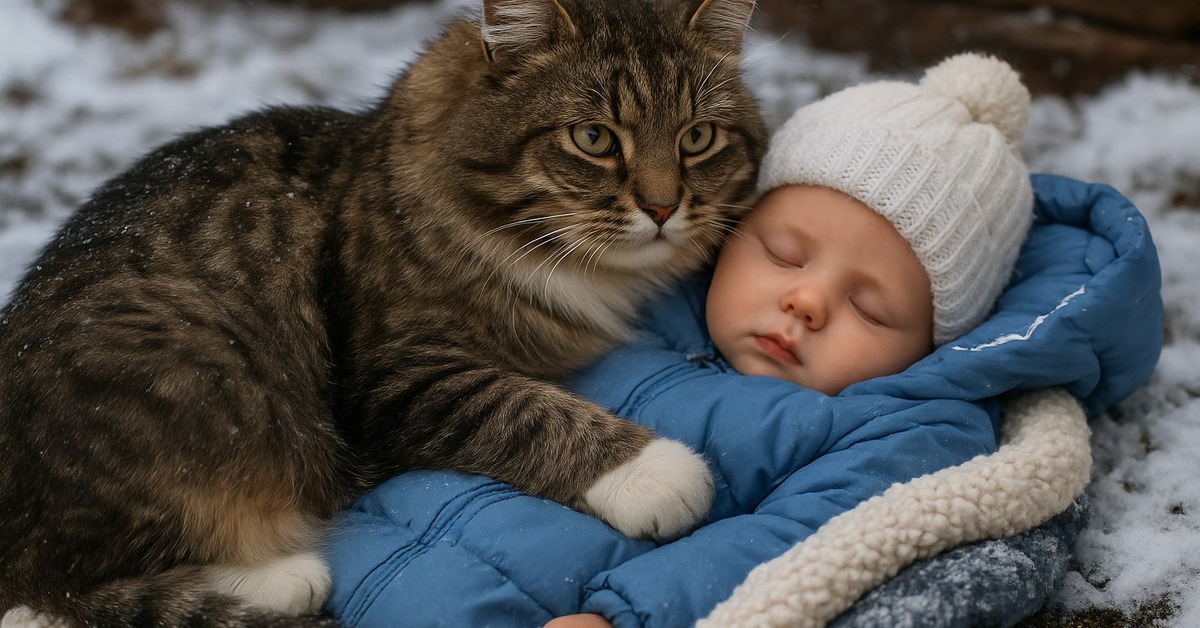
Obninsk sits roughly 100 kilometers southwest of Moscow, a city of about 115,000 people best known as the site of the world’s first nuclear power plant. In January 2015, temperatures dropped well below minus ten degrees Celsius — the kind of cold that turns a stone entryway into a refrigerator within minutes. Someone had wrapped a newborn baby and left him there. No note. No name. Wrapped, but alone, in a space that offered shelter from the wind but nothing against the temperature. What drew residents to that entryway was persistent, urgent meowing. What they found was a cat pressed against the bundle — her body flush with his, her warmth forming a physical barrier between the baby and the ambient cold. According to reports carried by hypothermia research, infants lose body heat far faster than adults due to their higher surface-area-to-volume ratio and inability to shiver effectively.
The baby was taken to Kaluga Regional Hospital, where doctors confirmed he was alive and in stable condition — cold-stressed but not yet in full hypothermic crisis. Medical staff estimated he had been outside for several hours. The cat hadn’t just stumbled onto him. She’d stayed. A passing animal doesn’t generate enough sustained heat transfer to make a clinical difference. Staying — pressing close, maintaining contact — is what the physiology actually required.
Residents named her Masha. She was a well-known fixture in the building’s entryway, fed by neighbours through the winter — what Russians call a podezdn’y kot, a stairwell cat, a semi-domestic animal with a specific territory and a specific community. She wasn’t feral in the truest sense. That context matters, as we’ll see.
The Science of a Cat’s Warmth — and Why It’s Enough
Domestic cats maintain a core body temperature between 38 and 39.2 degrees Celsius — measurably higher than the average human resting temperature of 37 degrees Celsius. That gap of one to two degrees might sound trivial. In a controlled environment, it is. But in a freezing entryway, where a newborn is losing heat to the surrounding surfaces through conduction and to the air through convection, an additional heat source pressing directly against the body changes the thermal equation in ways that matter clinically. This is precisely why survival medicine prioritizes skin-to-skin contact — a technique known formally as Kangaroo Mother Care, championed by the World Health Organization since the early 1980s, particularly for premature and low-birthweight infants in resource-limited settings. The cat’s body weight pressing against the infant’s also reduced the surface area exposed to cold air — a factor that reduces radiant heat loss in small bodies. The mechanism isn’t warmth as a feeling. It’s warmth as a measurable transfer of thermal energy, sustained over time.
What’s striking is that Masha didn’t just provide passive warmth. She vocalised. Domestic cats typically meow at humans — not at other cats — a communication behaviour that ethologists at the University of Sussex, including Dr. Karen McComb, have studied extensively. Their 2009 research found that cats embed a high-frequency cry within certain solicitation purrs and meows specifically to trigger a human response. It’s manipulative in the most precise biological sense. Whether Masha was employing that same mechanism in January 2015 is impossible to confirm. But the functional result was identical: a sound humans couldn’t ignore, produced repeatedly, until humans arrived.
Consider what the alternative looked like. A baby wrapped in cloth, in a cold stone entrance hall, with no one yet aware he existed. Masha didn’t just keep him warm. She kept him found.
What Animals Know About Protecting the Vulnerable
Masha’s behaviour sits inside a broader and genuinely strange body of research on cross-species protective responses. It’s not unique — not exactly — but it’s rare enough to demand attention. Why does this matter? Because the scientific literature on animal empathy and interspecies care has expanded substantially since the early 2000s, with researchers at institutions including Emory University’s Yerkes National Primate Research Center documenting consolation behaviours in great apes, elephants, and corvids — and what those studies consistently show is that the capacity to respond to distress signals from another creature isn’t exclusively human.
This connects to something worth reading alongside this story: the question of why a baby monkey will cling to a surrogate for years rather than abandon it — an instinct for attachment so strong it overrides almost everything else, and one that echoes across species lines in ways science is still mapping. The research on feline behaviour published by the American Association of Feline Practitioners in 2022 formally recognised that cats form complex social bonds not just with humans but with other animals in their perceived social group (researchers actually call this “affiliative interspecies bonding”) — a recognition that arrived decades later than the behaviour itself.
A newborn human produces specific distress signals — including ultrasonic components in its cry that fall above the range of comfortable human hearing but within the range cats perceive easily. Research from the University of Tokyo published in 2013 found that domestic cats respond to recorded infant cries with measurable behavioural changes: increased alertness, orientation toward the sound source, and vocalisation. The infant in Obninsk couldn’t cry loudly — he was too cold, too new. But even a faint cry may have been enough to orient a cat whose territorial instincts already centred on that building.
None of this is proof of empathy in the philosophical sense. It doesn’t need to be. The baby was alive. That’s the fact that holds.
Cat Saves Abandoned Baby in Russia: Why This Story Echoes
Treating the Obninsk story as a miracle — a one-off, a coincidence dressed in fur — is tempting. But the deeper you look at the conditions that made it possible, the less miraculous and the more structural it becomes. Russia’s stray and semi-domestic cat population is among the largest in the world. A 2021 survey by the Russian Cynological Federation estimated that urban stray and semi-feral cat populations in Russian cities number in the tens of millions, with a significant proportion occupying the podezd — the communal stairwell or entryway — as a semi-permanent territory. These animals are fed, loosely sheltered, and socially integrated into the lives of apartment buildings in a way that has no direct equivalent in most Western urban environments. A BBC report from 2020 described this phenomenon as one of Russia’s most distinctive urban wildlife adaptations, noting that residents often develop strong individual relationships with stairwell cats over years. Masha had been living in that building long enough that neighbours recognised her by name. She wasn’t a stranger to the space. She was, in every functional sense, its resident.
Ignoring that social infrastructure — the feeding, the naming, the quiet daily acknowledgment of the stairwell cat — means missing the mechanism that made a rescue possible at all.
And yet most coverage of this story has done exactly that. A study published in Smithsonian Magazine on feline cognition and human communication noted that cats living in close proximity to human communities develop more sophisticated interspecies communication than their free-roaming counterparts — a direct consequence of social learning. Masha’s prolonged meowing wasn’t accidental. It was, by the evidence, a learned behaviour applied in a novel situation. The cat saves abandoned baby Russia case isn’t a fluke of instinct. Change the building, the cat’s history, or the neighbourhood, and the story may not end the same way.
What this means, practically, is that communities maintaining these relationships — feeding the stairwell cat, recognising her as part of the social fabric — may be doing something more valuable than they realise. Not every act of informal animal care is consequential. But occasionally, improbably, it is.
How It Unfolded
- January 2015 — Masha the stairwell cat finds a newborn baby left in the entryway of an apartment building in Obninsk, Russia, and uses her body heat to keep him alive until residents respond to her meowing.
- January 2015 — The infant is rushed to Kaluga Regional Hospital, where doctors confirm he has survived without lasting injury from cold exposure.
- February 2015 — The story is reported internationally by outlets including The Guardian and The Telegraph, spreading rapidly across social media and drawing global attention to Russia’s urban stairwell cat culture.
- 2022 — The American Association of Feline Practitioners formally updates its feline behaviour guidelines to recognise complex social bonding in domestic cats, lending scientific context to cases like Masha’s response in Obninsk.
By the Numbers
- 38–39.2°C — the normal core body temperature of a domestic cat, compared to 37°C for a resting adult human (Cornell University College of Veterinary Medicine, 2023).
- Tens of millions — estimated population of urban stray and semi-feral cats in Russian cities, per Russian Cynological Federation survey data from 2021.
- 100km — the distance between Obninsk, where the rescue occurred, and Moscow; the city sits in the Kaluga Oblast with a population of approximately 115,000 people.
- 32°C — the critical core body temperature threshold below which neonatal hypothermia becomes life-threatening, according to the World Health Organization’s 2022 neonatal care guidelines.
- Several hours — the estimated duration the infant had been in the freezing entryway before residents responded to Masha’s meowing, according to hospital staff cited in January 2015 news reports.
Field Notes
- Masha was reportedly so distressed when paramedics arrived and took the baby that she followed the ambulance down the street — a behaviour noted by multiple residents and reported by Russian news agency Lifenews in January 2015. Whether she understood what the vehicle represented is unknown, but the attachment response was visible enough to be recorded.
- Newborn infants lose body heat approximately four times faster than adults, pound for pound, because of their disproportionately large head size relative to total body mass — the head alone accounts for roughly 40% of neonatal heat loss in cold environments.
- Russia has a documented cultural tradition of building-specific stairwell cats dating back at least to the Soviet era, when communal apartment blocks made semi-shared animal ownership a practical norm — Masha’s behaviour may be inseparable from that social structure.
- Researchers still can’t determine whether Masha’s sustained vocalisation was a learned response to human distress cues, a territorial alarm call repurposed by circumstance, or something else entirely — the motivational distinction matters for understanding feline cognition, and no study has been able to resolve it definitively in analogous cases.
Frequently Asked Questions
Q: Is the story of the cat saves abandoned baby Russia case verified — or is it an urban legend?
It’s verified. The incident was reported in January 2015 by multiple Russian news outlets, including Lifenews and Komsomolskaya Pravda, and subsequently confirmed by international publications including The Telegraph and The Guardian. Kaluga Regional Hospital staff confirmed the infant was admitted and treated for cold exposure. Masha was a real cat, in a real building, in Obninsk — not an urban legend, though it has circulated widely enough online that some people assume it must be.
Q: Could a cat’s body heat actually keep a baby alive in freezing temperatures?
Yes — within limits, and with important conditions. A domestic cat’s core body temperature of 38 to 39.2°C is measurably higher than a human’s 37°C, and physical contact transfers that heat through conduction. For a newborn — who cannot shiver, cannot move to generate heat, and loses warmth rapidly through a high surface-area-to-volume ratio — even a modest external heat source in direct contact with the body reduces the rate of temperature loss meaningfully. The cat’s warmth wouldn’t sustain an infant indefinitely in extreme cold, but it buys time. In this case, that time was enough.
Q: Does this mean cats can sense human distress or intentionally help people?
This is where science urges caution, and rightfully so. Cats respond to certain acoustic signals — including components of infant cries — with measurable behavioural changes. They’ve also been shown to engage in learned solicitation vocalisations directed at humans. But attributing intentional helping behaviour to Masha goes further than the evidence allows. What we can say is that the situation produced a response — sustained warmth and sustained vocalisation — that functionally saved a life. Whether Masha understood that outcome is a question ethology can’t yet answer honestly.
Editor’s Take — Sarah Blake
What stops me with this story isn’t the rescue. Rescues happen. What stops me is the meowing. A cat that stays with a cold baby is following some version of warmth-seeking instinct — contact, shelter, proximity. But a cat that then vocalises, loudly, persistently, until humans come? That’s a different act. That’s communication directed outward, toward another species, in a moment of apparent urgency. History has a way of treating the people who dismissed this kind of evidence unkindly — and the scientists who spent decades insisting cats were asocial, communicatively limited, and incapable of anything resembling outward-directed care are finding that out slowly. We don’t fully understand what Masha did. We should sit with that discomfort longer than we do before filing it under “animal instinct” and moving on.
A stray cat in a Russian winter, a newborn she had no biological reason to protect, and a noise that refused to be ignored. The cat saves abandoned baby Russia story is easy to share because it feels like a miracle. But miracles tend to dissolve under scrutiny. This one doesn’t. It gets stranger and more interesting the closer you look — a tangle of feline cognition, urban ecology, human-animal cohabitation, and neonatal physiology that scientists are still untangling. Somewhere in Obninsk, a child is growing up who doesn’t know any of this yet. One day, someone will have to explain it to him.
Illustrations are AI-generated. Article fact-checked and human-edited. Our editorial standards.