The Tibetan Fox Looks Judgy — Its Survival Skills Are Wild
Nobody goes looking for the Tibetan fox. Most people stumble across a meme of that famously blank, judgmental face and don’t think much beyond it. That’s a mistake.
Somewhere on the Qinghai-Tibet Plateau right now, a small fox is sitting completely still at 17,000 feet, reading the wind, watching a bear dig, and running calculations that would take a wildlife biologist a notepad to reconstruct. The deadpan expression is almost insulting, given what’s happening behind it.
Key Facts
- The Tibetan fox, Vulpes ferrilata, lives across the high-altitude grasslands of China, Nepal, and India at average elevations over 14,000 feet.
- Winter temperatures on the Qinghai-Tibet Plateau routinely drop below -40°F.
- At 17,000 feet, oxygen levels are roughly 50% lower than at sea level, and plateau wind gusts regularly exceed 60 mph.
- The plateau pika, Ochotona curzoniae, is the cornerstone of the Tibetan fox’s diet across every season.
- Wildlife biologist George Schaller documented plateau fauna for decades and noted that the fox’s dense facial structure provides insulation against extreme cold.
In short: The Tibetan fox (Vulpes ferrilata) survives the Qinghai-Tibet Plateau at average elevations over 14,000 feet, where temperatures fall below -40°F and oxygen is roughly half that of sea level. It shadows Tibetan brown bears while they dig for pikas, forms monogamous pairs, and depends on Ochotona curzoniae for most of its diet.
Tibetan Fox Survival Starts With That Famous Face
The Tibetan fox, Vulpes ferrilata, lives across the high-altitude grasslands of China, Nepal, and India — a region that sits, on average, over 14,000 feet above sea level. That square, compressed skull everybody screenshots? It’s not a genetic accident. Wildlife biologist George Schaller, who spent decades documenting plateau fauna, noted that the dense facial structure provides insulation against temperatures that routinely drop below -40°F in winter. You can read more about Vulpes ferrilata on Wikipedia’s Tibetan fox page.
So the face is doing actual work. Which raises the obvious follow-up question — what’s it protecting?
The short answer is a brain running constant calculations about wind direction, prey movement, and caloric math. Every single decision this fox makes at altitude is a trade-off between energy spent and energy gained. Miscalculate often enough, and you don’t survive the week. There’s no margin for inefficiency up here.
Why This Fox Follows Bears to Find Food
Here’s the thing nobody expected to find when researchers started seriously observing plateau behavior: Tibetan foxes shadow Tibetan brown bears while they dig.
The bears are after roots, bulbs, burrowing mammals — and their claws go through frozen ground like it’s nothing. When pikas bolt out of their collapsing tunnels in blind panic, the fox is already there, already positioned. It’s not hunting exactly. It’s more like harvesting. That last detail kept me reading for another hour, because this kind of deliberate interspecies opportunism is genuinely rare, and it keeps turning up in the Tibetan fox’s behavioral profile in ways that suggest it’s not accidental. You can explore more surprising animal partnerships over at this-amazing-world.com.
What’s extraordinary is the patience the behavior requires. The fox isn’t chasing the bear or scavenging behind it. It’s reading the bear — watching which direction the digging is moving, anticipating where the escape tunnels exit, placing itself at the right spot before anything happens. That’s spatial reasoning. It’s being done by an animal most people only know from reaction image folders.
Pikas: The Prey That Holds Everything Together
The plateau pika, Ochotona curzoniae, is the cornerstone of the entire Tibetan Plateau food web, and Tibetan fox survival is built almost entirely on top of it. Pikas make up the majority of the fox’s diet across every season. They’re fast, they burrow deep, and their colonies can number in the thousands per square kilometer. But the fox has internalized their patterns — the alarm calls, the sentinel rotations, the predictable sprint lines back to the nearest burrow entrance.
It knows where they’ll run before they do.
What’s harder to sit with is what happens when pika populations collapse. Poisoning campaigns launched across parts of China to reclaim grasslands from pikas have been directly linked to cascading declines in fox numbers, raptor populations, and soil quality. Pull one thread on this plateau and the whole thing starts coming apart in ways that take years to fully show up in the data.
Life at the Edge: What the Altitude Actually Does
At 17,000 feet, there’s roughly 50% less oxygen than at sea level. Temperatures swing violently between day and night. There’s almost no shelter. UV radiation at this elevation is brutal in a way that’s hard to describe if you haven’t spent time up there. Most mammals simply can’t function at this altitude — their cardiovascular systems aren’t built for it, and that’s that.
Tibetan fox survival at this elevation required thousands of years of modification: denser fur, modified hemoglobin that binds oxygen more efficiently, a metabolic rate calibrated for the extreme lean seasons that can last months.
And then there’s the wind.
Plateau gusts regularly exceed 60 mph. That’s not bad weather — that’s a force that physically relocates small animals. The fox’s low, stocky body and wide, flat face actually reduce wind resistance. Even the shape of its nose helps retain heat in the nasal passage before the air hits the lungs. Every physical feature is doing double or triple duty up here.
The plateau doesn’t care how tough you are. It only cares how adapted you are.
The Mating Season Nobody Talks About
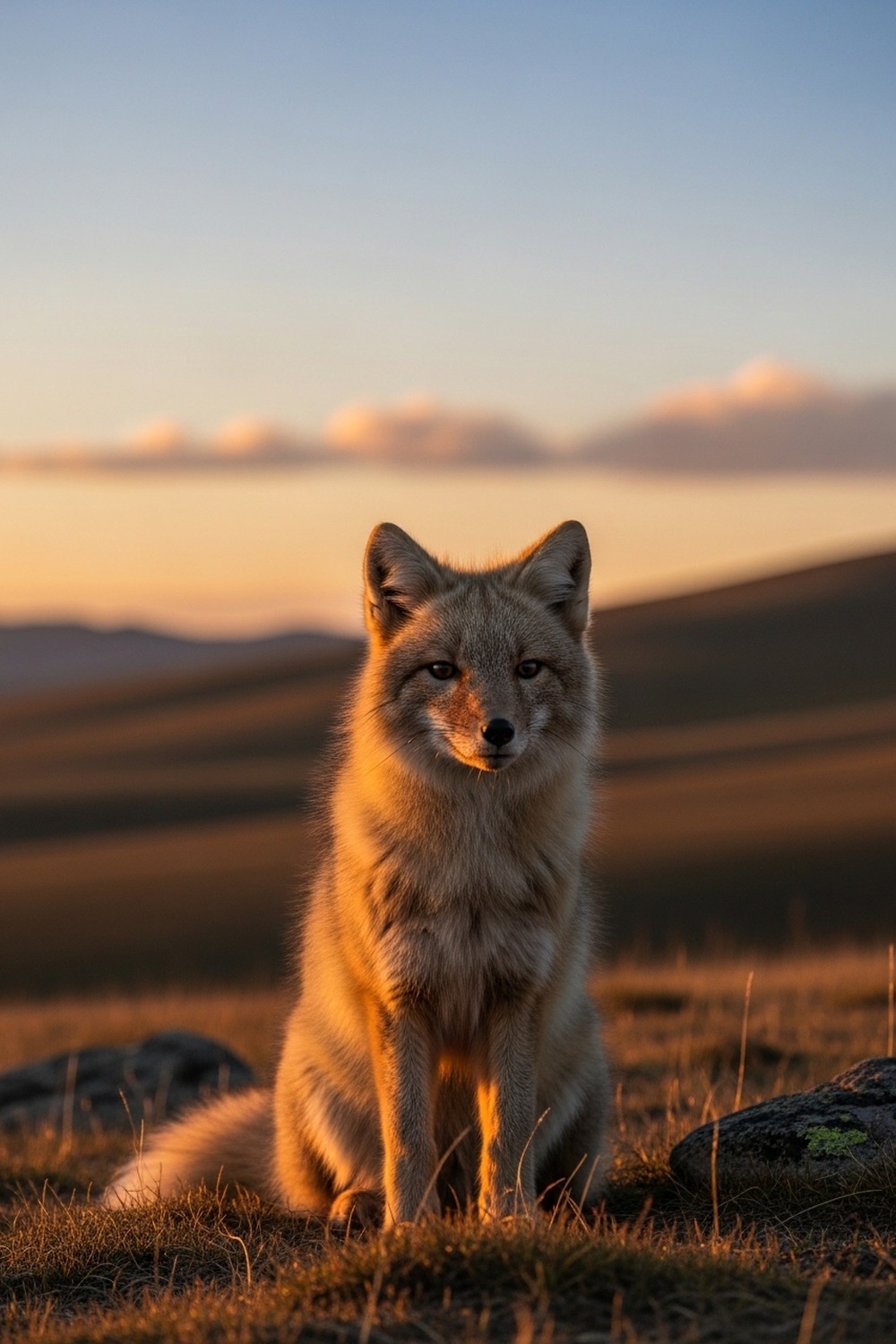
Turns out that deadpan expression hides something almost disarmingly domestic. Unlike many fox species that mate briefly and disperse, Tibetan foxes form monogamous pairs that hunt together and co-raise their kits in dens dug into rocky hillsides or repurposed pika burrows. Both parents bring food back. Both guard the entrance. The kits arrive in late spring, timed precisely to when pika populations are rising and the hunting is as reliable as it ever gets up there — which isn’t coincidence, it’s tens of thousands of years of calibration.
The pair bond holds across multiple seasons. Researchers tracking individual foxes on the plateau have observed the same pairs returning to the same den sites year after year. In a landscape this hostile, knowing your partner’s hunting style and movement habits isn’t romantic. It’s a survival strategy as important as the hemoglobin adaptation.
By the Numbers
- The Tibetan Plateau covers approximately 970,000 square miles — larger than France, Germany, Spain, and Italy combined — and is the primary habitat of the Tibetan fox (IUCN Species Report, 2021).
- Pika colonies peak at 300 individuals per hectare, which directly controls whether fox populations stabilize or crash in a given year.
- Average litter: 2-4 kits.
- At 17,388 feet, the Tibetan fox holds the elevation record for any canid species operating as a year-round, non-migratory predator — higher than Everest base camp, just to put a number on it.
Field Notes
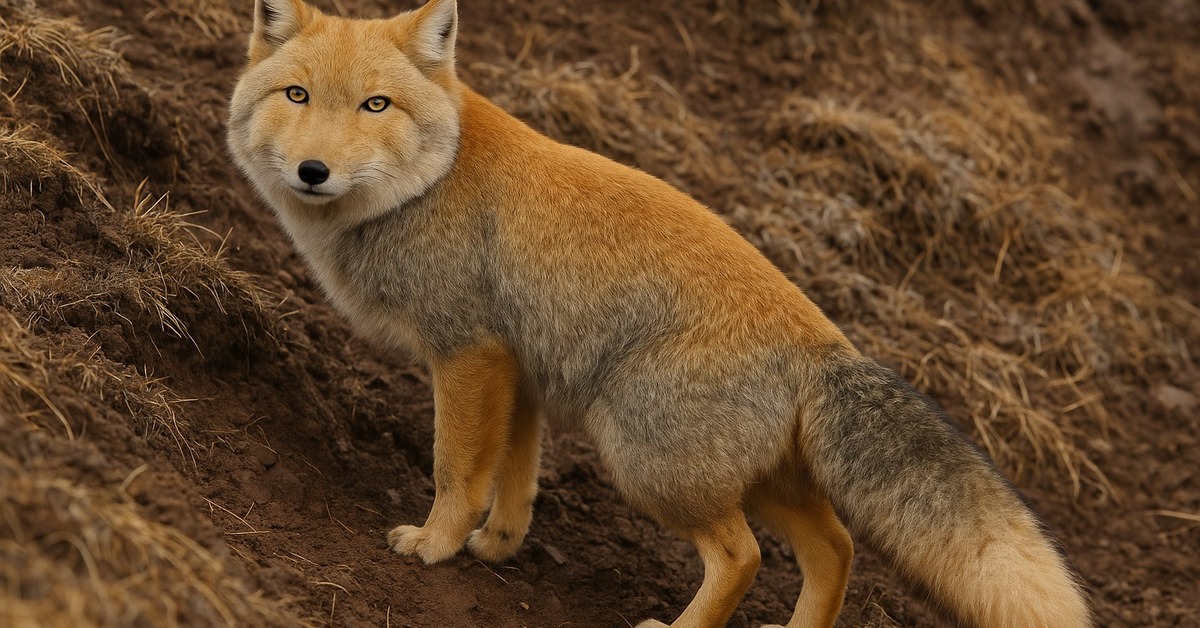
- Tibetan foxes have been filmed sitting calmly within a few feet of digging brown bears, showing almost no flight response — a level of behavioral tolerance that suggests this relationship has been developing for a very long time.
- Highly vocal during mating season, despite the stoic reputation — yelps, chattering calls, a range that researchers describe as surprisingly complex.
- Currently listed as “Least Concern” by the IUCN, but localized population drops in pika-culling zones suggest the official status is probably lagging behind what’s actually happening at ground level. The data takes time to catch up to the damage.
Why This Animal’s Story Actually Matters Now
The Tibetan fox is a living indicator species, meaning its population health directly mirrors the health of the entire plateau ecosystem. As climate change accelerates snowmelt, disrupts growing seasons, and throws off pika breeding cycles, Tibetan fox survival is being pressured from multiple directions simultaneously. Researchers monitoring plateau biodiversity use fox sighting frequency as one of their earliest signals that something larger is going wrong below the surface.
The plateau is also the source of Asia’s major river systems. The Yangtze, the Yellow River, the Mekong. What happens up there doesn’t stay up there — the ecological health of this landscape shapes freshwater access for nearly two billion people downstream.
That’s what’s actually at stake when we talk about one small, deeply unimpressed fox and whether it can find enough pikas this winter.
The Tibetan fox has survived ice ages, altitude, oxygen deprivation, and the particular cruelty of a landscape that simply doesn’t negotiate — armed with nothing but adaptation, patience, and an expression of permanent mild disdain. It didn’t need to be dramatic about any of it. The plateau supplies all the drama. In every flat-faced, perfectly timed pounce, there’s a story about resilience that’s much larger than one species. If this kind of thing pulls you in, there’s more at this-amazing-world.com — and the next one is stranger.
Frequently Asked Questions
Q: Where do Tibetan foxes live?
The Tibetan fox, Vulpes ferrilata, ranges across the high-altitude grasslands of China, Nepal, and India — a region sitting on average over 14,000 feet above sea level. At 17,000 feet, oxygen levels are roughly 50% lower than at sea level, temperatures swing violently between day and night, and UV radiation is brutal. Plateau gusts regularly exceed 60 mph. The fox’s denser fur, modified hemoglobin, and low, stocky body with a wide, flat face all reduce wind resistance and conserve heat.
Q: Why do Tibetan foxes follow bears?
Tibetan foxes shadow Tibetan brown bears while the bears dig for roots, bulbs, and burrowing mammals. The bears’ claws cut through frozen ground, and when pikas bolt from collapsing tunnels in panic, the fox is already positioned at likely escape exits. It isn’t hunting in the chase sense — it’s harvesting. This kind of deliberate interspecies opportunism is unusual, and the patience it requires is striking: the fox reads which direction the bear is digging and pre-positions before anything happens.
Q: What do Tibetan foxes eat?
Plateau pikas — Ochotona curzoniae — make up the majority of the fox’s diet across every season. Pikas are fast, burrow deep, and colonies can number in the thousands per square kilometer. The fox has internalized their alarm calls, sentinel rotations, and predictable sprint lines back to burrow entrances. Poisoning campaigns launched across parts of China to reclaim grasslands from pikas have been directly linked to cascading declines in fox numbers, raptor populations, and soil quality on the plateau.
Q: Do Tibetan foxes mate for life?
Unlike many fox species that mate briefly and disperse, Tibetan foxes form monogamous pairs that hunt together and co-raise their kits in dens dug into rocky hillsides or repurposed pika burrows. Both parents bring food back. Both guard the entrance. Kits arrive in late spring, timed to when pika populations are rising. The pair bond holds across multiple seasons, and researchers tracking individual foxes have observed the same pairs returning to the same den sites year after year — a survival strategy, not a romantic one.
Illustrations are AI-generated. Article fact-checked and human-edited. Our editorial standards.