India’s Ancient Wolf Is Fighting Back, Pup by Pup
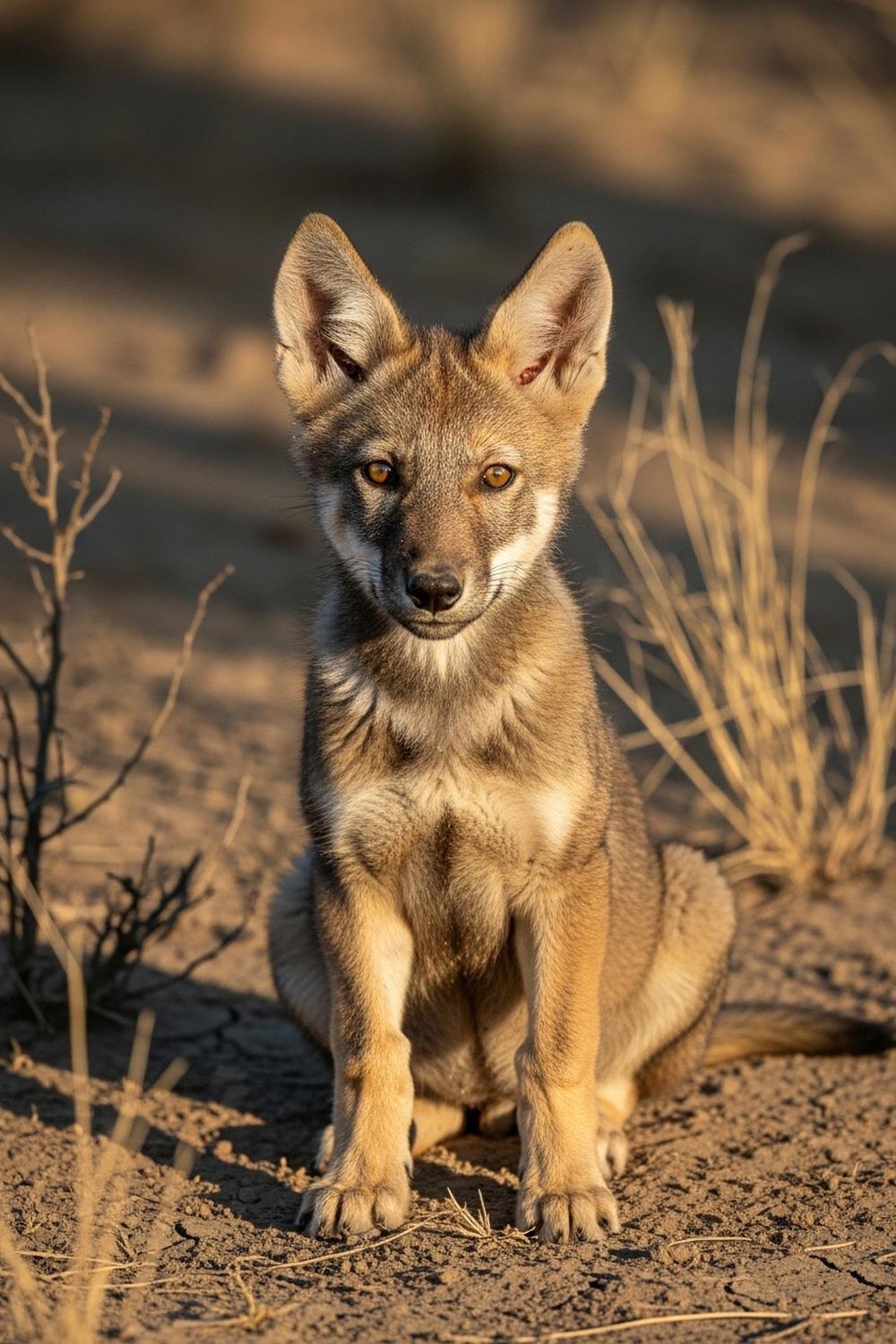
Every wolf subspecies on Earth carries evolutionary weight. Most carry it silently. But Canis lupus pallipes — the Indian wolf — carries something heavier: a lineage that stretches back 400,000 to 700,000 years, making it among the most ancient wolves alive today. And right now, in the scrublands of Karnataka, it’s doing something that science nearly forgot was possible. It’s reproducing. It’s raising pups. It’s coming back from the edge.
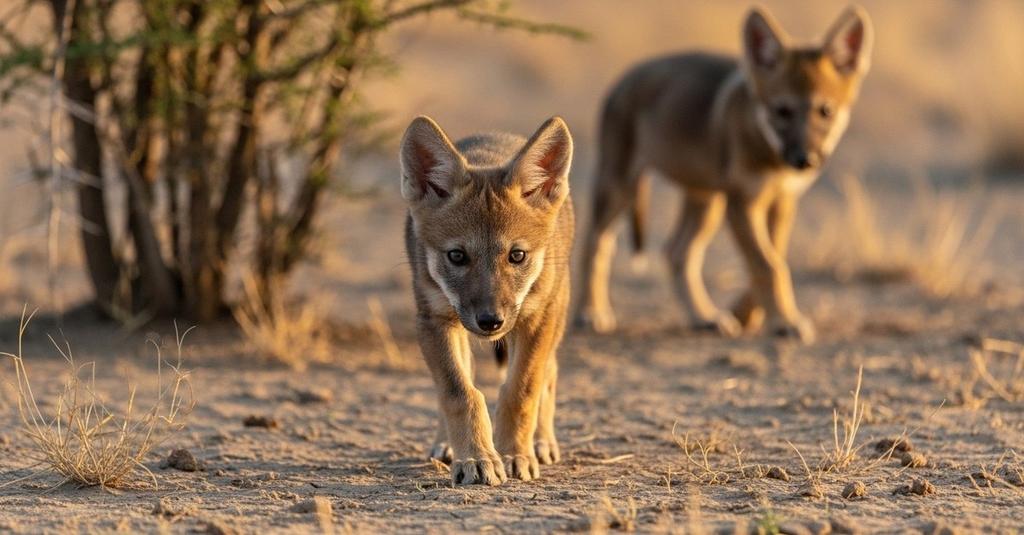
Fewer than 3,000 individuals estimated across the subcontinent. That’s the first fact. But what matters more is what happened in the 2022–2023 seasons at Bankapur Wolf Sanctuary: three distinct packs raising pups to weaning age, camera traps documenting territorial expansion into areas the animals hadn’t occupied in decades, a population gaining confidence at measurable speed. Small animals. Scrappy animals. Animals that have no idea how much weight they carry.
The recovery is real. But how did a subspecies this ancient get pushed to the edge of absence in the first place?
Key Facts
- The Indian wolf (Canis lupus pallipes) diverged from other wolf lineages an estimated 400,000 to 700,000 years ago, per a 2021 CCMB genomic study, making it among the most ancient wolves alive.
- Fewer than 3,000 Indian wolves are estimated across the Indian subcontinent, according to Wildlife Institute of India assessments from 2019 to 2023.
- Bankapur Wolf Sanctuary in Karnataka was established in 1994 and covers roughly 88 square kilometers of dry scrub habitat.
- Camera trap arrays at Bankapur recorded three distinct packs raising pups in the 2022-2023 monitoring seasons.
- About 70 percent of Indian wolf habitat falls outside designated protected areas, according to a 2019 WII landscape analysis.
In short: Indian wolf conservation centers on Canis lupus pallipes, a lineage 400,000 to 700,000 years old with fewer than 3,000 individuals left. At Karnataka’s 88-square-kilometer Bankapur Wolf Sanctuary, camera traps documented three packs raising pups in 2022-2023, a rare recovery for a subspecies long overlooked by global conservation funding.
The Ancient Lineage That Science Nearly Forgot
Canis lupus pallipes isn’t a regional variant of something more famous. It’s a genuinely distinct evolutionary line. In 2021, researchers at the Centre for Cellular and Molecular Biology (CCMB) in Hyderabad published a landmark genomic study confirming what earlier morphological studies had suggested for decades: the Indian wolf diverged from other wolf populations somewhere between 400,000 and 700,000 years ago. That placement puts it among the most basal — meaning evolutionarily ancient — of all living wolf subspecies, sitting at or near the root of the entire Canis lupus family tree. European gray wolves, the animals that dominate conservation funding and public imagination, are genetically speaking much younger relatives.
And yet, for most of the 20th century, Indian wolf conservation wasn’t a field — it was an afterthought.
While North American wolf reintroduction programs attracted global media coverage and significant federal funding, Canis lupus pallipes remained largely invisible to the international conservation apparatus. Part of that invisibility was physical: the Indian wolf is leaner than its northern cousins, shorter in the leg, tawny rather than grey, built for heat rather than snow. It doesn’t look like a wolf to eyes trained on Yellowstone footage. That misidentification — the assumption that “real” wolves are grey and cold-climate — has cost the subspecies decades of attention. Researchers actually call this the “charisma gap,” and it’s as consequential as habitat loss in determining which species get saved and which don’t.
What’s especially striking is the range it once held. The Indian wolf roamed from the Iranian plateau through Pakistan and across the Deccan scrublands into peninsular India. It hunted blackbuck on open plains. It shaped the behavior of every prey species it touched. That range is now a patchwork of fragments, and the animals that survive in them are under pressure from every direction.
Where Wolves and People Share the Same Ground
Understanding Indian wolf conservation requires understanding the human landscape it occupies — and that landscape is nothing like a North American wilderness reserve. The scrublands of Andhra Pradesh, the grasslands of Maharashtra’s Vidarbha region, and the semi-arid plains of Rajasthan all support significant wolf populations alongside dense human communities. India’s wolves aren’t isolated. They’re farmed around, grazed near, traversed daily, and lived in by tens of millions of people. On our planet, stories of wildlife persisting despite profound human presence are some of the most instructive we have — and Canis lupus pallipes is writing one of the most complicated versions of that story right now.
Why does proximity to humans matter so much in conservation? Because the ability of predators to navigate shared landscapes is one of the central challenges of modern wildlife biology, and it determines whether a species lives or dies. The Indian wolf faces it daily.
Livestock predation is the flashpoint. A wolf that takes a goat or a calf in a village that depends on those animals for income isn’t an abstraction — it’s an economic crisis for that family. Between 2010 and 2020, conflict-related wolf killings in Maharashtra alone were estimated in the dozens annually by the Wildlife Institute of India (WII). What the WII’s field teams documented more consistently is the pattern: wolves that lose fear of humans through habituation, often near poorly managed sanctuary boundaries, are the animals most likely to generate lethal conflict. Distance and wariness are forms of survival strategy.
The villages surrounding Bankapur tell a different story, though. Here, community-led watch programs — farmers, herders, and local school teachers acting as informal monitors — have reduced retaliatory killings significantly. It’s not a perfect system. Nothing about coexistence is perfect. But the pup counts are, slowly, reflecting that.
What the Genome Reveals About a Survivor’s Blueprint
A 2020 study by the Nature Conservation Foundation (NCF) in Mysuru, drawing on fecal DNA samples collected across six Indian states, found that Indian wolf populations were significantly more genetically isolated from one another than previously assumed. Connectivity between the Maharashtra plateau population and the Karnataka scrubland population was almost negligible — a finding consistent with broader patterns of large carnivore fragmentation documented across Asia. Low genetic exchange between populations means that local extinctions are harder to reverse. Inbreeding depression — the fitness cost of mating with close relatives — becomes a real medium-term risk. That’s the problem genetic data revealed.
But here’s the counterintuitive part: Indian wolf conservation research has also found that Canis lupus pallipes carries unusual genetic signatures associated with heat tolerance and prey adaptability. Where northern wolf subspecies show strong dietary specialization — boreal forest wolves are large-ungulate specialists — the Indian wolf’s genome suggests a more flexible metabolic strategy. It can subsist on smaller prey. It can operate in temperatures that would stress its northern relatives. That flexibility, encoded over hundreds of thousands of years of evolution in arid and semi-arid systems, may be exactly what’s keeping it alive in a rapidly warming, rapidly fragmenting landscape.
Watching a species survive on traits we didn’t even know it had, you stop thinking about conservation as rescue and start thinking about it as non-interference.
What this means practically is that Indian wolf conservation doesn’t need to recreate conditions of the past. It needs to protect the flexibility the animal already has. That’s a different kind of conservation goal — less about restoration, more about not obstructing a survivor that knows exactly what it’s doing.
Inside Indian Wolf Conservation’s Most Critical Sanctuaries
Bankapur Wolf Sanctuary, established in Karnataka in 1994, covers roughly 88 square kilometers of dry scrub and mixed deciduous habitat. Small by the standards of large carnivore conservation, yes, but intensively managed. The Karnataka Forest Department, working with field biologists from the Wildlife Institute of India since 2017, has implemented camera trap grids across the sanctuary that now provide near-continuous monitoring of individual animals. Multiple successful breeding seasons recorded in 2022 and 2023. At least three distinct packs documented raising pups to weaning age. That number matters because Indian wolf packs are small — typically four to eight individuals — and pack loss through poisoning, snaring, or disease can collapse a local population faster than it can recover through natural recruitment.
Adjacent to Bankapur lies Piluca Biological Park, functioning as a semi-wild buffer zone rather than a zoo in the conventional sense. Animals there are managed with minimal human contact, allowing behavioral studies that would be impossible in a fully wild context. Researchers from Bengaluru’s National Centre for Biological Sciences (NCBS) have documented den-site selection behavior, pup development timelines, and inter-pack territorial signaling there — data that feeds directly into management decisions at Bankapur.
The 2023 pup cohort triggered a decision to expand the camera trap array southward, following evidence that one pack’s territory had extended beyond the sanctuary’s formal boundary. Rangers on the ground describe the same thing in different language: wolves are pushing back. They’re using space they hadn’t used in years. That’s not policy. That’s a population gaining confidence, and it’s visible to anyone watching closely enough.
The Question No One Wants to Answer Out Loud
The recovery at Bankapur is real. But it’s also geographically tiny relative to the Indian wolf’s historical range. Conservation biologists at the WII and NCF are working, carefully, to answer whether the Bankapur model can scale to unprotected landscapes. The answer matters because roughly 70 percent of estimated Indian wolf habitat falls outside designated protected areas, according to a 2019 WII landscape analysis. That figure places India’s wolves in the same precarious position as cheetahs in Iran or snow leopards in the Pamir highlands: technically protected by law, effectively exposed to every pressure a working landscape can generate.
The stakes of getting this wrong are large in ways that extend beyond the wolf itself. Indian wolves, as apex predators in semi-arid grassland systems, regulate populations of blackbuck, chinkara, and nilgai — prey species whose overabundance in wolf-absent areas demonstrably increases crop raiding and farmer-wildlife conflict. Remove the wolf, and you don’t get a quieter landscape. You get a noisier one. That’s the trophic cascade argument, and it holds in India’s grasslands as reliably as it held in Yellowstone. But Yellowstone had a federal program, international media, and decades of public investment. Indian wolf conservation has a handful of dedicated field biologists, limited funding, and a species that the global conservation community still, somehow, treats as a secondary concern.
Stand at the edge of the Bankapur scrubland at dusk and you’ll understand the gap between what’s happening and what’s being reported. The air smells of dry grass and laterite dust. Somewhere beyond the treeline, a pack is moving. You can hear it before you see it — a high, carrying howl that sounds older than the landscape around it. It is. The world just hasn’t been paying close enough attention.
Where to See This
- Bankapur Wolf Sanctuary, Shiggaon, Karnataka, India — best visited between November and February when the scrubland vegetation is lower and wolf movement is more visible; access requires prior permission from the Karnataka Forest Department.
- The Wildlife Institute of India (wii.gov.in), Dehradun, maintains active Indian wolf research programs and publishes field reports accessible to the public — their carnivore ecology division is the most current source of population data.
- The Nature Conservation Foundation (ncfindia.org) in Mysuru runs community coexistence programs in wolf-range landscapes and offers engagement opportunities for researchers, students, and educators interested in human-wildlife conflict mitigation.
How It Unfolded
- 1994 — Bankapur Wolf Sanctuary established in Karnataka, one of the first designated protected areas in India created specifically with the Indian wolf as a focal species.
- 2004 — Wildlife Institute of India publishes first systematic population estimate for Canis lupus pallipes, placing numbers below 3,000 across the subcontinent and flagging fragmentation as the primary threat.
- 2021 — CCMB genomic study confirms Indian wolf as one of the most evolutionarily ancient wolf lineages on Earth, prompting calls for reclassification and increased international conservation attention.
- 2023 — Camera trap arrays at Bankapur record multiple successful breeding seasons across three distinct packs, marking one of the most documented recovery seasons in the sanctuary’s history.
By the Numbers
- Fewer than 3,000 Indian wolves estimated across the Indian subcontinent, according to Wildlife Institute of India assessments (2019–2023).
- 88 square kilometers — the total protected area of Bankapur Wolf Sanctuary, Karnataka, established 1994.
- 400,000–700,000 years — estimated divergence age of Canis lupus pallipes from other wolf lineages, per CCMB genomic study (2021).
- ~70 percent of Indian wolf habitat falls outside designated protected areas, according to WII landscape analysis (2019).
- Three distinct packs with documented successful breeding recorded at Bankapur in the 2022–2023 monitoring seasons, representing the highest verified pack count in the sanctuary’s recorded history.
Field Notes
- Indian wolves are one of the few wolf populations documented consistently raising pups in temperatures exceeding 40°C — field researchers at Bankapur have recorded den sites in exposed laterite outcrops with almost no shade cover, suggesting behavioral thermoregulation strategies not observed in temperate wolf populations.
- Unlike gray wolves in North America, Indian wolves don’t howl in the low, resonant register most people associate with the sound. Their vocalizations are higher-pitched and more variable — often described by field researchers as closer to a coyote’s yip than a gray wolf’s howl, which has contributed to misidentification in conflict situations.
- The Indian wolf is listed under Schedule I of India’s Wildlife Protection Act (1972), giving it the same legal status as tigers — yet it receives a fraction of the monitoring budget, staffing, and international attention directed at tiger conservation programs.
- Researchers still can’t reliably determine total population size because Indian wolves actively avoid camera traps in some landscapes and seek them out in others — it’s unclear whether this behavioral variation is learned, regional, or individual, and it introduces significant uncertainty into every population estimate currently on record.
Frequently Asked Questions
Q: What is the current status of Indian wolf conservation, and is the population growing?
The Indian wolf population — estimated at fewer than 3,000 individuals by the Wildlife Institute of India — has been declining for decades due to habitat loss and conflict. But recent seasons at Bankapur Wolf Sanctuary have recorded multiple successful breeding events. Whether this represents a broader trend or a localized recovery remains unclear. Population-wide assessments are methodologically difficult, and the data from unprotected landscapes remains sparse. What we know is that the moment matters.
Q: How is the Indian wolf different from the gray wolves I see in documentaries?
The Indian wolf is significantly smaller, leaner, and built for arid heat rather than cold forest. Genetically, it diverged from other wolf lineages between 400,000 and 700,000 years ago, making it far older than the gray wolf populations of Europe and North America. Its coat is shorter and more tawny-red, its legs are proportionally longer for its body weight, and its vocalizations are higher-pitched. These differences reflect hundreds of thousands of years of adaptation to a fundamentally different ecosystem.
Q: Aren’t all wolves in India the same species? What makes Canis lupus pallipes so distinct?
This is where many people get the taxonomy wrong. Canis lupus pallipes is a subspecies of the gray wolf, but genomic research published in 2021 confirmed it’s genetically distinct enough that some researchers have argued it warrants consideration as a separate species entirely. It shares less genetic similarity with European gray wolves than those wolves share with domestic dogs. The distinction matters practically: conservation strategies designed for cold-climate, large-prey specialists don’t translate directly to a warm-climate, flexible-diet generalist living alongside dense human populations.
Editor’s Take — Alex Morgan
What gets me about this story isn’t the pup count. It’s the genomic data sitting quietly in a 2021 paper out of Hyderabad that nobody outside the field has read. A wolf lineage half a million years older than the animals Yellowstone made famous is fighting for survival in landscapes most conservation funding will never reach — and the primary reason it’s still here at all is that it’s genuinely, demonstrably better at surviving than we’ve given it credit for. We didn’t save this animal. It saved itself. The least we can do is stop making that harder.
Every recovery in wildlife biology is a negotiation — between what an animal needs and what a landscape can offer, between what communities lose and what they’re willing to protect. The Indian wolf has been making that negotiation alone for a very long time. The pups at Bankapur don’t know they’re part of a conservation story. They don’t know about habitat fragmentation reports or government sanctuary budgets. They know scrubland at dawn and the sound of their pack. The question is whether the landscape around them — the human one, in particular — can hold enough space for that to continue.
Illustrations are AI-generated. Article fact-checked and human-edited. Our editorial standards.