This Sealed Glass Ball Has Been Alive for 26 Years
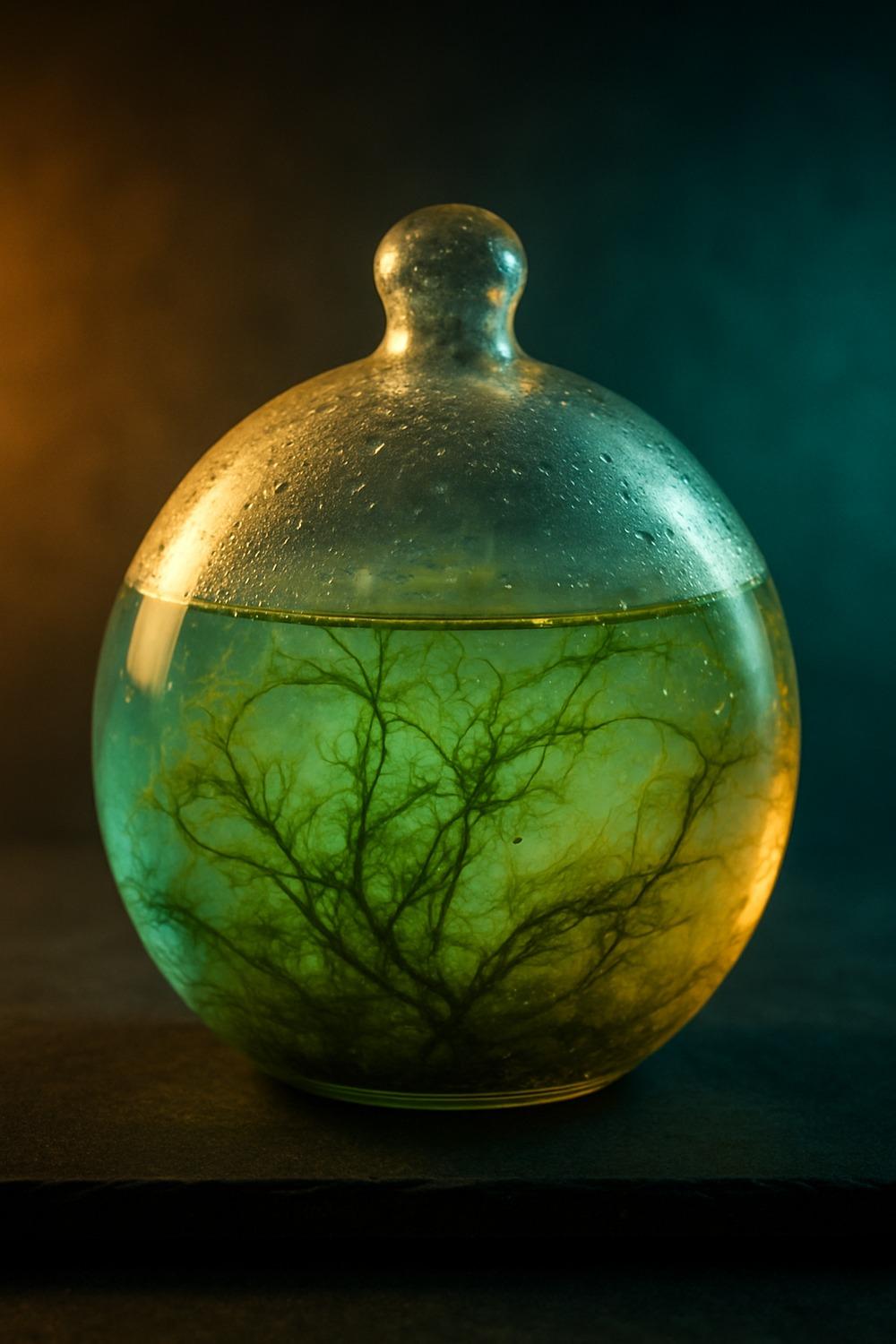
There’s a glass ball sitting at the American Museum of Natural History that’s been sealed since 1999. Inside it — shrimp, algae, bacteria — nothing’s been added, nothing’s been removed, and somehow it’s still alive. That part alone would be strange enough. But the real strangeness is this: nobody really knows how long it can keep going.
A sealed sphere the size of a cantaloupe. No pumps. No filters. No one feeding anything. Just life cycling through itself — over and over — for 26 years straight.
Key Facts
- The American Museum of Natural History ecosphere has stayed sealed since 1999, running 26 uninterrupted years as of 2025 with zero human intervention
- The closed loop uses just three organisms: algae (producers), Artemia salina brine shrimp (consumers), and bacteria/microbes (decomposers)
- Brine shrimp cysts have been found viable in sediment after up to 10,000 years of complete dormancy
- NASA funded closed-ecosystem research in the 1980s through its Controlled Ecological Life Support System (CELSS) program for spacecraft life support
- Commercial ecospheres sold since the early 1990s have reportedly remained stable for over 30 years under controlled conditions
In short: Inside a sealed glass sphere at the American Museum of Natural History, algae, brine shrimp, and bacteria have cycled life among themselves since 1999, 26 years with no human intervention. This sealed ecosphere self-sustaining loop, using three organisms and no filters, proves life needs only cycles, not vastness.
How a Sealed Ecosphere Self-Sustaining Loop Actually Works
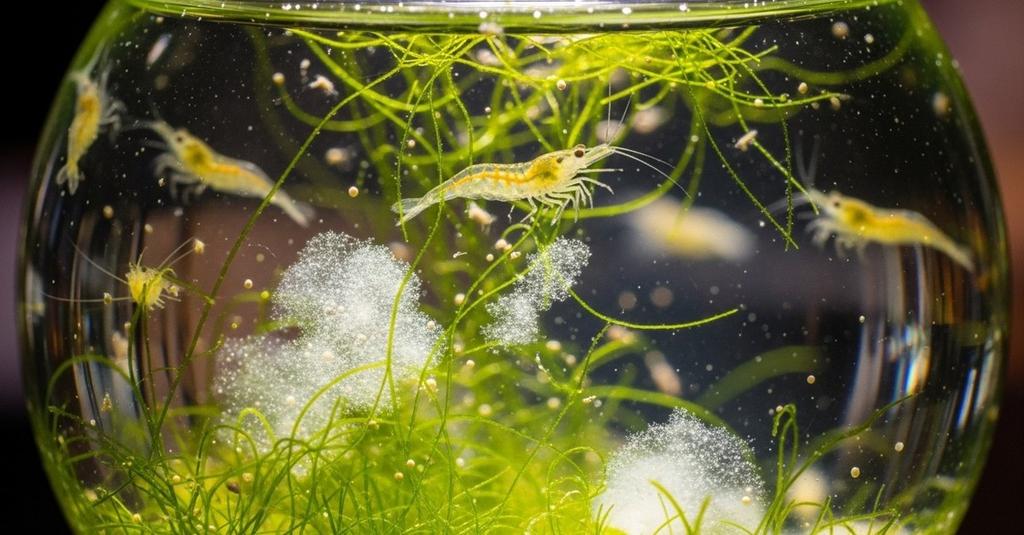
The mechanism is almost stupidly elegant once you see it. Algae photosynthesize under light and spit out oxygen. Brine shrimp — Artemia salina — breathe that oxygen and exhale carbon dioxide, which goes straight back to the algae. The shrimp produce waste. Microbes and bacteria break it down into nutrients. Algae eat the nutrients. Loop restarts.
Three organisms. That’s it.
Biologist and ecosphere pioneer Joe Hanson called systems like this “the minimum viable expression of a biosphere” — and he wasn’t exaggerating. You need producers (the algae making food from sunlight). You need consumers (the shrimp eating that food). You need decomposers (the bacteria breaking down what’s left). Pull out any one of those three, and the whole thing collapses. That’s the thing that got me. Not that it works. That it works with absolutely no redundancy. No backup systems. No understudies. Just three players in a glass bubble, each one keeping the others alive because if they don’t, they die.
Brine Shrimp Have Outlasted Almost Everything
Artemia salina are genuinely ancient creatures. Their eggs — called cysts — have been found viable in sediment after 10,000 years of complete dormancy. Ice ages came and went. Salt lakes dried up. These creatures just… waited. And when conditions got right again, they woke up and started reproducing like nothing happened.
In the sphere, they’ve never had to wait at all.
They’re born into a world smaller than your head. They eat. They reproduce. They die. Their bodies feed the algae that will feed their offspring. An entire existence. A complete life cycle. And absolutely no awareness that a glass wall separates them from an entirely different universe on the other side.
That last fact kept me reading for another hour, trying to figure out what that even means philosophically. But I’m getting ahead of myself.
You can find more about extreme life forms at this-amazing-world.com if you want to fall deeper into this particular rabbit hole.
The Ecosphere’s Sealed Design Wasn’t Accidental
NASA actually funded this research back in the 1980s. They weren’t interested in art installations or philosophical thought experiments. They wanted to know: how do you keep humans alive in a spacecraft without constant resupply from Earth? The thinking was elegant. If you could build a system where waste becomes food, where every breath gets recycled back as oxygen, you could theoretically travel anywhere.
The shrimp sphere is proof of concept.
It says: yes, closed loops work. But here’s what nobody mentions — we’ve been running this particular closed loop for 26 years and we still don’t know when it’ll stop working. There’s no expiration date stamped on the glass. No warning light that flashes when something’s about to give. Just an assumption that if it’s lasted this long, maybe it’ll last forever. Maybe it won’t. Nobody’s tested it.
What Happens When the Balance Tips Even Slightly
These systems look more stable than they actually are. Too much light and the algae bloom like crazy, consuming all the carbon dioxide. The shrimp suffocate in an oxygen-rich tomb. Too little light and the algae die. Oxygen levels crash. Temperature swings matter. The angle of the light source matters. The humidity inside the sphere matters. Every single variable connects to every other variable, and if one thing goes wrong, there’s nobody there to fix it.
The museum’s sphere has survived 26 years because it was engineered with extraordinary precision AND because it’s been kept in stable conditions. Take away either one of those, and you’ve probably got a problem.
Think about that. A sealed glass ball is holding together a miniature ecosystem longer than some marriages last. Longer than most cars on the road. Longer than a lot of things we build and call “built to last.” And it’s doing it with zero moving parts, zero electricity, zero maintenance schedule.
By the Numbers
- Sealed since 1999 — 26 uninterrupted years as of 2025, zero human intervention
- Brine shrimp cysts remain viable for up to 10,000 years in dormancy; possibly the most durable animal eggs on the planet
- NASA’s Controlled Ecological Life Support System (CELSS) program identified that a stable closed biosphere requires minimum three trophic levels: producers (algae), consumers (shrimp), decomposers (bacteria and microbes)
- Commercial ecospheres sold since the early 1990s have reportedly remained stable for over 30 years under controlled conditions — some are still running in private collections
Field Notes
- Brine shrimp populations self-regulate. They don’t grow infinitely. Available oxygen and nutrients create a natural carrying capacity, and the population stabilizes without external control.
- The glass is borosilicate — same material as lab flasks — specifically chosen because it doesn’t leach chemicals into the water over decades. Cheaper glass would slowly poison the system from the inside.
- Marine biologists have theorized that the first self-sustaining biological cycles on Earth may have emerged in similar enclosed environments — tide pools where nutrients couldn’t escape, kept recirculating for millions of years until complexity built on itself.
Why This Little Sphere Changes How We Think About Life
This sealed ecosphere self-sustaining loop is proving something that should feel impossible: life doesn’t need vastness to function. It doesn’t need mountains or ocean trenches or complex weather systems. It needs cycles. Light in. Heat out. Everything else is just variation on that theme.
Planet Earth runs the same loop. Just with more species. More redundancy. More chaos at the edges. But the core mechanism? It fits inside something you could hold in your palm.
We talk about Earth being fragile. About ecosystems collapsing. About tipping points. And fragile is the right word — but not in the way we usually think. Fragile doesn’t mean it stops working. It means the conditions for working are narrower than we’d like. The sphere has no backup system. Neither do we.
Twenty-six years of silence from a sealed glass ball. No alerts. No intervention. Just life doing what it does when conditions are right and nothing breaks the cycle. It’s a working miniature of every planet that’s ever managed to stay alive — and a reminder of how specific those conditions have to be. More stories like this at this-amazing-world.com. The next one’s even stranger.
“
Frequently Asked Questions
Q: How long has the museum’s sealed ecosphere stayed alive?
The glass sphere at the American Museum of Natural History has been sealed since 1999, meaning it has run for 26 uninterrupted years as of 2025 with zero human intervention. Nothing has been added or removed in that time. Notably, nobody knows how long it can keep going, because there is no expiration date and the system has never been tested to failure under stable conditions.
Q: What three organisms keep a sealed ecosphere working?
A sealed ecosphere needs three trophic levels to function. Algae act as producers, photosynthesizing under light and releasing oxygen. Brine shrimp (Artemia salina) act as consumers, breathing oxygen and exhaling carbon dioxide back to the algae. Bacteria and microbes act as decomposers, breaking shrimp waste into nutrients the algae consume. NASA’s CELSS program identified that a stable closed biosphere requires exactly these three levels; remove any one and the system collapses.
Q: Why did NASA fund sealed ecosystem research?
NASA funded closed-ecosystem research in the 1980s through its Controlled Ecological Life Support System (CELSS) program. The goal was practical: keeping humans alive in a spacecraft without constant resupply from Earth. If waste could become food and every breath could be recycled back into oxygen, long-duration space travel becomes possible. The shrimp sphere serves as a proof of concept that closed biological loops can sustain themselves indefinitely.
Q: How can a sealed ecosphere’s balance be disrupted?
Sealed ecospheres are more fragile than they appear because every variable connects to every other. Too much light makes algae bloom and consume all the carbon dioxide, suffocating the shrimp. Too little light kills the algae and crashes oxygen levels. Temperature swings, the angle of the light source, and internal humidity all matter. The museum’s sphere has survived 26 years because it was engineered with precision and kept in consistently stable conditions, with no one inside to fix any imbalance.
Illustrations are AI-generated. Article fact-checked and human-edited. Our editorial standards.