The Strait That Controls the World’s Oil Just Closed
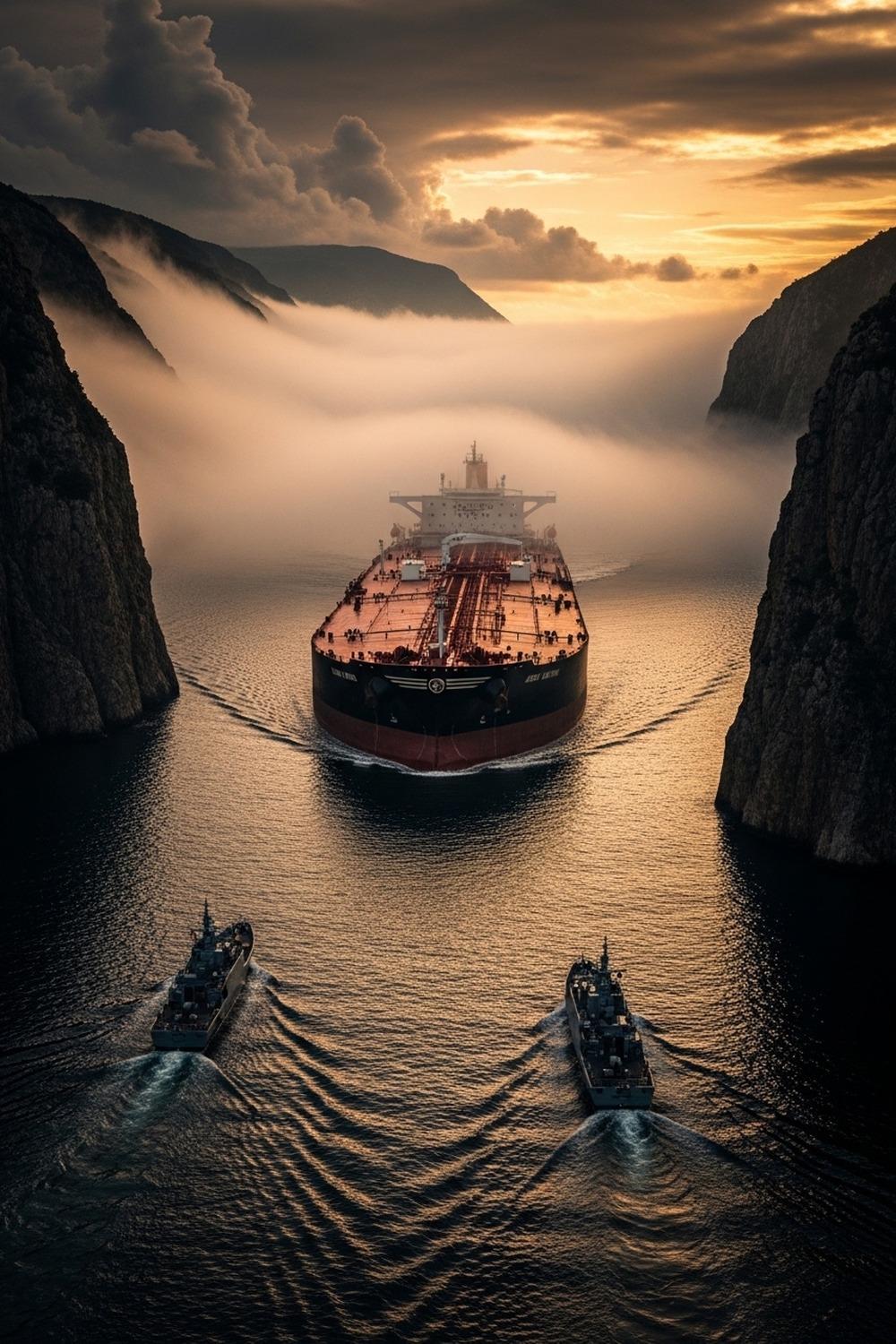
The Strait of Hormuz is closing. Not metaphorically. Right now, in late April 2026, Iran’s Revolutionary Guard has seized the most critical oil corridor on Earth—and the global energy system has no Plan B.
What started as a warning in March (ships linked to America and Israel wouldn’t be allowed through) turned into gunfire, vessel seizures, and a near-total shutdown of the waterway carrying one-fifth of all oil shipped by sea. The diplomatic posturing phase ended. The actual blockade began. And nobody in the market was ready for what happens when 21 million barrels of oil per day simply vanishes from the supply chain.
Key Facts
- The Strait of Hormuz is only 33 kilometers wide at its narrowest point, between Iran and Oman
- Roughly 21 million barrels of oil flow through the strait every day, representing about 21% of global petroleum liquids
- Saudi Arabia’s East-West Pipeline maxes out at around 5 million barrels per day, leaving a deficit of 16-plus million barrels with no alternative route
- Japan imports roughly 90% of its oil through the strait, South Korea around 70%, and China about 40%
- Oil futures jumped over 18% in the first 48 hours after IRGC vessel seizures were confirmed in late April 2026, the steepest two-day spike since the 2022 Ukraine invasion
In short: The Strait of Hormuz blockade in late April 2026 saw Iran’s Revolutionary Guard halt the 33-kilometer corridor carrying 21 million barrels of oil daily, about 21% of global petroleum liquids. With backup pipelines handling under a third of that volume, oil futures jumped over 18% in 48 hours as Asia faced the deepest exposure.
Why the Strait of Hormuz Blockade Changes Everything
33 kilometers. That’s the width at its narrowest point. Between Iran and Oman sits the single most important energy corridor on Earth, and it’s barely wider than a large city.
Through that slim corridor flows roughly 21 million barrels of oil every single day. Energy analyst Ellen Wald, a senior fellow at the Atlantic Council, has long called it “the most important chokepoint in global energy.” According to the Strait of Hormuz Wikipedia entry, it handles nearly 21% of global petroleum liquids. That’s not a backup corridor. That’s not a secondary route. That’s the system.
When it goes dark, everything connected to oil gets more expensive. Gas at your pump. Heating bills in winter. Airline tickets. Plastics. Fertilizer. The knock-on effects don’t stop at energy—they ripple through manufacturing, agriculture, logistics, insurance. Everything.
How a Diplomatic Threat Became a Global Crisis
It looked like negotiating theater at first.
In March 2026, Iran’s Foreign Minister Abbas Araghchi announced that ships linked to the United States and Israel would be denied passage. Aggressive posturing, sure, but the kind that usually ends in backchanneling and compromise. Analysts debated whether Iran would actually follow through. The answer came in late April, and it was faster and worse than anyone’s models predicted.
The Islamic Revolutionary Guard Corps moved from rhetoric to action. Tanker traffic—already slowing from the threat alone—ground toward a halt. Ships were fired upon. Commercial vessels were boarded. The strait didn’t just close to American and Israeli-linked ships. It became dangerous for everyone. That last fact kept me reading for another hour, trying to understand what Tehran was actually calculating. For deeper analysis on how regional tensions reshape global trade, this-amazing-world.com has been tracking the escalation in real time.
No Easy Detour: The World’s Energy Has Nowhere to Go
Here’s the brutal geography problem. Unlike other shipping chokepoints, the Strait of Hormuz doesn’t have a viable backup route capable of absorbing anywhere near its volume.
Saudi Arabia’s East-West Pipeline—the Petroline—runs across the kingdom to the Red Sea port of Yanbu. Maximum capacity: around 5 million barrels per day. The UAE has the Abu Dhabi Crude Oil Pipeline capable of handling about 1.5 million barrels. Together, those alternatives handle less than a third of normal Hormuz traffic. The Strait of Hormuz blockade has exposed just how fragile the global energy system actually is.
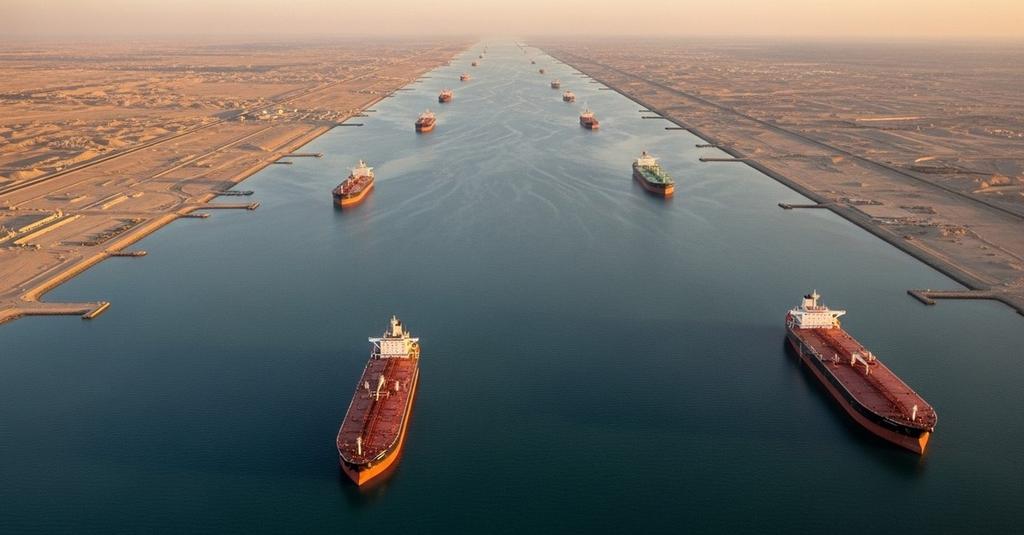
Tankers sit loaded at terminals in Kuwait, Iraq, Qatar, and the UAE. Waiting. Every day they wait, prices climb.
Which Countries Feel the Pain First?
Asia gets hit hardest. Japan imports roughly 90% of its oil through the Strait of Hormuz. South Korea sits at around 70%. China—already managing a fragile economic recovery—pulls about 40% of its crude through that corridor. These aren’t countries that can pivot to North Sea oil or American shale on short notice. Contracts, infrastructure, refinery configurations are all built around Gulf crude.
Europe has its own exposure. Germany and Italy both hold significant Gulf supply agreements. The United States is less directly vulnerable than it was a decade ago, thanks to the shale revolution. But oil is a global commodity. When supply contracts anywhere, prices rise everywhere.
The American driver will feel this.
The Deeper Strategy Nobody’s Talking About
Here’s the thing: Iran almost certainly didn’t expect to hold the strait indefinitely. A permanent blockade destroys Tehran’s own export economy. But a short, sharp disruption—the kind that sends prices spiking, destabilizes rivals, forces international negotiators back to the table before anyone can mobilize a military response—that’s worth the cost.
The risk is that short disruptions have a way of becoming long ones. Naval responses from the US Fifth Fleet, permanently stationed in Bahrain, were swift but carefully constrained. An outright military confrontation wouldn’t reopen the strait. It would close it harder. And potentially ignite something far larger.
By the Numbers
- 21 million barrels of oil per day, representing roughly 21% of global petroleum liquids, under normal 2025 conditions (U.S. Energy Information Administration)
- Saudi Arabia’s East-West Pipeline maxes out at around 5 million barrels per day—leaving a deficit of 16+ million barrels with no alternative route capable of absorbing the overflow
- Oil futures jumped over 18% in the first 48 hours after IRGC vessel seizures were confirmed in late April 2026. The steepest two-day spike since the 2022 Ukraine invasion.
- Japan’s strategic petroleum reserves: estimated at only 150 days of supply. The clock started ticking the moment the strait closed.
Field Notes
- The strait’s navigable shipping lanes are actually just a few kilometers wide—inbound and outbound lanes roughly 3.2 kilometers each, separated by a 3.2-kilometer buffer zone. Extraordinarily easy to monitor and disrupt with even modest naval assets.
- Iran has rehearsed exactly this scenario. The IRGC ran large-scale exercises simulating Hormuz closure in 2019, 2020, and again in 2024. Analysts tracking those drills noted they were becoming significantly more operationally sophisticated each iteration. This wasn’t improvised.
- Qatar, the world’s largest exporter of liquefied natural gas, ships almost all of its LNG through the Strait of Hormuz. The blockade isn’t just an oil story. Europe’s gas supply—still recovering from the Russian energy crisis—is now facing a second simultaneous pressure point.
Why This Matters Far Beyond the Middle East
The Strait of Hormuz blockade is a stress test for a global economy that was already under pressure. Inflation hadn’t fully cooled. Supply chains hadn’t fully healed. Central banks were navigating a delicate path between growth and stability.
And now the single most critical energy corridor on Earth is compromised. Every country that heats homes with gas, runs factories on electricity, or moves goods by truck or plane is downstream of what’s happening in that 33-kilometer gap between Iran and Oman.
This isn’t abstract geopolitics. It’s the price at the pump next week. It’s the heating bill in January. It’s the airline that announces a fuel surcharge without explanation. Most people won’t recognize the source until they’re already paying it.
The Strait of Hormuz has been called a chokepoint for decades. Most assumed it was metaphor. Turns out it’s just geography—brutal, simple, and very hard to work around. What happens next depends on diplomacy, naval presence, and whether Iran calculates that the pressure is worth the cost. None of those things are certain right now. If geopolitics like this keeps you reading, there’s more at this-amazing-world.com.
Frequently Asked Questions
Q: Why is the Strait of Hormuz so important to global oil?
The Strait of Hormuz is only 33 kilometers wide at its narrowest point between Iran and Oman, yet roughly 21 million barrels of oil flow through it every day, about 21% of global petroleum liquids. Energy analyst Ellen Wald of the Atlantic Council calls it the most important chokepoint in global energy. There is no backup corridor capable of absorbing anywhere near its volume, so when it closes, everything connected to oil, from gas pumps to airline tickets, gets more expensive.
Q: Are there alternative routes if the Strait of Hormuz closes?
Alternative routes exist but cannot replace the strait’s capacity. Saudi Arabia’s East-West Pipeline, the Petroline, runs to the Red Sea port of Yanbu with a maximum capacity of around 5 million barrels per day. The UAE’s Abu Dhabi Crude Oil Pipeline handles about 1.5 million barrels. Together these alternatives manage less than a third of normal Hormuz traffic, leaving a deficit of more than 16 million barrels per day with no way to absorb the overflow.
Q: Which countries are hit hardest by a Strait of Hormuz blockade?
Asia bears the heaviest impact. Japan imports roughly 90% of its oil through the Strait of Hormuz, South Korea around 70%, and China about 40% of its crude. These countries have contracts, infrastructure, and refinery configurations built around Gulf crude and cannot pivot quickly to North Sea oil or American shale. Europe, including Germany and Italy, also holds significant Gulf supply agreements, while the United States is less directly exposed thanks to the shale revolution.
Q: How did the 2026 Strait of Hormuz crisis begin?
In March 2026, Iran’s Foreign Minister Abbas Araghchi announced that ships linked to the United States and Israel would be denied passage through the strait. Analysts initially viewed it as negotiating posture. In late April 2026, the Islamic Revolutionary Guard Corps moved from rhetoric to action, firing on ships and boarding commercial vessels. Oil futures jumped over 18% in the first 48 hours after the IRGC vessel seizures, the steepest two-day spike since the 2022 Ukraine invasion.
Illustrations are AI-generated. Article fact-checked and human-edited. Our editorial standards.