How 5-Ton Elephants Walk in Near-Total Silence
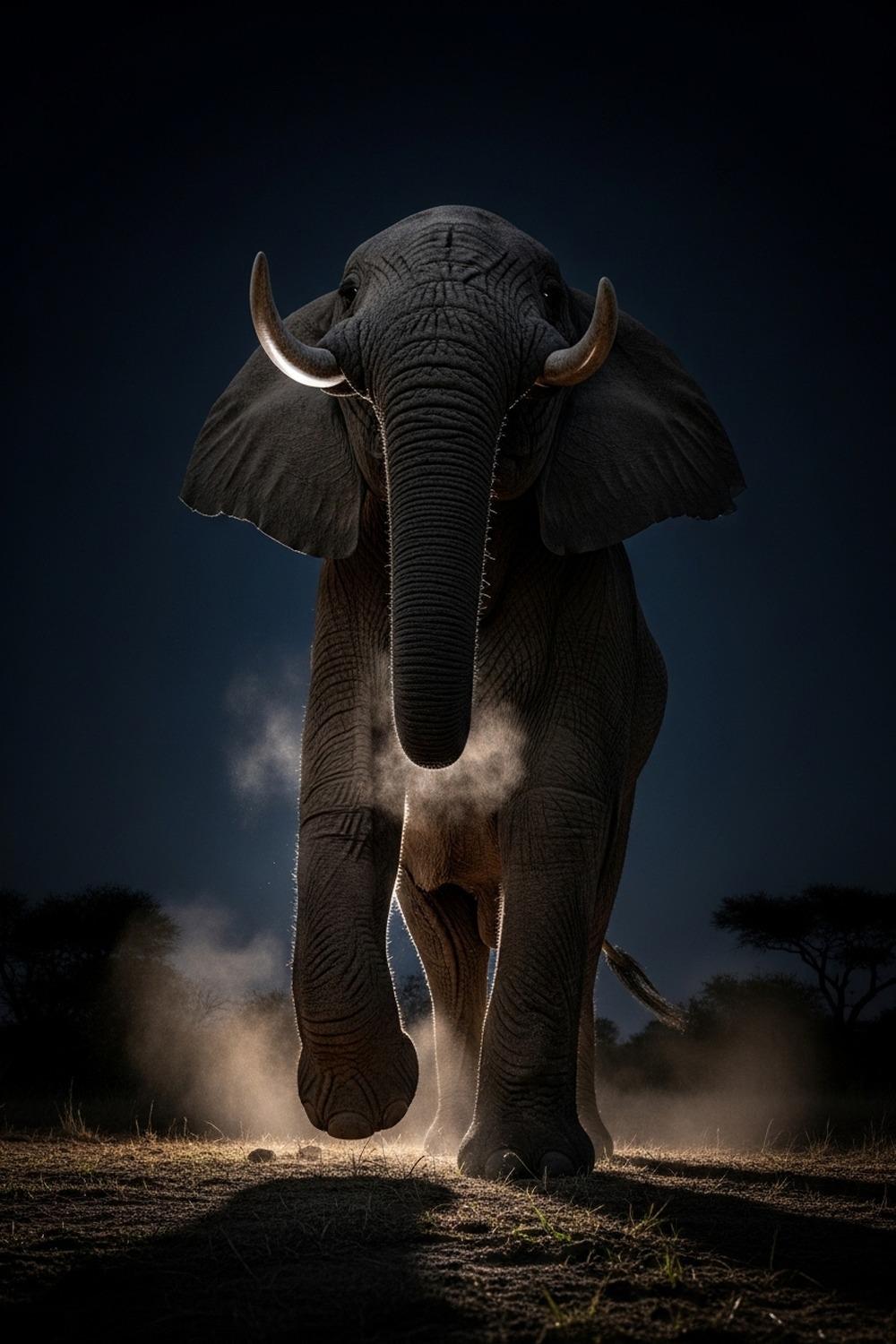
You’d never hear it coming. A five-ton animal crosses the savanna in absolute silence — and this isn’t accident or coincidence, but engineered biology perfected across millions of years. How elephants walk silently defies everything we assume about mass, impact, and sound. The answer lives in their feet, their behavior, and a kind of selective pressure that shaped them long before humans were around to marvel at it.
Somewhere in Amboseli National Park right now, a family group of fifteen elephants is covering thirty kilometers under cover of darkness. Rangers tracking them by GPS watch the dots move across the map, then step outside and hear — nothing. The silence isn’t incidental to their movement. It’s the entire point.
Key Facts
- Each elephant foot contains a wedge of fatty adipose tissue acting as a hydraulic shock absorber, spreading mass across an area like a dinner plate
- For an animal exceeding 13,000 pounds, foot pressure per square inch drops to levels comparable to a walking adult human
- Biologist John Hutchinson and a University of Edinburgh team began dissecting elephant feet in 2001 using CT scanning and pressure plates
- Elephants coordinate movement using infrasound below 20 Hz, detectable by other elephants up to 10 kilometers away
- An estimated 415,000 African savanna elephants remained as of the 2016 Great Elephant Census, down from over one million in the 1970s
In short: Understanding how elephants walk silently comes down to a fatty, gel-like cushion in each foot that spreads a 13,000-pound mass to human-level pressure per square inch. Documented by John Hutchinson’s team from 2001, this hydraulic pad, paired with infrasound coordination up to 10 kilometers, lets five-ton herds move in near silence.
The Anatomy Nobody Expected
In 2001, biologist John Hutchinson and a research team at the University of Edinburgh began taking elephant feet apart — literally and figuratively. They used dissection, CT scanning, pressure plate analysis. What they found rewrote the standard understanding of how large animals move. Beneath the thick, corrugated skin of each foot lies a dense wedge of fatty adipose tissue — a gel-like cushion that behaves less like a rigid pad and more like a hydraulic shock absorber.
This material spreads each footfall laterally, distributing the animal’s mass across a surface area roughly equivalent to a dinner plate. For an animal that can exceed 13,000 pounds, the pressure per square inch drops to levels comparable to a walking adult human. That number is almost offensive in its modesty.
The interior of the foot is designed to deform on contact. It compresses, spreads, then rebounds — passively, without muscular effort. Hutchinson’s team measured this using force plates buried beneath sandy substrates, and here’s the thing: larger elephants didn’t necessarily produce proportionally higher peak pressures. The cushion scales. As body mass increases, the foot structure compensates, maintaining impact pressure within a surprisingly narrow range across animals of vastly different sizes.
On soft ground, the mechanics become even more dramatic. Loose sand, leaf litter, damp soil — the foot sinks slightly, then lifts cleanly. No slap. No thud.
Trackers in Botswana have described following fresh elephant paths in riverine forest and hearing nothing but their own breathing. The evidence is in the ground. The animal itself has already vanished.
Infrasound, Herd Coordination, and the Invisible Architecture of Movement
But understanding how elephants walk silently requires looking beyond the feet. The silence of an elephant herd on the move isn’t just acoustic — it’s strategic. Elephants coordinate long-distance movement through infrasound: vocalizations pitched below 20 Hz, the lower threshold of human hearing. These rumbles travel through both air and ground, detectable by other elephants several kilometers away.
Cynthia Moss, founder of the Amboseli Elephant Research Project, documented in her decades-long field work — beginning formally in 1972 and continuing past 2020 — that family groups separated by hills and vegetation would begin moving in coordinated directions simultaneously. The evidence pointed to real-time infrasound communication across distances of up to 10 kilometers. The matriarch initiates. The herd responds. All of it below the frequency of human perception.
Why does this matter for understanding how elephants walk silently? Because it means the silence isn’t just about feet — it’s about an entire system of movement, information exchange, and coordination that operates almost entirely outside human sensory range.
Field researchers working night transects in Amboseli have reported standing fifty meters from a moving herd and hearing only the occasional soft exhalation, the rare brush of a tusk against bark. At that distance, with that many tons of animal in motion, the silence is deeply disorienting. It rewires your intuition about what large means.
Why Evolution Built This in the First Place
The selective pressure for silent locomotion in elephants is ancient, and researchers have debated it seriously. The prevailing hypothesis, supported by work published in National Geographic’s coverage of elephant locomotion research, centers on predation avoidance during the Pleistocene. Africa’s megafauna coexisted with a far richer guild of large predators than exists today — multiple lion species, giant hyenas, saber-toothed cats. Juvenile elephants were vulnerable. Silent movement at night, in coordinated herds, reduced acoustic signature during the hours when ambush predators were most active. The behavior and anatomy co-evolved across millions of years into what we observe today: a system so refined it persists even when the original predators are gone.
And here’s what makes this genuinely counterintuitive: we expect mass to create impact. A 5,000-kilogram animal *should* announce itself. Instead, the engineering of the elephant foot — that distributed pressure, that hydraulic cushion — means the ground beneath a walking elephant experiences less localized force than the ground beneath a galloping horse, which weighs roughly one-tenth as much. The physics are verifiable. The emotional register of standing near a moving elephant in silence is something else entirely. Watching a species move through the world in near-perfect acoustic invisibility, you stop thinking of silence as an absence and start thinking of it as a choice that paid off spectacularly.
There’s a conservation implication here, too. Silent movement means elephants are harder to monitor through acoustic means alone. Anti-poaching teams working in low-visibility environments can’t rely on sound to track herd movements. The same adaptation that protected elephants from Pleistocene predators creates a genuine modern surveillance gap — one that wildlife managers in Kenya, Zimbabwe, and Botswana are actively working to address through GPS collaring and drone monitoring.
Speed Doesn’t Break the Silence
In 2003, John Hutchinson and colleagues at the Royal Veterinary College in London produced a finding that challenged longstanding assumptions about elephant gait. Using high-speed cameras and force plates at a wildlife facility in Thailand, the team measured elephants moving at up to 25 kilometers per hour. Elephants don’t technically gallop — they lack a full aerial phase, a moment when all four feet leave the ground simultaneously. But they do transition to a gait that biomechanically resembles running.
At that speed, the pressure distribution across their foot pads remained remarkably consistent with their walking data. The cushion kept working. This means the silence isn’t a low-speed phenomenon. An elephant moving urgently — responding to a threat, covering ground quickly during a dry-season migration — still produces a fraction of the acoustic impact you’d expect.
A herd in flight covers ground with the mechanical quiet of something far smaller. Researchers working in Hwange National Park in Zimbabwe documented a family group moving at near-maximum speed through a dry riverbed in 2018 and described the dominant sound as wind displacement, not footfall. The feet were nearly silent. The bodies were not — the size of the animals pushing air as they passed was the giveaway.
Rangers who work night patrols in elephant territory learn to read other signals. Broken branches. The smell of fresh dung. Tremors in soft soil, detectable through the soles of boots. They track something that doesn’t want — or at least, hasn’t needed — to be heard.
What the Silence Reveals About Intelligence
Joyce Poole, co-director of ElephantVoices and one of the world’s leading authorities on elephant communication, has spent more than four decades documenting the cognitive architecture behind elephant behavior. Her work, increasingly in collaboration with institutions like Stanford University and the Amboseli Elephant Research Project, points to something striking: the silence of an elephant march isn’t passive. It appears to involve active suppression of non-essential noise.
Elephants have been observed pausing, scenting the air, then changing direction wordlessly — the herd following the matriarch without audible instruction, responding to infrasound signals too subtle for researchers to isolate without sensitive recording equipment. The silence isn’t just anatomical. It’s behavioral. An elephant choosing when to move, how to move, and how to communicate that movement to fifteen other animals — all while maintaining acoustic near-invisibility — is executing something that looks a great deal like tactical decision-making.
This behavioral dimension matters because it suggests a level of environmental awareness and group coordination that complicates simple narratives about animal cognition.
The implications for conservation are significant. Elephants that can move silently across vast distances in coordinated groups are harder to protect and harder to threaten — simultaneously. They cross borders without detection. They navigate around human settlements. They make decisions researchers are still struggling to predict with confidence. That unpredictability, rooted in the same intelligence that makes them extraordinary, is also what makes their protection genuinely complex.
Where to See This
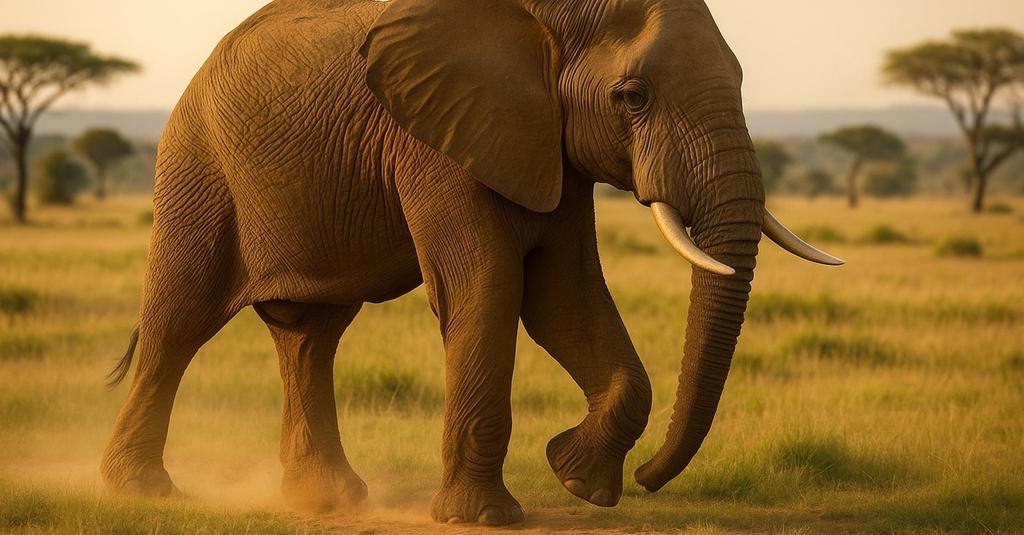
- Amboseli National Park, Kenya — the best location on Earth for observing large elephant herds in open terrain, with peak dry-season activity between June and October when herds travel furthest overnight.
- The Amboseli Elephant Research Project (amboseli-trust.org) — the longest-running elephant study in the world, with decades of behavioral and acoustic data available to the public and active research partnerships open to visiting scientists.
- Joyce Poole’s ElephantVoices project (elephantvoices.org) maintains an extensive open-access library of elephant vocalizations, including infrasound recordings, with detailed behavioral context for each call. For readers who can’t travel to Kenya, this is the most comprehensive resource available.
By the Numbers
- Up to 25 km/h — maximum speed recorded in Hutchinson et al.’s 2003 *Nature* study on elephant locomotion at the Royal Veterinary College, London.
- 10 kilometers — estimated range of elephant infrasound communication under optimal atmospheric conditions, per Cynthia Moss’s Amboseli field research.
- 13 feet at the shoulder — maximum recorded height for African savanna bull elephants (*Loxodonta africana*), the largest land animals currently alive on Earth.
- 50 miles — the distance a single herd can cover in one night during peak dry-season migration in southern Africa, tracked via GPS collaring by conservation teams in Botswana.
- 415,000 — estimated number of African savanna elephants remaining as of the 2016 Great Elephant Census, down from over one million in the 1970s (Great Elephant Census, Elephants Without Borders).
Field Notes
- In 2013, researchers at the University of Vienna confirmed that elephants detect seismic vibrations through their feet and leg bones — meaning they can “hear” infrasound traveling through the ground, not just the air. The foot pad that silences them also receives information through the same substrate they’re trying not to disturb.
- Elephant toenails are vestigial in function — they don’t bear weight or provide traction. The actual grip comes from the fibrous outer wall of the foot pad and the hydraulic distribution of body mass. You can remove a toenail entirely without affecting gait.
- Matriarchs with more years of experience lead herds on longer, more efficient migration routes — suggesting how elephants walk silently is guided by memory, potentially stretching back decades to routes the matriarch walked as a calf.
- Researchers still can’t fully explain why elephant foot pads don’t show more compression fatigue over time. An animal walking 50 miles a night for decades should show measurable structural degradation in the fatty cushion — but field and post-mortem data don’t consistently show this. The material science of that fat pad remains an open question.
Frequently Asked Questions
Q: How do elephants walk silently when they weigh so much?
The mechanism is structural. Each foot contains a thick wedge of fatty, gel-like tissue that spreads the animal’s weight across a wide surface area, reducing pressure per square inch to levels comparable to a walking human. The foot wall is semi-rigid, but the interior deforms on contact and rebounds — functioning like a built-in shock absorber. On soft substrates, the effect is dramatic. The foot sinks slightly and lifts cleanly, producing almost no impact sound.
Q: Do elephants actually try to be quiet, or is it just anatomy?
It appears to be both. The foot pad anatomy is passive — it works whether the elephant is paying attention or not. But behavioral evidence, documented by researchers including Joyce Poole at ElephantVoices, suggests elephants also make active choices about movement that reduce noise: pausing before crossing open ground, coordinating herd movement through infrasound rather than louder vocalizations, and adjusting pace in response to environmental cues. The silence has an anatomical floor and a behavioral ceiling, and the two work together.
Q: Can humans hear elephants moving at all?
At close range — within ten to twenty meters — you may hear the soft exhalation of breath, the occasional crack of a branch, or the displacement of air as a large body passes. The footfalls themselves, on soft ground, are often below the threshold of human hearing. On hard substrate — rock, compacted clay — there’s more audible contact. But most people who have stood near a moving elephant herd at night report the experience as profoundly, almost unnervingly quiet. The infrasound communication between animals is completely inaudible without specialized recording equipment.
Editor’s Take — Alex Morgan
What gets me about this story isn’t the foot pad — it’s the compounding effect. Silent feet. Infrasound communication. Decades of route memory in the matriarch’s head. Each element is impressive alone. Together, they describe an animal that has essentially evolved to be undetectable while simultaneously coordinating complex group behavior across kilometers. We’ve spent centuries assuming large meant loud, heavy meant clumsy. Elephants have been quietly proving otherwise, every night, on every continent that still has them. We just weren’t paying attention to the right frequencies.
There’s a reorientation that happens when you truly absorb what elephant silence means — not just as biology, but as a fact about the world. Something enormous is moving through the dark right now, somewhere in Kenya or Botswana or Zimbabwe, and it’s choosing its path, communicating in frequencies no human ear can catch, leaving the lightest possible mark on ground it’s crossed a thousand times. We’ve built entire intuitions about size and weight and impact that a 5-ton animal dismantles every single night. What else are we assuming about the natural world that it’s already quietly proven wrong?
Illustrations are AI-generated. Article fact-checked and human-edited. Our editorial standards.