Cuba’s Two-Currency System: A Cold War Economic Experiment
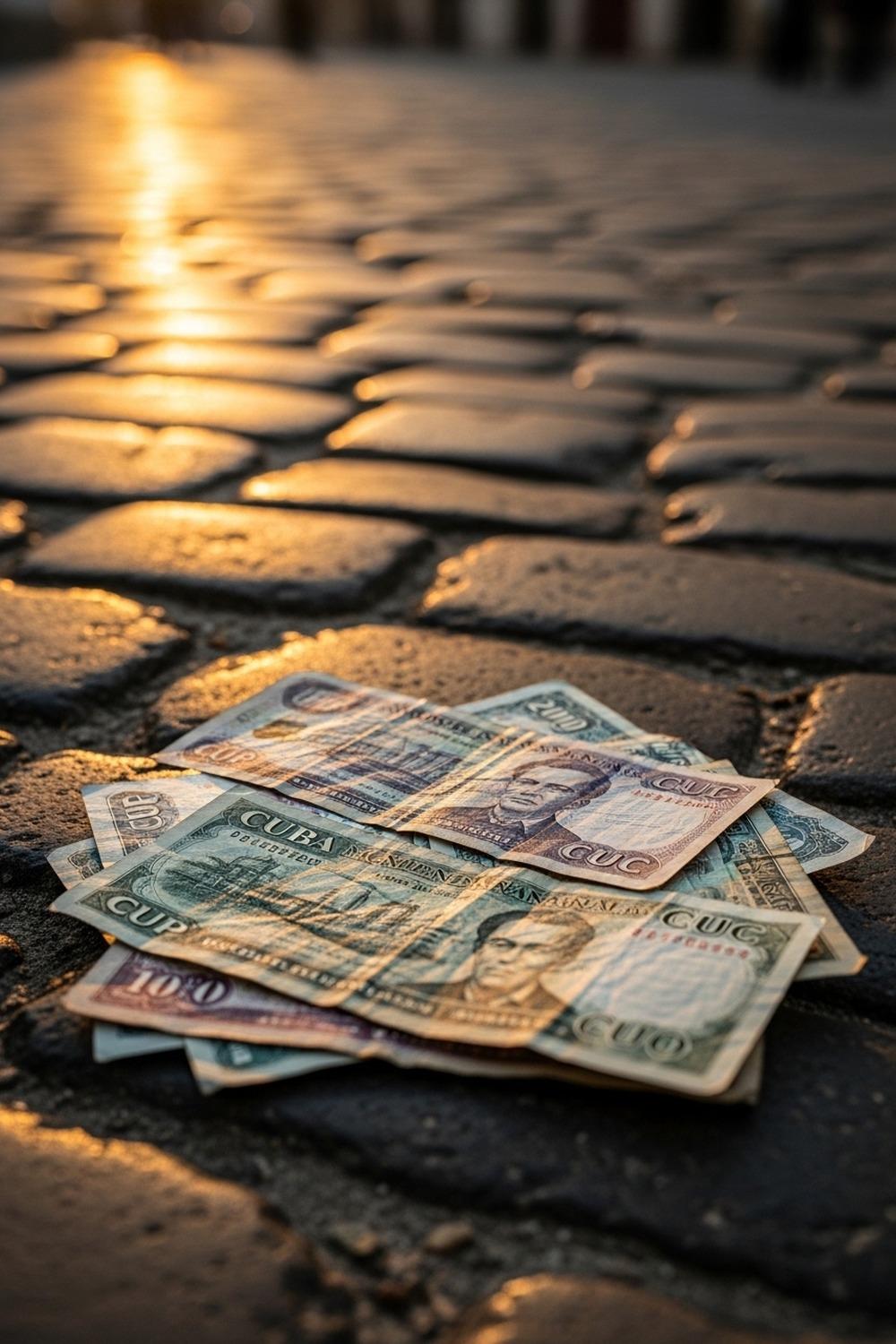
Two Cubans stand on the same Havana corner in 2015, reaching into identical pockets and pulling out currencies that might as well be from different planets. One buys bread, bus tickets, a doctor’s monthly salary. The other unlocks hotels, imported whisky, the entire category of goods marked “for tourists only.” Same island. Same moment. The Cuba two-currency system CUC CUP didn’t just divide wallets — it divided what it meant to work, to aspire, to belong.
For 27 years, Cuba ran one of the most unusual monetary experiments in modern history. A dual-currency economy born from crisis. Sustained by ideology. Ultimately dismantled by its own contradictions. How does a government convince an entire population to accept two parallel versions of money? What happens when it finally stops pretending the system makes sense?
Key Facts
- Cuba’s dual-currency system ran for 27 years, from the CUC’s introduction in 1994 to its elimination in 2021
- The CUC was pegged 1:1 to the US dollar and fixed at 24 CUP per CUC
- Cuba’s GDP contracted by an estimated 35% between 1989 and 1993 during the Special Period (World Bank, 2019)
- Cuba ended the dual system on January 1, 2021 via the ‘Tarea Ordenamiento’ (Ordering Task)
- Cuba’s official annual inflation reached 77.3% in 2021, its highest in decades
In short: The Cuba two-currency system ran 27 years, from 1994 to 2021, splitting daily life between the national peso (CUP) and the dollar-pegged convertible peso (CUC) at a fixed 24:1 rate. Born from a 35% GDP collapse, it ended in 2021’s ‘Ordering Task,’ which triggered 77.3% inflation but left inequalities intact.
Born From Collapse: How Cuba Built Two Economies
1991 is where this story begins, but not with politics — with mathematics. The Soviet Union imploded. Cuba’s economy was structurally dependent on Soviet subsidies: Soviet oil, Soviet trade deals, Soviet political goodwill. When those vanished almost overnight, the Cuban government watched its GDP fall by an estimated 35% in just three years. The period that followed — known as the “Special Period in Time of Peace,” or the Special Period — became one of the most severe peacetime economic contractions in Latin American history.
Blackouts lasted sixteen hours a day. Protein intake collapsed. The black market swallowed entire sectors of daily life. Fidel Castro’s government needed a lifeline, and it needed one fast.
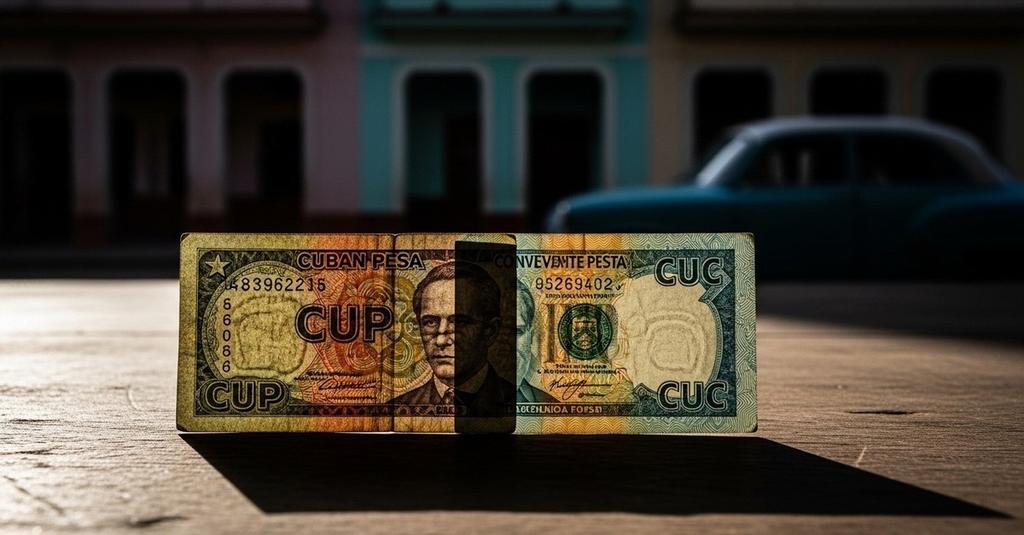
The lifeline it chose was dollars. In 1993, Cuba legalized the possession of US currency — a radical and deeply uncomfortable ideological concession for a revolutionary government that had built its identity on rejecting American economic power. But necessity overrode symbolism. Dollars flooded in through tourism, remittances from Cubans living abroad, and foreign investment in the emerging hospitality sector. The problem was immediate and visible: dollars circulating freely in a peso economy created instant inequality. Those with access to dollars — tourism workers, people with relatives in Miami — suddenly lived better than doctors and engineers with no foreign connections.
Enter the convertible peso, the CUC. Introduced in 1994, it gave the government a way to capture dollar flows, keep foreign currency inside state institutions, and maintain the fiction of a socialist economy. It was, from the beginning, a workaround dressed as a solution. And in retrospect, it was the moment when the Cuba two-currency system CUC CUP became not temporary crisis management but permanent economic architecture.
A Daily Life Divided by Currency Exchange Rates
The mechanics were simple on paper. Ordinary Cubans earned wages in the national peso, the CUP. A doctor might earn 600 to 1,000 CUP per month — a salary that felt meaningful until you tried to buy anything imported, anything in a tourist-adjacent store, or anything the state sold in CUC-denominated shops. The exchange rate was officially fixed at 24 CUP to 1 CUC, which meant that doctor’s monthly wage was worth roughly 25 to 40 US dollars.
Meanwhile, hotel cleaners and restaurant waitstaff could collect enough tips in a single weekend to double or triple that figure. The system inverted the entire logic of professional aspiration — and here’s the thing: this kind of economic inversion, where surface appearances mask radically different underlying realities, has a way of reshaping societies in ways that last long after the original policy is gone.
CUC shops — called “dollar stores” even after dollars were technically replaced — stocked goods that CUP shops simply didn’t carry. Cooking oil. Shampoo. Decent cuts of meat. Washing machines. A Cuban family without CUC access wasn’t just poorer in a numerical sense; they were locked out of categories of consumption that most of the world considers basic. The World Bank noted in its 2019 Cuba Economic Report that the dual monetary system created significant distortions in resource allocation, productivity incentives, and household welfare, particularly for state-sector workers whose salaries had no mechanism to keep pace with CUC-denominated prices.
Picture this nurse, finishing a twelve-hour shift in 2015 Havana. She earns 800 CUP that month — about 33 dollars. Her neighbor, a hotel concierge with no university degree, pockets that in tips before Thursday. The nurse knows the math. So does her daughter, who is now reconsidering whether medical school is actually worth the years. Watching a professional class systematically learn that credentials don’t matter, that the system rewards you for who you serve rather than what you know, you stop calling it a currency problem. It’s a society problem that wears a currency’s face.
What Other Dual-Currency Regimes Teach Us
Cuba was hardly the first country to experiment with parallel currencies. Zimbabwe ran a similar foreign currency regime through much of the 2000s as hyperinflation rendered the Zimbabwean dollar essentially worthless, eventually abandoning its own currency entirely in 2009 and adopting a basket of foreign currencies. The Soviet bloc itself used hard-currency shops — Beryozka stores in Russia, Pewex in Poland, Tuzex in Czechoslovakia — where citizens could spend foreign-currency certificates to access imported goods unavailable through ordinary state retail. These systems shared a common logic: create a separate economic layer for foreign exchange flows while maintaining ideological control over the primary economy.
But the Cuba two-currency system CUC CUP was architecturally different from its predecessors. It wasn’t just a hard-currency instrument — it was explicitly designed to sit between foreign tourists and the Cuban state, with ordinary Cuban citizens permitted access only through informal channels: tips, remittances, black market exchange. This meant the currency’s value was simultaneously official and underground. The exchange rate was fixed by government decree at 1 CUC to 1 US dollar, but the informal street rate — the rate actual transactions followed — often diverged significantly. As BBC News documented in its coverage of Cuba’s 2021 monetary unification, the Cuban system became one of the longest-running dual monetary experiments in the post-Cold War world.
Why does the distinction matter? Because it created arbitrage opportunities that fed a grey economy the government could neither fully eliminate nor entirely control. Other economies that tried similar tools found them equally difficult to dismantle. The distortions they create tend to embed themselves in wage structures, price expectations, and social hierarchies. Pulling the lever to unify is far harder than the original decision to split ever was.
The CUC Ends: Cuba’s “Ordering Task” and Its Consequences
January 1, 2021. The Cuban government officially ended the Cuba two-currency system CUC CUP through a policy it called the “Tarea Ordenamiento” — the Ordering Task. The CUC was phased out entirely. All transactions would henceforth use only the Cuban peso, the CUP. The official exchange rate was reset to 24 CUP per US dollar, a dramatic devaluation of the peso relative to its previous parity through the CUC mechanism.
State sector wages were simultaneously increased — some by factors of four or five — in an attempt to cushion the transition. The Cuban Ministry of Economy estimated in official statements that average state wages would rise from roughly 870 CUP to approximately 3,643 CUP per month. On paper, it looked like a substantial raise. In practice, inflation arrived faster than the wage adjustments did.
By mid-2021, consumer prices on the informal market had risen sharply. Some food items tripled or quadrupled in peso terms within months. The unification removed the currency distortion but didn’t remove the underlying scarcity that the CUC had been partly masking. State enterprises that had been priced in artificially low CUP terms suddenly faced the true cost of inputs, many of which were dollar-denominated on international markets. The Cuban Central Bank reported annual inflation for 2021 at 77.3% — the highest in decades, and almost certainly an undercount relative to informal market realities experienced by ordinary households.
In Havana’s Vedado neighborhood, families who had carefully accumulated small CUC savings watched their value reset. The government gave a grace period to exchange CUC holdings, but for many the process was confusing and the window felt narrow.
A Legacy Written in Exchange Rates and Inequality
The deepest legacy of the Cuba two-currency system CUC CUP isn’t financial — it’s social and psychological, carved into how Cubans understand work, aspiration, and the state’s promises. Twenty-seven years of parallel currencies created two classes of Cuban defined not by education, profession, or party membership, but by access to foreign currency. A surgeon without relatives in Florida was economically subordinate to a hotel bellhop with American guests. That inversion left marks.
The Brookings Institution, in its 2020 analysis of Cuban economic reform trajectories, noted that the monetary duality had contributed to persistent informal sector growth, erosion of public sector professional incentives, and a remittance-driven social stratification that official ideology struggled to reconcile with its egalitarian commitments. One currency collapsed on January 1, 2021. The other struggled to absorb the weight of an entire economy’s contradictions.
The end of the CUC didn’t end those dynamics. If anything, unification brought them into sharper focus by removing the currency as a buffer. In 2021 and beyond, Cubans with dollar remittances from abroad could still access informal dollar markets and purchase goods unavailable to peso-only households. (Researchers actually call this “de facto dollarization” — the persistence of dollar-based advantage even after official dual-currency mechanisms are eliminated.) The structural advantage of foreign currency access survived the monetary reform intact — just no longer codified in an official exchange rate. The poverty it mapped became, if anything, more visible once the formal architecture disguising it was gone.
In a small apartment in Santiago de Cuba, a retired schoolteacher who spent thirty years earning CUP salaries now watches her granddaughter weigh the calculus of emigration. The math, she says, hasn’t changed. Only the currency on the scale.
How It Unfolded
- 1991 — Soviet Union collapse triggers Cuba’s catastrophic “Special Period,” with GDP contracting by an estimated 35% and sparking the conditions that would demand monetary intervention.
- 1994 — Cuba introduces the convertible peso (CUC), pegged 1:1 to the US dollar and worth 24 times the national peso (CUP), creating the formal dual-currency architecture that would define Cuban economic life for nearly three decades.
- 2004 — Cuba bans the circulation of US dollars entirely, replacing them with CUC in tourist and hard-currency transactions, deepening the dual system while removing direct dollar access for ordinary citizens.
- January 1, 2021 — The Cuban government launches the “Tarea Ordenamiento,” officially eliminating the CUC and unifying the economy under the CUP, triggering the highest inflation rate Cuba had recorded in decades.
By the Numbers
- 35% — estimated Cuban GDP contraction between 1989 and 1993 following Soviet subsidy withdrawal, the crisis that made the dual-currency system politically necessary (World Bank, 2019)
- 24:1 — official exchange rate of CUP to CUC for the system’s entire 27-year existence, creating a fixed but economically distorting conversion that shaped every household budget in Cuba
- 77.3% — Cuba’s official annual inflation rate for 2021, the year monetary unification took effect, the highest figure recorded since before the Special Period
- 3,643 CUP — average monthly state salary promised under the Ordering Task reform, up from roughly 870 CUP — a nominal 4× increase that was quickly eroded by inflation
- 27 years — the total lifespan of the CUC, from 1994 to 2021, making it one of the longest-running parallel currency experiments in modern Latin American history
Field Notes
- In 2004, Cuba applied a 10% surcharge specifically on US dollar exchange — a penalty tax that didn’t apply to euros or Canadian dollars, a direct political jab at Washington that also generated hard-currency revenue for the state. The rule quietly reinforced the CUC’s role as intermediary and made dollar possession marginally less attractive than holding European currency.
- Cuba’s dual system created a phenomenon economists call “occupational downgrading at scale” — highly trained professionals like engineers, doctors, and academics actively sought tourism-sector jobs because tips in CUC dwarfed state professional salaries. At its peak, a top surgeon and a hotel bartender occupied meaningfully similar economic positions.
- The CUC banknotes featured Cuban national heroes, while CUP notes featured the same heroes on different denominations — so Cubans essentially carried two portraits of José Martí in their wallets, in currencies worth completely different amounts.
- Economists still disagree on whether eliminating the CUC without simultaneously reforming the state enterprise system was the correct sequencing. Did unification cause Cuba’s 2021 inflation crisis, or merely reveal price distortions that were already embedded? The answer would tell us a great deal about how to design — and exit — dual monetary regimes elsewhere.
Frequently Asked Questions
Q: What exactly was the Cuba two-currency system CUC CUP, and why did it exist?
The Cuba two-currency system CUC CUP was a dual monetary arrangement in which the Cuban national peso (CUP) served as the domestic currency for wages, rent, and daily necessities, while the convertible peso (CUC) functioned as a parallel hard currency pegged to the US dollar. Introduced in 1994 during the economic crisis following Soviet collapse, it was designed to capture foreign exchange flows from tourism and remittances while insulating the socialist economy from full dollarization. It lasted from 1994 to January 2021.
Q: Could ordinary Cubans actually use both currencies in daily life?
In practice, most ordinary Cubans earned and spent primarily in CUP, but access to CUC was essential for purchasing imported goods, electronics, quality food items, and anything sold in the state’s hard-currency retail network. Cubans obtained CUC through tips from foreign tourists, remittances from relatives abroad, or informal black-market exchange. Those without any of those access channels were effectively locked out of an entire tier of consumer goods — not because they were prohibited from using CUC, but because they had no realistic way to obtain it.
Q: Did ending the CUC actually fix Cuba’s economic problems?
A common misconception is that the currency split was the root cause of Cuba’s economic inequality, and that eliminating it would restore equity. It didn’t work that way. The CUC was a symptom of deeper structural issues — state enterprise inefficiency, dependence on remittances, restricted private sector activity, and foreign currency scarcity. When the CUC was abolished in January 2021, inflation surged to 77.3% that year, effectively wiping out the wage increases the government had promised to offset the transition. Cubans with dollar access through informal channels retained their advantage. The architecture changed; the underlying inequalities largely persisted.
Editor’s Take — Sarah Blake
What strikes me most about the Cuba two-currency system CUC CUP isn’t the economics — it’s the way it quietly redefined what education and professional achievement were worth. A society that had bet its entire ideological project on the value of trained, public-spirited labor ended up paying its surgeons less than its bellhops. The CUC didn’t create that contradiction. It just made it impossible to ignore. And when the government finally removed the currency, the contradiction it had been encoding didn’t disappear — it just stopped wearing a name tag.
Monetary systems are never just about money. They’re about what a society decides to reward, who it decides to protect, and which contradictions it’s willing to live with long enough to call them normal. Cuba’s 27-year experiment with two currencies tells us something unsettling about economic design everywhere: the temporary fixes we build in moments of crisis have a way of outlasting the crises that created them, reshaping the people who live inside them in ways that no exchange rate reform can simply undo. What does a society owe the people it accidentally taught to distrust the value of their own work?
Illustrations are AI-generated. Article fact-checked and human-edited. Our editorial standards.