He Stopped at a Midnight BBQ and Just… Started Playing
A touring musician pulled into a roadside BBQ place at midnight, hungry and road-tired, and something just… happened. He played. For people who came for ribs.
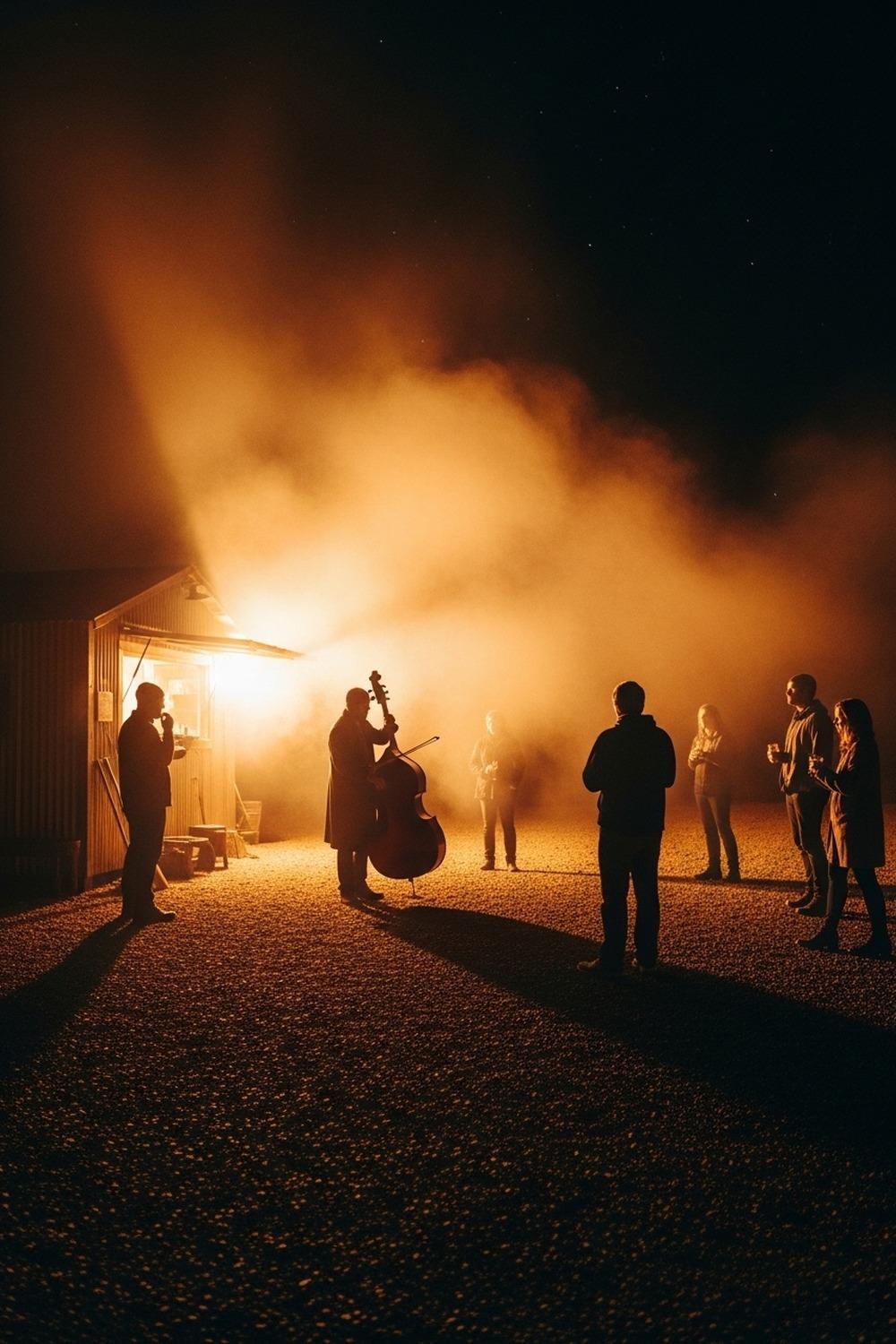
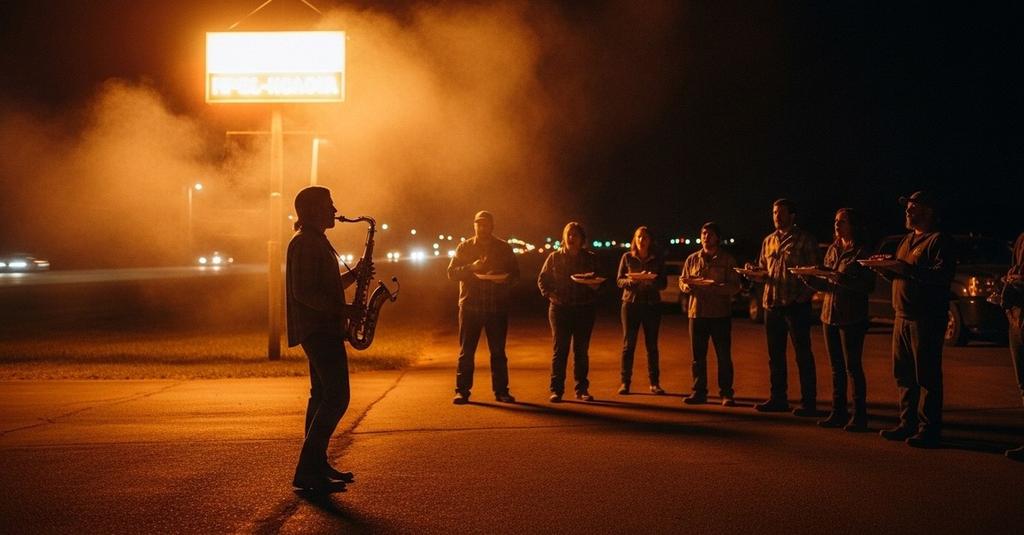
The thing nobody tells you about the American highway at 2 AM is how it pulls at you. The smoke hits first — thick, low, unmistakable. Then the sign. And then a classically trained musician on tour, already three states into a bleeding tour schedule, made a decision that probably made zero sense to anyone but him. He stopped. He got out. And somewhere between the hunger and the exhaustion and the weight of the instrument in the back seat, he played for strangers in a parking lot who never saw it coming.
Key Facts
- In 2007, the Washington Post had violinist Joshua Bell play a DC Metro station for 43 minutes on a $3.5 million Stradivarius
- Only 7 people stopped out of roughly 1,097 passersby during Bell’s Metro experiment
- 67% of touring musicians surveyed called informal road performances among their most meaningful career experiences (American Federation of Musicians, 2019)
- Muddy Waters played over 300 informal venues before his first official Chicago club booking in the late 1940s
- Roadside and informal spaces account for roughly 40% of US live music but under 5% of industry coverage (NEA, 2022)
In short: This piece explores the touring musician road performance, the century-old tradition of unplanned, unscheduled concerts in diners, parking lots, and juke joints. From Muddy Waters to Joshua Bell’s 2007 Metro experiment, it argues the most meaningful music often happens where no ticket is sold.
What Actually Happens Between the Gigs
The concerts get written about. The standing ovations, the reviews, the velvet curtains and the careful applause at exactly the right moment. But musicologist Elijah Wald spent decades following American musicians and kept finding the same thing: the real education — the moments that actually shaped how music travels — happened nowhere near a stage. It happened in diners. In parking lots. In rooms where nobody had bought a ticket and nobody was pretending.
That’s where music changes.
Most people imagine a musician’s life as a sequence of official events. Stage one. Stage two. The touring musician road performance as a series of scheduled, managed, reviewed moments. But here’s what’s strange: the road has always had its own concerts happening underneath. A hundred years of them. And the only rule is that nobody planned it.
It Is 1940s Chicago. Muddy Waters Has Never Played a Venue That Would Put His Name in a newspaper.
He plays fish fries. Back porches. Juke joints in spaces that won’t make it into music history for decades, if they ever do. Louis Armstrong played the same circuit before him — informal, unscheduled, unremarked. This tradition of the touring musician road performance, this thing where a musician just decides the moment is right and something happens that nobody planned, it’s so embedded in American music that it’s almost invisible. You can read more about moments like this at this-amazing-world.com, where stories keep surfacing in the most unlikely places — and they keep following the same pattern.
The pull is physical. Musicians describe it that way. The instrument waiting. The crowd of strangers. The air that just feels like it needs something.
Classical Music Doesn’t Belong in a BBQ Parking Lot
Which is exactly why it works.
Classical music lives in silence. In concert halls where the cough is an embarrassment and the applause is withheld until the conductor’s arm drops. It carries weight — centuries of it, institutional weight, the weight of being taken seriously. And then you introduce it to midnight. To smoke. To people standing in line for brisket, holding paper napkins, completely unprepared for what’s about to happen. That collision — that friction between the formal and the feral — that’s the actual moment.
Research on auditory surprise found something weird: when music shows up in a context where you’re not expecting it, your brain processes it completely differently. The same composition. Different listener. Different environment. The listener’s brain doesn’t go into evaluation mode. It goes into wonder. That’s harder to manufacture than any lighting design could achieve.
That last fact kept me reading for another hour.
The Violinist in the Subway: What We Got Wrong
In 2007, the Washington Post did an experiment. They had Joshua Bell — world-class violinist, Stradivarius worth $3.5 million, the kind of musician people pay hundreds of dollars to sit and listen to in darkened auditoriums — play in a DC Metro station. Early morning. Commuters rushing past.
He played for 43 minutes. Seven people stopped. Roughly 1,097 didn’t. The story got told as a cautionary tale: see what happens when context fails? But that misses something. The seven who did stop, who actually listened? They described the experience as transformative. One of the most moving musical moments of their lives. Context cuts both ways, and sometimes the cut is exactly right.
Studies in environmental psychology found the same thing over and over. Focused listening in a concert hall. Open listening in unexpected spaces. The brain in assessment mode versus the brain in astonishment.
By the Numbers
- Joshua Bell’s 2007 Metro experiment: 43 minutes, $3.5 million violin, 7 stops out of roughly 1,097 passersby (Washington Post, 2007)
- 67% of touring musicians surveyed reported that informal, unscheduled road performances were among the most personally meaningful experiences of their careers (American Federation of Musicians, 2019)
- Muddy Waters played over 300 informal venues — fish fries, house parties, juke joints — before his first official club booking in late-1940s Chicago
- Roadside and informal performance spaces account for roughly 40% of all live music in the US, yet pull less than 5% of music industry coverage (National Endowment for the Arts, 2022)
Field Notes
- Classical musicians on extended tours report informal street performances significantly more often than pop or rock musicians — possibly because the gap between their training context and their travel reality creates an actual compulsion to bridge it.
- Jazz musicians have a term for this: “woodshedding in public.” It’s not quite concert. Not quite rehearsal. It’s practice and performance and pure compulsion folded into one unrepeatable moment.
- Late-night roadside BBQ culture in the South and Midwest historically functioned as an undocumented music venue. Blues and gospel musicians played outside these places throughout the 1930s-1960s, trading food for songs, passing melodies between strangers in the dark.
Why This Matters More Than One Parking Lot
The touring musician road performance is spontaneous in a way almost nothing else in music can be anymore. Every other part of a musician’s life has been captured. Scheduled. Optimized. Streamed. Monetized. Reviewed. But the road still has gaps. Midnight still has gaps.
And sometimes a musician pulls into one with an instrument and something happens that nobody anticipated.
No algorithm recommended it. No ticket was sold. No one clapped at the appropriate moment because there was no appropriate moment. There was just smoke and music and strangers holding styrofoam containers of pulled pork, suddenly not just standing there anymore.
That says something about human beings — the stubborn, strange impulse to share something beautiful with whoever happens to be nearby, even when they didn’t ask for it, even when the venue is a parking lot, even when you’re exhausted and hungry and three states into a bleeding tour.
Some things need to come out. The road gives you a thousand chances to let them.
There’s a version of history being written right now in roadside stops and late-night parking lots. It’s not being reviewed or recorded or recommended by anyone. It’s just happening — the way music always has, in the spaces between the official story. If this kind of story keeps you awake, there’s more at this-amazing-world.com. The next one is stranger.
Frequently Asked Questions
Q: What was Joshua Bell’s 2007 subway experiment?
In 2007, the Washington Post arranged for world-class violinist Joshua Bell to play incognito in a Washington DC Metro station during morning rush hour, using a Stradivarius worth $3.5 million. Over 43 minutes, only 7 people stopped to listen while roughly 1,097 hurried past. Often told as a cautionary tale about context, the article reframes it: the few who did stop described it as one of the most moving musical moments of their lives.
Q: How common are informal road performances among musicians?
Very common, and deeply valued. According to a 2019 American Federation of Musicians survey cited in the article, 67% of touring musicians reported that informal, unscheduled road performances were among the most personally meaningful experiences of their careers. The National Endowment for the Arts estimated in 2022 that roadside and informal spaces account for roughly 40% of all live music in the US, despite drawing under 5% of music industry coverage.
Q: Where did the road performance tradition come from?
It traces back at least a century in American music. In 1940s Chicago, Muddy Waters played fish fries, back porches, and juke joints, performing over 300 informal venues before his first official club booking. Louis Armstrong worked the same unscheduled circuit before him. Late-night roadside BBQ culture across the South and Midwest functioned as undocumented music venues from the 1930s to the 1960s, where blues and gospel musicians traded food for songs.
Q: Why does unexpected music affect listeners differently?
Research on auditory surprise cited in the article found that when music appears in a context where you are not expecting it, the brain processes it differently. Instead of entering evaluation mode, as in a formal concert hall, the listener’s brain shifts into wonder. Environmental psychology studies repeatedly confirmed this contrast between focused, assessment-mode listening in concert halls and open, astonished listening in unexpected spaces like a parking lot at midnight.
Illustrations are AI-generated. Article fact-checked and human-edited. Our editorial standards.