The Zoo Where Humans Are the Ones in Cages
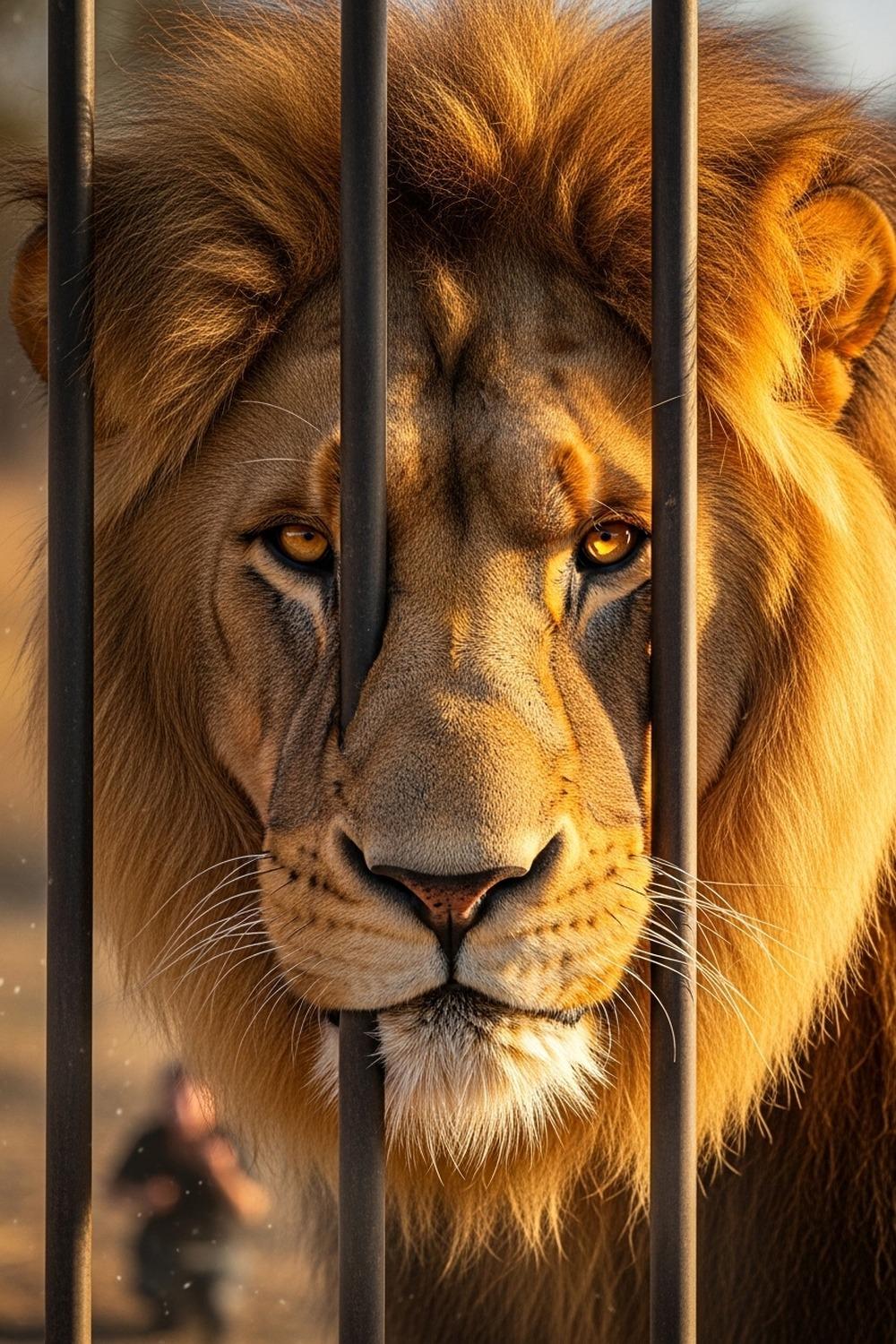
You’re watching a predator eat. The meat is attached to the door you’re leaning against. The gap between your face and a 400-pound tiger is measured in centimeters. And the strangest part? The animal hasn’t looked at you once. Welcome to Lehe Ledu Wildlife Zoo in Chongqing, China — where the cage isn’t built around the animals anymore.
The concept inverts everything a zoo has been for a century. Visitors board reinforced steel vehicles and roll through open landscape while lions, tigers, and wolves move freely around them. Staff lure the predators toward the cages using raw meat tied to the outside. It’s immersive, visceral, wildly popular. But here’s the thing: beneath the spectacle lives a question that doesn’t resolve cleanly. Does this change anything for the animals — or is it just theater wearing a smarter costume?
Key Facts
- Lehe Ledu Wildlife Zoo opened in 2015 in Chongqing, China, a megacity of 32 million people
- Visitors ride in reinforced steel vehicles while staff lure predators with raw meat tied to the exterior
- A single Amur tiger roams natural territories of up to 4,000 square miles in the wild (WWF, 2022)
- The average US big cat zoo enclosure measured under 2,000 square feet as of 2019 (Animal Legal Defense Fund)
- An estimated 800,000 animals are held in zoos worldwide (World Association of Zoos and Aquariums, 2023)
In short: This article examines Lehe Ledu, the zoo where humans are in cages, which opened in 2015 in Chongqing, China. Visitors ride reinforced steel vehicles while predators roam free, lured by raw meat. The inversion forces a welfare debate: more space than typical enclosures, but food-luring manipulation with no independent audit as of 2024.
Inside the Zoo Where Humans Are in Cages
In 2015, a megacity of 32 million people tucked into the mountains of southwest China made a choice that would ripple through the global zoo industry. Lehe Ledu opened its gates. The concept was simple and startling: invert the zoo. Remove the bars from the animals. Put them on the people. Visitors ride through the park in custom-built steel-mesh vehicles, windows reinforced, doors locked from the inside. Lions, Amur tigers, and wolves roam the terrain around them, apparently indifferent to the rolling metal boxes in their space. Tickets sold out weeks in advance that first season. Queues formed at dawn.
What separates this from a traditional drive-through safari isn’t architecture. It’s strategy. Staff attach chunks of raw meat to the exterior of the cages before and during tours. The animals follow. They press against the mesh. Claws make contact with steel. From inside, you’re close enough to see a tiger’s pupils shift — that’s not metaphor, it’s physics. The vehicle is small. The cats are enormous. The distance between you and predator is measured in centimeters.
The zoo markets this openly as “letting humans feel like prey.” That framing isn’t casual.
It’s the whole point. And once you’ve sat inside one of those cages, watching a lion ignore you completely while eating meat off the door you’re leaning against, the usual zoo dynamic — humans elevated, animals diminished — dissolves in a way that’s genuinely hard to shake.
What Traditional Zoos Have Always Got Wrong
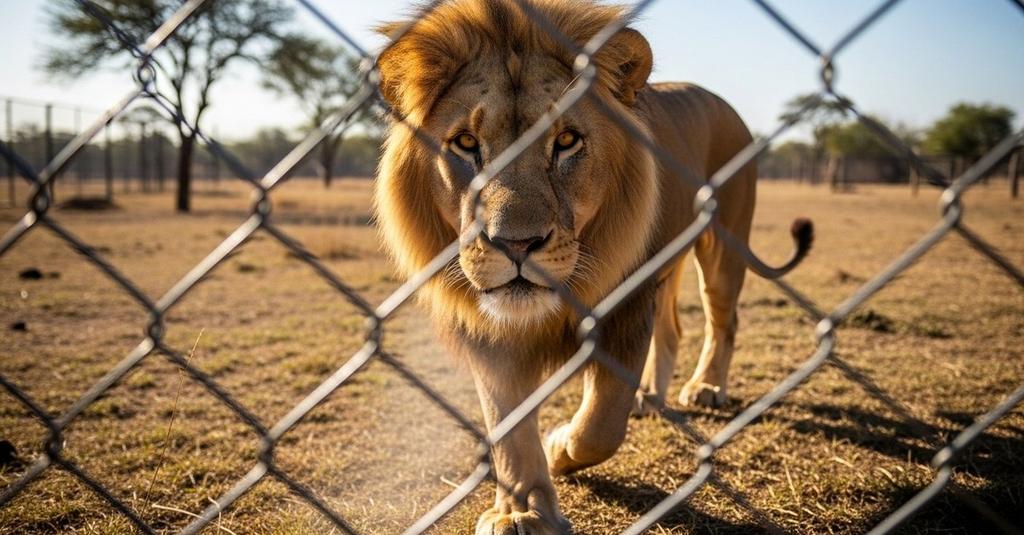
The discomfort Lehe Ledu produces isn’t just adrenaline. It’s recognition. Because the moment you sit inside a cage watching a big cat move freely, you’re forced to reckon with what you’ve been watching in traditional zoos for decades — an animal moving in a rectangle. Turning. Turning again. Wearing a groove in the concrete that gets deeper every year.
Consider the math. The Amur tiger in the wild roams territories of up to 4,000 square miles. In captivity, the average zoo enclosure for a big cat in the United States measured under 2,000 square feet as of 2019, according to data reviewed by the Animal Legal Defense Fund. That’s not a home. That’s a holding cell. And while this critique isn’t new, there’s something uniquely powerful about understanding it from inside a cage yourself — which is exactly the psychological shift Lehe Ledu manufactures. There’s a reason this story connects with research on animal attachment and captivity (researchers actually call this prolonged confinement-induced neurological degradation) that’s been circling for years: confinement changes behavior at the neurological level, not just the physical one.
Zoochosis — repetitive, compulsive behavior in captive animals — was formally documented in the 1990s by veterinary researcher Georgia Mason at Oxford University. She identified stereotypies like pacing, head-bobbing, and bar-biting in zoo mammals across dozens of species. By 2010, her work had influenced zoo accreditation standards in multiple countries. Yet the behaviors persist. Lions pace. Polar bears sway. Elephants rock. These aren’t personality quirks.
They’re the neurological signature of an environment that can’t meet the animal’s spatial or cognitive needs.
But here’s what stays with you across both experiences. In a traditional zoo, you leave feeling like you’ve seen something. At Lehe Ledu, you leave feeling like something has seen you. That inversion — that moment of species humility — might be the most honest thing a zoo has ever produced. Watching a species move through space as though you don’t exist, you stop thinking of zoos as windows into nature.
The Welfare Question Nobody Can Fully Answer
Does Lehe Ledu represent progress for animal welfare, or is it a different kind of exploitation dressed up as innovation? The field doesn’t agree. The zoo’s animals do have significantly more space than typical captive environments — the roaming areas are large by any conventional zoo standard. Movement patterns are closer to naturalistic. But “closer to” isn’t the same as “equivalent to.”
Why does this distinction matter so much? Because a 2021 review by National Geographic examining global zoo welfare found that even expanded enclosures fail to replicate the one thing wild animals genuinely need: choice. The ability to move away. Hide. Avoid. Disengage. At Lehe Ledu, staff are actively luring predators toward visitor vehicles with food. That’s behavioral manipulation, whether we want to call it that or not.
Whether it constitutes stress depends on the individual animal, the frequency, and the handling protocols — none of which are publicly available. The zoo where humans are in cages presents itself as animal-first, but critics point to food-luring systems creating artificial arousal states in predators that may compromise psychological equilibrium. Feeding behavior in big cats is one of their most charged neurological states. Triggering it repeatedly, on schedule, for tourist vehicles raises questions that Chinese zoo regulators haven’t yet been required to answer publicly. There’s no independent welfare audit on record as of 2024.
What’s certain is this: the model forces a conversation the traditional zoo industry has avoided for decades. And that discomfort — for regulators, for visitors, for the industry itself — may be the concept’s most lasting contribution.
What Crowds Tell Us About How We See Animals
The ticket-selling-out-weeks-in-advance phenomenon deserves its own analysis. A 2017 study by researchers at the University of Exeter’s Centre for Research in Animal Behaviour found something curious: zoo visitors who reported feeling “observed by” an animal rated the encounter as significantly more emotionally meaningful than those who felt purely like observers. The direction of the gaze matters to us — deeply, instinctively. Lehe Ledu’s model exploits this beautifully. When a tiger walks toward your cage, you’re not a spectator anymore.
You’re a participant. Participants remember. They tell people. They come back. And the crowds also reveal something about what traditional zoos have quietly lost over the last two decades. Global zoo attendance has been declining in per-capita terms since the mid-2000s, as wildlife documentaries, streaming platforms, and high-definition nature content have raised the bar for what “seeing an animal” means. A listless lion in a concrete pen can’t compete with a David Attenborough production. But a lion pressing its face against the mesh of a cage you’re sitting inside?
That can’t be streamed.
The zoo understood something about presence and proximity that the traditional model had forgotten — that physical vulnerability is irreplaceable, and people will seek it out. But there’s a counter-argument worth examining. Does proximity breed respect, or just excitement? Research from the San Diego Zoo Global’s Institute for Conservation Research suggests that emotional intensity during zoo visits doesn’t automatically translate to conservation behavior afterward. Feeling scared isn’t the same as caring. The conversion from adrenaline to action requires a different kind of architecture — in the visit, in the storytelling, in the information provided. Lehe Ledu hasn’t publicly prioritized that dimension.
What a Reversed Zoo Could Actually Become
The Lehe Ledu model exists at one end of a spectrum. Open-range wildlife reserves in South Africa’s Sabi Sand Game Reserve, Kenya’s Maasai Mara, and India’s Ranthambore sit at the opposite end — animals genuinely wild, genuinely free, genuinely dangerous. But something more interesting is happening in the middle. Drive-through safari parks, nocturnal animal experiences, rewilding corridors attached to visitor centers are emerging as a new generation of hybrid facilities. They borrow from Lehe Ledu’s inversion concept without carrying its ethical ambiguities forward. The Global Federation of Animal Sanctuaries reported in 2022 that applications for accreditation from “immersive habitat” facilities had increased 34% over the preceding five years.
The market is moving.
But whether it’s moving toward something genuinely better for animals, or toward something that just feels that way to humans — that remains unresolved. There are approximately 800,000 animals held in zoos worldwide, according to the World Association of Zoos and Aquariums’ 2023 data. If the Lehe Ledu model influences how even a fraction of those facilities reconsider spatial and behavioral design, the ripple effects for animal welfare become significant. Not because inverting the cage is the answer. But because it makes the cage visible in a way that a century of traditional zoo design never quite managed to do. And visibility changes what happens next.
Imagine a twelve-year-old sitting in that steel vehicle in Chongqing. A wolf lopes past. She doesn’t flinch — she watches. That child has just learned something about wildness that no classroom, no documentary, no glass-paneled enclosure has ever taught her: that the animal doesn’t need her there. It was fine before she arrived. It will be fine when she leaves. That thought — small, uncomfortable, exact — might be where everything begins.
How It Unfolded
- 2015: Lehe Ledu Wildlife Zoo opens in Chongqing, China, introducing the inverted-cage model to mainstream public audiences.
- 2016: International media coverage drives global awareness; the zoo reports multi-week ticket waiting lists across peak season.
- 2019: Animal welfare organizations begin formally reviewing food-luring practices, raising behavioral manipulation concerns publicly.
- 2022–2024: A wave of new “immersive habitat” facilities globally cite the Lehe Ledu model as design reference, prompting accreditation bodies to develop new welfare assessment frameworks.
By the Numbers
- 4,000 square miles — the natural roaming territory of a single Amur tiger in the wild (WWF, 2022)
- Under 2,000 square feet — average big cat enclosure size in U.S. zoos, reviewed by the Animal Legal Defense Fund in 2019
- 800,000 — estimated number of animals held in zoos worldwide (World Association of Zoos and Aquariums, 2023)
- 34% — increase in accreditation applications from “immersive habitat” wildlife facilities between 2017 and 2022 (Global Federation of Animal Sanctuaries)
- 32 million — population of Chongqing, the megacity where Lehe Ledu operates, one of Earth’s densest zoo markets
Field Notes
- Georgia Mason’s landmark 1990s research at Oxford University found stereotypic pacing behaviors in captive big cats correlated with the size of the animal’s range in the wild — meaning the more space a species naturally needs, the worse captivity treats it neurologically. Tigers and polar bears consistently showed highest rates of zoochosis.
- The meat-luring system means animals associate visitor vehicles with food — which may make the experience less about natural predator behavior and more about conditioned feeding responses, a distinction most visitors don’t realize they’re watching.
- Traditional zoo glass panels, designed to feel invisible, may actually reduce psychological impact of animal encounters — studies suggest physical barriers visitors can feel and hear (like mesh or steel) produce stronger empathic responses than clean glass.
- Researchers still can’t fully answer whether the zoo where humans are in cages improves or worsens long-term conservation attitudes in visitors — the emotional intensity is measurable, but translation into lasting behavioral change remains an open question no peer-reviewed longitudinal study has yet resolved.
Frequently Asked Questions
Q: What exactly is the zoo where humans are in cages, and where is it?
Lehe Ledu Wildlife Zoo opened in 2015 in Chongqing, China. It’s structured so humans occupy reinforced steel vehicles while lions, tigers, wolves, and bears roam freely around them. Staff lure predators toward the vehicles using raw meat. The concept has drawn massive visitor numbers since opening, with tickets reportedly selling out weeks in advance during peak seasons.
Q: Is it actually safe to visit a zoo where animals roam free around visitors?
The vehicles used at Lehe Ledu are reinforced steel enclosures with mesh windows — designed specifically for close predator contact. No major injury incidents have been publicly reported since the zoo opened in 2015, though the risk is not zero. Structural engineering prioritizes containment over comfort. Visitors are instructed not to extend limbs through the mesh, and staff monitor luring throughout each tour to manage animal proximity.
Q: Does this model actually benefit the animals, or is it just a different kind of captivity?
Animals at Lehe Ledu have considerably more space than those in traditional zoo enclosures — a genuine improvement by spatial standards. But the food-luring system creates a conditioned behavioral response in predators that critics argue is its own form of manipulation. More space doesn’t automatically mean better welfare if the animal’s behavioral freedom is still being regularly redirected for visitor entertainment. No independent welfare audit of the facility has been published as of 2024.
Editor’s Take — Sarah Blake
What unsettles me most about Lehe Ledu isn’t the concept — it’s how effectively it produces exactly one feeling: humility. You sit in that cage and the animal doesn’t care about you. Not in a threatening way. In a clarifying way. We’ve built a century of zoo design around the assumption that animals exist for human attention. One reversed cage, one indifferent tiger, and that assumption falls apart faster than any conservation campaign has ever managed to dismantle it. The discomfort is the point.
The zoo where humans are in cages isn’t a solution. It’s a provocation. It forces a question that 800,000 captive animals have been asking — silently, through glass, through concrete, through repetitive pacing — for generations: what does it feel like to be the one who can’t leave? That question doesn’t resolve when you exit the vehicle in Chongqing. It follows you home. And maybe that’s exactly what a zoo, finally, should do.
Illustrations are AI-generated. Article fact-checked and human-edited. Our editorial standards.