Tehran: The 16-Million-Person City Most People Forget
Sixteen million people live in Tehran. That’s more humans than exist in the entire Netherlands. And somehow, ask most people where it is on a map, and you get a blank stare.
It generates nearly a third of Iran’s GDP. It’s been the capital for over two centuries. It’s one of the largest cities on Earth, sprawling against mountain backdrop, dense as a crowded bazaar at closing time. Yet mention Tehran in conversation outside certain circles and people nod vaguely, as if you’ve just mentioned a city they saw once in a documentary they half-remember. That disconnect — between its actual significance and how little the world seems to register it — is what pulled me into researching this for hours.
Key Facts
- Greater Tehran exceeded 16 million people as of 2023, comparable to the Netherlands’ population of about 17.9 million.
- Tehran generates an estimated 25-30% of Iran’s total GDP from within its metropolitan boundaries.
- The city sits at an average elevation of 1,200 meters above sea level, with northern districts climbing above 1,800 meters.
- The Tehran Metro carries over three million passengers daily, one of the busiest rapid transit systems in Western Asia.
- Tehran has been Iran’s capital since 1796, when Agha Mohammad Khan of the Qajar dynasty designated the modest plateau town.
In short: The Tehran Iran megacity holds over 16 million people in its greater metropolitan area and generates 25-30% of the nation’s GDP, yet remains underrecognized abroad. Sitting at 1,200 meters against the Alborz Mountains, it has been Iran’s capital since 1796 and ranks among the top twenty urban agglomerations on Earth.
How Big Does a City Have to Get Before Anyone Notices?
Nine million inside the official city limits. Sixteen million if you count Greater Tehran. That places it comfortably among the top twenty urban agglomerations on the planet, according to Wikipedia’s demographic overview of Tehran.
Urban geographer Asef Bayat has spent his career writing about how Iranian cities absorb population pressure in ways that completely break Western urban planning assumptions. The math alone is staggering — but the real question that kept me reading for another hour was simpler: how does a city this dense actually function day-to-day?
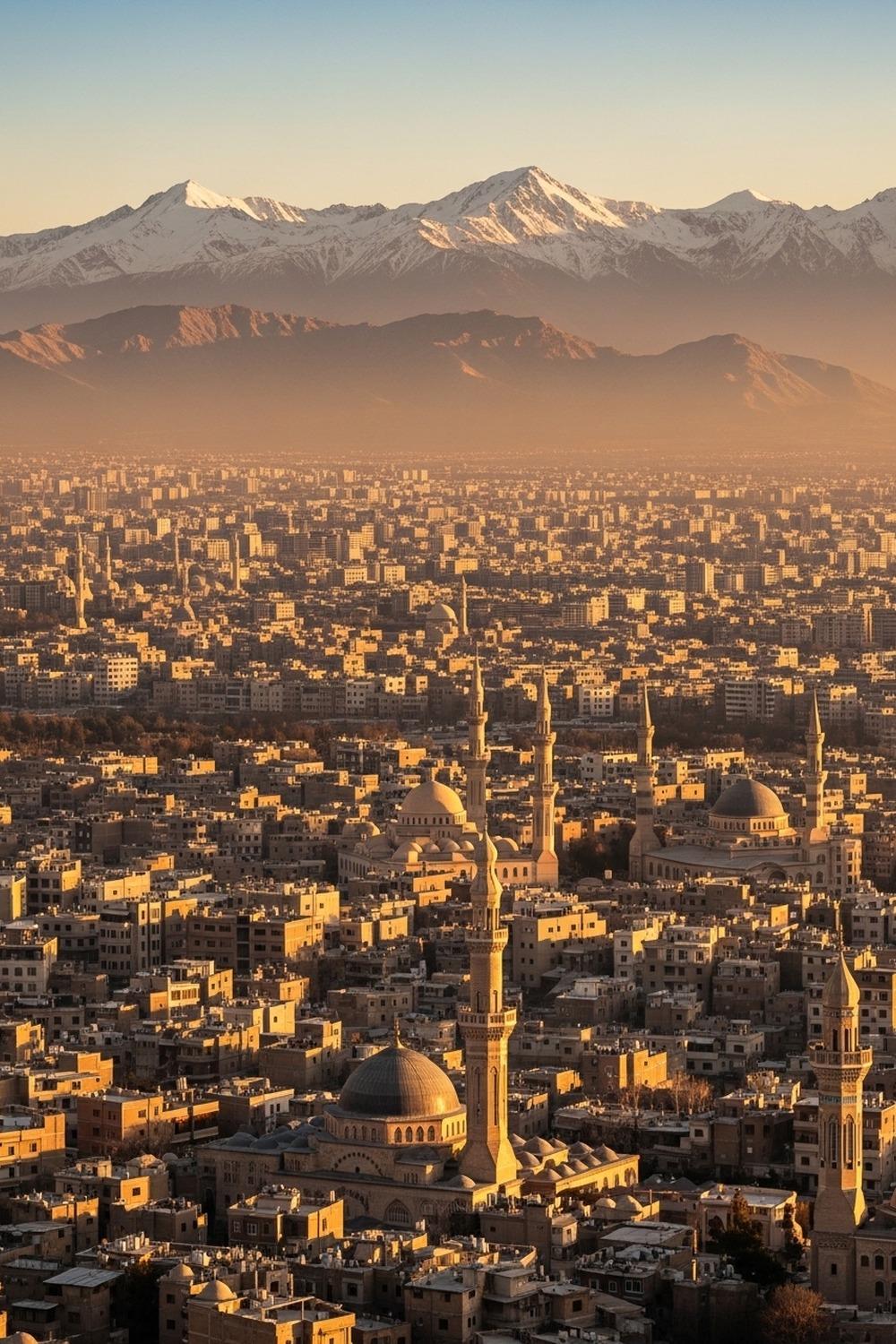
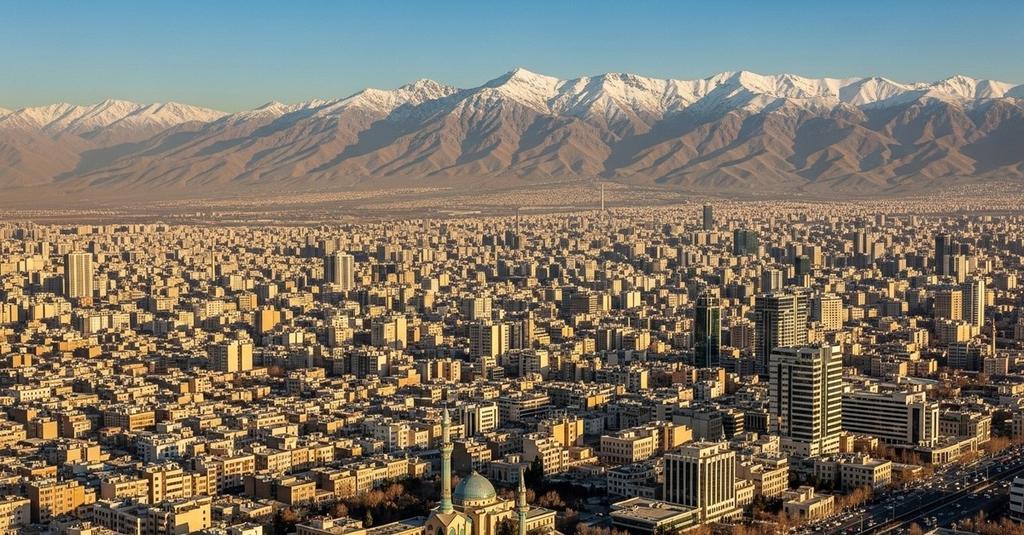
The Alborz Mountains rise sharply at Tehran’s northern edge, snow-capped even in late spring. The city spills southward across a plateau at roughly 1,200 meters above sea level. It doesn’t just feel big. The landscape decided to build a city rather than the other way around.
One Ruler Changed Everything in 1796
It is 1796. Agha Mohammad Khan of the Qajar dynasty looks at this modest town on the plateau and sees something others have completely missed. One decision. One city. One moment that set in motion an urban explosion that’s never stopped.
Most cities grow slowly over millennia. Tehran’s transformation from regional town to megacity happened in historical fast-forward. For deeper stories about how political decisions reshape entire landscapes, this-amazing-world.com explores those moments when a single choice ripples outward through centuries.
Walk through the bazaar that anchors old Tehran today and you’ll find saffron merchants next to smartphone repair stalls, wholesale fabric dealers beside kids scrolling TikTok on lunch break. History and modernity don’t coexist here — they share a zip code, argue in the same corridor, borrow sugar from each other.
The Economy Nobody Talks About
Most people picture Iran and think: oil fields. Geopolitics. Sanctions. They don’t picture a metropolitan economy generating 25 to 30 percent of the country’s entire GDP within a single urban boundary.
Tehran Iran megacity is an economic engine — banks, tech startups, over 30 universities, government ministries, bazaar networks that move goods across Western Asia. Iran produces more engineering graduates per capita than most European nations. The startup scene here has been growing despite every external pressure trying to slow it down.
Resilience doesn’t quite cover it.
The Air, The Traffic, And Everything Gets Trapped
Tehran sits in a geographic bowl. The Alborz range traps pollution the way a cupped hand holds water. On bad days, the smog is visible from the foothills — a gray-brown blanket draped over 16 million people. The city has more registered vehicles than almost any other in the Middle East. Traffic jams aren’t inconveniences here; they’re cultural institutions. There are days when schools close not because of snow, but because the air quality makes breathing outside a genuine health risk.
And yet.
People climb to the northern neighborhoods on clear winter mornings and watch the Alborz turn pink in the early light. They’ll tell you this city is beautiful, and they’re not wrong — not in how their voice changes when they say it, not in how carefully they seem to be holding that thought.
North vs. South: Geography of Wealth Written Into Elevation
Turns out the geography of wealth in Tehran is almost perfectly literal. The northern neighborhoods — Shemiran, Zafaraniyeh, Elahiyeh — sit higher on the plateau. Cleaner air. Wider streets. Coffee shops designed in Stockholm. Move south and the elevation drops alongside income levels. Southern Tehran is denser, louder, older, and in many ways more authentically the city it’s always been.
Same municipal boundary. Completely different realities.
This north-south divide runs through the city’s literature, its politics, its daily life in ways that outsiders rarely glimpse. Tehranis from opposite ends can feel like they’re from different countries — not metaphorically, but in how they navigate the same streets, what they assume about each other, which version of the city they believe is real.
By the Numbers
- Greater Tehran exceeded 16 million people as of 2023.
- That’s larger than the entire Netherlands — 16 million versus the Netherlands’ 17.9 million. Close enough to cause a double-take when you actually think about it.
- Tehran generates an estimated 25–30% of Iran’s total GDP from within its metropolitan boundaries, a concentration of economic output that rivals capital cities twice its international profile.
- The city sits at an average elevation of 1,200 meters above sea level, with northern districts climbing above 1,800 meters.
- Iran produces approximately 400,000 engineering and technical graduates per year, with research institutions concentrated in Tehran — a fact that tends to surprise people who’ve never looked past the headlines.
The Details That Change How You Think About This Place
- Dizin ski resort sits less than two hours from the city center. On winter weekends, Tehranis pack the slopes in numbers that would make a Colorado resort manager jealous.
- The Tehran Metro carries over three million passengers daily — one of the busiest rapid transit systems in Western Asia. Western coverage never mentions this part.
- The Grand Bazaar trades the same pomegranates, saffron, and pistachios that merchants moved there centuries ago. It remains one of the largest covered markets in the world, an economic ecosystem predating the country’s oil industry by hundreds of years. That last fact kept me reading for another hour.
Why Nobody’s Talking About This
Tehran Iran megacity has spent decades being defined by headlines that reduce it to a symbol — of sanctions, geopolitical tension, a revolution that happened before most current residents were born. What gets missed: the weight of daily life in 16 million simultaneous stories. The traffic. The mountain views. The poetry being written. The startups being pitched. Students arguing in cafes about philosophy and football and the future.
Cities this size carry entire civilizations inside them.
Ignoring a city this significant doesn’t make it smaller. It just means the rest of the world is missing one of the great urban stories of the 21st century — told in Farsi, against snow-capped peaks, by people who’ve been building culture here longer than most Western nations have existed.
Tehran doesn’t need permission to matter. It already does — been mattering for centuries. What changes when we actually pay attention is our own understanding of what a city can be: complicated, resilient, beautiful, maddening, completely alive. Sixteen million lives happening right now in a city most people couldn’t place on a map. If this keeps you up at night, there’s more at this-amazing-world.com — and the next one is even stranger.
“
Frequently Asked Questions
Q: How big is the Tehran Iran megacity?
Tehran has roughly nine million people inside its official city limits and exceeds 16 million across Greater Tehran as of 2023. That places it comfortably among the top twenty urban agglomerations on the planet. For perspective, Greater Tehran’s population approaches that of the entire Netherlands, which has about 17.9 million people. The city sprawls southward across a high plateau at roughly 1,200 meters above sea level, with northern districts climbing above 1,800 meters against the Alborz Mountains.
Q: Why is Tehran economically important to Iran?
Tehran generates an estimated 25 to 30 percent of Iran’s total GDP from within a single metropolitan boundary, a concentration of economic output that rivals capital cities with far larger international profiles. The city hosts banks, tech startups, over 30 universities, and government ministries, plus bazaar networks that move goods across Western Asia. Iran produces approximately 400,000 engineering and technical graduates per year, with research institutions concentrated in Tehran, making it the country’s clear economic and intellectual engine.
Q: When did Tehran become Iran’s capital?
Tehran became Iran’s capital in 1796, when Agha Mohammad Khan of the Qajar dynasty chose the then-modest plateau town as his seat of power. That single decision set in motion an urban expansion that has never stopped. While most cities grow slowly over millennia, Tehran’s transformation from regional town to megacity happened in historical fast-forward, and it has remained the capital for over two centuries since that founding choice.
Q: Why does Tehran have such severe air pollution?
Tehran sits in a geographic bowl, and the Alborz mountain range traps pollution the way a cupped hand holds water. The city also has more registered vehicles than almost any other in the Middle East. On bad days the smog is visible from the foothills as a gray-brown blanket over 16 million people, and air quality can deteriorate so severely that schools close, not because of snow, but because breathing outside becomes a genuine health risk for residents.
Illustrations are AI-generated. Article fact-checked and human-edited. Our editorial standards.