She Left Switzerland for a Samburu Warrior’s World
A Swiss woman walked into a Samburu warrior’s life in 1986, and the Corinne Hofmann Samburu warrior Kenya story began — not with a flourish, but with a choice that would cost her almost everything. She met him on a beach near Mombasa. She went home. Then she sold the boutique, the apartment, the predictable future, and moved to Barsaloi, a remote settlement in Kenya’s semi-arid north. Some encounters don’t ask permission. They simply redirect the current of a life.
Corinne Hofmann was running a successful clothing boutique in Frauenfeld, Switzerland when the holiday happened. She travelled to Kenya and met a Samburu warrior named Lketinga Leparmorijo on a beach near Mombasa. What happened next over the following four years would become one of the most startling cross-cultural love stories ever put to paper.
But why did it nearly destroy her?
Key Facts
- Corinne Hofmann moved from Frauenfeld, Switzerland to Barsaloi, Kenya in 1987 after meeting Samburu warrior Lketinga Leparmorijo.
- Her memoir Die weisse Massai (The White Masai), published in 1998, sold over 5 million copies across 30 languages.
- She contracted malaria three times during her four years in Samburu territory, requiring emergency evacuation to Nairobi.
- Cerebral malaria carries a fatality rate of up to 25% without prompt treatment (WHO 2023 malaria report).
- The 2005 film adaptation became Germany’s highest-grossing film that year.
In short: The Corinne Hofmann White Masai story follows a Swiss woman who sold her business in 1987 to live with a Samburu warrior in remote Barsaloi, Kenya. Over four years she married, had a daughter, and survived malaria three times before returning home. Her 1998 memoir sold over 5 million copies in 30 languages.
A Warrior’s World: What Barsaloi Actually Looks Like
Barsaloi sits in Samburu County, in the arid lowlands north of the Ewaso Ng’iro River, roughly 350 kilometres from Nairobi. It’s not a place that makes concessions. The terrain is thornscrub and red dust, interrupted by the occasional flash of a dry riverbed, acacia canopy, and the low silhouettes of livestock. Temperatures regularly exceed 35°C.
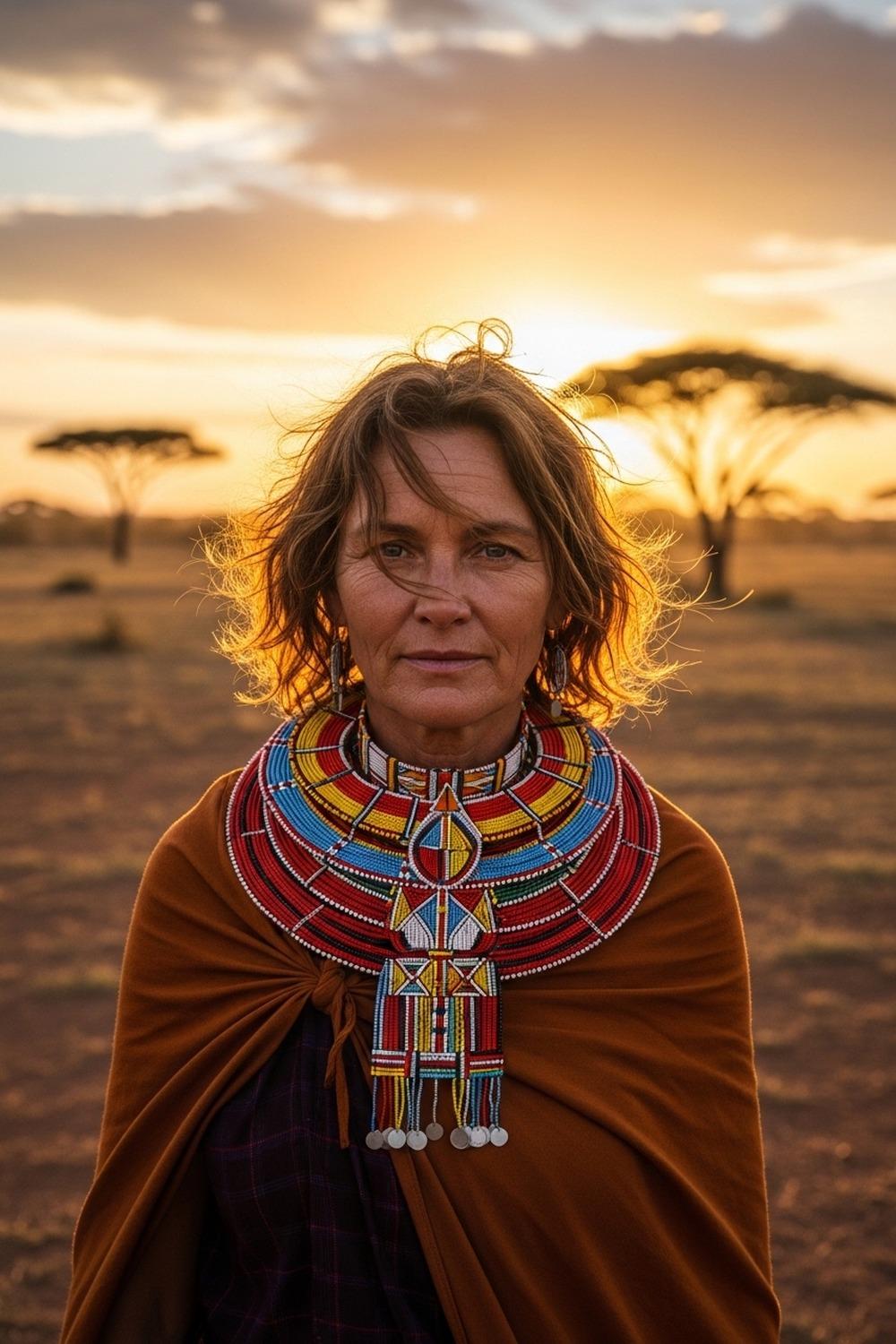
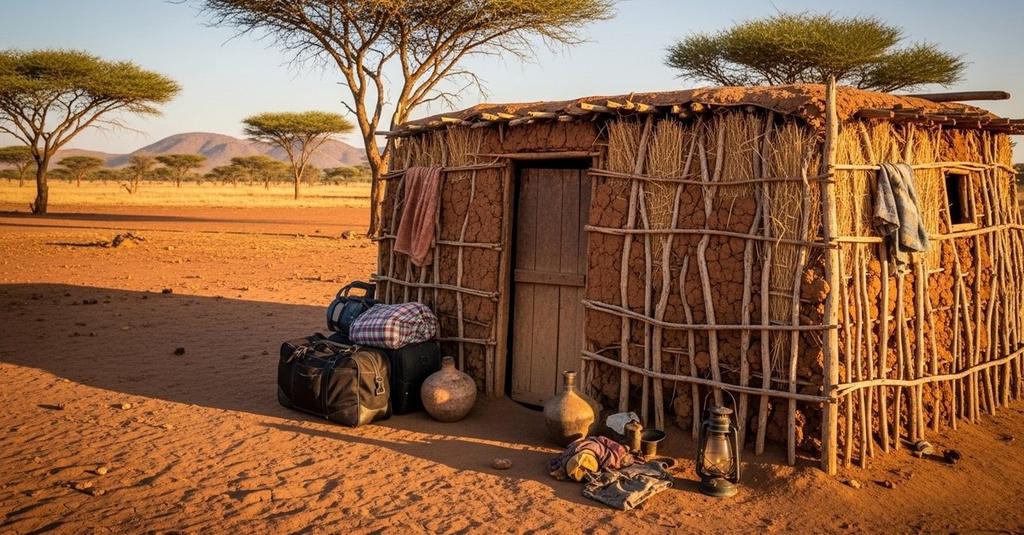
The Samburu people are a Nilotic ethnic group closely related to the Maasai, semi-nomadic pastoralists whose culture is built around cattle, camels, goats, and a warrior class known as the moran. When Corinne arrived in 1987, Barsaloi had no electricity grid, no running water, no paved road access for much of the year. The manyatta she moved into — a traditional homestead of woven branches sealed with packed mud and cow dung — was built by hand, shared with goats and chickens, lit by kerosene at night. This wasn’t a cultural exchange programme. It was daily life, unmediated and unromantic in its logistics.
Lketinga was a moran — a young Samburu warrior in the age-grade that carries the community’s prestige and ceremonial responsibility. He wore ochre and red, carried a spear, moved through the landscape with the ease of someone born inside it. Corinne had none of that fluency. She fetched water from a river shared with livestock. She learned to cook over an open fire. She picked up Ki-Samburu word by word, relying on broken Swahili as a bridge, making mistakes that caused genuine offence in a culture where language and protocol are inseparable. It was gruelling.
It was also, by her own account, the most alive she’d ever felt.
Every assumption she’d carried about time, privacy, food, and gender had to be renegotiated from scratch. The gap between the life she’d left and the one she’d entered wasn’t just geographical. It was structural. That’s not metaphor. That’s Tuesday morning in Barsaloi.
Love Under Pressure: When Culture Becomes Weight
Why does the Western-woman-gives-it-all-up-for-love framing survive so stubbornly? Because Corinne Hofmann has always pushed back against it. The reality was layered, difficult, and often contradictory. Lketinga’s jealousy intensified steadily after their traditional Samburu wedding in 1988. He questioned her movements, her interactions with other men, her reasons for everything. This wasn’t aberrant behaviour in a vacuum — it emerged from a culture in which women’s mobility and fidelity are policed communally and in which a warrior’s honour is bound up in his wife’s behaviour.
Understanding the structural roots of something doesn’t make it easier to live inside it. Those of us drawn to stories that ask whether tenderness and strength can truly live side by side inside a relationship — that persistent human question at the heart of so many lives — will recognise the particular ache of this one. Read more on that tension here: can tenderness and strength truly live side by side inside us.
By 1990, she had contracted malaria three times. Corinne gave birth to their daughter, Napirai, in 1989 — in a local clinic with minimal equipment, after a difficult pregnancy. She was severely malnourished. Her weight had dropped dangerously. The combination of dietary changes, physical labour, emotional strain, and repeated illness had taken a cumulative toll that no romantic narrative could paper over.
Cerebral malaria — the variant that crosses the blood-brain barrier — carries a fatality rate of up to 25% without prompt hospital treatment, according to the World Health Organization’s 2023 malaria report. In Samburu County, prompt hospital treatment is not always available. She was medevaced to Nairobi at one point barely conscious. Watching a human body refuse to cooperate with the place it inhabits — watching the Corinne Hofmann Samburu warrior Kenya story narrowing down to a medical evacuation — you stop calling it a narrative choice.
She made a decision. In 1990, Corinne took Napirai and returned to Switzerland. She left Lketinga behind. The marriage was over. The love, she has said repeatedly, was not — but love doesn’t always equal a liveable life, and she was clear-eyed enough to know the difference.
The Book That Made the World Pay Attention
When Corinne Hofmann published Die weiße Massai — The White Masai — in 1998 through Rütten & Loening, it sold more than five million copies across 30 languages. The publisher hadn’t anticipated it. Corinne had written it largely for herself, as a way to process an experience that didn’t fit neatly into any existing category.
It became one of the best-selling German-language memoirs of the decade. The story found a global audience precisely because it was told without sentimentality — the leeches in the river, the goat slaughtered for guests, the sleepless nights listening to Lketinga’s accusations — alongside genuine love, genuine wonder, and genuine loss. The BBC later documented how the memoir transformed Barsaloi’s relationship with outside visitors, as readers began making pilgrimages to the settlement that had been invisible to international tourists before the book.
Some scholars of African studies and postcolonial literature pushed back on the memoir’s framing — the White woman as central protagonist in an African landscape, Lketinga as object of fascination rather than full subject. These are legitimate critiques. Corinne herself has engaged with some of them in later interviews, acknowledging that her perspective was inevitably partial, shaped by privilege she carried even into poverty.
What’s harder to dismiss is the specificity of her account. Here’s the thing: the concrete detail, the named places, the dates, the bodily reality of what she endured — that specificity does something that generalised criticism sometimes can’t. It insists on the actual texture of a life. The film adaptation, directed by Hermine Huntgeburth and starring Nina Hoss, was released in Germany in 2005 and became the country’s highest-grossing film that year, bringing the Corinne Hofmann Samburu warrior Kenya story to an audience that had never opened the book.
Corinne Hofmann’s Samburu Warrior Kenya Legacy Revisited
After the book came something almost as remarkable as the story inside it. Corinne returned to Kenya — not to Lketinga’s compound, but to the broader Samburu community she’d been part of. She established the Corinne Hofmann Foundation, which has funded school buildings, water projects, and medical supply chains across Samburu County. By 2015, the foundation had contributed to the construction of several primary school classrooms in the Barsaloi area, serving communities that had previously had no formal educational infrastructure within walking distance.
Lketinga himself eventually remarried within the Samburu tradition and raised several children. He has given interviews. He tells the story differently — and both versions are true, in the way that two people can live through the same four years and emerge with different architectures of memory.
Napirai Hofmann — the daughter born in that Barsaloi clinic in 1989 — grew up in Switzerland. She didn’t meet her father until she was in her twenties. Their reunion became the subject of Corinne’s follow-up memoir, Wiedersehen in Barsaloi (Return to Barsaloi), published in 2005. Napirai has since become a public figure in her own right, working in fashion and speaking about her dual heritage with nuance that neither romanticises Samburu culture nor dismisses it. She’s described the experience of travelling back to Barsaloi as meeting a version of herself she hadn’t known existed — a cellular recognition that had nothing to do with nostalgia.
Mobile phone networks now reach parts of Samburu County. Some moran carry smartphones. The manyatta still exists. So does the thornscrub, the red dust, the livestock, the heat. Some things negotiate. Some things don’t. But Samburu community itself has changed too.
How It Unfolded
- 1986 — Corinne Hofmann, then running a clothing boutique in Frauenfeld, Switzerland, meets Samburu warrior Lketinga Leparmorijo during a holiday near Mombasa, Kenya.
- 1987 — She sells her business, packs her belongings, and relocates permanently to Barsaloi in Samburu County, moving into a traditional manyatta compound with no electricity or running water.
- 1988 — Corinne and Lketinga marry in a traditional Samburu ceremony; she is the first Swiss national to be formally integrated into a Samburu family unit in this region.
- 1989 — Daughter Napirai is born in a local Barsaloi clinic; Corinne’s health deteriorates sharply through malnutrition and repeated malaria infections.
- 1990 — Corinne returns to Switzerland with Napirai; the marriage ends. She begins writing what will become The White Masai.
- 1998 — Die weiße Massai published in Germany; goes on to sell over five million copies across 30 languages.
- 2005 — Film adaptation released in Germany, becoming the country’s highest-grossing film of the year; Return to Barsaloi memoir also published.
- 2015 — The Corinne Hofmann Foundation completes new school classroom construction in the Barsaloi area, with ongoing water infrastructure funding in Samburu County.
By the Numbers
- 5 million+ copies of The White Masai sold across more than 30 languages since its 1998 publication (Rütten & Loening publisher data)
- 350 kilometres — approximate distance from Nairobi to Barsaloi, Samburu County, Kenya, most of it on unpaved roads
- 3 — number of times Corinne contracted malaria during her four years in Samburu territory, with at least one episode requiring emergency evacuation to Nairobi
- 25% — approximate fatality rate for cerebral malaria without prompt treatment (WHO World Malaria Report, 2023)
- 4 years — the span of Corinne’s life in Barsaloi, from 1987 to 1990, during which she learned Ki-Samburu, gave birth, and survived conditions that hospitalised her repeatedly
Field Notes
- When Corinne arrived in Barsaloi in 1987, the Samburu concept of moran — the warrior age-grade — was not a romantic or symbolic identity. It was a functional social structure determining land access, marriage rights, and community protection duties. Lketinga’s behaviour, including his jealousy, was shaped by codes that operated communally, not just personally (researchers actually call this structural rather than personal behaviour).
- Ki-Samburu, the language of the Samburu people, is a Southern Nilotic language closely related to Maa (spoken by the Maasai). It has no standardised written form and is transmitted entirely orally. Corinne learned it without a textbook, grammar guide, or language school — entirely through immersion and correction in real time.
- The Corinne Hofmann story is often filed under “romance” or “travel memoir,” but it’s one of the few first-person accounts of long-term integration into a semi-nomadic East African community written by an outsider who actually stayed — not for weeks or months, but for years, through illness, pregnancy, and social isolation.
- Researchers studying cross-cultural marriage and integration in semi-nomadic East African communities still don’t fully understand how sustained psychological stress interacts with physical illness in these environments — specifically whether the malaria outcomes Corinne experienced were worsened by chronic stress-induced immune suppression. It’s a question that sits at the intersection of tropical medicine and medical anthropology, and it hasn’t been resolved.
Frequently Asked Questions
Q: Who is Corinne Hofmann and what is her connection to the Samburu warrior Kenya story?
Corinne Hofmann is a Swiss author born in 1960 who sold her clothing business in Frauenfeld, Switzerland, and moved to Barsaloi, Kenya in 1987 after meeting Samburu warrior Lketinga Leparmorijo. She lived in a traditional manyatta compound for four years, married Lketinga in 1988, gave birth to their daughter Napirai in 1989, and returned to Switzerland in 1990 after repeated serious illness. She published her memoir The White Masai in 1998, which sold over five million copies.
Q: What happened to Lketinga and Napirai after Corinne left Kenya?
Lketinga Leparmorijo remained in Barsaloi, where he remarried within Samburu tradition and raised a family. He has given interviews over the years and has offered his own account of the relationship, which differs in emphasis from Corinne’s memoir. Napirai Hofmann grew up in Switzerland with her mother and didn’t visit Kenya or meet her father until she was in her twenties. Their reunion became the subject of Corinne’s 2005 follow-up memoir, Return to Barsaloi. Napirai has since built a public profile and spoken openly about her mixed heritage.
Q: Is The White Masai a true story, and how accurate is it?
Yes, The White Masai is a memoir — Corinne Hofmann has consistently maintained it is a first-person factual account, not fiction. Some scholars of African studies and postcolonial literature have critiqued the perspective as inherently partial, and Corinne has acknowledged in interviews that her account is shaped by her own cultural lens. However, the memoir’s specific place names, dates, and bodily detail are consistent with documented geography and conditions in Samburu County during the late 1980s. It’s a subjective truth, not a fabricated one.
Editor’s Take — Sarah Blake
What stays with me isn’t the love story. It’s the immune system. Corinne Hofmann contracted malaria three times in four years, was medevaced near-unconscious, and yet the narrative almost always leads with the romance. We keep aestheticising survival as devotion. The body was telling a clear story the whole time — one about limits, about what a human organism can and can’t negotiate — and the book became famous for the part about love instead. Both things are real. But only one of them tried to kill her.
The Corinne Hofmann Samburu warrior Kenya story has been filed under romance for twenty-five years, and that filing has always been slightly wrong. It’s actually a story about what happens when the terms of a life are completely dismantled and rebuilt from raw materials — language, fire, mud, illness, a child’s first cry in a clinic with no power. Corinne survived it. Napirai carries it forward in her DNA and her face. Barsaloi is still there, the red dust still rising. What do we do with lives that refuse to be categorised cleanly? We keep reading them.
Illustrations are AI-generated. Article fact-checked and human-edited. Our editorial standards.