Why Baby Squirrels Run Straight At You (It’s Not Rabies)
You’re standing in your yard and suddenly there’s this tiny, wobbling thing moving straight toward your feet like it’s got somewhere urgent to be. Most people’s first instinct is to back away. Maybe panic. But what’s actually happening in that moment is so much stranger — and sadder — than you probably think.
Every year, thousands of people encounter a baby squirrel doing exactly this, and almost nobody knows what to do. Most of us get it wrong. But here’s the thing: understanding what’s really driving that fearless sprint could literally be the difference between a squirrel that makes it and one that doesn’t.
Key Facts
- The CDC has no documented cases of squirrel-to-human rabies transmission in U.S. history; squirrels account for less than 1% of animal rabies cases.
- Baby squirrels stay in nests called dreys for the first 10 to 12 weeks, built 20 to 45 feet up in tree canopies.
- Below 60°F ambient temperature, a healthy baby squirrel loses roughly 1°F of body temperature every minute.
- The National Wildlife Rehabilitators Association (2022) reports orphaned squirrels make up nearly 30% of small mammal intakes at U.S. rehabilitation centers annually.
- Mother squirrels retrieve fallen kittens within roughly a four-hour window, after which they typically will not return.
In short: Why baby squirrels run toward you comes down to a biological emergency, not aggression or rabies. A fallen kitten loses about 1°F per minute below 60°F, and as cold crashes its blood sugar, evolution drives it to seek anything warm and maternal, including your legs. The CDC has recorded zero squirrel-to-human rabies cases.
First, Let’s Kill the Rabies Panic
Squirrels and rabies is one of those things people worry about constantly. The CDC has no documented cases of squirrel-to-human rabies transmission in U.S. history. None. Zero. According to rabies tracking data, squirrels rank so low on the transmission list that Dr. Cathleen Hanlon, a former CDC rabies specialist who spent years mapping this stuff, basically stopped tracking them at all.
So that charging baby squirrel isn’t sick.
It’s desperate.
The boldness you’re seeing isn’t courage. It’s a biological emergency wearing the shape of confidence. And it started the moment that kitten — yes, that’s what baby squirrels are called, and I spent an embarrassing amount of time just on this one fact alone — hit the ground.
How a Kitten Becomes a Problem
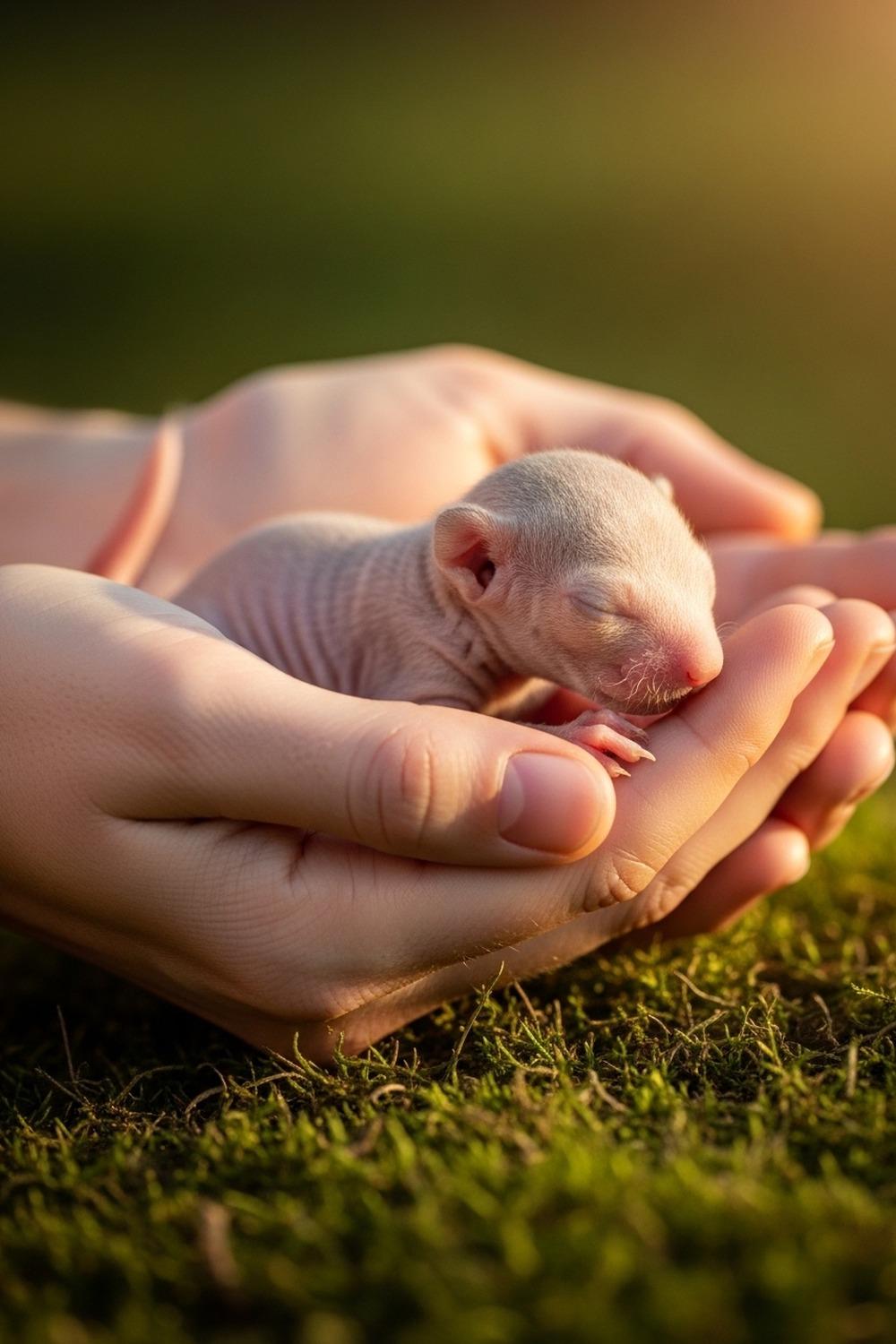
Baby squirrels are born completely blind, hairless, and entirely dependent on their mothers. For the first 10 to 12 weeks, they stay in their nests — called dreys — tucked 20 to 30 feet up in tree canopies. Eastern gray squirrels, the ones most of us see in suburbs, sometimes build these things as high as 45 feet. That’s a four-story building worth of height.
One storm. One predator. One clumsy sibling leaning the wrong way.
That’s all it takes.
A kitten tumbles down and suddenly it’s on pavement with no mother, no nest, and no idea how to survive. You can read more about what happens to animals in these situations at this-amazing-world.com.
The Physics of a Tiny Body Falling Apart
When a baby squirrel hits the ground, the fall is often survivable. Their bodies are lighter, their bones more flexible. That’s not the problem. The problem is what happens in the minutes after — and it happens fast. Their thermoregulation doesn’t fully develop until around week seven or eight. Before that, they lose body heat to the environment like a leaky container. At temperatures below 60°F, a healthy kitten loses roughly 1°F of body temperature every single minute. Twenty minutes on a cool spring morning, and you’re already looking at dangerous hypothermia.
That’s when the real desperation kicks in.
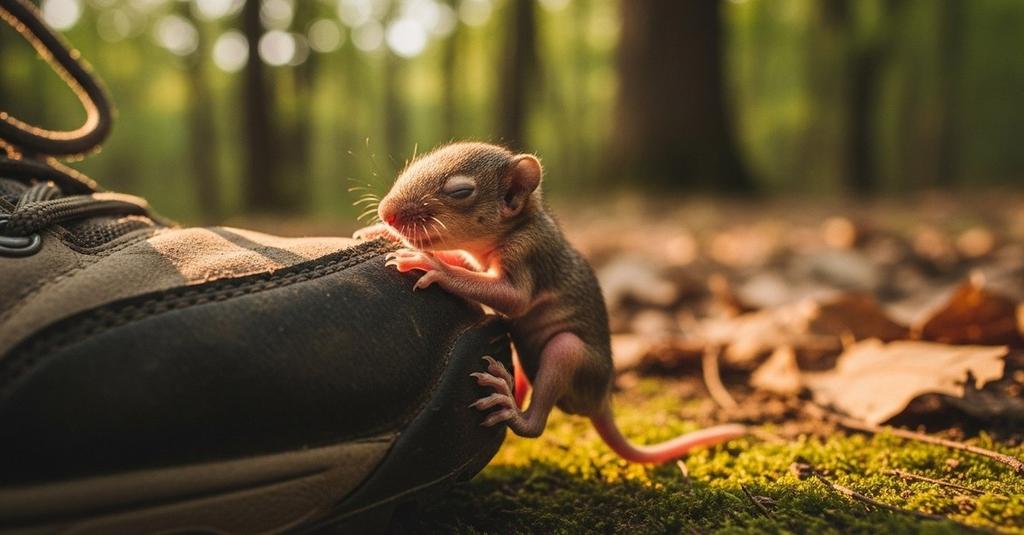
Cold crashes their blood sugar. The brain goes into emergency mode. And when a baby squirrel’s brain is in emergency mode, it does what millions of years of evolution hardwired it to do: seek out anything large, anything warm, anything that might be maternal. Your legs. Your shoes. The heat radiating off your body.
The squirrel doesn’t know it’s you.
Why the Mother Doesn’t Come Back (Usually)
Here’s what wildlife rehabilitators see over and over: people find a kitten, they wait for the mother to retrieve it, and that waiting costs the kitten its life. Mother squirrels will come back — but not after six hours. Not after the kitten’s been on cold pavement, getting weaker, going into shock. The window is maybe four hours. Sometimes less.
The National Wildlife Rehabilitators Association reports that orphaned squirrels account for nearly 30% of all small mammal intakes at wildlife rehabilitation centers annually. More than any other species. Thirty percent. And most of those cases could’ve been salvageable if someone had acted faster.
It’s not that people don’t care. They just don’t know.
By the Numbers
- A kitten loses 1°F per minute below 60°F ambient temperature.
- According to the National Wildlife Rehabilitators Association (2022), orphaned squirrels make up nearly 30% of all small mammal intakes at wildlife rehabilitation centers in the United States each year — a number that’s held steady for over a decade despite urban population shifts, which is weird when you think about it.
- Eastern gray squirrel dreys documented at heights exceeding 45 feet — equivalent to a four-story building.
- Squirrel rabies: less than 1% of all animal rabies cases in the U.S., compared to bats (33%), raccoons (28%), and foxes (7%), according to CDC Wildlife Rabies data from 2021.
- Mother squirrels retrieve fallen kittens within a four-hour window if they’re going to retrieve them at all.
Field Notes
- If you find a baby squirrel, place it in a small box near the base of the nest tree and watch from inside for up to four hours. The mother often comes.
- Never give a baby squirrel water from a dropper or cow’s milk. Their digestive systems can’t process it. Aspiration pneumonia — fluids entering the lungs — kills more rescued kittens than almost anything else. You need specialized formula from an actual wildlife rehabilitator.
- Baby squirrels have a rooting reflex identical to human newborns — the instinct that makes them turn toward anything touching their face. When a cold, hungry kitten buries itself in your sleeve or your collar, it’s not bonding with you. It’s searching for a nipple. That’s all it knows how to do.
What You Do When One Charges
Don’t kick it. Don’t run. Don’t assume someone else will handle it.
Pick it up gently — gloved hands or a cloth work fine. Warm it slowly using body heat or a heating pad on the lowest setting under half the container. Then find your nearest licensed wildlife rehabilitator. The National Wildlife Rehabilitators Association and the Wildlife Rehabber directory both have searchable databases by zip code. Most areas have someone reachable within an hour.
That’s the equation. Time, warmth, the right person.
And please don’t keep it. I know it’s tempting — that last fact about the rooting reflex kept me reading for another hour, and I get why people want to just hold onto something that small and helpless. But squirrels raised by humans without proper training develop metabolic bone disease, behavioral imprinting problems, and zero chance of surviving in the wild. The kindest thing is handing it off fast to someone who actually knows what it needs.
There’s something larger happening here anyway. Urban tree canopy loss in American cities has accelerated sharply over the past two decades. More nests getting knocked down. More kittens falling. More collisions between the wild world and ours. Every person who recognizes what that charging baby squirrel is really asking — and responds correctly — becomes part of a wildlife safety net that the urban environment increasingly needs.
A baby squirrel running toward you is asking in the only language it has: warm me, help me, don’t let me disappear. The answer takes about four minutes and a phone call. That’s the whole story — except it’s also a window into how many small, urgent, easy-to-miss ways the wild keeps colliding with what we’ve built. If this keeps you curious, there’s more at this-amazing-world.com. The next one’s even stranger.
Frequently Asked Questions
Q: Can baby squirrels give you rabies?
No documented cases of squirrel-to-human rabies transmission exist in U.S. history, according to the CDC. Squirrels account for less than 1% of all animal rabies cases, far below bats at 33%, raccoons at 28%, and foxes at 7% per CDC 2021 data. A baby squirrel charging toward you is not sick with rabies; it is desperate, cold, and seeking warmth after falling from its nest.
Q: Why does a baby squirrel run toward people?
When a baby squirrel falls from its nest, it cannot regulate body temperature until around week seven or eight. Below 60°F it loses roughly 1°F per minute, and the resulting cold crashes its blood sugar, pushing the brain into emergency mode. Evolution then drives it to seek anything large, warm, and potentially maternal, including your legs, shoes, or the heat radiating off your body. The squirrel does not know it is approaching a human.
Q: What should you do if you find a fallen baby squirrel?
Pick it up gently with gloved hands or a cloth, then warm it slowly using body heat or a heating pad on the lowest setting under half the container. Place it in a box near the nest tree and watch for up to four hours, since mothers retrieve fallen kittens within roughly a four-hour window. If the mother does not return, contact a licensed wildlife rehabilitator through the National Wildlife Rehabilitators Association directory.
Q: Why shouldn’t you give a baby squirrel water or milk?
Never give a baby squirrel water from a dropper or cow’s milk, because their digestive systems cannot process it. Aspiration pneumonia, where fluids enter the lungs, kills more rescued kittens than almost anything else. They need specialized formula from an actual wildlife rehabilitator. You also should not keep one as a pet, since squirrels raised by humans without training develop metabolic bone disease, behavioral imprinting problems, and have virtually zero chance of surviving in the wild.
Illustrations are AI-generated. Article fact-checked and human-edited. Our editorial standards.