Sustainable Aviation Fuel: Why 99% of Flights Still Burn Oil
Every 90 seconds, another aircraft climbs into the sky burning kerosene. That’s 100,000 flights daily, each one consuming fuel refined from crude oil — and yet sustainable aviation fuel exists, works perfectly in those same engines, and makes up less than 1% of global jet fuel consumption. The paradox contains one of modern aviation’s most consequential blind spots. The math is straightforward. Everything else is tangled.
In 2023, global aviation consumed roughly 300 million tonnes of jet fuel. Approximately 600,000 tonnes came from sustainable sources. Airlines from London to Singapore have published net-zero pledges, invested in carbon offset schemes, and signed SAF purchasing agreements. But the infrastructure, the feedstock supply, and the production economics haven’t caught up with the ambition — and the gap between the two widens every time another aircraft leaves the gate.

Key Facts
- In 2023, global aviation consumed roughly 300 million tonnes of jet fuel, of which only about 600,000 tonnes came from sustainable sources (under 1%)
- Sustainable aviation fuel can reduce lifecycle carbon emissions by 70-80% compared to conventional jet fuel, depending on feedstock and process
- HEFA-based SAF, made from waste cooking oil and fats, accounted for well over 80% of SAF produced in 2023
- Power-to-Liquid SAF cost roughly four to six times the price of conventional jet fuel in 2023
- In November 2021 at COP26 in Glasgow, more than 150 airlines and aviation bodies committed to net-zero carbon aviation by 2050
In short: Sustainable aviation fuel is a drop-in replacement that works in existing jet engines, yet it made up under 1% of the roughly 300 million tonnes of jet fuel burned in 2023. The bottleneck is feedstock supply, infrastructure, and cost, not aircraft technology, leaving airline net-zero pledges far ahead of actual production.
What Sustainable Aviation Fuel Actually Is
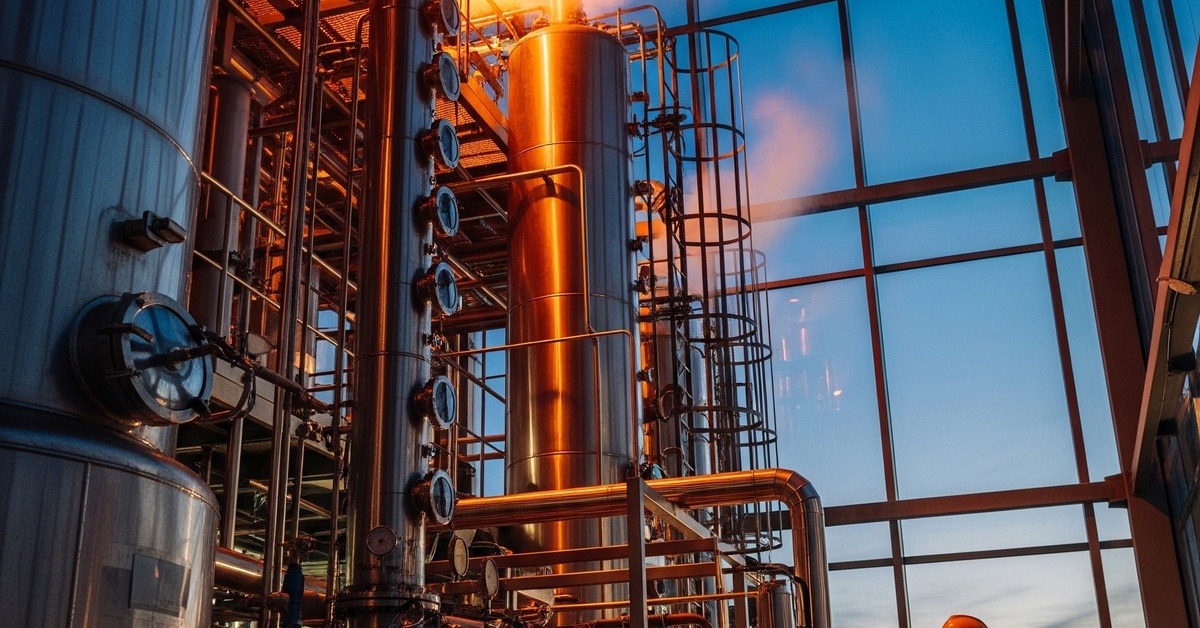
Sustainable aviation fuel isn’t a single product. It’s a category — a set of fuel pathways that produce a drop-in replacement for conventional Jet-A kerosene, chemically compatible with existing engines and airport infrastructure. Several approved production routes exist. These include Hydroprocessed Esters and Fatty Acids (HEFA), which converts waste cooking oil and animal fats into fuel; Fischer-Tropsch synthesis, which gasifies agricultural or municipal waste and reconstructs it into hydrocarbons; and Power-to-Liquid (PtL) pathways, which use captured CO₂ and green hydrogen to synthesize jet fuel from the air itself.
Each pathway carries a different carbon intensity, a different production cost, and a different set of supply constraints. According to the documented chemistry, SAF can reduce lifecycle carbon emissions by 70–80% compared to conventional jet fuel, depending on the feedstock and process. The International Air Transport Association (IATA) has tracked these developments since the early 2010s.
A Boeing 787 can fly on a blend of SAF and conventional jet fuel today — and has done, on commercial passenger flights since 2011. Lufthansa, United Airlines, and Singapore Airlines have all operated SAF-blended flights without any modification to aircraft systems. This is not a technology waiting to be invented.
The phrase “drop-in replacement” is critical here. SAF doesn’t require new engines, new fuel tanks, or new airport pipelines. The bottleneck isn’t at the aircraft — it’s hundreds of kilometers upstream, in the fields, refineries, and chemical plants that would need to produce it at scale. That distinction matters enormously when you’re trying to understand why progress feels so glacially slow.
The Supply Chain That Doesn’t Yet Exist
HEFA-based SAF — the kind made from used cooking oil and agricultural fats — currently dominates global SAF production, accounting for well over 80% of the 600,000 tonnes produced in 2023. It’s the cheapest pathway available. But it runs headfirst into an uncomfortable ceiling. The world has a finite supply of waste cooking oil. The European Union’s renewable energy directives already compete with aviation for that feedstock. Shipping, road transport, and even some power generators want the same raw material. There’s a genuine resource competition underway, and aviation — which can’t easily electrify its long-haul fleet the way a car can — may end up losing it.
Why does this matter? Because when one sector dominates a limited resource, others get squeezed out.
The more promising long-term pathways — Fischer-Tropsch and Power-to-Liquid — face a different set of obstacles entirely. Green hydrogen, the essential input for PtL fuel, requires vast quantities of renewable electricity to produce. Building the electrolyzer capacity, the renewable power generation, and the CO₂ capture infrastructure simultaneously, at scale, with the right geographic co-location — that’s an engineering and financing challenge with no clean precedent.
PtL fuel is effectively carbon-neutral in its lifecycle. But in 2023, it cost somewhere between four and six times the price of conventional jet fuel. The Rocky Mountain Institute estimated in 2022 that scaling PtL SAF to even 10% of global aviation fuel demand would require more renewable electricity than Germany currently produces in an entire year.
Here’s the thing: talk to fuel production engineers working on this and they’ll tell you the same thing. The science is solved. What’s missing isn’t chemistry. It’s capital allocation, policy certainty, and time — three things the climate timeline is no longer willing to offer generously.
Why Airlines Are Buying Pledges, Not Fuel
In November 2021, at the COP26 climate summit in Glasgow, more than 150 airlines and aviation bodies signed the Aviation Climate Ambition Coalition declaration, committing to net-zero carbon aviation by 2050. Aviation accounts for roughly 2.5% of global CO₂ emissions, but when you factor in contrail formation, nitrogen oxide effects, and cirrus cloud generation at altitude, the sector’s total warming impact may be two to four times higher than its CO₂ numbers alone suggest.
A 2021 analysis published in Nature Climate Change estimated that non-CO₂ aviation effects could account for more than two-thirds of the sector’s total climate forcing. That’s a number the industry has been conspicuously slow to incorporate into its public commitments.
The SAF pledges made by airlines tend to exist as forward purchase agreements — contracts to buy SAF when it becomes available at a specified future price. Delta Air Lines committed to sourcing 10% of its fuel from SAF by 2030. United Airlines signed agreements totaling over one billion gallons of SAF. But signing a purchase agreement doesn’t build a biorefinery. It doesn’t train chemical engineers. It doesn’t secure feedstock supply contracts or connect power grids to electrolyzers. The sustainable aviation fuel industry needs both the demand signal and the physical infrastructure simultaneously, and those two things are still deeply out of sync.
Policy is beginning to shift, though unevenly. The EU’s ReFuelEU Aviation regulation mandates that 2% of aviation fuel at EU airports must be SAF by 2025, rising to 70% by 2050. The US Inflation Reduction Act introduced a tax credit of up to $1.75 per gallon for qualifying SAF. These are meaningful levers. But 2% by 2025, against a global backdrop of sub-1% today, reveals exactly how much the ambition still outruns the reality.
The Sustainable Aviation Fuel Math Problem
To replace just 10% of aviation fuel demand with SAF by 2030 — a modest target by most net-zero frameworks — the world would need to produce around 30 million tonnes per year within six years. In 2023, it produced 600,000. That’s a 50-fold increase in less than a decade. The arithmetic that keeps fuel researchers awake reveals something uncomfortable: the aviation industry burns approximately 300 million tonnes of jet fuel annually.
The World Economic Forum’s Clean Skies for Tomorrow coalition published a detailed production roadmap in 2021 estimating that achieving 10% SAF penetration by 2030 would require $300 billion in cumulative investment. Not across the whole century. By the end of this decade. For context, the entire global aviation industry generated revenues of roughly $750 billion in 2023, and has spent much of the post-pandemic period rebuilding balance sheets, not redirecting capital into fuel production infrastructure. The gradient required — the steepness of the production growth curve needed to matter climatically — is still far beyond what current investment rates can deliver on schedule.
New facilities are coming online. Neste, the Finnish oil refining company that has pivoted aggressively into renewable fuels, produced around 500,000 tonnes of SAF in 2023 alone — nearly the entire global supply from just a few years prior. In 2023, World Energy’s Paramount facility in California remained one of the largest SAF producers operating globally. Gevo, LanzaJet, and a handful of other emerging producers are building or planning facilities in the United States and Europe. The trajectory is upward.
Watching these increments accumulate while global aviation expands — you stop calling it progress.
Some researchers at MIT’s Laboratory for Aviation and the Environment have begun modeling what a realistic transition looks like if current investment trends continue. Their conclusion, published in updated analyses around 2022, was that SAF could reach somewhere between 5% and 13% of global jet fuel supply by 2035 under optimistic assumptions — and between 1% and 4% under conservative ones. Neither figure puts aviation on a credible net-zero path by 2050 without dramatic policy intervention.
What a Real Transition Actually Requires
Sweden offers the clearest early-stage model of what a mandated transition looks like in practice. In 2021, Sweden introduced the world’s first national SAF blending mandate, requiring aviation fuel suppliers to include SAF at a rate starting at 0.8% and rising annually. Supply chains adapted. Airlines complied. The sky did not fall in. Fuel costs rose modestly at Swedish airports. Traffic was not materially disrupted. But Sweden is a small country with strong environmental policy infrastructure, a functioning carbon price, and access to significant biomass feedstocks.
Replicating its model at the scale of the United States, China, or the Middle East — where much of global aviation growth is concentrated — is an entirely different engineering and political challenge. China is currently the world’s fastest-growing aviation market and will likely surpass the United States in total passenger traffic sometime in the 2030s. Its SAF production capacity is minimal. India’s aviation sector is expanding at rates that will add the equivalent of a new major airline every two years for the foreseeable future.
If SAF is only scaled in Europe and North America while the centers of aviation growth go unaddressed, the net climate benefit shrinks toward irrelevance. The International Energy Agency’s Net Zero by 2050 roadmap is explicit: SAF must account for more than half of the emissions reduction needed from aviation. There is no credible substitute technology for long-haul flight within the 2050 window — battery-electric aircraft are still limited to short regional routes, and hydrogen propulsion remains 15 or more years from commercial scale (researchers actually call this the “propulsion gap,” and it matters more than it sounds).
How It Unfolded
- 2008 — Virgin Atlantic operated the world’s first biofuel-assisted commercial flight, using a coconut and babassu oil blend on one of its Boeing 747 engines, demonstrating basic feasibility.
- 2011 — The first commercial passenger flight using a certified SAF blend took off; Lufthansa subsequently ran a six-month SAF trial on its Hamburg-Frankfurt route.
- 2021 — COP26 in Glasgow saw more than 150 aviation signatories commit to net-zero by 2050; the EU simultaneously began drafting the ReFuelEU Aviation regulation.
- 2023 — Global SAF production reached approximately 600,000 tonnes, doubling from 2022, but remaining below 0.2% of total jet fuel demand.
By the Numbers
- Less than 1% — share of global jet fuel that was sustainable aviation fuel in 2023 (IATA, 2023)
- 300 million tonnes — jet fuel consumed by the global aviation sector annually
- 70–80% — lifecycle carbon reduction achievable with SAF compared to conventional kerosene, depending on feedstock
- 50× — the production increase required to reach just 10% SAF penetration by 2030, from 2023 baseline figures
- $300 billion — estimated investment needed to reach 10% SAF penetration by 2030 (World Economic Forum, Clean Skies for Tomorrow, 2021)
Field Notes
- In 2022, a United Airlines flight carrying 100 passengers flew from Chicago to Washington D.C. using 100% SAF in one engine — the first time a commercial passenger aircraft flew with a full SAF blend rather than a partial mix. The flight was entirely unremarkable from a passenger perspective, which was precisely the point.
- The energy density of SAF is virtually identical to conventional Jet-A fuel, which is why it works as a drop-in replacement without engine modifications. This is fundamentally different from electric or hydrogen aviation, which would require completely new propulsion architectures.
- Contrails — the white streaks left by aircraft at altitude — may contribute more to aviation’s warming effect than its CO₂ emissions in the short term. SAF produces fewer aromatic hydrocarbons when burned, which means fewer contrail-forming particles. Early research suggests this could be an underappreciated climate benefit of SAF beyond carbon alone.
- Researchers still can’t fully model how a rapid global SAF transition would affect land use, biodiversity, and water consumption if biomass-based feedstocks are scaled aggressively. The land competition between SAF feedstock farming and food production, wildlife habitat, and existing carbon sinks remains one of the genuinely unresolved equations in aviation sustainability science.
Frequently Asked Questions
Q: What is sustainable aviation fuel and how is it different from regular jet fuel?
Sustainable aviation fuel is a category of jet fuel made from non-petroleum sources — including waste cooking oil, agricultural residues, municipal solid waste, and captured CO₂ — rather than refined crude oil. Chemically, it’s nearly identical to conventional Jet-A kerosene, which means it can be blended directly into existing fuel systems without modifying aircraft engines or airport infrastructure. The key difference is its carbon lifecycle: SAF can reduce emissions by 70–80% compared to fossil jet fuel, depending on how it’s produced.
Q: Why don’t airlines just switch to sustainable aviation fuel immediately?
Cost and supply are the two primary barriers. In 2023, SAF cost roughly two to five times more than conventional jet fuel, depending on the production pathway. Even more fundamentally, the world simply doesn’t produce enough of it. Global SAF output in 2023 was around 600,000 tonnes — against an industry demand of 300 million tonnes. The feedstocks, refineries, and chemical plants required to close that gap don’t yet exist at scale. Airlines can’t buy what hasn’t been built.
Q: Is sustainable aviation fuel really sustainable, or is it just greenwashing?
The answer depends heavily on the feedstock. HEFA-based SAF from waste cooking oil carries genuine carbon savings and competes minimally with food systems. But if SAF were scaled using purpose-grown energy crops, the land use impacts — deforestation, water consumption, biodiversity loss — could offset much of the climate benefit. The best pathways, like Power-to-Liquid using green hydrogen and captured CO₂, are genuinely low-carbon but remain expensive and early-stage. Certification schemes like CORSIA attempt to verify sustainability claims, but enforcement and transparency vary considerably between producers and jurisdictions.
Editor’s Take — Dr. James Carter
What strikes me most about the SAF story isn’t the technology gap — it’s the perception gap. The public narrative around aviation and climate tends to oscillate between guilt-tripping passengers and celebrating airline pledges, while the actual production numbers sit quietly in industry reports, almost never mentioned. The data left no room for alternative interpretation — less than 1% of global jet fuel came from sustainable sources in 2023, and everyone involved in the industry knows it. Until that figure dominates every conversation about flight and the future, the distance between ambition and infrastructure will keep widening while the planes keep burning oil.
The jet age transformed how humans move across the planet. It compressed geography, connected cultures, and built an economy that now depends on 100,000 daily flights remaining airborne. Sustainable aviation fuel is the closest thing we have to a bridge across the carbon chasm that dependency has created. But bridges have to be built — beam by beam, investment by investment, refinery by refinery. The question isn’t whether the technology exists. The question is whether the civilizational will to scale it arrives before the carbon budget for aviation runs out entirely.
Illustrations are AI-generated. Article fact-checked and human-edited.