The Salamander That Regrows Its Brain Without a Scar
An axolotl can rebuild its own brain. Not patch it. Not scar over it. Actually rebuild it, neuron by neuron, until you can’t tell anything was ever wrong. Here’s what’s wild: we’re watching it happen in real time, and we still don’t fully understand how.
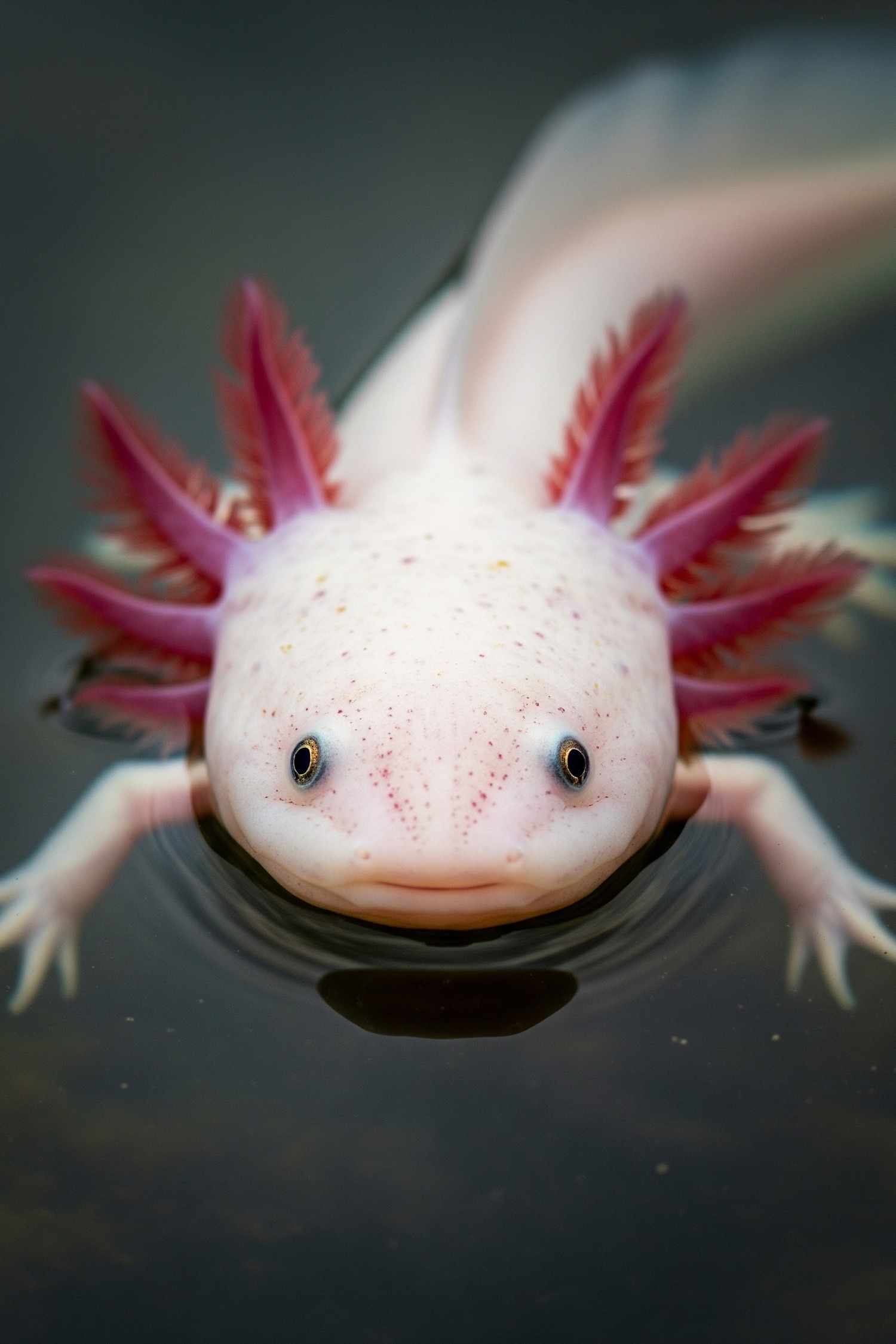
The axolotl lives in exactly one place on Earth — the canal system of Lake Xochimilco, just outside Mexico City. It’s a small salamander with feathery gills and an almost comically permanent smile. When it loses a leg, it grows it back. When its heart gets damaged, it repairs itself. When a chunk of its brain gets injured, the whole thing regenerates — cleanly, precisely, with zero scarring. That’s not metaphorical language. That’s what the cells actually accomplish.
Key Facts
- Fewer than 1,000 axolotls may survive in the wild, down from tens of thousands, per the IUCN Red List (2023).
- The axolotl genome spans roughly 32 billion base pairs — about ten times the human genome — and was fully sequenced in 2018 by teams in Vienna and Dresden.
- Axolotls can regenerate the same limb up to five times with no measurable decline in accuracy or tissue quality.
- Lake Xochimilco, the axolotl’s only native habitat, has lost an estimated 98% of its surface area since the 1970s.
- Regeneration research on the axolotl is led by Elly Tanaka at the Research Institute of Molecular Pathology in Vienna.
In short: The axolotl, a salamander native only to Mexico City’s Lake Xochimilco, can regrow limbs, heart and brain tissue cleanly with no scarring. Its cells revert to an embryonic state and rebuild exact structures using positional memory. Its 32-billion-base-pair genome was sequenced in 2018, yet fewer than 1,000 survive in the wild.
What Happens When a Cell Decides to Start Over
Okay, so an axolotl loses a limb. The wound closes. And then something happens that shouldn’t be possible — the cells at the damage site just… give up on being what they were. They dedifferentiate. Roll back to an embryonic state. Become blank slates. From there, they rebuild everything: nerves, muscle, bone, blood vessels. The whole architecture. Elly Tanaka, who runs regeneration research at the Research Institute of Molecular Pathology in Vienna, has spent years mapping the molecular signals that trigger this. The precision is what gets you.
Each cell knows its place.
A toe cell doesn’t become a knee. A nerve doesn’t wire itself backward. The axolotl’s cells somehow carry a map of where they belong in the body — researchers call this positional memory — and they follow it every single time, across the animal’s entire lifespan. It’s repeatable. It works. It never fails.
Why Humans Settled for Scars
We heal differently. When you get cut, your body floods the wound with collagen fibers — fibrous, tough stuff that closes the gap fast. It’s a survival strategy, not an elegant solution. The axolotl skips that entirely. That raised the question that’s actually been driving regenerative medicine for decades: do humans still carry these genes? Are they dormant?
According to the research documented through the axolotl’s genetic research history on Wikipedia, the axolotl genome is ten times larger than ours — absolutely dense with information we’re still parsing. And here’s the part that kept me reading for another hour: some of the genes involved in axolotl regeneration have direct counterparts in the human genome. They’re just off. Silent. Switched out.
Whether we can turn them back on without breaking everything else — that’s the question.
Regrowing a Brain Is Different
A limb is one problem. A brain is another. Axolotls can recover from significant brain injuries — damage to the cerebellum, the whole region that controls coordination and movement. The cells don’t fill the gap with scar tissue. They regenerate the actual architecture. They wire up the right connections. Function comes back. In mammals, this simply doesn’t happen.
What’s striking is the accuracy. No visible trial and error. Researchers watching under imaging equipment describe it like watching development run backward, then forward again — the rebuilt tissue integrates seamlessly, and the axolotl just swims away.
If you want context on how rare true regeneration is across the animal kingdom, there’s more at this-amazing-world.com.
The Disappearing Animal We Still Need
Here’s where it gets hard.
The axolotl — the animal at the center of some of the most important regenerative biology research happening right now — is critically endangered in the wild. Lake Xochimilco, its only native home, has been shrinking for decades. Urban sprawl. Pollution. Invasive tilapia and carp that ate the native species. The canals that once formed a vast lake system central to Aztec civilization now exist as narrow, degraded waterways threading through one of the world’s largest cities.
Fewer than 1,000 individuals may survive in the wild. Some estimates are lower. While axolotls thrive in labs and living rooms worldwide — they’re common in the pet trade — the species is functionally extinct where it actually evolved.
The Genome They Finally Cracked Open
Axolotls aren’t the only animals with regenerative capacity. Planarian flatworms can rebuild their entire bodies. Some zebrafish repair heart tissue. But the axolotl sits at this weird intersection: it’s a vertebrate, its regeneration is incredibly complex, and in 2018, teams in Vienna and Dresden fully sequenced its genome. That was the breakthrough. It gave science an actual map.
What they found was both exciting and humbling.
The genome is enormous — 32 billion base pairs, roughly ten times larger than the human genome — and the sequencing itself was technically brutal. But buried inside are regulatory regions that light up during regeneration, regions that stay silent in humans. The implication is uncomfortable: we may have had more regenerative capacity once. Evolution probably traded it away for speed and immune efficiency. Whether that trade can be partially reversed, even in a lab, is a genuinely urgent question right now.
By the Numbers
- Fewer than 1,000 wild axolotls remain (IUCN Red List, 2023), down from tens of thousands in Lake Xochimilco decades ago.
- The axolotl genome spans approximately 32 billion base pairs — making the 2018 sequencing one of the most complex ever completed.
- Axolotls can regenerate the same limb up to five times without measurable decline in accuracy or tissue quality.
- Lake Xochimilco has lost an estimated 98% of its surface area since the 1970s.
Field Notes
- Neoteny — the retention of juvenile features into adulthood — defines the axolotl. Those iconic external gills never disappear. Some researchers suspect this is directly connected to regenerative ability.
- The cruel irony: axolotls are thriving in captivity worldwide while going extinct in their native habitat.
- The axolotl’s immune system may be the key — it doesn’t trigger the inflammatory scarring response that mammals use, which keeps regeneration clean and precise.
What We Lose If This Animal Disappears
When scientists talk about losing the axolotl, they’re not being sentimental. They’re talking about losing a working biological library we haven’t finished reading. Axolotl regeneration research has already pointed toward potential therapies for spinal cord injuries, heart disease, neurodegenerative conditions. Every year of continued study adds new understanding. Every year the wild population shrinks, we lose genetic diversity and evolutionary context that makes that research meaningful.
Spinal cord injuries affect millions of people globally with almost no path to full recovery. Heart muscle doesn’t come back once it’s damaged. The axolotl does what human medicine desperately wants to achieve — automatically, reliably, without side effects. Understanding that mechanism isn’t optional. It’s one of the most important problems in biology.
A creature smaller than your forearm, living in shrinking urban canals, is quietly holding a key that could reshape human medicine. It’s been regenerating the same way for millions of years. It’s not waiting for us to understand it. The question is whether we will before it’s gone.
Frequently Asked Questions
Q: How can an axolotl regrow its brain without scarring?
When an axolotl is injured, cells at the damage site dedifferentiate — they roll back to an embryonic, blank-slate state — then rebuild nerves, muscle, bone and blood vessels in the correct arrangement. Researchers call the guiding mechanism positional memory: each cell knows its place, so a toe cell never becomes a knee. The rebuilt tissue integrates seamlessly and function returns, without the collagen scar humans form.
Q: Why don’t humans regenerate the same way?
Human wounds heal by flooding the gap with tough collagen fibres, closing it fast as a survival strategy rather than rebuilding the original structure — which leaves scars. Some genes involved in axolotl regeneration have direct counterparts in the human genome, but they are switched off. Whether they can be safely reactivated without disrupting other systems is one of the central questions driving regenerative medicine today.
Q: Is the axolotl endangered?
Yes. Although axolotls are common in labs and the pet trade worldwide, the wild species is critically endangered. Its only native home, the canal system of Lake Xochimilco near Mexico City, has shrunk for decades under urban sprawl, pollution and invasive tilapia and carp. Fewer than 1,000 individuals may remain in the wild — some estimates are lower — making it functionally extinct where it evolved.
Q: What did sequencing the axolotl genome reveal?
In 2018, teams in Vienna and Dresden sequenced the axolotl’s genome of roughly 32 billion base pairs, about ten times the size of ours. It was technically brutal but gave science a map of the animal’s biology. Buried inside are regulatory regions that activate during regeneration yet stay silent in humans, hinting that mammals may have traded away regenerative capacity for speed and immune efficiency.
Illustrations are AI-generated. Article fact-checked and human-edited.