650 Dives: One Man’s Search for His Wife After Japan’s 2011 Tsunami
For thirteen years, a man in his sixties has descended into the cold waters off Onagawa — not as a rescue worker, not as part of any official operation, but because his wife’s final text message was never answered, and he decided the institution’s silence didn’t have to be his own. Yasuo Takamatsu diving search wife Japan tsunami remains one of the most quietly shattering stories of the decade. The currents are relentless. The visibility is often less than two meters. And somewhere in that darkness, he keeps looking.
On March 11, 2011, a 9.0-magnitude earthquake off Japan’s Pacific coast sent a tsunami crashing into the Sanriku coastline. Nearly 20,000 people were killed or vanished. Yuko Takamatsu, who worked at a local bank branch in Onagawa, sent her husband a final text message — “I want to go home” — and was never seen again. Yasuo, a man with no diving background, no official support, and no guarantee of anything, decided that wasn’t good enough. He learned to dive. And then he kept going.
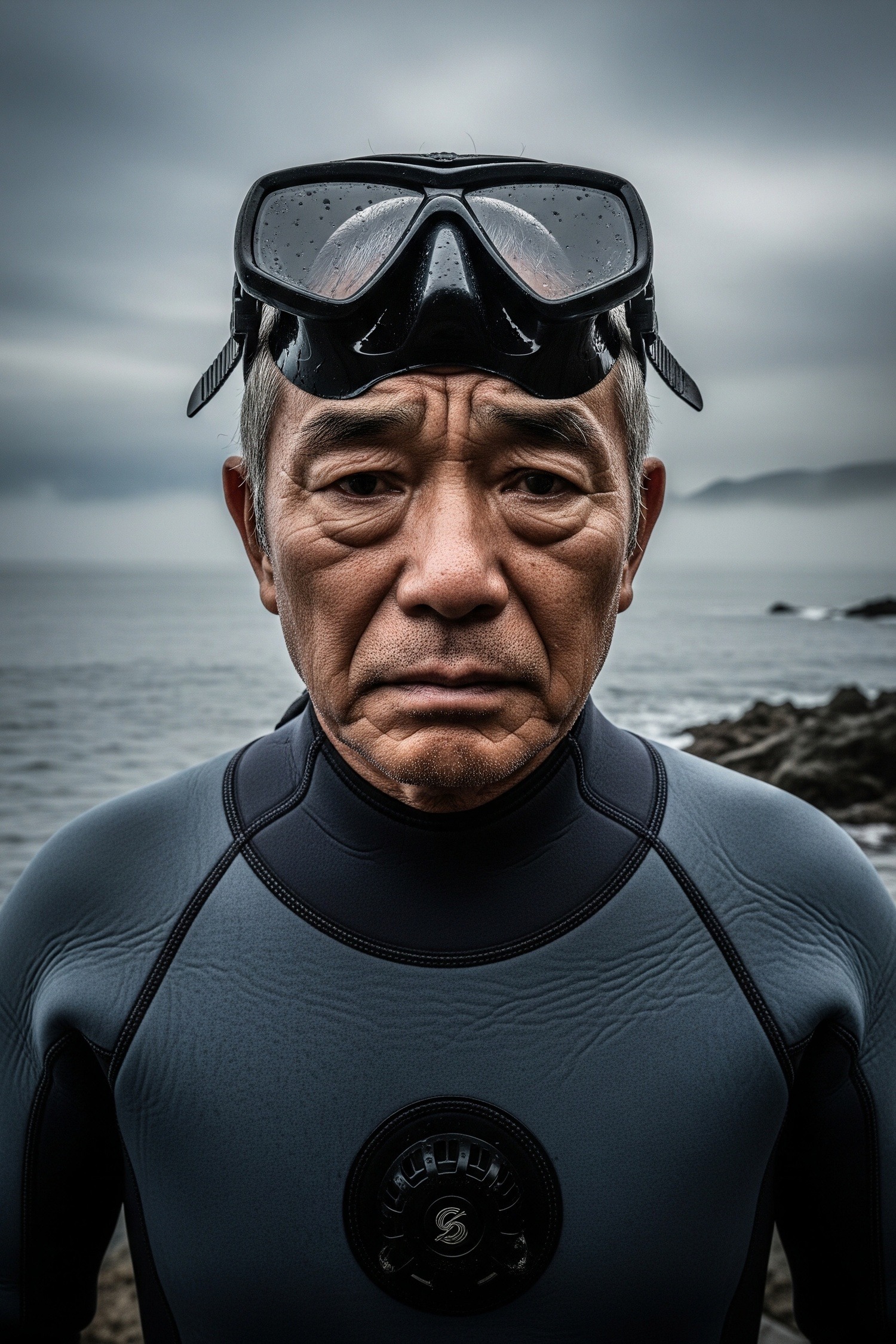

Key Facts
- A 9.0-magnitude earthquake struck off Japan’s Pacific coast on March 11, 2011 — the most powerful ever measured in Japan and the fourth most powerful in recorded history.
- Yasuo Takamatsu, who had no diving background, certified as a diver in 2013 and had surpassed 650 dives off Onagawa by 2024, searching for his wife Yuko.
- Japan’s National Police Agency confirmed 15,899 people killed and 2,527 still listed as missing; the town of Onagawa alone lost more than 800 residents.
- The tsunami surged more than 18 meters above sea level in parts of Onagawa; Yuko Takamatsu, 47, sent a final text — ‘I want to go home’ — and was never found.
- A 2013 Reconstruction Agency report found over 90% of those formally declared dead were eventually identified, while more than 2,500 people were never recovered at all.
In short: After the 9.0-magnitude 2011 Tohoku earthquake and tsunami killed his wife Yuko in Onagawa, Japan, Yasuo Takamatsu learned to dive in 2013. By 2024 he had made more than 650 dives in cold, low-visibility coastal water searching for her remains — one of more than 2,500 people who were never found.
The Day the Sanriku Coast Changed Forever
At 2:46 p.m. on a Friday afternoon in March 2011, offices were full and schools were still in session along Japan’s northeastern coast when the 2011 Tōhoku earthquake and tsunami struck. The Japan Meteorological Agency recorded the earthquake’s magnitude at 9.0 — the most powerful ever measured in Japan, and the fourth most powerful in recorded human history. In Onagawa — a fishing town of roughly 10,000 people at the time — the wave surged more than 18 meters above sea level in some areas, consuming entire neighborhoods in under four minutes. Yuko Takamatsu was 47 years old when the water came. She was never found.
The National Police Agency of Japan and the Japan Meteorological Agency confirmed the death toll: 15,899 people were killed, with a further 2,527 officially listed as missing. Onagawa lost more than 800 residents. But numbers don’t hold you at night. Yasuo was at work in a different location when the wave hit. His phone finally received her message hours after she’d sent it — “I want to go home.” Five words. He has kept them with him ever since. There was no evacuation record. No shelter sign-in. No hospital admission. Just silence, and the wreckage of a town that no longer existed in any recognizable form.
History repeats along this coast. The Sanriku coastline is one of the most seismically active stretches on Earth, hit by major tsunamis in 1896, in 1933, in 1960. Japan’s ancient stone tsunami warnings — some dating back six centuries and carved with instructions to never build below a certain elevation — speak to a culture with institutional memory of catastrophe. But institutional memory doesn’t hold your hand when the text messages stop.
Learning to Dive When Love Demands It
Two years passed before Yasuo began searching. He was in his early 50s, had never been a diver, and the Onagawa area was still deep in the logistical chaos of recovery when he certified through a professional diving course in 2013. The Japanese government and the Japan Coast Guard had conducted extensive official search operations in the immediate aftermath of the tsunami, but by then those efforts had been scaled back or suspended entirely. For families of the missing, this was a particular kind of abandonment.
Why does institutional abandonment accelerate the urgency of private devotion? Because when the searching stops, some people begin their own.
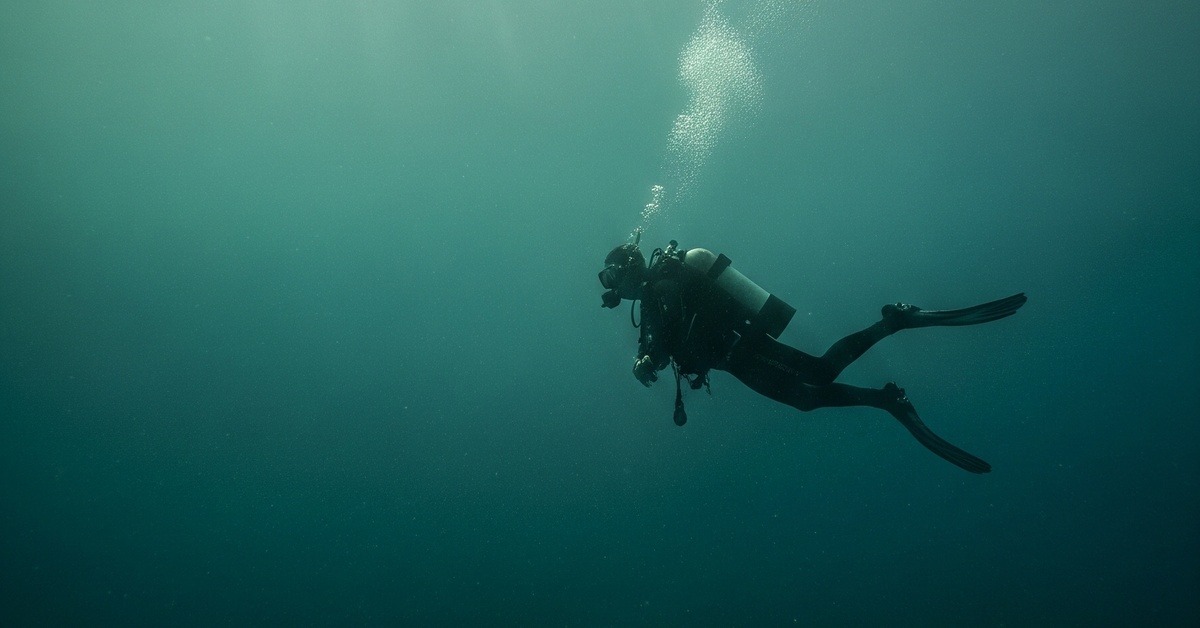
The conditions he entered are not forgiving. Water temperatures off the Sanriku coast can drop below 10°C in winter. Visibility is often poor — sometimes less than two meters. Currents running along the ria coastline, where the land is cut by long, narrow inlets carved by ancient glaciers, are irregular and powerful. Several divers have died along this coast in unrelated incidents. Yasuo dives with a buddy when he can, but the search is his alone in every other sense. He goes on weekends. He goes in winter. He goes when the current is running and when it isn’t. By 2024, he had surpassed 650 dives — not days, not surface intervals, but six hundred and fifty individual descents into cold, dark water, each one an act of devotion that defies any reasonable calculus of hope.
What the Water Holds — and What It Keeps
Forensic scientists and disaster recovery specialists have studied carefully what happens to human remains in the aftermath of catastrophic tsunamis. The National Police Agency of Japan, working with disaster victim identification teams and forensic anthropologists from institutions including the Japanese Society for Forensic Odontology, spent years processing identifications of recovered remains. DNA matching, dental records, and bone fragment analysis were deployed at scale. According to a 2013 report from the Reconstruction Agency of Japan, over 90% of those formally declared dead in the Tōhoku disaster were eventually identified.
That figure masks the hardest truth: more than 2,500 were never found at all. National Geographic’s coverage of the disaster’s anniversary documented how families of the missing describe their grief as suspended — unable to complete mourning rituals, unable to hold memorial services grounded in any physical reality, caught between loss and absence in ways that complicate everything from inheritance law to psychological recovery. Under Japanese law, a person declared missing rather than dead cannot be legally deceased until seven years have passed — a period that ends not in closure but in paperwork.
Buddhist funeral traditions, which most Japanese families observe, place enormous significance on the physical body: the rituals of washing, dressing, and cremating a loved one are understood as part of the passage between this life and the next. Watching a culture’s most sacred rituals collapse against the absence of a body — you stop calling Yasuo’s search unusual. You call it necessary.
When remains are found in Japanese tsunami zones, local authorities and diving groups treat the recovery with enormous ceremony. Even small fragments are significant. Even after thirteen years of cold water and strong currents, Yasuo believes the sea has not entirely erased her.
Yasuo Takamatsu’s Diving Search Becomes a Form of Witness
Research published in 2018 by the Disaster Relief and Mental Health Institute at Hyogo Institute of Information Education (HIJE) in Japan found that bereaved family members of the missing consistently reported higher rates of prolonged grief disorder, depression, and complicated mourning than those who had lost loved ones whose bodies were recovered. It’s not just loss. It’s ambiguous loss — a term developed by American family therapist Pauline Boss at the University of Minnesota in the 1970s (and this matters more than it sounds) — and it functions differently in the brain and the body. There is no point at which the nervous system receives the signal to begin closure. The missing person is simultaneously gone and not gone.
The relationship persists in a kind of suspended animation that grief counselors describe as uniquely exhausting. Yasuo has spoken in interviews about how diving is not only a search but a practice of presence. When he is underwater, he is with Yuko in a way he isn’t anywhere else. The act of descending into the place where she disappeared is, for him, a form of connection. He is now in his 60s. His knees are not what they were. The wetsuits are heavier than they used to feel.
And still, he goes down.
The 650 dives are not a monument to failure. They’re a record of love measured in meters and minutes, in cold and silence, in a decade of Saturdays spent underwater instead of anywhere else. Volunteers and local diving groups occasionally join him. The NPO Grandblue, a Japanese non-profit that supports underwater searches for tsunami victims, has worked alongside families like Yasuo’s for years. They don’t promise results. They promise presence. That distinction — between promising outcomes and simply refusing to abandon someone — is what defines everything about this search.

How It Unfolded
- March 11, 2011 — The 9.0-magnitude Tōhoku earthquake and subsequent tsunami strike Japan’s Pacific coast; Yuko Takamatsu disappears in Onagawa; her final text to Yasuo reads “I want to go home.”
- 2013 — Yasuo Takamatsu completes his diving certification and begins his first underwater searches in Onagawa Bay, with no official support and no prior diving experience.
- 2016 — Yasuo’s story receives significant international attention when global media outlets report on his ongoing search, drawing awareness to the more than 2,500 people still officially listed as missing from the disaster.
- 2024 — Having surpassed 650 dives over more than a decade, Yasuo continues his weekly searches; Yuko has not yet been found, and the official missing persons list from the 2011 disaster remains open.
By the Numbers
- 650+ — individual dives completed by Yasuo Takamatsu in Onagawa Bay since 2013, as reported by multiple Japanese and international news sources.
- 2,527 — people officially listed as missing (not confirmed dead) following the 2011 Tōhoku disaster, per the National Police Agency of Japan’s 2023 annual report.
- 9.0 — magnitude of the Tōhoku earthquake, making it the most powerful ever recorded in Japan and fourth most powerful in recorded global history.
- 18+ meters — height the tsunami wave reached above sea level in parts of Onagawa, one of the hardest-hit communities along the entire Sanriku coastline.
- 7 years — the legally mandated waiting period in Japan before a missing person can be declared legally deceased in the absence of a confirmed body.
Field Notes
- In 2021, Japanese diver and NPO Grandblue volunteer Yasuhiro Koike noted in an interview with NHK World that the seabed off Onagawa remains littered with structural debris from the tsunami — concrete foundations, vehicle frames, and household objects — creating a labyrinthine underwater landscape that both conceals and preserves what was swept out to sea.
- Currents don’t behave predictably along the Sanriku coastline’s ria geography — its deeply indented, glacially carved inlets — which means items carried by the 2011 tsunami wave can shift position on the seabed seasonally. This is part of why long-term, repeated searching of the same areas is not futile but methodologically rational.
- Prolonged grief disorder was formally added to the DSM-5-TR (Diagnostic and Statistical Manual of Mental Disorders) in 2022, giving clinical recognition to a condition that family members of Japan’s tsunami missing had been experiencing — without diagnosis or treatment framework — for over a decade.
- Researchers at Tohoku University still cannot fully predict the long-term dispersal patterns of human remains in tsunami-affected coastal zones, particularly in areas with complex bathymetry like the Sanriku ria coast — meaning the scientific basis for declaring any zone “exhaustively searched” remains genuinely uncertain.
Frequently Asked Questions
Q: Has Yasuo Takamatsu’s diving search for his wife after the Japan tsunami ever found anything?
As of the time of writing, Yasuo has not recovered Yuko’s remains despite more than 650 dives. He has, however, reported finding objects and debris connected to Onagawa residents over the years. His search has never been framed by Yasuo himself as futile — turns out he has consistently said that diving is both a practical search and a way of remaining close to his wife in the place she disappeared.
Q: Why are more than 2,500 people still listed as missing from the 2011 Japan tsunami?
The sheer scale and velocity of the 2011 tsunami, combined with the ria coastline’s complex underwater topography, meant that many victims were carried out to sea and never returned to shore. Ocean currents, depth, and the weight of overlying debris all contribute to the difficulty of recovery. Japan’s National Police Agency maintains the official missing persons list and updates it annually, but after thirteen years, formal recovery operations have long since ended, leaving families like Yasuo’s without institutional support for continued searching.
Q: Is Yasuo Takamatsu’s search considered unusual in Japan, or do other families search for missing tsunami victims?
Yasuo’s search is extraordinary in its duration and personal commitment, but he isn’t entirely alone. The NPO Grandblue and other volunteer diving groups in the Tohoku region have supported families seeking missing loved ones in underwater search operations since 2011. What distinguishes Yasuo is the consistency — over a decade of near-weekly dives — and the fact that he learned to dive specifically for this purpose. In Japan, his story is widely known and is regarded with deep respect rather than puzzlement.
Editor’s Take — Sarah Blake
Six hundred and fifty dives is not the story of someone who hasn’t accepted loss. It’s the story of someone who has accepted it completely — and decided that acceptance doesn’t require abandonment. What sits with me is the legal reality: under Japanese law, Yuko is not yet officially dead. She is missing. And in that gap between missing and dead, Yasuo has built an entire practice of love. The sea took her. He keeps going back to the sea. That’s not denial. That’s devotion, and it deserves more than a word.
The 2011 Tōhoku disaster reshaped entire coastlines, rewrote building codes, and forced a nation to reckon with what it means to live alongside geological forces that don’t negotiate. But its longest aftershock is human. It’s the 2,527 people still on a list. It’s Yasuo Takamatsu pulling on a wetsuit on a cold Saturday morning, thirteen years on, and slipping beneath the surface of Onagawa Bay. The earthquake lasted six minutes. The love it couldn’t extinguish has lasted far, far longer. What does it mean to keep looking? Maybe the question is what it would mean — to any of us — to finally stop.
Illustrations are AI-generated. Article fact-checked and human-edited.